Galang Taruna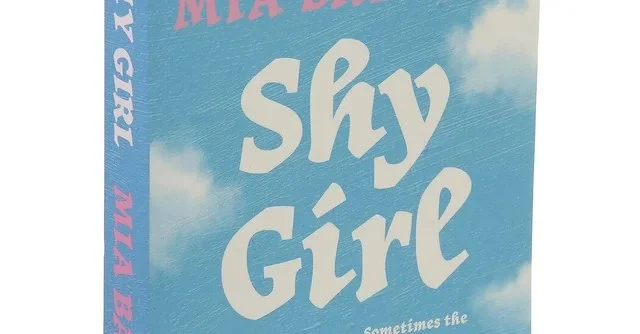
A significant tremor has rippled through the literary world as Hachette, one of the "Big Five" publishing houses, announced the unprecedented cancellation of the American release of Mia Ballard’s debut horror novel, Shy Girl. The decision, coupled with the immediate withdrawal of the book from sale in the United Kingdom, where it had already been published, stems from serious allegations of extensive use of generative artificial intelligence in the text’s composition. This marks a pivotal moment, setting a stark precedent for how traditional publishers might confront the burgeoning challenges posed by AI in creative writing.
The controversy surrounding Shy Girl did not originate within the hallowed halls of publishing houses but rather in the vibrant, often unfiltered, online communities where avid readers dissect and discuss literature. The first whispers of suspicion emerged on platforms like Reddit and Goodreads in late 2025 and early 2026, months after the book’s initial release in the UK in autumn 2025. Readers, possessing an increasingly sophisticated collective understanding of AI-generated prose, began to flag passages within the novel that struck them as unusually generic, stylistically inconsistent, or repetitive. Specific critiques highlighted what was described as a "flat" narrative voice, a reliance on cliché, confusing metaphors that seemed disconnected from the text’s emotional core, and an overall lack of the unique authorial fingerprint typically expected from a human writer. These characteristics, increasingly familiar to those interacting with large language models, quickly fueled a growing online debate.
The digital murmurs soon escalated into a public outcry, catching the attention of traditional media. In March 2026, a comprehensive investigation by The New York Times brought the allegations into the mainstream, interviewing readers, literary critics, and AI experts who corroborated the stylistic anomalies. The article detailed how certain narrative beats felt formulaic, how character dialogue sometimes lacked authentic human nuance, and how descriptions, while technically correct, often failed to evoke genuine emotion or vivid imagery. This widespread media exposure intensified the pressure on Hachette, prompting the publisher to initiate a rigorous internal audit of the manuscript.
Following their comprehensive review, Hachette’s findings led to the decisive action announced recently. A spokesperson for the publisher confirmed that their internal investigation concluded that "large portions" of Shy Girl had indeed been processed by artificial intelligence. In an official statement, a Hachette representative underscored the company’s foundational principles: "Hachette remains committed to protecting original creative expression and the art of storytelling. Our decision reflects our unwavering dedication to the integrity of authorship and the trust placed in us by readers and authors alike." This strong affirmation signals a clear stance from a major industry player regarding the authenticity of content in an increasingly AI-permeated landscape.
Mia Ballard, the author credited with Shy Girl, has vehemently denied personally using AI to craft her manuscript. In a series of communications, including an email to The New York Times, Ballard attributed the suspected AI-generated content to a freelance editor she had engaged. According to her account, this editor was hired in February 2025 to refine the self-published version of the book, which had initially garnered significant online traction. Ballard maintains that any AI integration occurred without her knowledge or consent, placing the responsibility squarely on the shoulders of her former collaborator. "This controversy has changed my life in countless ways," Ballard conveyed, expressing profound distress. "My mental health is at an all-time low, and my name is ruined for something I did not personally do." Her defense, while offering a potential explanation, also casts a spotlight on the complex and often opaque processes of manuscript development, particularly in the hybrid world of self-publishing and traditional acquisition.
The methods employed by Hachette to definitively identify AI-generated text remain somewhat unclarified, a point of ongoing discussion within the industry. While advanced AI detection tools are available, their accuracy and reliability are still subjects of intense debate. These automated detectors, often trained on vast datasets of human and AI-generated text, can flag patterns indicative of machine authorship. However, they are not infallible and have been known to produce false positives or negatives, particularly with highly polished AI outputs or texts that merely mimic common stylistic trends. It is plausible that Hachette’s audit involved a combination of sophisticated software analysis and meticulous human review, where experienced editors and literary professionals scrutinized the text for tell-tale signs: unnatural phrasing, an absence of idiosyncratic authorial voice, unexpected shifts in tone or vocabulary, and a general blandness that often characterizes machine-generated prose. The nuanced understanding of human storytelling remains a critical component in discerning artificiality, especially as AI models become increasingly sophisticated at mimicking human writing styles.
This incident is particularly impactful given Shy Girl‘s journey to traditional publication. The novel initially found success as a self-published work, reportedly selling around 1,800 copies in the UK before its withdrawal. Its online popularity caught the eye of Hachette, leading to a significant publishing deal. This trajectory highlights a common path for emerging authors, where grassroots success can open doors to mainstream recognition. The cancellation, therefore, not only affects Mia Ballard but also raises questions about the vetting processes for independently published works that transition to traditional houses. Publishers often rely on the initial reader reception and raw manuscript for acquisition, assuming the authenticity of the author’s work. This case forces a re-evaluation of that reliance.
The broader implications for the publishing industry are profound. The rise of generative AI, exemplified by tools like OpenAI’s ChatGPT and Google’s Gemini, has democratized content creation but simultaneously introduced unprecedented challenges regarding authenticity, intellectual property, and ethical authorship. The technology, capable of producing coherent and often stylistically competent text at scale, blurs the lines between human creativity and algorithmic output. This has led to a growing concern among authors, agents, and publishers about the potential devaluation of human-authored works and the proliferation of what some internet users cynically refer to as "AI slop"—generic, often uninspired content churned out by machines.
In response to these burgeoning concerns, the Society of Authors in the UK has proactively launched the "Human Authored" logo. This initiative aims to provide a clear visual identifier for readers, distinguishing books written entirely by human beings from those that may incorporate AI-generated elements. The logo serves as a mark of authenticity, a promise to the reader that the creative spark and labor behind the words are unequivocally human. While a commendable effort, its effectiveness in an increasingly saturated and digitally fragmented market remains to be seen. The challenge lies not only in its widespread adoption but also in ensuring its veracity, as authors or publishers might be tempted to misrepresent content origin.
The Shy Girl scandal will likely prompt publishers globally to revisit and reinforce their contractual agreements with authors. Future contracts may include more explicit clauses regarding the use of AI in manuscript creation, potentially requiring authors to declare any AI involvement or even prohibiting it entirely for certain types of works. This could extend to the entire creative process, from initial drafting to editing and revision. Literary agents will also face new responsibilities in vetting manuscripts and advising their clients on the ethical boundaries of AI use. The onus of proving authenticity might shift, placing a greater burden on authors to demonstrate the human origin of their work.
Beyond contractual matters, the incident could trigger a re-evaluation of editorial processes. Publishers might invest in more sophisticated AI detection technologies or develop internal guidelines for identifying AI-generated content. This could involve training editors to spot the stylistic hallmarks of AI, which often manifest as a lack of idiosyncratic voice, an over-reliance on common phrases, or a superficial understanding of complex human emotions and experiences. The role of the human editor, far from being diminished by AI, may become even more critical as a gatekeeper of authenticity and quality.
The long-term impact on author careers, particularly for those emerging from self-publishing, is also a significant consideration. While self-publishing platforms offer unparalleled access to readers, they also represent a less curated environment where AI-generated content can more easily proliferate. This case may lead traditional publishers to approach self-published successes with increased scrutiny, potentially requiring more extensive vetting processes before offering traditional deals. This could inadvertently make it harder for genuinely talented self-published authors to break into the mainstream if suspicion casts a wider net.
Ultimately, the Shy Girl controversy serves as a crucial inflection point, forcing the publishing industry to confront head-on the ethical and practical dilemmas posed by artificial intelligence. It underscores the profound value placed on human creativity, originality, and the unique connection between an author and their readers. As technology continues to evolve, the distinction between human and machine authorship will remain a central concern, shaping the future of literature, publishing practices, and the very definition of creative expression. The literary world is now tasked with navigating this new frontier, balancing innovation with the timeless principles of artistic integrity.