admin
admin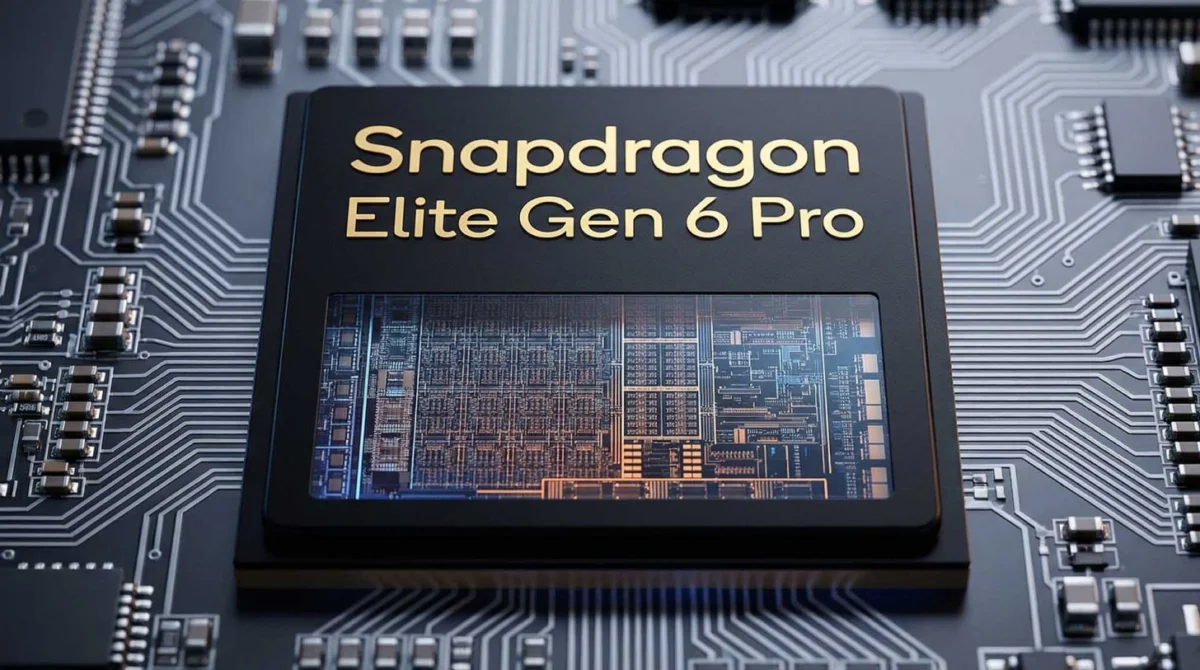
The landscape of mobile semiconductor technology is poised for a significant architectural shift as Qualcomm reportedly prepares to introduce its next-generation flagship, the Snapdragon 8 Elite Gen 6 Pro. Central to this development is the introduction of "AI Frame Fusion," a sophisticated upscaling and frame generation suite designed to leverage the specialized hardware found within the upcoming 2nm chipset. Recent leaks and industry reports suggest that this feature will be an exclusive hallmark of the "Pro" variant, setting a new performance ceiling for mobile gaming and high-fidelity graphical rendering. The distinction between the standard Snapdragon 8 Elite Gen 6 and its Pro counterpart appears to be rooted in specific hardware components—namely, dedicated Matrix ALU blocks within the Adreno 850 GPU—that are absent in the base model.
Architectural Innovations: The Role of Matrix ALU Blocks and GMEM
The primary catalyst for the exclusivity of AI Frame Fusion is the inclusion of two dedicated Matrix ALU (Arithmetic Logic Unit) blocks within the shader processors of the Adreno 850 GPU. These blocks are engineered specifically to accelerate Graphics Memory (GMEM) operations. While standard mobile GPUs often struggle with the bandwidth and latency requirements of real-time AI upscaling, the addition of Matrix ALUs allows the Snapdragon 8 Elite Gen 6 Pro to process complex mathematical tensors required for frame interpolation and resolution enhancement without placing an undue burden on the primary graphics cores.
AI Frame Fusion is expected to operate in two distinct modes. The first is a super-resolution mode, which aims to upscale native 1080p output to a crisp 1440p resolution. This process utilizes a combination of motion vectors, depth buffers, low-resolution color buffers, and data from previously rendered frames to reconstruct high-fidelity imagery. The second mode is a frame generation technology analogous to NVIDIA’s Deep Learning Super Sampling (DLSS) 3. By analyzing two consecutive rendered frames, the system injects an AI-generated intermediate frame, effectively doubling the perceived framerate. This approach is intended to provide a smoother visual experience while maintaining a lower power profile, as the GPU does not have to render every frame from scratch.
Hardware Divergence: Standard vs. Pro Variants
The decision to segment the Snapdragon 8 Elite Gen 6 lineup marks a strategic shift for Qualcomm. For several generations, the "Pro" or "Plus" designations were often reserved for mid-cycle refreshes with slightly higher clock speeds. However, the Gen 6 era appears to be moving toward fundamental architectural differentiation.
Beyond the GPU enhancements, the Snapdragon 8 Elite Gen 6 Pro is rumored to be the only chip in the lineup to support the upcoming LPDDR6 RAM standard. LPDDR6 is expected to offer significantly higher bandwidth and lower power consumption compared to the current LPDDR5X standard, which is critical for feeding data to the Matrix ALUs during AI Frame Fusion tasks. The standard Snapdragon 8 Elite Gen 6, lacking both the Matrix ALU blocks and the LPDDR6 compatibility, will likely rely on more traditional, less efficient upscaling methods, creating a clear performance gap between the two tiers of flagship devices.
Chronology of Qualcomm Mobile Flagship Evolution
The path to the Snapdragon 8 Elite Gen 6 Pro has been marked by a steady transition from general-purpose mobile processing to specialized AI-driven silicon.
- 2022: Snapdragon 8 Gen 2: Introduced the first "Cognitive ISP" and significant improvements in ray tracing capabilities, signaling a focus on visual fidelity.
- 2023: Snapdragon 8 Gen 3: Shifted focus toward Generative AI on-device, with the Hexagon NPU taking a more prominent role in photography and voice processing.
- 2024: Snapdragon 8 Elite (Gen 4/5 transition): Rebranded to "Elite" to signify a departure from the previous numbering scheme, introducing the custom Oryon CPU cores to the mobile space.
- 2025/2026 (Projected): Snapdragon 8 Elite Gen 6 Series: The anticipated move to a 2nm process node (likely utilizing TSMC’s N2 or Samsung’s SF2 process), introducing the Pro tier with dedicated graphics acceleration hardware.
This timeline illustrates a clear trajectory: Qualcomm is no longer content with incremental speed bumps. Instead, the company is integrating hardware-level solutions for software problems, specifically addressing the "thermal envelope" limitations of mobile devices through AI-assisted rendering.

The 2nm Frontier and Efficiency Gains
The shift to a 2nm manufacturing process is a cornerstone of the Snapdragon 8 Elite Gen 6 Pro’s value proposition. As semiconductor nodes shrink, manufacturers can fit more transistors into a smaller area, leading to either higher performance or improved energy efficiency. In the context of the Gen 6 Pro, the 2nm node provides the "transistor budget" necessary to include the Matrix ALU blocks without significantly increasing the chip’s physical footprint or its heat output.
Industry analysts suggest that the 2nm process could offer a 10% to 15% performance increase at the same power levels as 3nm, or a 25% to 30% reduction in power consumption at the same performance levels. For mobile gaming, where thermal throttling is the primary enemy of sustained performance, these efficiency gains are vital. By offloading upscaling tasks to the Matrix ALUs and utilizing the efficiency of the 2nm node, the Gen 6 Pro may be able to sustain high-performance gaming sessions longer than any previous mobile chipset.
The Software Dilemma: AAA Gaming on Android
Despite the impressive hardware specifications, the utility of AI Frame Fusion remains tethered to the availability of compatible software. Currently, the Android ecosystem faces a shortage of native AAA gaming titles that can fully utilize such advanced features. While Apple has made strides in bringing titles like Resident Evil and Death Stranding to the iPhone via its MetalFX upscaling, the Android market remains dominated by "freemium" mobile-first titles that do not necessarily require the horsepower of a 2nm Pro-tier chipset.
To prevent AI Frame Fusion from becoming a "paper feature," industry experts suggest that Qualcomm must take a proactive role in the development ecosystem. This could involve:
- Direct Partnerships: Collaborating with major publishers like Ubisoft, Capcom, or EA to bring console-quality ports to Android with native AI Frame Fusion support.
- Middleware Integration: Ensuring that popular game engines like Unreal Engine 5 and Unity have "plug-and-play" support for Qualcomm’s upscaling technology.
- Emulation Support: A burgeoning use case for high-end Snapdragon chips is the emulation of PC and console environments. Software like Winlator and GameHub allows users to run Windows-based games on Android. If Qualcomm facilitates the integration of AI Frame Fusion into these emulation layers, it could transform the Snapdragon 8 Elite Gen 6 Pro into a powerhouse for legacy and desktop gaming, rivaling dedicated handhelds like the Steam Deck or the ROG Ally.
Market Impact and Competitive Landscape
The introduction of a "Pro" variant with exclusive hardware features is likely to alter the purchasing patterns of both OEMs and consumers. Smartphone manufacturers such as Samsung, Xiaomi, and OnePlus may reserve the Snapdragon 8 Elite Gen 6 Pro for their "Ultra" or "Gaming" editions, using AI Frame Fusion as a key marketing differentiator. This could lead to a further "premiumization" of the smartphone market, where the highest tier of devices offers a tangibly different technological experience rather than just more storage or better cameras.
Competitively, Qualcomm is looking over its shoulder at MediaTek and Apple. MediaTek’s Dimensity 9000 series has closed the performance gap in recent years, often offering competitive Ray Tracing and AI capabilities at a lower price point. Meanwhile, Apple’s vertical integration allows it to optimize its A-series chips specifically for the titles available in the App Store. By introducing dedicated Matrix ALUs for frame generation, Qualcomm is attempting to reclaim the "performance king" title in the mobile gaming space.
Conclusion: A Strategic Pivot Toward Specialized Silicon
The Snapdragon 8 Elite Gen 6 Pro represents more than just a seasonal update; it is a strategic pivot toward specialized silicon designed for the next era of mobile computing. By separating the Pro and standard models through physical hardware blocks rather than just clock speeds, Qualcomm is creating a new hierarchy in the Android ecosystem.
The success of AI Frame Fusion will ultimately depend on whether the company can bridge the gap between its cutting-edge hardware and a software library that justifies its existence. If Qualcomm can successfully incentivize developers or empower the emulation community, the Snapdragon 8 Elite Gen 6 Pro could redefine what is possible on a handheld device. However, without a robust catalog of games to push the Adreno 850 GPU to its limits, the Matrix ALU blocks risk becoming a sophisticated solution in search of a problem. As the industry moves toward the 2nm era, the focus shifts from how many transistors a chip has to how intelligently those transistors are being used to enhance the user experience.