Vera Intan Clara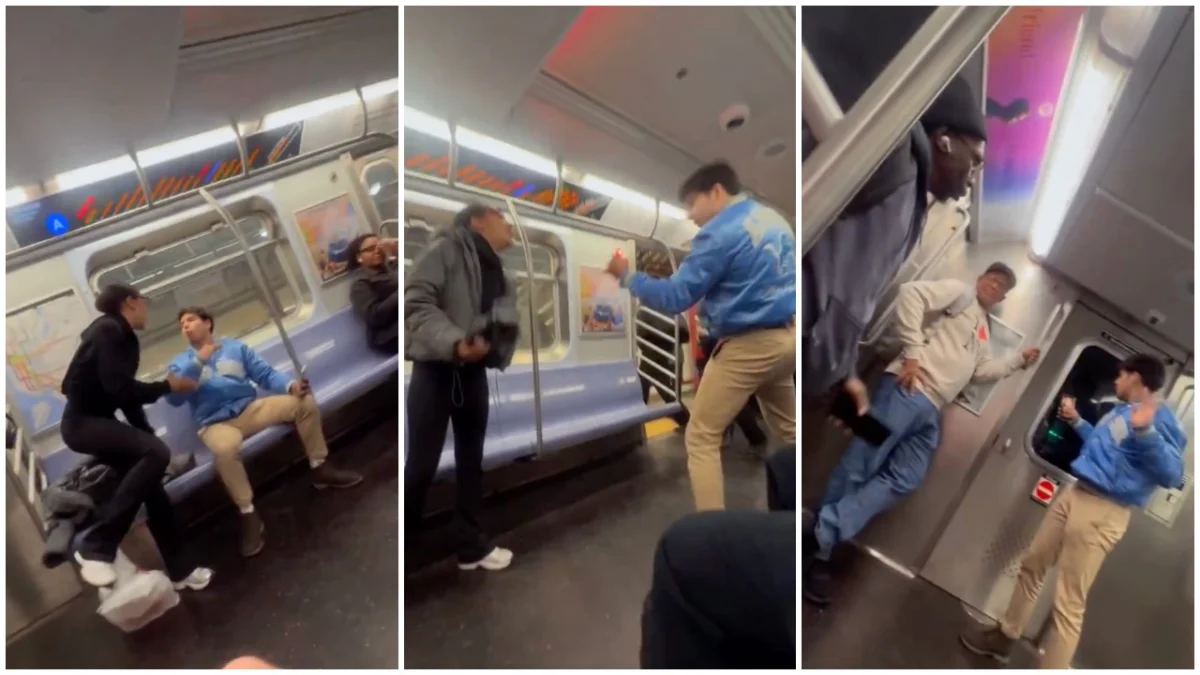
A recent video circulated widely across social media platforms, notably X (formerly Twitter), has thrust the contentious issue of passenger conduct and public civility on New York City’s transit system back into the spotlight. The footage captures a volatile argument between multiple passengers aboard a New York City subway train, an altercation that swiftly spiraled into physical contact and broader disruption, highlighting the ever-present tensions within the city’s bustling subterranean network. The incident, reshared by X user @Floridap8triot, quickly garnered significant attention, prompting widespread discussion on the challenges of maintaining order and decorum in confined public spaces. The initial segment of the clip shows a woman dressed in all black engaged in a heated exchange with another female passenger, who appears to be admonishing her for causing a delay to the train’s service. This immediate, high-tension snapshot then transitions, through an apparent edit, to an earlier point in time, revealing the catalyst for the entire chaotic sequence.
The Genesis of Conflict: A Detailed Chronology of Escalation
The roots of the altercation trace back to an intense verbal confrontation between the woman in all black and a man seated beside her. The interaction begins with the man issuing a contentious remark, telling her, “Don’t bring that white bullshit…”, a phrase that immediately ignited the situation. The woman’s reaction was swift and aggressive; she rose from her seat, confronting the man directly, demanding, “Did I tell you to stop talking to me?” This initial exchange set a confrontational tone, signaling a rapid descent into open hostility rather than a de-escalation.
During this heated dialogue, the man held his arm outstretched, presumably recording their interaction on his mobile phone. The woman, seemingly incensed by this act, retaliated by slapping the device out of his hand, sending it clattering onto the train floor. Undeterred by the initial impact or the public setting, she emphatically stated, “I don’t give a f–k about that, stop talking to me,” before repeating the action, striking the phone out of his hand for a second time. This physical act of aggression, occurring in full view of other passengers, served as a significant escalation point, transforming a verbal dispute into a tangible conflict with potential legal ramifications.
Following the second instance of physical contact, a brief but palpable silence descends, as captured by the video. The man, now standing, visibly appears stunned by the woman’s actions, staring at her in what could be interpreted as disbelief or shock. Despite his apparent momentary pause, the woman persisted in her aggressive posture, continuing to verbally assault him. Instead of allowing the situation to cool, her rhetoric intensified. She challenged him directly, uttering threats such as, “Go ahead, so I can knock you out on this train,” and reiterating, “Play with me if you want to, so I can knock you out on this train.” These overt threats of violence further cemented the volatile nature of the interaction.
In response to her continued aggression and threats, the man issued a clear warning, stating, “That’s the final warning,” while simultaneously inviting her to call the police. His frustration visibly mounted as he reminded her of her two physical strikes against him. With a chilling implication, he then stated, “You know what three strikes mean,” suggesting a potential retaliatory action or invoking a broader understanding of consequences, all while maintaining his recording of the incident. He reiterated his boundary, “Don’t touch me, you hit me twice,” even as the woman continued to provoke him, egging him on to repeatedly call her a derogatory term.
Throughout this tumultuous back-and-forth, the train doors remained conspicuously open, a critical detail that brought an external element into the fray. The delay caused by the protracted argument between the woman in black and the man prompted another female passenger to intervene. This second woman, clearly exasperated by the disruption, began yelling at the woman in black, directly blaming her for holding up the train and affecting the commutes of countless others. This added layer of confrontation further compounded the chaotic scene, illustrating how individual disputes can quickly impact the broader collective within a public transit environment.
The chaos escalated further with the entrance of a third male passenger. This man, rather than attempting to mediate or de-escalate, entered the scene by confronting the original male passenger. He began yelling at him, assigning blame for the unfolding events, despite the fact that the original male passenger had not physically touched the woman and had repeatedly warned her against further physical contact. This intervention by the third man underscored the complex dynamics of bystander involvement, where attempts to assign blame or intervene can sometimes inadvertently fuel further conflict rather than resolving it. The entire sequence, from its initial spark to its multi-party escalation, paints a vivid picture of a public space transformed into a crucible of raw emotion and unchecked aggression.
NYC Subway Dynamics: Background and Context of Urban Commuting
The New York City subway system, a sprawling network vital to the daily lives of millions, is a microcosm of the city itself – diverse, dynamic, and often intensely stressful. Operating 24/7, it transports an average of over 3 million riders on weekdays, a figure that, while fluctuating post-pandemic, still represents an immense volume of human interaction in close quarters. This constant, dense congregation of people, often under time pressure and varying personal circumstances, creates an environment ripe for interpersonal friction.
Factors such as chronic delays, often caused by signal issues, track work, or passenger incidents, contribute significantly to commuter frustration. The sheer volume of people packed into train cars, especially during peak hours, reduces personal space to a minimum, eroding the psychological buffers that individuals typically rely on in public. This lack of personal space, combined with the anonymity of urban life, can sometimes embolden individuals to act out in ways they might not in other settings. The expectation of prompt and efficient transit often clashes with the unpredictable realities of an aging infrastructure, leading to a palpable sense of tension that can ignite even minor disagreements.
Historically, the Metropolitan Transportation Authority (MTA) has undertaken various campaigns aimed at promoting polite conduct and passenger civility, from "Please Be Courteous" posters to more specific directives about seat hogging or loud music. These campaigns acknowledge the inherent challenges of managing behavior across such a vast and diverse ridership. However, the effectiveness of such messaging can be limited when confronted with underlying societal stressors and individual predispositions towards confrontation.
The proliferation of mobile phones equipped with high-definition cameras has also profoundly altered the landscape of public altercations. What once might have been a fleeting, unrecorded incident now has the potential to become a viral spectacle, instantly shared and dissected by millions. This phenomenon has a dual impact: it can serve as a deterrent, as individuals are aware they might be recorded, but it can also escalate situations, with some individuals actively recording to document perceived injustices or even provoke reactions. For those involved, the awareness of being recorded can either temper behavior or, conversely, intensify it, creating a performative aspect to otherwise private disputes. The viral spread of such videos often fuels public discourse, shaping perceptions of safety and civility on public transit in ways that traditional media coverage alone cannot achieve.
Data and Trends in Transit Incidents Across the System
While specific incident reports for every altercation on the NYC subway are not always immediately publicized, broader trends provide crucial context. Data from the New York City Police Department (NYPD) and the MTA often indicate a persistent challenge with disorderly conduct, minor assaults, and harassment across the transit system. Although major felonies, such as grand larceny or felony assault, are often the focus of official crime statistics, incidents of verbal altercations, shoving, and minor physical contact—like the one depicted in the viral video—are far more frequent.
For instance, while Q2 2026 data might show a slight decrease in major transit crimes compared to previous years, incidents categorized as "disorderly conduct" or "harassment" often remain stubbornly high, representing a significant portion of passenger complaints and police interventions. These types of incidents contribute heavily to the perception of an unsafe or unpleasant commuting environment, even if they don’t always result in arrests or severe injuries. MTA internal reports frequently detail instances of train delays directly attributable to passenger interference, including fights, medical emergencies, or individuals holding doors open. Such delays, even if minor, cascade through the system, exacerbating the stress for thousands of commuters and potentially fueling further frustration.
The MTA invests substantial resources in maintaining safety and order, deploying thousands of uniformed police officers from the NYPD Transit Bureau and MTA Police Department, alongside MTA employees, across the system. Surveillance cameras are pervasive throughout stations and on trains, serving both as a deterrent and as a crucial tool for investigating incidents. Furthermore, public awareness campaigns regularly remind riders of the "See Something, Say Something" initiative, encouraging reporting of suspicious activity or disturbances. Despite these efforts, the sheer volume of daily interactions makes it challenging to prevent every isolated incident of conflict. The underlying social dynamics, including heightened stress levels in a post-pandemic urban environment, economic pressures, and varying levels of individual self-regulation, contribute to a complex landscape where even minor provocations can quickly ignite into public spectacles. The incident in question, while dramatic, reflects a recurring pattern of interpersonal conflict that transit authorities continually strive to mitigate through a combination of enforcement, infrastructure, and public engagement.
Official Responses and Passenger Guidelines for Safety
In the wake of widely circulated videos depicting altercations on its trains, the Metropolitan Transportation Authority (MTA) and the New York City Police Department (NYPD) typically reiterate their commitment to passenger safety and the importance of respectful conduct. While specific statements regarding this particular unverified incident were not immediately available, the general stance of these agencies is well-established.
The MTA routinely urges all passengers to exercise patience and demonstrate respect for fellow riders. Official guidelines emphasize that disruptive behavior, verbal abuse, or physical altercations are unacceptable and violate the Authority’s code of conduct. Passengers are encouraged to report any disturbances to train operators or conductors, or to use the MTA’s official channels for reporting incidents, such as the MTA app or by contacting uniformed personnel. The Authority often highlights that while disputes can arise, resorting to violence or actions that delay service impacts thousands of commuters and potentially leads to serious consequences. Public service announcements frequently remind riders that keeping train doors clear and allowing them to close promptly is crucial for maintaining scheduled service and ensuring efficient movement throughout the system.
The NYPD, through its Transit Bureau, maintains a visible presence across the subway network. Officers are tasked with responding to emergencies, investigating crimes, and ensuring public order. In situations involving physical altercations, police response can lead to arrests for charges ranging from disorderly conduct to assault, depending on the severity of the incident and any injuries sustained. The NYPD typically advises passengers who witness or are involved in an escalating conflict to prioritize their safety: if possible, move away from the situation, avoid direct confrontation, and immediately alert transit staff or call 911. They often stress that recording an incident, while useful for evidence, should not come at the expense of personal safety or exacerbate the situation. For incidents that result in a criminal complaint, video evidence, like the footage shared on X, can be crucial for investigations and potential prosecutions, providing an objective record of events that might otherwise be disputed. The overarching message from both the MTA and NYPD is one of shared responsibility: while authorities provide a framework for safety and order, individual passenger behavior plays a critical role in fostering a respectful and secure commuting environment.
The Ripple Effect: Broader Implications and Public Discourse
The viral spread of videos depicting subway altercations, such as the one in question, extends far beyond the immediate incident, creating a significant ripple effect across public perception and discourse. Such footage invariably impacts how passengers view the safety and overall experience of commuting on the NYC subway. For many, these videos reinforce anxieties about public safety, contributing to a sense that the subway environment is increasingly unpredictable or hostile. This perception, whether fully supported by crime statistics or not, can erode public trust in the transit system and even influence ridership patterns, as some individuals may opt for alternative transportation if they feel unsafe.
Social media plays an undeniable and often complex role in shaping these narratives. Platforms like X act as powerful amplifiers, transforming isolated incidents into widespread phenomena. The speed and reach of sharing mean that a confrontation witnessed by a few dozen people on a train can be seen by millions globally within hours. This amplification fuels extensive public discourse, with commenters frequently expressing outrage, concern, or resignation. Discussions often revolve around themes of individual responsibility, the perceived decline of public civility, the effectiveness of law enforcement on transit, and broader societal issues contributing to stress and aggression in urban environments. The collective digital commentary can either galvanize calls for action or deepen cynicism, depending on the prevailing sentiment.
The incident also brings into sharp focus the complex dynamics of bystander intervention. In crowded public spaces, individuals often face a dilemma: intervene and risk personal safety, or remain passive and potentially allow a situation to escalate. The "bystander effect," a social psychological phenomenon, suggests that individuals are less likely to intervene in an emergency situation when others are present, assuming someone else will take action. This incident, with multiple passengers observing before some became directly involved, implicitly highlights this challenge. While many commend those who try to de-escalate, others question the wisdom of engaging with aggressive individuals.
For transit authorities, managing public behavior remains an ongoing and multifaceted challenge. Beyond enforcement, it involves fostering a culture of respect and mutual consideration. The confined, often anonymous nature of public transit can paradoxically lead to both increased tolerance and decreased inhibition, making it difficult to predict or prevent every conflict. This particular video, by vividly illustrating the rapid escalation from verbal dispute to physical contact and multi-party involvement, serves as a stark reminder of the delicate balance required to maintain order and civility in the dense, high-pressure environment of urban public transportation. It underscores the ongoing debate over individual freedom versus communal respect in shared public spaces, a debate that continues to play out daily on the platforms and in the cars of New York City’s subway system.
The full circumstances surrounding the incident, including whether any arrests were made or official reports filed, remain unclear. While the video offers a compelling glimpse into a moment of intense conflict, independent verification of all events beyond the footage shared on X, as noted by The Daily Dot, remains challenging, underscoring the limitations of social media as a sole source of factual information.