Galang Taruna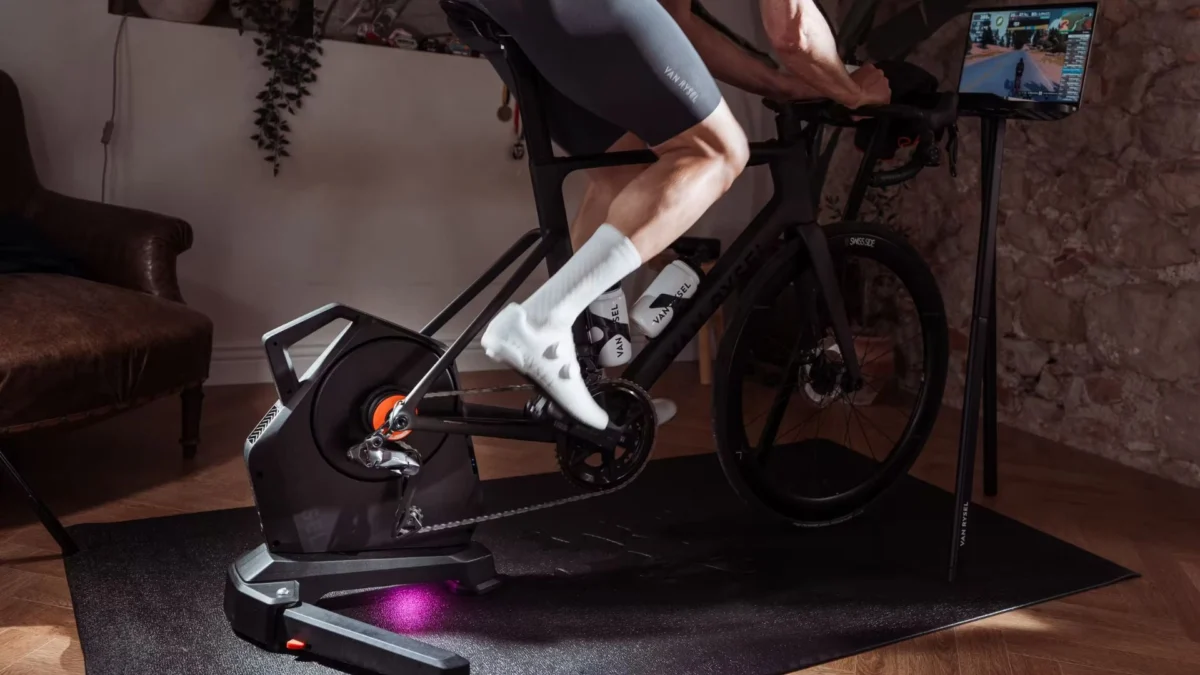
Decathlon, the global sports retail giant, is making a significant stride into the premium segment of the indoor cycling market with its new Van Rysel RCR smart trainer. This sophisticated device, boasting a formidable 2,800-watt power capacity and seamless Zwift compatibility, is currently available at a promotional price of 599 euros, a substantial reduction from its original 789 euros. This aggressive pricing strategy positions the RCR as a compelling alternative to established high-end competitors, signaling Decathlon’s ambition to cater to a broader spectrum of cyclists, from serious enthusiasts to professional athletes seeking advanced training solutions. The launch and subsequent pricing adjustment underscore a strategic pivot for the brand, moving beyond its traditional entry-level offerings to challenge market leaders directly in the high-performance arena.
Decathlon’s Evolving Strategy in Indoor Cycling
For years, Decathlon has been recognized for its accessible and affordable sports equipment, often serving as an entry point for many athletes. In the realm of indoor cycling, the brand has successfully offered models like the Van Rysel D100, which garnered acclaim for its simplicity and affordability, making virtual training accessible to beginners. However, the introduction of the Van Rysel RCR marks a definitive shift in this strategy. The Van Rysel brand, Decathlon’s dedicated line for performance cycling, has been steadily expanding its portfolio to include road bikes, apparel, and accessories designed for serious riders. The RCR smart trainer is a natural extension of this ambition, demonstrating Decathlon’s commitment to providing competitive, high-quality gear across all cycling disciplines, including the burgeoning indoor segment.
The indoor cycling market has experienced explosive growth in recent years, particularly amplified by global events that encouraged home-based fitness solutions. Platforms like Zwift, Peloton, MyWhoosh, and Rouvy have transformed static bike training into immersive, interactive experiences. This surge in demand has driven innovation and competition among manufacturers of smart trainers, which simulate real-world cycling conditions, including resistance changes based on virtual terrain and structured workouts. Decathlon’s entry into the high-end tier with the RCR is a direct response to this evolving market landscape, aiming to capture a share of discerning cyclists who demand top-tier performance without necessarily paying a premium price tag often associated with specialized brands. This strategic move aligns with a broader industry trend where major retailers are increasingly diversifying their offerings to meet sophisticated consumer needs.
Unpacking the Van Rysel RCR’s Performance Prowess
The technical specifications of the Van Rysel RCR are designed to impress even the most demanding cyclists, placing it firmly in contention with industry benchmarks. At the core of its capabilities is a maximum power output of 2,800 watts. This figure is critical for cyclists engaging in intense training, such as sprint intervals or high-power efforts, ensuring that the trainer can accurately replicate the resistance required for such demanding scenarios without reaching its limit. For comparison, many mid-range trainers cap out around 1,500 to 2,000 watts, making the RCR’s capacity suitable for professional-level training.
Beyond raw power, the RCR excels in simulating realistic terrain. It can replicate slopes of up to 27%, a feature particularly valuable for riders training for mountainous events or those who wish to experience the grueling climbs of virtual worlds with authentic resistance. This level of incline simulation provides a true-to-life feel that enhances immersion and training effectiveness, allowing cyclists to target specific muscle groups and improve climbing endurance.
Precision is another cornerstone of high-performance smart trainers, and the Van Rysel RCR boasts an impressive accuracy of 1%. This means that the power readings and resistance adjustments are highly reliable, providing consistent and trustworthy data for structured workouts and performance analysis. For athletes following specific training plans, this level of precision is indispensable for tracking progress and ensuring that prescribed power zones are accurately maintained. The difference between a 1% and 3-5% accuracy can significantly impact the effectiveness of a training program over time.
Furthermore, the RCR addresses a common concern among indoor cyclists: noise. Operating at a contained 56 dB when cycling at 25 km/h, the RCR is remarkably quiet. To put this into perspective, 50-60 dB is often compared to a quiet conversation or the hum of a refrigerator. This low noise level is a significant advantage, particularly for individuals living in apartments or shared spaces, allowing for early morning or late-night training sessions without disturbing others. This thoughtful engineering contributes significantly to the overall user experience, making indoor cycling a more pleasant and integrated part of daily life.
Seamless Integration into the Virtual Cycling Ecosystem
A crucial aspect of any modern smart trainer is its ability to integrate seamlessly with the expansive ecosystem of virtual cycling platforms. The Van Rysel RCR is particularly well-equipped in this regard, coming pre-installed with the Zwift Cog & Click system. This innovative feature streamlines the setup process and enhances the virtual riding experience. The Zwift Cog, a 14-tooth single-speed cog mounted directly onto the trainer’s axle, replaces the traditional multi-gear cassette. This universal design is compatible with a wide range of bicycle transmissions, including Shimano, SRAM, and Campagnolo drivetrains ranging from 8 to 12 speeds, eliminating the need for users to purchase and install a specific cassette for their trainer. This simplification is a major convenience, especially for users who might switch between different bikes or are new to smart trainers.
Complementing the Cog is the Zwift Click, a handlebar-mounted controller that provides immediate access to 24 virtual resistance levels. This allows riders to manually adjust their resistance on the fly within Zwift, offering a level of control that mimics shifting gears on a real bike, even though the physical gear on the trainer remains fixed. This intuitive control system enhances the interactive nature of virtual rides, enabling quick adjustments during races, climbs, or casual spins.
In terms of broader connectivity, the Van Rysel RCR supports industry-standard protocols, including Bluetooth FTMS (Fitness Machine Service) and ANT+. These widely adopted wireless technologies ensure compatibility with a vast array of devices, including smartphones, tablets, computers, and dedicated GPS bike computers, allowing users to connect to their preferred training applications with ease. A notable inclusion is an Ethernet port, which is particularly beneficial for serious online racers. A wired connection significantly reduces latency and drops in communication, providing a more stable and reliable connection during critical virtual races or group rides where every millisecond counts. This feature underscores the RCR’s positioning as a serious training tool for competitive cyclists.
Beyond Zwift, the RCR is fully compatible with other popular virtual training platforms such as MyWhoosh and Rouvy. This multi-platform compatibility offers users flexibility and choice, allowing them to explore different virtual worlds, training programs, and social communities based on their preferences. This broad support ensures that the RCR is a versatile and future-proof investment for any indoor cyclist.
Design, Portability, and User Experience
While performance and connectivity are paramount, the practical aspects of a smart trainer’s design significantly contribute to the overall user experience, especially for those with limited space. The Van Rysel RCR strikes an impressive balance between robust stability and compact storage. Despite its reassuring weight, which guarantees excellent stability during intense efforts and sprints – a crucial safety and performance factor – the RCR features retractable feet. This design allows the trainer to be easily folded down, significantly reducing its footprint when not in use.
Further enhancing its portability and storage convenience is an integrated transport handle. This thoughtful addition makes it effortless for users to move the trainer around their living space or tuck it away under a bed or into a cupboard. This "discreet" nature of the RCR is a major advantage for urban dwellers or anyone whose training space doubles as a living area. The ease of setup and takedown minimizes friction, encouraging more consistent training. This focus on practical ergonomics demonstrates Decathlon’s understanding of the everyday challenges faced by indoor cyclists, making the RCR a highly functional and user-friendly piece of equipment. The robust construction also suggests durability, a key consideration for a training tool that will endure thousands of kilometers of virtual riding.
Competitive Landscape and Market Disruption
The smart trainer market is a fiercely contested arena dominated by established players renowned for their innovation and high-performance products. Competitors such as the Garmin Tacx Neo 3M and the Wahoo Kickr Move represent the pinnacle of smart trainer technology, offering features like multidirectional movement, integrated road feel, and exceptionally high power and accuracy specifications. These trainers typically retail in the range of €1,000 to €1,500 or even higher, reflecting their advanced engineering and brand prestige.
Decathlon’s Van Rysel RCR, with its comparable technical specifications—2,800 W power, 27% slope simulation, 1% precision, and low noise—but a promotional price of 599 euros (originally 789 euros), directly challenges this pricing paradigm. This aggressive value proposition positions the RCR as a highly disruptive force in the market. It offers nearly identical top-tier performance metrics at a price point that is significantly lower, often by 40-60%, than its premium rivals. This strategy makes high-end indoor cycling training accessible to a much broader audience, including serious amateur cyclists, club riders, and budget-conscious enthusiasts who previously might have found such advanced equipment financially out of reach.
The impact of this pricing is multifold. Firstly, it exerts pressure on established brands to re-evaluate their own pricing strategies or to further differentiate their products with unique features that justify their higher cost. Secondly, it elevates Decathlon’s Van Rysel brand perception, signaling its capability to produce not just affordable gear, but genuinely high-performance equipment that can stand toe-to-toe with specialized manufacturers. This move could catalyze a shift in consumer expectations, where high-performance no longer exclusively equates to a prohibitive price tag. For consumers, it represents an unprecedented opportunity to acquire a top-tier smart trainer without a significant financial outlay.
The Broader Implications for the Indoor Cycling Industry
Decathlon’s strategic entry into the high-end smart trainer market with the Van Rysel RCR carries significant implications for the entire indoor cycling industry. Historically, the market has been segmented, with Decathlon occupying the entry-level and mid-range segments, while specialized brands catered to the premium sector. The RCR blurs these lines, suggesting a potential consolidation or at least increased competition across all price points.
This move could spur further innovation as established brands respond to the challenge. They might accelerate their R&D efforts to introduce new features, improve existing technologies, or explore alternative pricing models to maintain their market share. The focus might shift even more towards user experience, integration with virtual platforms, and unique selling propositions beyond raw power and slope simulation.
Furthermore, the accessibility offered by the RCR’s price point could expand the overall market for smart trainers. As more cyclists gain access to high-quality indoor training, the ecosystem of virtual cycling platforms, accessories, and complementary services is likely to grow. This could lead to a virtuous cycle where increased adoption drives further innovation and competition, ultimately benefiting the end-user with more choices, better technology, and competitive pricing. Decathlon, with its vast retail footprint and global supply chain, is uniquely positioned to scale this offering and potentially redefine the "value for money" benchmark in the high-performance smart trainer category. This bold step by Decathlon indicates a maturation of the indoor cycling market, where performance and affordability are no longer mutually exclusive.
The Van Rysel RCR stands as a testament to Decathlon’s evolving strategy, positioning it not merely as a retailer but as a serious contender in the performance sports equipment market. With its robust technical specifications, seamless virtual integration, and disruptive pricing, the RCR is poised to be a game-changer for cyclists seeking a top-tier indoor training experience without compromising on budget.