Galang Taruna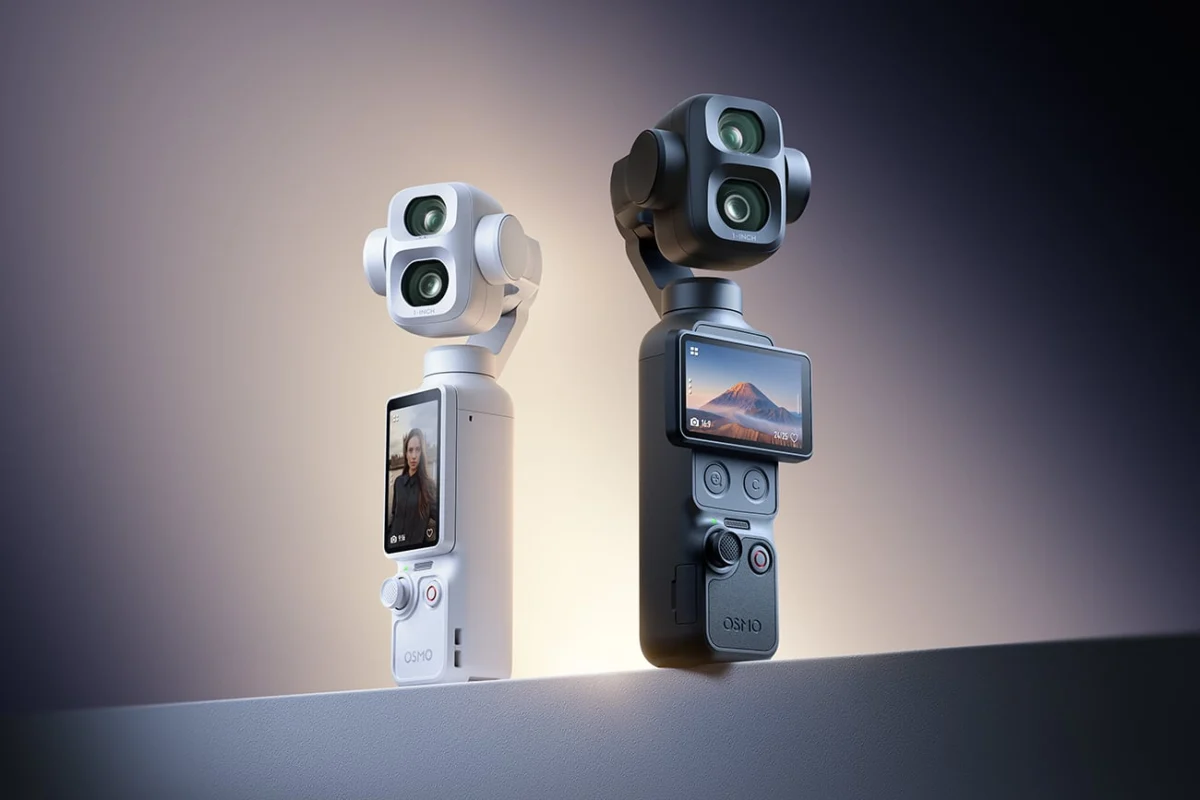
After months of anticipation and an initial exclusive launch in China, DJI, the world leader in drone and camera technology, has officially made its latest innovation, the Osmo Pocket 4P, available in France. This marks a significant milestone for the company, introducing its first-ever dual-lens pocket camera to the European market, starting at a competitive price of 599 euros. The launch underscores DJI’s commitment to pushing the boundaries of compact cinematography, offering content creators a powerful tool that blends portability with advanced imaging performance.
A Legacy of Innovation: The Evolution of the Osmo Pocket Series
DJI first pioneered the stabilized pocket camera category in 2018 with the original Osmo Pocket. This revolutionary device redefined on-the-go content creation by integrating a miniaturized three-axis mechanical gimbal with a high-quality camera, all within a remarkably compact form factor. It quickly became a favorite among vloggers, travelers, and casual users seeking professional-grade stabilization without the bulk of traditional camera setups. Over the past eight years, DJI has consistently refined the series, with subsequent iterations like the Osmo Pocket 2, Pocket 3, and Pocket 4, each introducing enhanced sensors, improved audio, and more sophisticated software features.
The Osmo Pocket 4P represents a pivotal step in this evolution. For the first time, DJI has integrated two distinct lenses onto a single gimbal, offering unprecedented versatility in a device that still comfortably fits in the palm of one’s hand. This dual-lens configuration—featuring both a wide-angle and a telephoto objective—addresses a critical need for creators who require varied perspectives without having to switch cameras or rely on digital zoom that often compromises image quality. The strategic addition of a telephoto lens alongside a wide-angle primary sensor empowers users to capture a broader range of shots, from expansive landscapes and group scenes to detailed close-ups and dynamic action sequences, all with the renowned stability of DJI’s gimbal technology.
Unpacking the Osmo Pocket 4P: A Deep Dive into Technical Prowess
At the heart of the Osmo Pocket 4P’s imaging capabilities lies its sophisticated dual-camera system. The primary lens boasts a robust 1-inch CMOS sensor, a significant upgrade that promises superior image quality, particularly in challenging lighting conditions. This sensor is paired with a 20mm equivalent wide-angle lens featuring a bright f/2.0 aperture, ideal for capturing broad vistas and immersive perspectives. A standout feature of this primary sensor is its incorporation of LOFIC (Lateral Overflow Integration Capacitor) technology, which DJI claims delivers an impressive 17 stops of dynamic range.
Dynamic range, in photographic terms, refers to the spectrum of light intensities a camera can capture, from the deepest shadows to the brightest highlights, without losing detail (i.e., "crushing" blacks or "blowing out" whites). A 17-stop dynamic range is exceptionally high for a camera of this size, rivaling professional-grade cinema cameras. This capability ensures that footage maintains rich detail across varied lighting, making it invaluable for shooting in high-contrast environments such as bright outdoor scenes with deep shadows or interiors with strong backlighting. The result is footage that offers greater flexibility in post-production color grading and an overall more cinematic look.
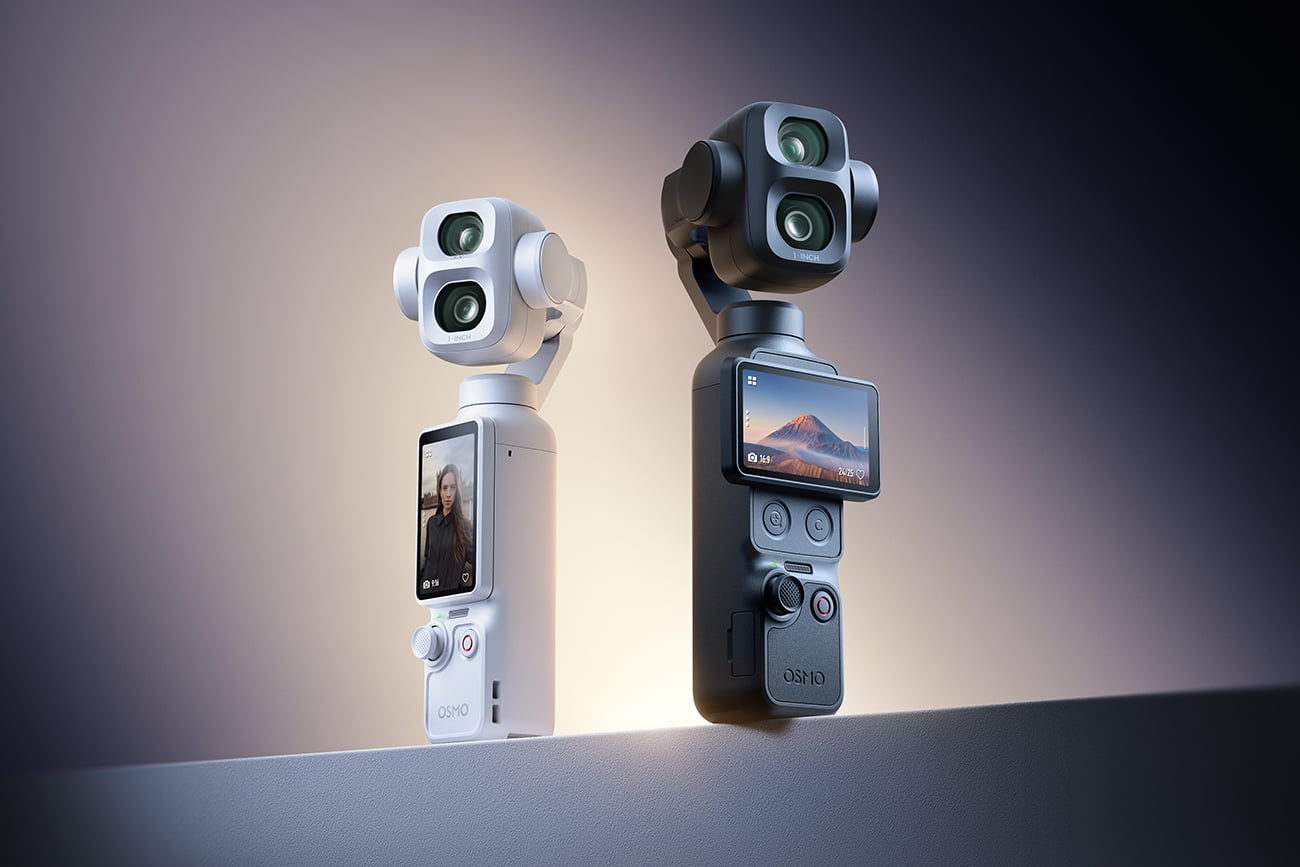
Complementing the wide-angle primary lens is the second module: a telephoto lens with a 60mm equivalent focal length and an f/1.8 aperture. This lens offers a 3x optical zoom, which can be extended up to 12x through digital magnification. The telephoto module is built around a slightly smaller 1/1.28-inch sensor, providing up to 14 stops of dynamic range. While slightly less than the primary sensor, 14 stops is still highly respectable and ensures excellent performance for zoomed-in shots. It is important for users to note that the image characteristics, particularly dynamic range, will subtly differ between the two lenses, requiring a nuanced approach during shooting and editing to maintain a consistent aesthetic if desired.
Advanced Video and Photography Capabilities
Beyond its innovative dual-lens system, the Osmo Pocket 4P is a formidable video production tool. It supports 4K video recording at an impressive 240 frames per second (fps). This high frame rate is crucial for capturing incredibly smooth slow-motion footage, allowing creators to add dramatic flair to action shots or highlight subtle movements with exceptional clarity. The camera’s ability to record in 4K 240p is a key differentiator, offering a level of slow-motion detail that is highly sought after in professional and semi-professional video production.
The camera also introduces DJI’s new D-Log 2 color profile, a 10-bit logarithmic gamma curve designed specifically for post-production color grading. Shooting in D-Log 2 provides a flat, desaturated image that preserves maximum detail and dynamic range, giving colorists immense latitude to manipulate colors, exposure, and contrast to achieve a desired look. This feature positions the Osmo Pocket 4P not just as a casual camera but as a serious contender for creators who incorporate professional-grade workflows. For still photography, the Osmo Pocket 4P is capable of capturing images up to 37 megapixels, delivering high-resolution stills suitable for various applications, from social media to print.
Weighing in at a mere 230 grams, the Osmo Pocket 4P remains true to its "pocket" moniker, emphasizing portability without sacrificing power. Its battery performance is equally impressive, capable of charging from 0 to 80% in just 18 minutes, providing approximately 210 minutes (3.5 hours) of continuous recording time. This rapid charging and extended battery life ensure that creators can capture moments without frequent interruptions, making it ideal for extended shoots or travel.
Pricing and Availability in France
In France, the DJI Osmo Pocket 4P is offered in two distinct packages to cater to different user needs and budgets:
- Standard Version: Priced at 599 euros, this pack includes the essential camera unit and basic accessories, perfect for users who prioritize the core functionality and dual-lens system.
- Vlog Version: Available for 689 euros, this enhanced pack is tailored for dedicated content creators and vloggers. It typically includes additional accessories such as a wider array of mounts, an external microphone adapter, and potentially a battery handle or an expanded storage card, offering greater flexibility and convenience for advanced production needs. This tiered pricing strategy allows DJI to address a broader segment of the market, from enthusiasts to semi-professionals.
The Competitive Arena: Osmo Pocket 4P vs. Its Rivals

The launch of the Osmo Pocket 4P intensifies competition within the compact camera market, particularly against its single-lens predecessor, the Osmo Pocket 4, and direct dual-lens rival, the Insta360 Luna Ultra.
Osmo Pocket 4P vs. Osmo Pocket 4:
The most immediate comparison is with DJI’s own Osmo Pocket 4, released just a few months prior. The Osmo Pocket 4, starting at 479 euros, features a single lens and offers up to 14 stops of dynamic range. For an additional 120 euros at the entry level, the Osmo Pocket 4P provides the significant advantages of the telephoto lens, an increased 17 stops of dynamic range on its primary sensor, and the D-Log 2 color profile. This makes the 4P a compelling upgrade for users who value enhanced versatility in framing, superior image quality in challenging light, and greater control in post-production, justifying the higher price point for a more professional-grade output.
Osmo Pocket 4P vs. Insta360 Luna Ultra:
The Insta360 Luna Ultra, priced at 729 euros, emerges as the Osmo Pocket 4P’s most direct competitor in the dual-lens pocket camera segment. The Luna Ultra distinguishes itself with a primary 1-inch sensor co-engineered with Leica, capable of recording in 8K resolution, and features a detachable OLED screen for enhanced modularity. While the Luna Ultra boasts higher resolution, the Osmo Pocket 4P counters with its exceptional 4K 240p slow-motion capabilities and DJI’s well-established, industry-leading mechanical stabilization system.
The choice between these two advanced cameras hinges on a user’s specific priorities. Creators prioritizing maximum resolution and modularity, particularly those who might integrate the 8K footage into larger productions or require the flexibility of a detachable screen, might lean towards the Insta360 Luna Ultra. Conversely, those who prioritize buttery-smooth 4K slow-motion, superior dynamic range, and the proven reliability of DJI’s mechanical gimbal stabilization, alongside its expansive ecosystem of accessories, will find the Osmo Pocket 4P more appealing. This head-to-head battle highlights the dynamic innovation occurring in the compact camera space, pushing manufacturers to offer increasingly specialized features.
Broader Market Impact and Implications
The introduction of the Osmo Pocket 4P signifies several key trends in the consumer electronics and content creation industries.
- Professionalization of Compact Cameras: DJI’s continuous innovation, particularly with features like dual lenses, 17-stop dynamic range, and D-Log 2, blurs the lines between professional cinema cameras and highly portable consumer devices. This empowers a new generation of content creators—from YouTubers and TikTokers to independent filmmakers—to produce high-quality, cinematic content without the need for cumbersome and expensive traditional equipment.
- Demand for Versatility: The dual-lens system directly addresses the creator’s need for versatile framing options. In fast-paced shooting environments, the ability to switch between wide-angle and telephoto perspectives instantaneously without changing lenses or cameras is a significant workflow advantage. This versatility is crucial for capturing diverse content, from travel vlogs to action sports.
- Ecosystem Advantage: DJI’s robust ecosystem of accessories, software, and drone technology provides a significant advantage. Users invested in DJI products often benefit from seamless integration and a consistent user experience across different devices, enhancing the overall value proposition of the Osmo Pocket 4P. This ecosystem appeal is a powerful factor in customer loyalty and market dominance.
- Competitive Pressure: The intense competition with brands like Insta360 drives innovation across the board. Consumers ultimately benefit from this rivalry, as manufacturers are compelled to offer more advanced features, better performance, and competitive pricing to capture market share. This ongoing "duel of the dual-sensor pocket cameras" will undoubtedly lead to further advancements in stabilization, image quality, and user experience.
Conclusion: A New Horizon for Content Creation
The DJI Osmo Pocket 4P is more than just another camera; it represents a significant leap forward in the realm of ultra-portable, stabilized imaging. By integrating a dual-lens system, advanced sensor technology, and professional-grade video capabilities into a pocket-sized device, DJI has delivered a powerful tool for creators. Its launch in France at a starting price of 599 euros makes high-end cinematic features more accessible to a broader audience. For vloggers, travelers, and anyone passionate about capturing high-quality video and photos with unparalleled stability and versatility, the Osmo Pocket 4P stands as a compelling choice, poised to redefine expectations for what a compact camera can achieve. The future of content creation, characterized by flexibility, quality, and portability, is undeniably here.