admin
admin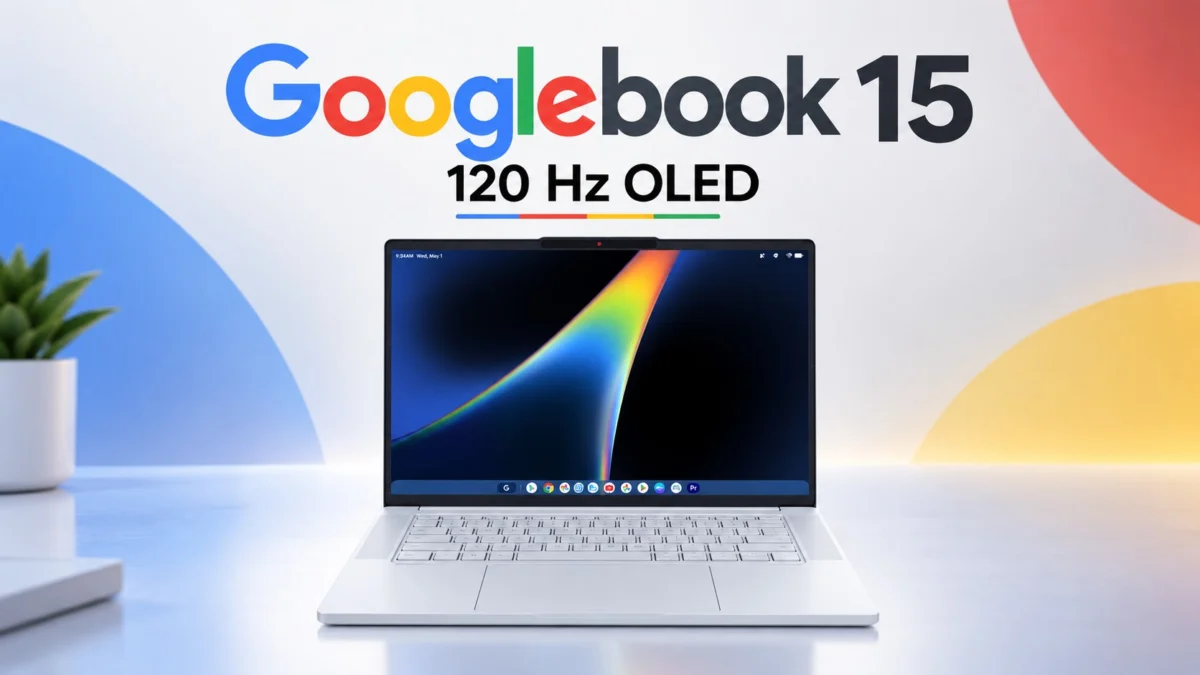
The portable computing landscape is witnessing a significant shift as leaked details regarding the Lenovo Googlebook 15 emerge, signaling a departure from the traditional budget-oriented Chromebook market toward a high-performance, premium ecosystem. According to internal product sheets and high-resolution images obtained by Mac Observer, Lenovo is preparing to launch a flagship device identified by the model number GB 15IPH12. This device is not merely an incremental update to the existing Chromebook line but appears to be the vanguard of a new category of "Googlebooks" designed to compete directly with high-end Windows ultrabooks and Apple’s MacBook Air series. The leaked specifications suggest a focus on high-fidelity displays, next-generation Intel silicon, and deep integration with Google’s Gemini artificial intelligence, marking a new era for the ChromeOS platform.
Technical Specifications and Internal Architecture
At the heart of the Lenovo Googlebook 15 lies the Intel Core Ultra 5 325 processor. This choice of silicon is noteworthy as it belongs to Intel’s latest architecture, emphasizing power efficiency and localized AI processing. The processor features integrated graphics powered by four Xe cores, which should provide a substantial leap in graphical performance compared to the UHD or Iris Xe graphics found in previous generations of ChromeOS devices. Perhaps most intriguing is the association of the "IPH" platform code with Intel’s Panther Lake-H platform in Lenovo’s internal documentation. If accurate, this suggests that the Googlebook 15 is being developed on a cutting-edge architecture that focuses on high-bandwidth memory and advanced neural processing units (NPUs).

The memory and storage configurations further distance the Googlebook 15 from its predecessors. While the average Chromebook typically offers 4 GB or 8 GB of RAM, Lenovo is reportedly equipping this model with either 16 GB or 32 GB of LPDDR5X memory. This high-speed RAM is essential for maintaining performance during heavy multitasking and for running local AI models through Google’s Gemini interface. Storage options include 256 GB or 512 GB of internal capacity. While these figures are standard in the Windows world, they represent the upper echelon of ChromeOS hardware, where cloud storage has traditionally been the primary focus.
A New Standard for Visual Fidelity: The OLED Display
The most prominent feature of the Lenovo Googlebook 15 is undoubtedly its display. Moving away from the dim, low-resolution LCD panels that characterized early Chromebooks, Lenovo has opted for a 15.3-inch OLED touchscreen. The panel boasts a 2.8K resolution (2880 x 1800), providing a pixel density that ensures crisp text and sharp imagery.
Beyond resolution, the display is engineered for professional-grade color accuracy and fluid motion. It supports a 120 Hz refresh rate, which will significantly enhance the smoothness of the user interface, scrolling, and stylus input. The peak brightness is rated at 500 nits, making it usable in various lighting conditions, including bright office environments. Furthermore, the 100% DCI-P3 color gamut coverage indicates that Lenovo is targeting creative professionals and media consumers who require vibrant and accurate color reproduction. This display configuration places the Googlebook 15 in direct competition with premium devices like the Dell XPS 15 or the MacBook Pro, suggesting that Google and Lenovo believe ChromeOS is ready for more demanding visual tasks.

Design Philosophy and Portability
Despite the large 15.3-inch screen and robust internal hardware, the Lenovo Googlebook 15 maintains a remarkably slim and lightweight profile. The device reportedly weighs only 1.29 kg (approximately 2.84 lbs). Achieving this weight in a 15-inch form factor is a significant engineering feat, likely involving the use of lightweight magnesium alloys or advanced carbon fiber composites in the chassis.
The physical design includes a modern, minimalist aesthetic with a light silver finish. One of the more unique design elements revealed in the leak is the "Glowbar." This multicolor LED strip, situated near the hinge, serves as a functional status indicator. Users can determine battery levels and charging status at a glance without needing to open the lid or check the software interface. This hardware-level integration of status monitoring reflects a design philosophy focused on user convenience and "glanceable" information.
Connectivity and Peripheral Support
In terms of I/O (input/output), the Googlebook 15 does not compromise. It features dual Thunderbolt 4 ports, which is a rarity in the ChromeOS ecosystem. Thunderbolt 4 support allows for high-speed data transfer, dual 4K monitor outputs, and universal charging. The inclusion of a traditional USB-A port, an HDMI 2.0 port, and a 3.5mm audio jack ensures compatibility with existing peripherals without the need for excessive adapters.

Wireless connectivity is equally forward-looking, with support for WiFi 7 and Bluetooth 5.4. WiFi 7 (802.11be) offers significantly lower latency and higher throughput compared to WiFi 6E, which is particularly beneficial for cloud-based applications and Google’s suite of web-based productivity tools. The inclusion of these standards suggests that the Googlebook 15 is intended to be a "future-proof" investment for enterprise and educational users.
The AI Frontier: Gemini Integration and the "G" Key
The branding of the device as a "Googlebook" rather than a "Chromebook" appears to be tied to its deep integration with Google’s AI ecosystem. The laptop features built-in Gemini Intelligence, which is expected to assist users with document drafting, data analysis, and creative workflows directly within the operating system. To facilitate this, the keyboard includes a dedicated Google "G" key, which likely serves as a shortcut to trigger AI assistants or a centralized Google search and command hub.
Security and ecosystem synergy are also prioritized. The device supports both fingerprint authentication and Google facial authentication, providing biometric security options that align with modern enterprise standards. Furthermore, enhanced Android phone synchronization allows for a seamless transition between mobile and desktop environments, including shared clipboards, notification mirroring, and easy file transfers through Nearby Share (now Quick Share).

Historical Context and Market Evolution
To understand the significance of the Googlebook 15, one must look at the history of Google’s hardware ventures. In 2013, Google released the Chromebook Pixel, an expensive, high-end machine that felt out of place in a market dominated by $200 educational laptops. This was followed by the Pixelbook and Pixelbook Go, which attempted to refine the idea of a "premium" ChromeOS experience. However, Google eventually retreated from first-party laptop manufacturing to focus on the software ecosystem.
The emergence of the Lenovo Googlebook 15 suggests that Google is now working more closely with key manufacturing partners to revive the premium segment under a new branding strategy. By leveraging Lenovo’s supply chain and engineering prowess, Google can push the boundaries of what ChromeOS can do without the risks associated with first-party hardware production. This move also aligns with the "Chromebook Plus" initiative launched recently, which sets minimum hardware requirements for devices to ensure a consistent, high-quality user experience. The Googlebook 15 appears to be the logical evolution of this trend—a device that doesn’t just meet the "Plus" standards but exceeds them significantly.
Potential Impact and Analysis of Implications
The introduction of the Googlebook 15 carries several implications for the broader laptop market. First, it challenges the perception of ChromeOS as a "browser-only" operating system. With 32 GB of RAM and a Core Ultra 5 processor, this machine is capable of handling local Linux applications, professional photo editing via web-based tools like Photopea or Adobe’s web-based Photoshop, and even moderate video editing.

Second, it puts pressure on Microsoft and its partners. The "AI PC" is the current buzzword in the Windows ecosystem, but Google has a distinct advantage with its tightly integrated suite of Workspace apps and the Gemini AI. If Lenovo can offer a smoother, more secure, and more "connected" experience than a similarly priced Windows laptop, it may capture a significant portion of the prosumer and executive market.
Third, the battery life performance will be a critical metric. Lenovo’s testing suggests up to 11 hours of operation from the 70Wh battery. While this is respectable, it will be compared against the MacBook Air, which often achieves 15-18 hours in real-world usage. The efficiency of the Intel Core Ultra 5 325 and the power draw of the OLED panel will be the deciding factors in whether this device can truly compete as a mobile workhorse.
Conclusion and Expected Availability
While pricing and specific release dates have not yet been officially disclosed, the level of detail in the leaked product sheets suggests that an announcement could be imminent. Historically, Lenovo often utilizes major trade shows like CES or IFA to debut new flagship hardware. Given the "2026/09" timestamp seen in some associated leak data, there is a possibility that this device is part of a longer-term roadmap for late 2025 or early 2026, or the date could simply be a placeholder for a 2025 rollout.

The Lenovo Googlebook 15 represents a bold bet on the future of cloud-centric computing. By combining "overkill" hardware with a sophisticated OLED display and deep AI integration, Lenovo and Google are attempting to redefine what a laptop can be when it is unburdened by the legacy bloat of traditional desktop operating systems. As the line between local and cloud processing continues to blur, the Googlebook 15 may well be the device that finally takes ChromeOS from the classroom to the boardroom.