Sisilia Frederika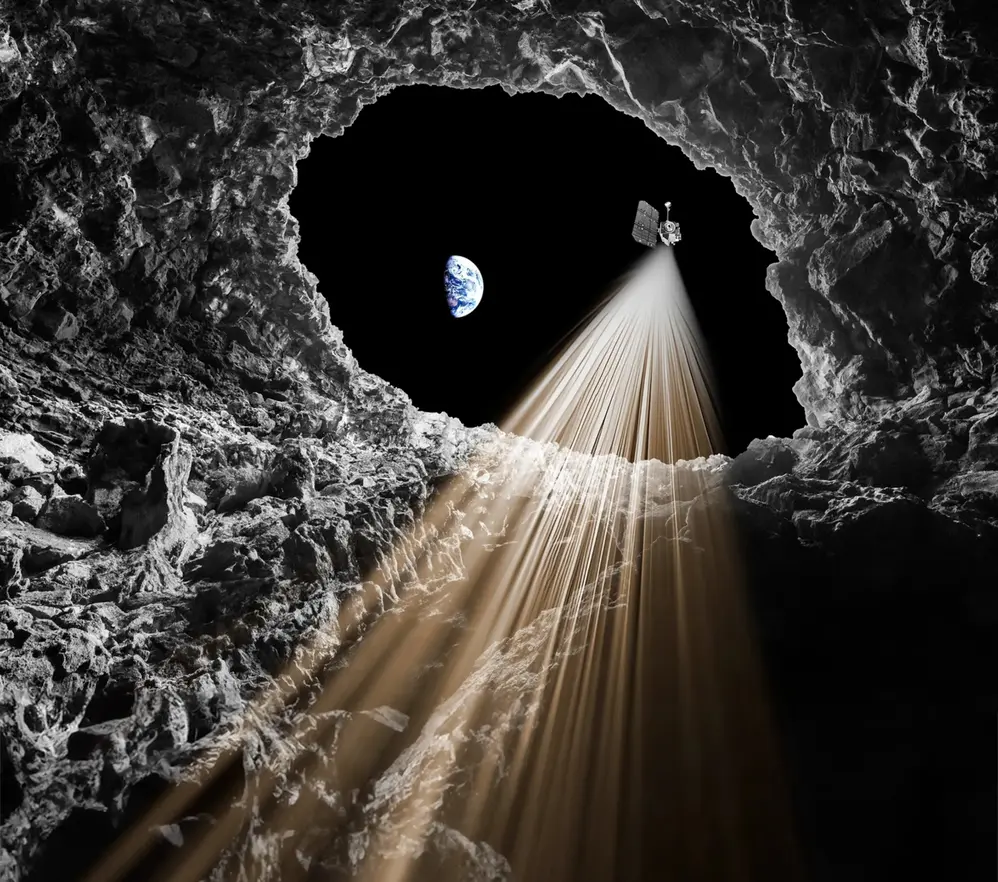
The National Aeronautics and Space Administration (NASA) has officially moved forward with a specialized robotic mission designed to probe the subsurface mysteries of the Moon, a critical step in the agency’s overarching Artemis Program. Known as the Geophysical Instruments for Marius Lunar pit Investigation (GIMLI), the mission is spearheaded by the Planetary Science Institute (PSI) and aims to determine whether lunar "skylights"—large, naturally occurring holes in the lunar surface—lead to expansive, stable lava tubes. These underground voids are increasingly viewed by mission planners as the most viable locations for long-term human habitation, offering natural protection against the Moon’s hostile environment.
The Artemis Program represents the first concerted effort since the Apollo era to return humans to the lunar surface. However, unlike the short-duration sorties of the 1960s and 70s, Artemis is designed to establish a "sustained program of lunar exploration and development." To achieve this, NASA must solve the problem of environmental exposure. The lunar surface is bombarded by high-energy cosmic radiation, solar flares, and a constant rain of micrometeorites. Furthermore, surface temperatures fluctuate wildly, swinging from 127 degrees Celsius (260 degrees Fahrenheit) in the sun to minus 173 degrees Celsius (minus 280 degrees Fahrenheit) in the shade. Subsurface caves, formed billions of years ago by volcanic activity, could provide a thermally stable environment and a thick layer of regolith shielding for future astronauts.
The GIMLI Mission and Technical Framework
The GIMLI mission is a collaborative effort led by PSI Associate Director and Senior Scientist Than Putzig. The project was selected under NASA’s Payloads and Research Investigations on the Surface of the Moon (PRISM) program, which funds high-priority science investigations to be delivered to the lunar surface via the Commercial Lunar Payload Services (CLPS) initiative. Under the CLPS model, NASA contracts private aerospace companies to provide the lander and rover elements, allowing the agency to focus on the scientific instrumentation.
GIMLI will utilize a sophisticated suite of geophysical tools to "see" beneath the lunar crust. Key instruments include ground-penetrating radar (GPR), seismic sensors, a gravimeter, and high-resolution cameras. This multi-modal approach is designed to overcome the limitations of orbital imagery, which can identify pits but cannot confirm the extent or stability of the caverns that may lie beneath them.
Than Putzig emphasized the historical significance of the mission’s methodology, noting that the use of active-source seismic methods has been largely dormant in planetary science since the Apollo missions. "It’s long been a desire of mine to reintroduce intentional active-source seismic methods to planetary science, as it has essentially not been done since the Apollo astronauts conducted the first seismic surveys on the Moon," Putzig stated. By combining these seismic waves with gravity measurements and radar, the team expects to map the subsurface properties of the Marius Hills region with unprecedented accuracy.
The Significance of the Marius Hills Pit
The primary target for GIMLI is the Marius Hills Pit (MHP), located within the Oceanus Procellarum, the largest of the Moon’s "seas" or maria. The Marius Hills region is one of the most volcanically diverse areas on the Moon, characterized by a high density of volcanic domes and sinuous rilles—long, narrow channels that resemble dry riverbeds. These rilles are believed to be the remnants of collapsed lava tubes.
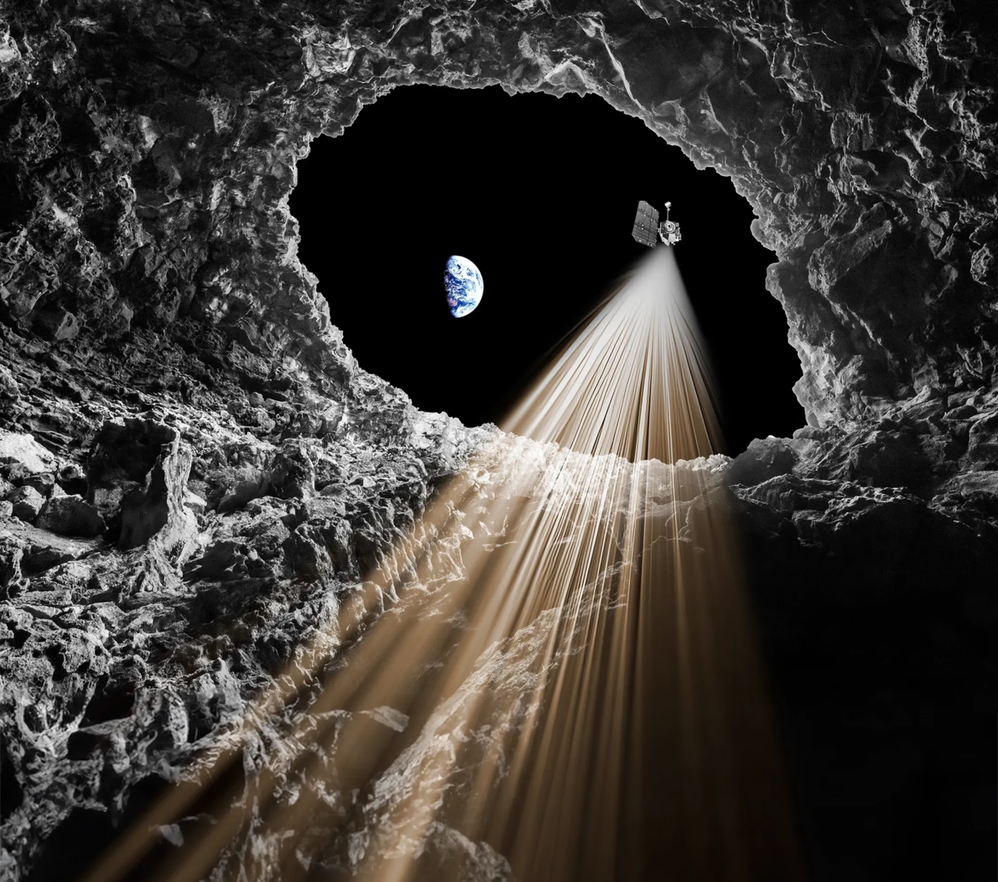
The Marius Hills Pit was first identified in 2009 by the Japanese SELENE (Kaguya) spacecraft and later confirmed by NASA’s Lunar Reconnaissance Orbiter (LRO). It is a near-vertical hole approximately 65 meters (213 feet) across and estimated to be 80 to 90 meters (260 to 295 feet) deep. Researchers theorize that this "skylight" formed when a section of a lava tube roof collapsed, potentially exposing a cavern system that could stretch for kilometers.
Geologically, these features are remnants of the Moon’s active past, roughly 3.8 to 3 billion years ago. During this period, massive basaltic eruptions flooded the lunar basins. As the surface of a lava flow cooled and hardened, the molten rock beneath continued to flow. When the eruption ceased, the liquid lava drained out, leaving behind a hollow tube. On Earth, similar features are found in volcanic regions like Hawaii, Iceland, and the Canary Islands. However, due to the Moon’s lower gravity (one-sixth that of Earth), lunar lava tubes are theorized to be significantly larger—potentially wide enough to house entire cities.
Strategic Partnerships and Logistics
The GIMLI mission reflects the increasingly international and commercial nature of modern space exploration. While the mission is led by the Arizona-based Planetary Science Institute, it involves a critical partnership with the Norwegian Space Agency. On the industrial side, Honeybee Robotics, a firm known for its specialized planetary sampling and drilling equipment, will be responsible for creating a significant portion of the robot’s instrumentation.
Amanda Hendrix, PSI Director and CEO, highlighted the ambitious nature of the project. "Than and his team are taking a scientific question we’ve been studying from orbit and have developed a way to investigate it directly on the Moon," Hendrix said. She noted that the partnership with NASA and Honeybee Robotics is essential for transitioning from theoretical orbital observations to direct on-site verification.
The mission will rely on the CLPS program for delivery. Since its inception, CLPS has been a cornerstone of NASA’s strategy to foster a lunar economy. By purchasing delivery services as a customer, NASA encourages private sector innovation. For GIMLI, this means the instruments will likely be integrated into a commercial lander, which will perform the precision landing required to place the sensors near the edge of the Marius Hills Pit.
Scientific and Practical Implications
The confirmation of a substantial lava tube at the Marius Hills site would have profound implications for both planetary science and human exploration. From a scientific perspective, the walls of the pit represent a vertical "history book" of lunar volcanism. Orbiters can only see the top layer of the regolith, but the exposed layers in a pit wall reveal a chronology of lava flows and periods of volcanic quiescence.
Gareth Morgan, a PSI Senior Scientist and the Deputy Principal Investigator of GIMLI, explained that identifying these tubes allows scientists to apply "terrestrial analogs" to the Moon. "Lava tubes are a common feature of basaltic volcanism on Earth, so identifying them on the Moon means we could use knowledge of such terrestrial caves to better understand lunar history," Morgan said. This comparative study helps researchers understand how the cooling rates, viscosity, and chemical composition of lunar lava differed from that of Earth.
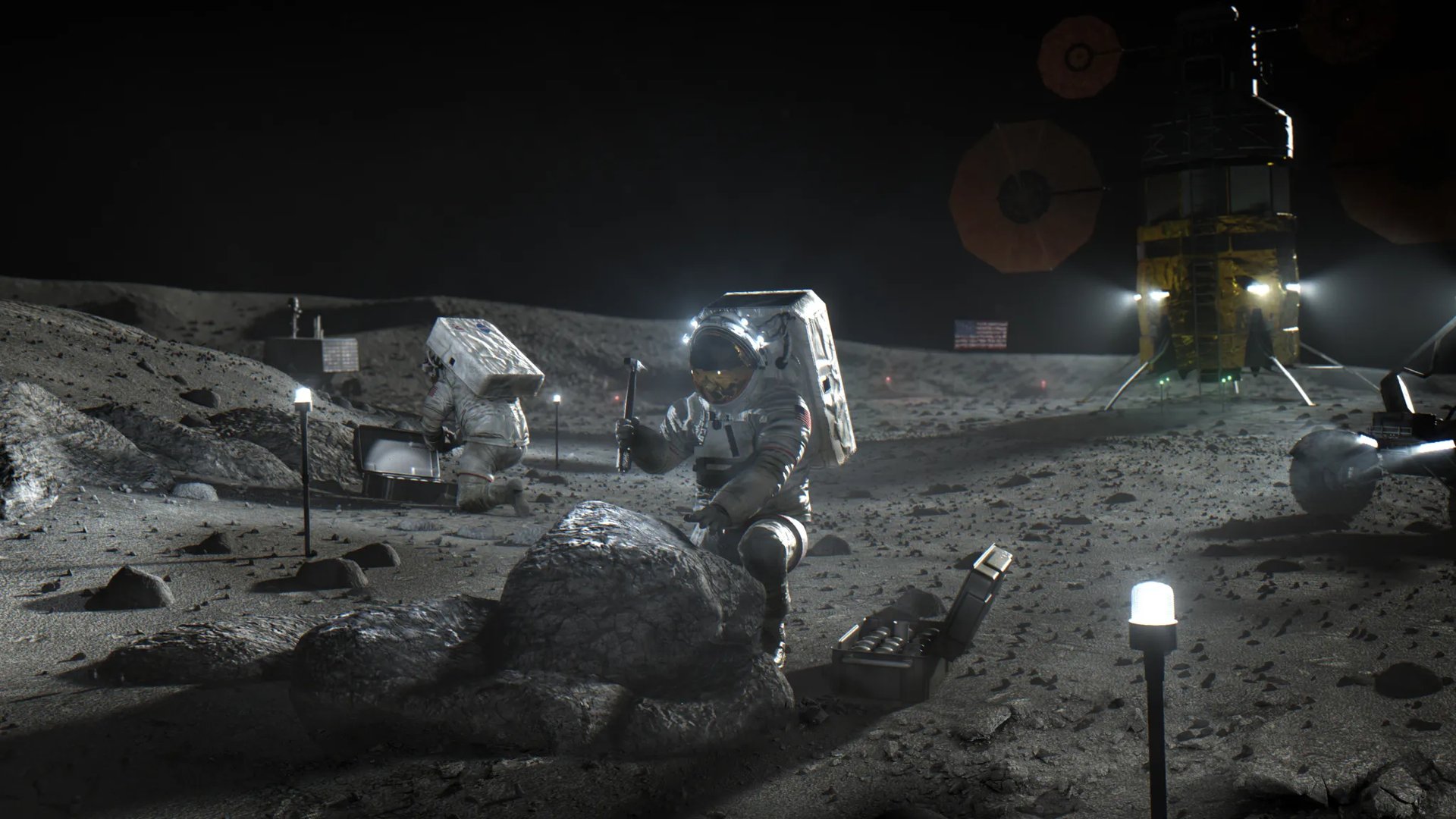
Beyond the science, the practical applications for the Artemis Program are immense. If GIMLI confirms that the Marius Hills Pit leads to a stable, expansive void, it would jumpstart plans for "sublunar" bases. Utilizing these natural structures would drastically reduce the mass of building materials that need to be transported from Earth. Instead of hauling heavy radiation shielding, engineers could focus on sealing and pressurizing segments of the lava tube or placing modular habitats within them.
Chronology of Lunar Pit Exploration
The journey to the GIMLI mission has been a decades-long progression of orbital discovery:
- 1960s-1970s: Lunar Orbiter and Apollo missions identify sinuous rilles, leading to the first theories about lunar lava tubes.
- 2009: The Japanese SELENE (Kaguya) mission discovers the first three "pits" on the Moon, including the Marius Hills Pit.
- 2010-2011: NASA’s Lunar Reconnaissance Orbiter (LRO) provides high-resolution imagery of the pits, suggesting they are deeper than they are wide.
- 2014: Analysis of LRO data suggests that the Marius Hills Pit could be an opening to a tube large enough to fit a small city.
- 2023-2024: NASA formalizes the PRISM and CLPS selections, moving GIMLI into the active development phase.
Looking Ahead: The Road to Artemis III and Beyond
As NASA prepares for Artemis II (a crewed flyby of the Moon) and Artemis III (the first crewed landing in over 50 years), the data provided by GIMLI will be instrumental in site selection for later missions. While the initial Artemis landings are targeted for the Lunar South Pole—primarily to investigate water ice in permanently shadowed regions—the volcanic plains of the Moon remain the most logical site for permanent industrial or residential development.
Even if GIMLI discovers that the Marius Hills Pit does not lead to an extensive cave system, the mission will not be considered a failure. The geophysical data collected will still provide the most detailed look at the lunar subsurface ever achieved. It will help scientists understand the thickness of the regolith (the layer of loose, fragmented rock) and the structural integrity of the volcanic plains, data points that are vital for any future construction on the Moon.
The GIMLI mission represents a bridge between pure science and applied engineering. By peering into the dark recesses of the Marius Hills, NASA and its partners are not just looking for clues about the Moon’s past; they are looking for a home for humanity’s future. The success of GIMLI could redefine the architecture of lunar colonization, moving the focus from the surface to the vast, protected corridors hidden beneath the basaltic plains.