Sisilia Frederika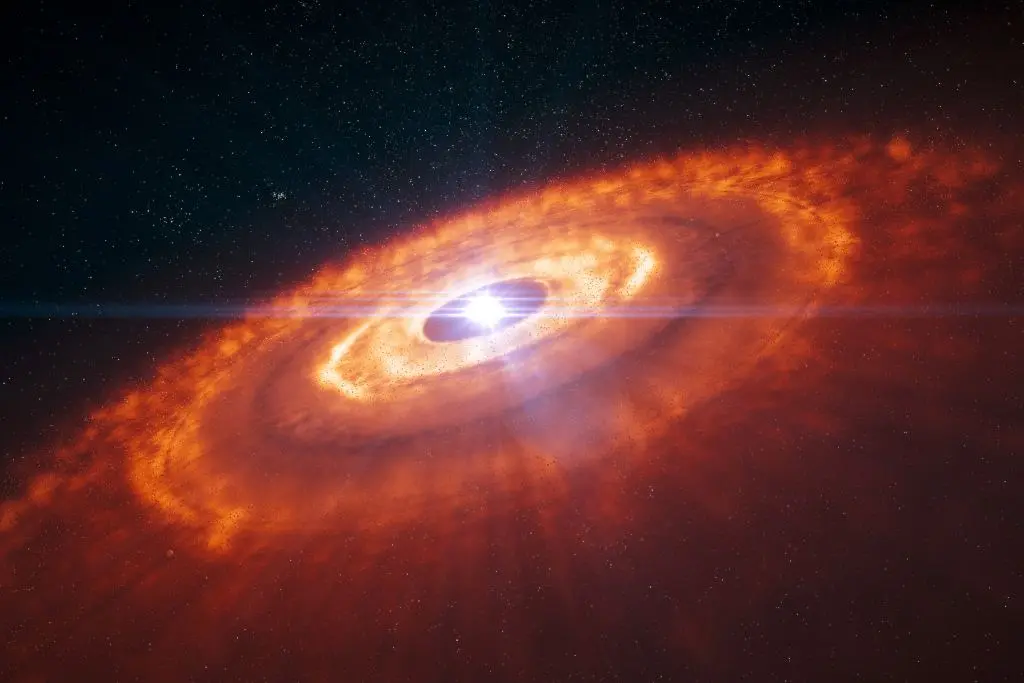
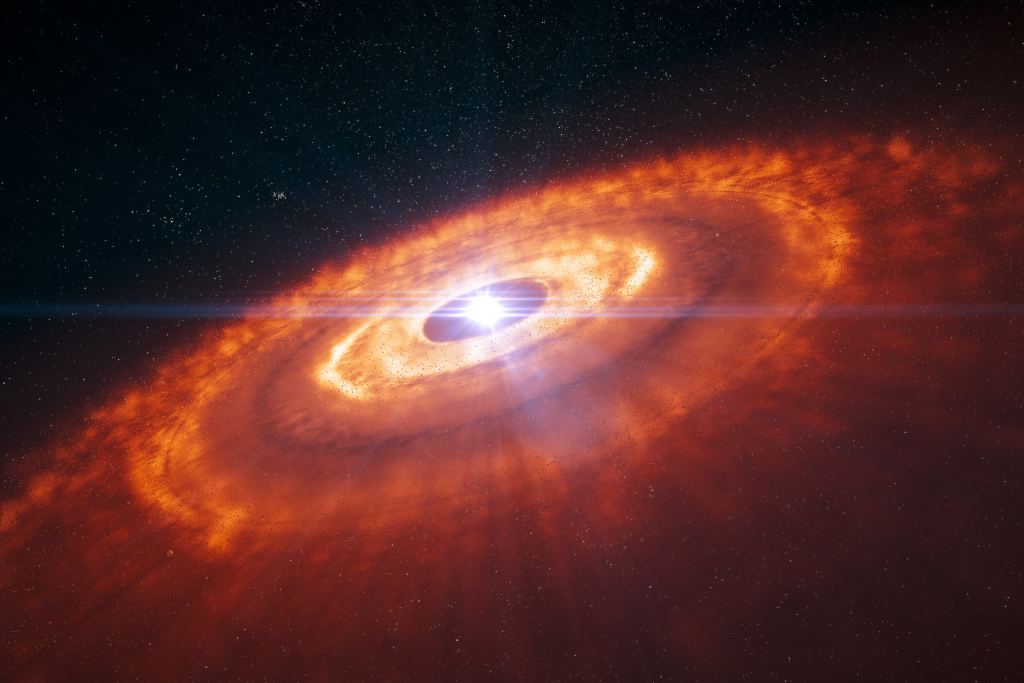
The long-standing debate over the birth of the inner solar system has taken a significant turn as new evidence suggests that Earth and Mars, despite being neighbors, followed remarkably different evolutionary paths. For decades, astronomers have operated under the framework of the Nebula Theory, which posits that our solar system emerged approximately 4.5 billion years ago from a massive, rotating accretion disk of gas and dust surrounding the young Sun. However, the specific mechanics of how cosmic dust transformed into terrestrial worlds have remained a point of contention. Traditionally, two competing theories dominated the discourse: the first suggests planets formed through high-energy collisions between large, mountain-sized rocks known as planetesimals; the second proposes a more gradual "pebble accretion" model, where planetesimals slowly grow by vacuuming up millimeter-to-centimeter-sized pebbles from the surrounding disk.
New research spearheaded by the University of Copenhagen’s Globe Institute provides a potential resolution to this dichotomy. By utilizing a sophisticated chemical analysis of planetary mantles combined with advanced statistical modeling, a team of international researchers has proposed a hybrid model. Their findings, recently published in the journal Nature Astronomy, indicate that while both processes played a role, the "recipe" for Earth was fundamentally different from that of Mars. This discovery not only reshapes our understanding of our own planetary backyard but also provides a vital blueprint for identifying habitable worlds around distant stars.
The Two Pathways of Planetary Genesis
To understand the significance of the Copenhagen study, one must first examine the two primary mechanisms of planet formation that have divided the scientific community. The planetesimal-led model is a "bottom-up" approach characterized by chaos and violence. In this scenario, dust grains clump together to form kilometer-sized bodies. These planetesimals then collide with one another in a series of high-impact events, eventually merging to form protoplanets. This process is relatively slow and involves significant heat generation, which can radically alter the chemical makeup of the resulting body.
Conversely, the pebble accretion model, which has gained significant traction over the last decade, suggests a more efficient growth process. In this version of history, small pebbles are slowed down by gas friction within the protoplanetary disk, allowing them to be easily captured by the gravity of an existing planetesimal. This allows a planet to grow to its final size much faster than through collisions alone. Until now, scientists struggled to determine which of these processes was dominant in the early inner solar system.
The research led by Assistant Professor Haiyang S. Wang and Professor Anders Johansen suggests that the answer is not an "either-or" scenario, but rather a matter of proportion. Their analysis reveals that the inner solar system was a heterogeneous environment where different planets utilized different building blocks based on their location and the timing of their formation.
Chemical Fingerprints: The Role of Volatile Elements
The breakthrough in this study came from a "detective job" involving the chemical composition of the planetary mantles. Because the original evidence of the solar system’s formation has been largely erased by billions of years of geological activity, researchers looked toward "volatile elements"—substances like sodium (Na), potassium (K), and zinc (Zn). These elements are characterized by relatively low boiling points, meaning they evaporate easily when subjected to high temperatures.
"Even after 4.5 billion years, the compositions of Earth’s and Mars’ mantles remain the same," Professor Anders Johansen explained. "You can think of them as an imprint of the formation process."
The team noted that as pebbles travel through the protoplanetary disk toward a growing planet, they are subjected to intense radiation and friction, causing them to lose a portion of their volatile elements. By measuring the specific ratios of these elements in the crust and mantle of Earth and Mars, the researchers could work backward to determine how much of each planet’s mass came from "hot" planetesimal collisions versus "cooler" pebble accretion.
Earth vs. Mars: A Tale of Two Origins
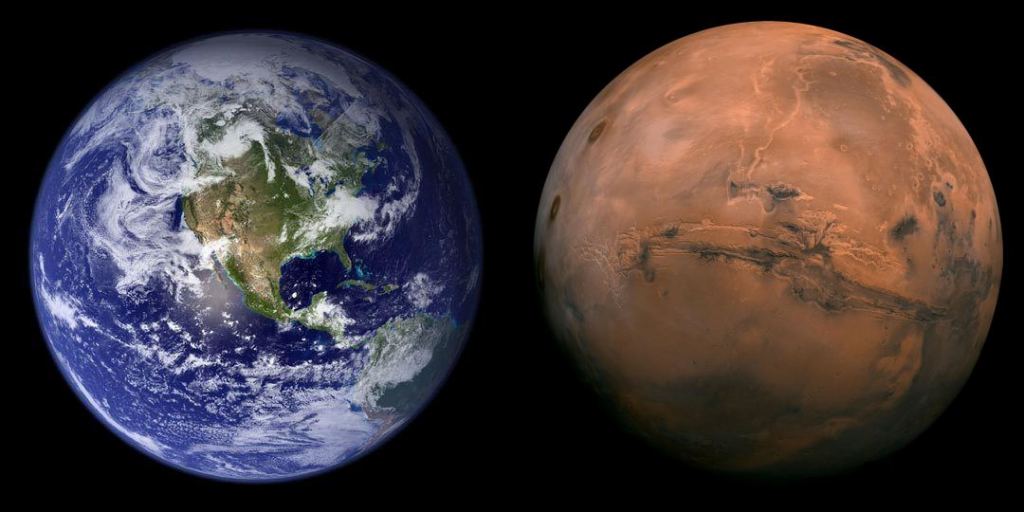
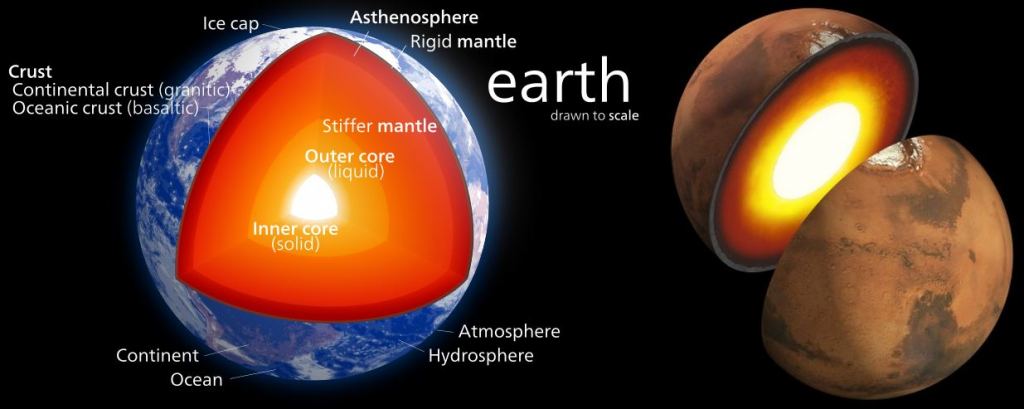
The results of the statistical modeling were unexpected, revealing a stark contrast between the two terrestrial planets. According to the study, Earth’s mass is a product of a pebble-heavy diet. Approximately 75 percent of Earth’s mass appears to have originated from two young protoplanets that grew rapidly through the accretion of pebbles. Only the remaining 25 percent of Earth’s mass is attributed to the impact of planetesimals.
Mars, however, tells a different story. The Red Planet appears to be a "planetesimal-dominated" world. The data suggests that roughly three-quarters (75 percent) of Mars’ mass was formed through the collision of planetesimals, with pebble accretion contributing only about 25 percent.
Assistant Professor Haiyang S. Wang noted the irony of these findings: "The most surprising result was that Earth and Mars appear to have formed in different ways. You might have expected that two planets formed side by side in the same solar system would share a more similar formation history."
This discrepancy suggests that the early solar system was a highly dynamic environment where small changes in orbital distance or local gas density could lead to vastly different evolutionary outcomes. Mars, being further from the Sun and potentially forming in a region with fewer available pebbles or different gravitational influences (such as the presence of a young Jupiter), relied on the more chaotic collision method to reach its final size.
Methodological Rigor and Scientific Constraints
The researchers were careful to acknowledge the complexities and uncertainties inherent in reconstructing events from 4.5 billion years ago. The study’s conclusions rely on several key assumptions. First, the team had to estimate the initial chemical composition of the solar nebula’s accretion disk. Second, they used the asteroid Vesta as a proxy for the chemical makeup of the planetesimal building blocks that formed Mars, given the similarities between the two bodies.
Furthermore, the team addressed the traditional assumption that volatile elements are lost more efficiently during pebble accretion than during giant impacts. While impacts generate immense heat, the prolonged exposure of small pebbles to the disk’s environment provides a different mechanism for volatile depletion. Despite these variables, Wang emphasized that the core conclusion remained robust: "Our analyses consistently indicate that Earth and Mars formed in two different ways. Our method provides a more precise and direct way of understanding planet formation than the more widely used isotope-based approach."
The collaboration involved a prestigious roster of institutions, including the Center for Star and Planet Formation (StarPlan) at the University of Copenhagen, the Institute for Particle Physics and Astrophysics at ETH Zürich, the Nevada Center for Astrophysics (NCfA), and the Lunar and Planetary Laboratory at the University of Arizona. This multi-disciplinary approach allowed the team to cross-reference chemical data with physical models of disk dynamics.
Timeline of the Inner Solar System’s Formation
Based on the study’s findings, a refined timeline of the inner solar system’s first 100 million years begins to emerge:
- 0 to 1 Million Years: The solar nebula collapses, and the Sun ignites. The first planetesimals form in the disk.
- 1 to 10 Million Years: Mars begins its primary growth phase, dominated by collisions with other planetesimals. Simultaneously, two "proto-Earths" begin to grow rapidly via pebble accretion.
- 10 to 30 Million Years: Earth’s precursors reach a significant size, eventually colliding in a "Giant Impact" (often associated with the formation of the Moon) which contributes the final 25% of its mass from planetesimal material.
- 50 to 100 Million Years: The gas in the disk dissipates. The planets reach their final orbits and masses, with their chemical "imprints" locked into their mantles.
Implications for Exoplanets and the Search for Life
The significance of this research extends far beyond our own solar system. One of the most pressing questions in modern astronomy is the "Habitability Question": what makes a planet capable of supporting life? A key factor is the retention of volatile substances, including water and atmospheric gases.
By understanding the formation pathways of rocky planets, scientists can better predict which exoplanets are likely to be "water-rich" or "water-poor." As Johansen noted, "If we understand how planets lose volatile elements during their formation, we can also become better at predicting how much water and other life-supporting substances they ultimately retain."
This research arrives at a pivotal moment for observational astronomy. The Nancy Grace Roman Space Telescope, which recently moved closer to its mission phases, features a Wide Field Instrument with a view 100 times larger than Hubble’s. It will be tasked with surveying millions of stars to find Earth-like exoplanets. Following it in the 2040s, the Habitable Worlds Observatory (HWO) will use advanced direct-imaging techniques to search for chemical signatures of life in the atmospheres of distant worlds.
If Earth’s habitability is a direct result of its 75% pebble-accretion origin, then astronomers can use this chemical "fingerprint" to narrow down the search for a "Second Earth." Conversely, planets that follow the Mars-like planetesimal-heavy path may be less likely to retain the necessary volatile inventory to support long-term biological activity.
A New Era of Planetary Science
The study from the University of Copenhagen represents a shift toward a more nuanced, hybrid understanding of the cosmos. It moves away from "one-size-fits-all" models and acknowledges the diversity of planetary origins even within a single system. As space agencies prepare to deploy the next generation of telescopes, the chemical "detective work" performed on Earth and Mars provides the essential clues needed to solve the mysteries of the wider universe. By looking deep into the chemistry of our own world’s past, we are finding the keys to unlocking the future of interstellar exploration.