Sisilia Frederika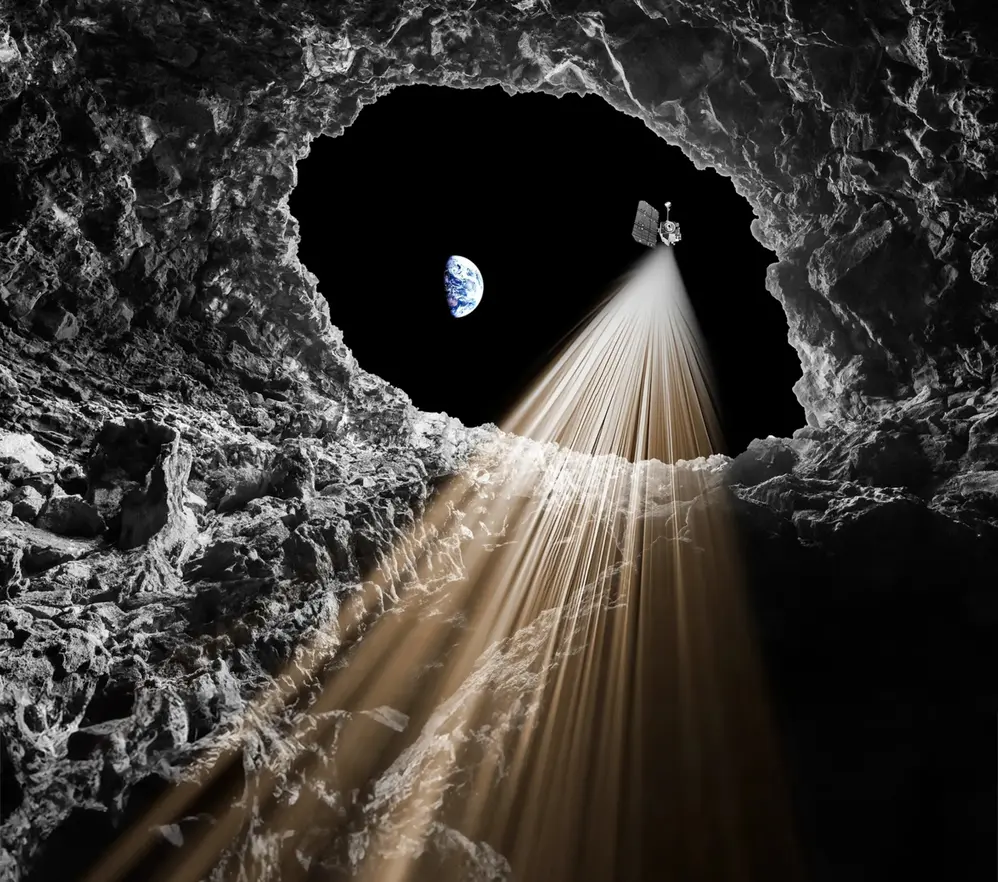
The National Aeronautics and Space Administration (NASA) has officially moved forward with a specialized scientific endeavor designed to probe the depths of the Moon’s volcanic past and pave the way for future human habitation. As part of the broader Artemis Program, which seeks to establish a permanent and sustainable human presence on the lunar surface, the Geophysical Instruments for Marius Lunar pit Investigation (GIMLI) has been selected to explore one of the most intriguing geological features on the lunar nearside: the Marius Hills Pit (MHP). This mission, led by the Planetary Science Institute (PSI), represents a critical step in transitioning from short-term exploration to long-duration lunar residency by investigating the potential for natural underground shelters.
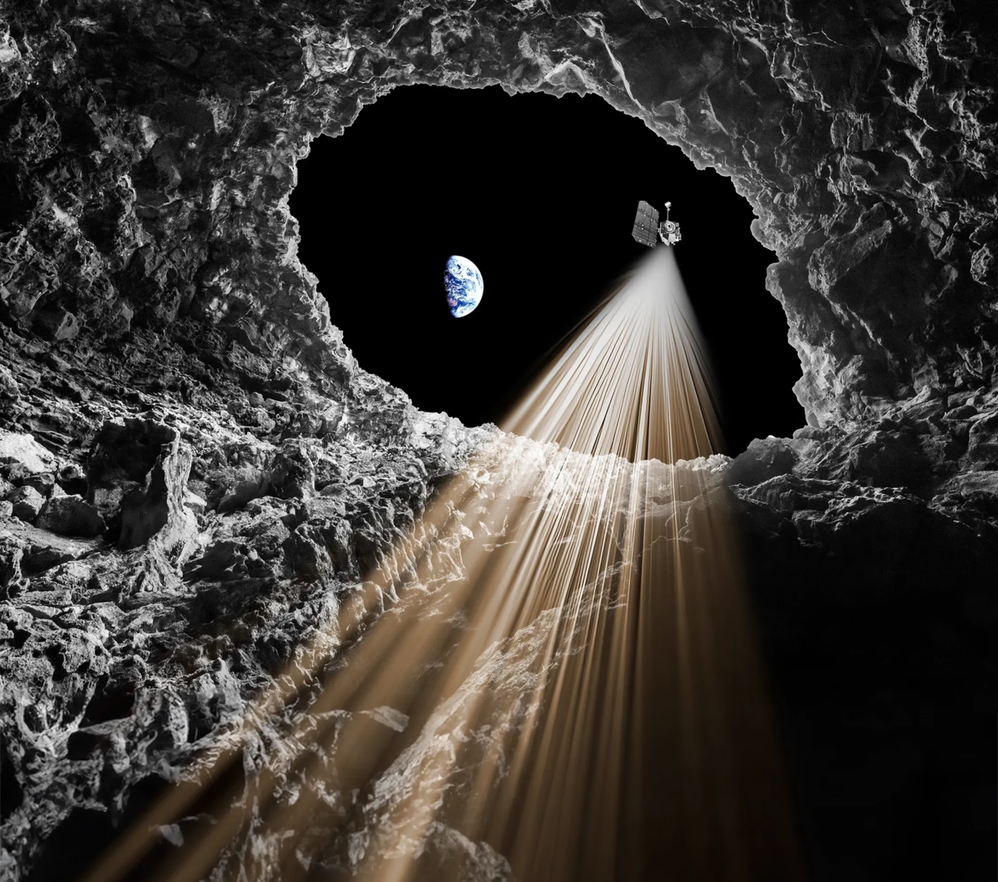
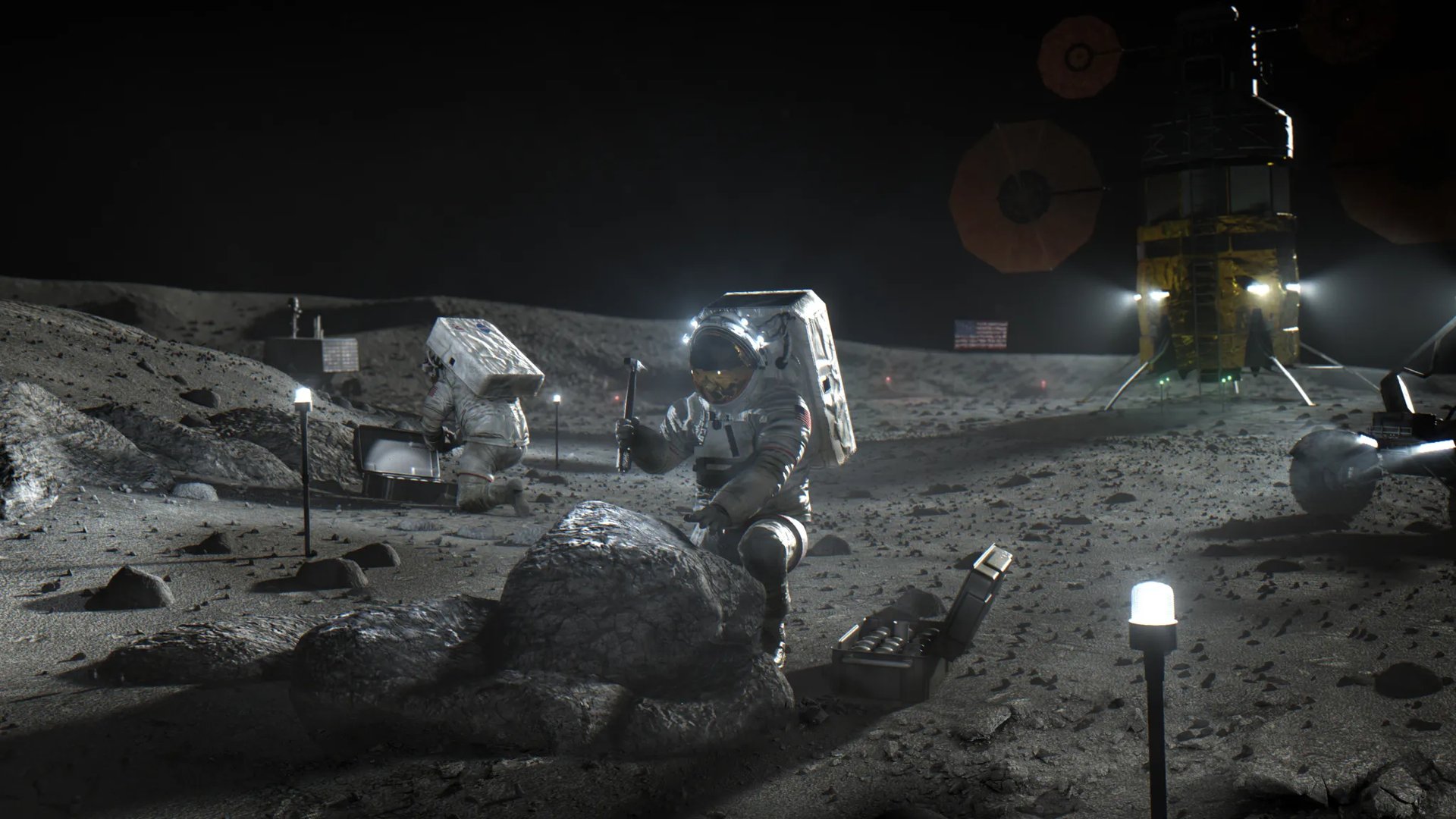
The GIMLI mission is a direct response to the need for "sustained lunar exploration and development," the cornerstone philosophy of the Artemis Era. While previous missions have focused on surface operations and the search for water ice at the lunar South Pole, GIMLI turns its attention to the subsurface. The mission aims to investigate a "skylight"—a collapsed portion of a lunar lava tube—to determine if extensive, stable cave systems exist beneath the Marius Hills region. Such structures could offer astronauts unprecedented protection from the harsh lunar environment, including extreme temperature fluctuations, solar radiation, and micrometeoroid impacts.
The Strategic Importance of the Marius Hills Pit
Located within the Oceanus Procellarum, the Marius Hills region is recognized as one of the most volcanically diverse areas on the Moon. It is characterized by a high concentration of volcanic domes, cones, and sinuous rilles, which are long, narrow depressions believed to be collapsed lava tubes. The Marius Hills Pit itself was first identified in data from the Japanese SELENE (Kaguya) spacecraft and later imaged in high resolution by NASA’s Lunar Reconnaissance Orbiter (LRO).
The pit is approximately 65 meters (213 feet) deep and nearly 100 meters (328 feet) wide. Unlike craters formed by impacts, the MHP is believed to be a volcanic "skylight," created when the ceiling of an ancient lava tube collapsed. Geologists estimate that these tubes formed between 3.8 and 3 billion years ago when the Moon was still geologically active. If the tube remains intact beyond the opening, it could provide a cavernous space large enough to house entire lunar bases, shielded by meters of basaltic rock.
Collaborative Mission Architecture and Funding
The GIMLI mission is a multifaceted international and commercial collaboration. The project is led by Principal Investigator Than Putzig, Associate Director and Senior Scientist at the Planetary Science Institute. PSI, a non-profit organization dedicated to solar system exploration, will oversee the scientific direction and data analysis of the mission.
The technical development of the mission involves several key partners:
- Honeybee Robotics: Known for its expertise in planetary sampling and drilling, Honeybee Robotics will be responsible for creating the specialized robotic equipment and instrumentation required to operate on the rugged terrain of the pit’s edge.
- Norwegian Space Agency: This partnership highlights the international nature of the Artemis Accords, bringing European expertise into the fold of lunar subsurface investigation.
- NASA’s PRISM Program: Funding is provided through the Payloads and Research Investigations on the Surface of the Moon (PRISM) program. PRISM is a NASA initiative designed to solicit high-value science investigations that can be delivered to the Moon via commercial services.
- CLPS Delivery: The mission will reach the lunar surface through the Commercial Lunar Payload Services (CLPS) initiative. Under this model, NASA contracts private companies to provide end-to-end delivery services, including the spacecraft, the lander, and the rover elements.
Amanda Hendrix, PSI Director and CEO, emphasized the mission’s importance, stating that GIMLI represents the ambitious planetary science the institute was built to pursue. She noted that the team is taking questions originally studied from lunar orbit and developing the means to investigate them directly on the surface, marking a significant leap in lunar geophysics.
Advanced Instrumentation and Methodologies
To confirm the existence and dimensions of a lava tube, GIMLI will deploy a suite of sophisticated geophysical instruments. The mission’s primary challenge is to "see" underground without the need for extensive drilling.
- Active-Source Seismic Sensors: In a methodology not utilized since the Apollo 14, 16, and 17 missions, GIMLI will reintroduce active seismic surveys to the Moon. This involves creating controlled vibrations or "shocks" and measuring how the resulting waves travel through the lunar crust. By analyzing these waves, scientists can map the density and structure of the subsurface, identifying hollow voids that would indicate a lava tube.
- Ground-Penetrating Radar (GPR): GPR will send high-frequency radio waves into the ground. When these waves encounter a change in material—such as the transition from solid rock to an empty cavern—they reflect back to the surface. This will provide a high-resolution cross-section of the Marius Hills Pit’s surroundings.
- Gravimetry: A gravimeter will measure minute variations in the Moon’s gravitational field. A large, empty underground space would have less mass than the surrounding solid rock, resulting in a slightly weaker gravitational pull at the surface. By combining gravity data with seismic and radar results, the team can verify the volume of any detected caves.
- High-Resolution Imaging: Multi-angle cameras will capture the stratigraphy of the pit walls. These walls act as a geological record, exposing layers of ancient lava flows and regolith (lunar soil) that have been protected from space weathering for billions of years.
Than Putzig noted that the combination of these three methods—seismic, radar, and gravity—is essential for a comprehensive understanding of the subsurface. He expressed particular excitement about the return to active seismic methods, which provide the most definitive data on structural integrity.
Chronology of Lunar Pit Discovery and Exploration
The journey to GIMLI began decades ago but accelerated with modern orbital technology:
- 1960s-1970s: Apollo missions identify sinuous rilles, leading to the hypothesis that lava tubes exist on the Moon.
- 2009: The Japanese Kaguya mission discovers the Marius Hills Pit, the first confirmed "skylight" on the Moon.
- 2010-Present: NASA’s Lunar Reconnaissance Orbiter (LRO) discovers over 200 similar pits across the lunar surface, many of them in volcanic mare regions.
- 2021: NASA establishes the PRISM program to send science payloads to the Moon more frequently.
- Current Phase: The selection of GIMLI for a future PRISM delivery, with the mission currently in the development and instrument integration phase.
Scientific and Operational Implications
The implications of confirming a large-scale lava tube are profound. Beyond the immediate goal of providing shelter for astronauts, the GIMLI mission addresses fundamental questions about the Moon’s thermal and volcanic history.
Volcanic Evolution:
Gareth Morgan, PSI Senior Scientist and Deputy Principal Investigator of GIMLI, pointed out that lava tubes are common in basaltic volcanism on Earth, such as those found in Hawaii, Iceland, and the Canary Islands. By studying lunar versions, scientists can compare how the Moon’s lower gravity and lack of atmosphere affected the flow and cooling of magma. This data helps refine models of how terrestrial planets evolve over time.
Radiation Shielding and Thermal Stability:
The surface of the Moon is a lethal environment for long-term human survival. Radiation levels are estimated to be 200 to 1,000 times higher than on Earth, and surface temperatures swing from 127°C (260°F) in sunlight to -173°C (-280°F) at night. However, preliminary data suggests that the interior of a lunar pit or lava tube remains relatively constant, likely hovering around -20°C (-4°F). This thermal stability would drastically reduce the energy requirements for heating and cooling a lunar habitat. Furthermore, the thick basaltic "roof" of a lava tube would act as a natural shield against cosmic rays and solar flares.
Preservation of History:
The interiors of these caves are essentially time capsules. Because they are shielded from the "gardening" effect of micrometeoroid impacts and the eroding effects of the solar wind, the surfaces inside a lava tube may look exactly as they did billions of years ago. There is also the remote possibility that these shaded regions could trap volatile compounds, though they are more likely to be found in the permanently shadowed regions (PSRs) of the poles.
Future Outlook and Mission Trajectory
As GIMLI prepares for its launch, it stands as a bridge between the robotic reconnaissance of the past and the crewed missions of the future. If GIMLI confirms that the Marius Hills Pit leads to a stable, expansive cavern, it will likely become a primary candidate for the site of an "Artemis Base Camp" extension.
The mission also serves as a testbed for the CLPS program’s ability to handle complex geophysical payloads. Success would validate the model of using commercial partners to conduct high-stakes science, potentially leading to more ambitious subterranean missions, including the deployment of "pit-bots" or drones designed to fly into the caverns and map them from the inside.
While the primary focus of the Artemis Program remains the lunar South Pole—due to the presence of water ice—the discovery of habitable subsurface voids at lower latitudes like Marius Hills provides NASA with strategic flexibility. It ensures that the "sustained program of lunar exploration" is not limited to a single geographic location, but rather utilizes the diverse geological features of the entire Moon to ensure the safety and longevity of the next generation of explorers.