Sisilia Frederika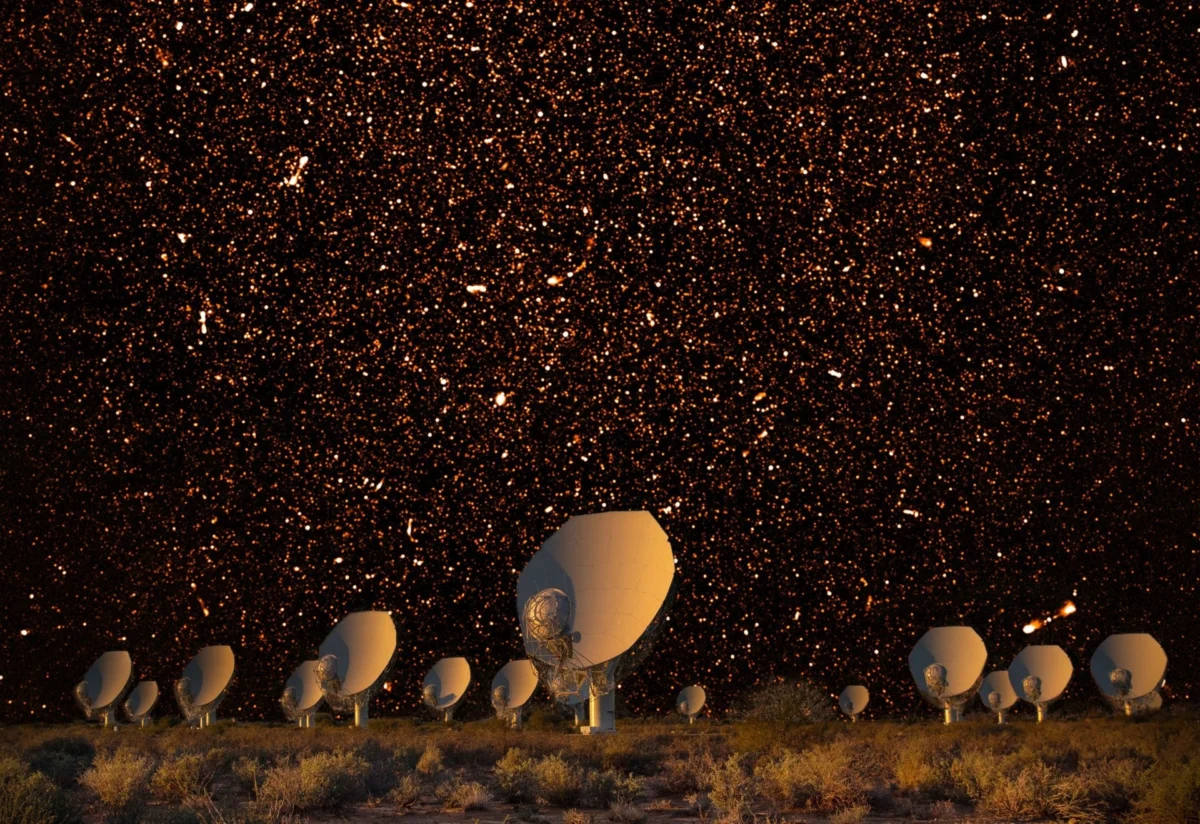
In a landmark achievement for observational cosmology, an international team of astronomers has successfully detected extremely faint radio signals from neutral hydrogen gas located billions of light-years away from Earth using the MeerKAT radio telescope. This breakthrough, led by researchers from the University of Manchester and the University of the Western Cape, represents the first time such a signal has been directly isolated using a single radio observatory without the assistance of cross-correlation data from optical surveys. The findings, recently published in The Astrophysical Journal Letters, validate the efficacy of a technique known as Hydrogen Intensity Mapping (HIM), which is poised to revolutionize our understanding of the large-scale structure of the universe and the mysterious forces driving its expansion.
The MeerKAT array, situated in the remote Northern Cape province of South Africa, consists of 64 high-precision dish antennas. While it was originally designed to study cosmic hydrogen, galaxy evolution, and transient radio sources, this latest discovery underscores its capabilities as a world-leading instrument for deep-space exploration. By capturing the "21-centimeter line"—the specific radio frequency emitted by neutral hydrogen—the team was able to peer back into cosmic history, detecting gas as it existed when the universe was significantly younger than it is today.
The Science of Hydrogen Intensity Mapping
To understand the significance of this detection, one must look at the nature of neutral hydrogen (HI). As the most abundant element in the cosmos, hydrogen serves as the primary building block for stars and galaxies. It emits a characteristic radio signal with a wavelength of approximately 21 centimeters due to a rare "spin-flip" transition in the ground state of the hydrogen atom. While this signal is incredibly weak, the sheer volume of hydrogen in the universe allows it to serve as a vital tracer for the distribution of matter.
Traditionally, astronomers have mapped the universe by identifying individual galaxies through optical or infrared telescopes. However, as we look further into the distance, galaxies become increasingly difficult to resolve. Hydrogen Intensity Mapping offers a more efficient alternative. Instead of attempting to detect every individual galaxy, HIM measures the integrated radio emission from large volumes of space. This "collective" signal provides a low-resolution but highly informative map of the cosmic web—the vast network of dark matter and gas that defines the architecture of the universe.
As the universe expands, the 21-cm signal emitted by distant hydrogen is stretched, or "redshifted," to longer wavelengths. By tuning radio telescopes to different frequencies, astronomers can effectively "slice" the universe by time and distance. In this specific study, the team detected signals at redshifts of approximately $z = 0.32$ and $z = 0.44$. These values correspond to distances of 3.67 billion and 4.76 billion light-years, respectively. This means the light captured by MeerKAT has been traveling through the vacuum of space since the universe was only 9 to 10 billion years old.
A Chronology of Discovery and Data Analysis
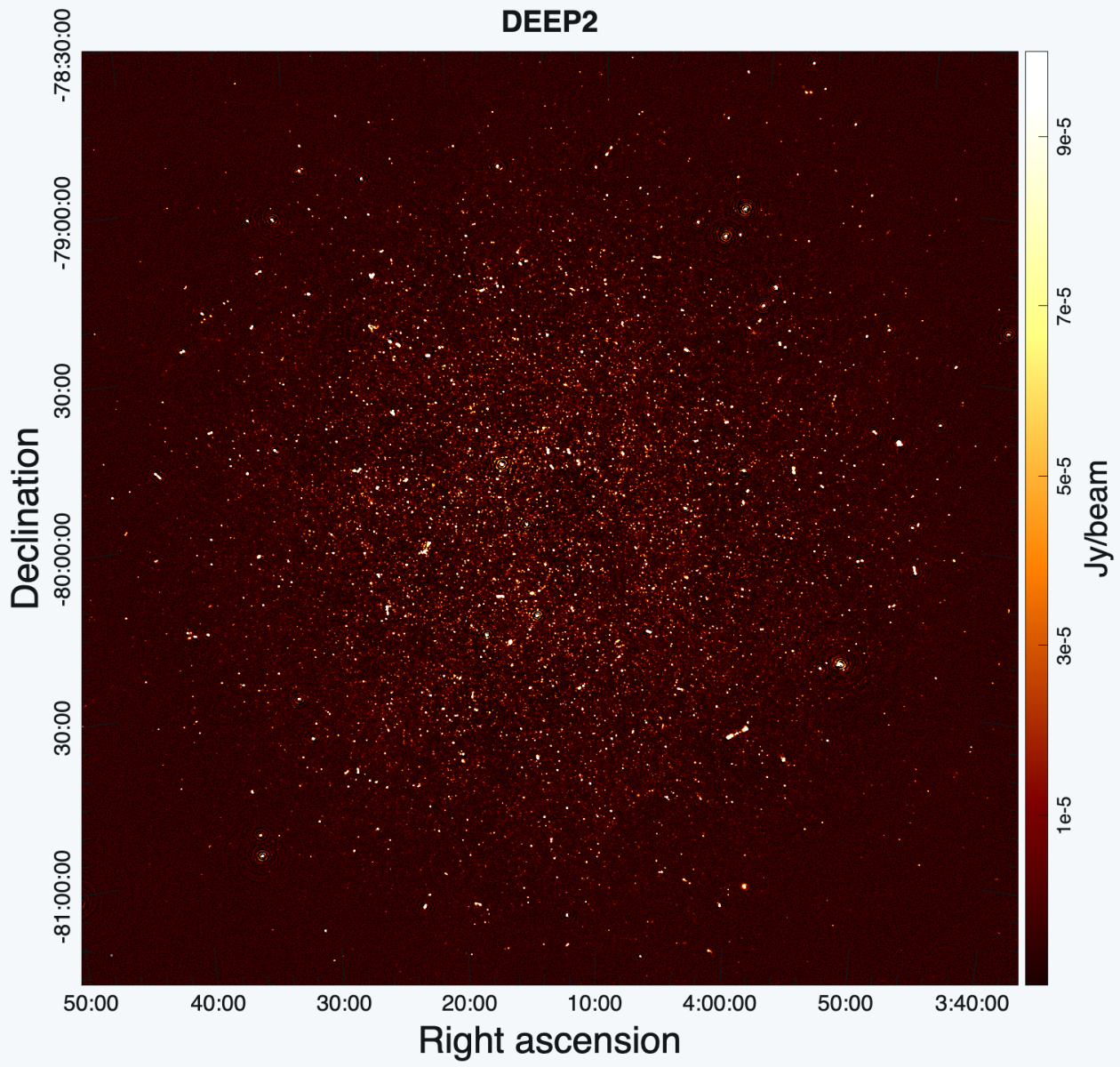
The road to this discovery began in 2018, shortly after MeerKAT commenced its science operations. The data used in this study was part of an early observation campaign consisting of 96 hours of telescope time. While the data was nearly a decade old by the time the final analysis was completed, its utility had not diminished. The process of extracting such a faint signal from a massive dataset is a monumental task that requires sophisticated algorithmic filtering.
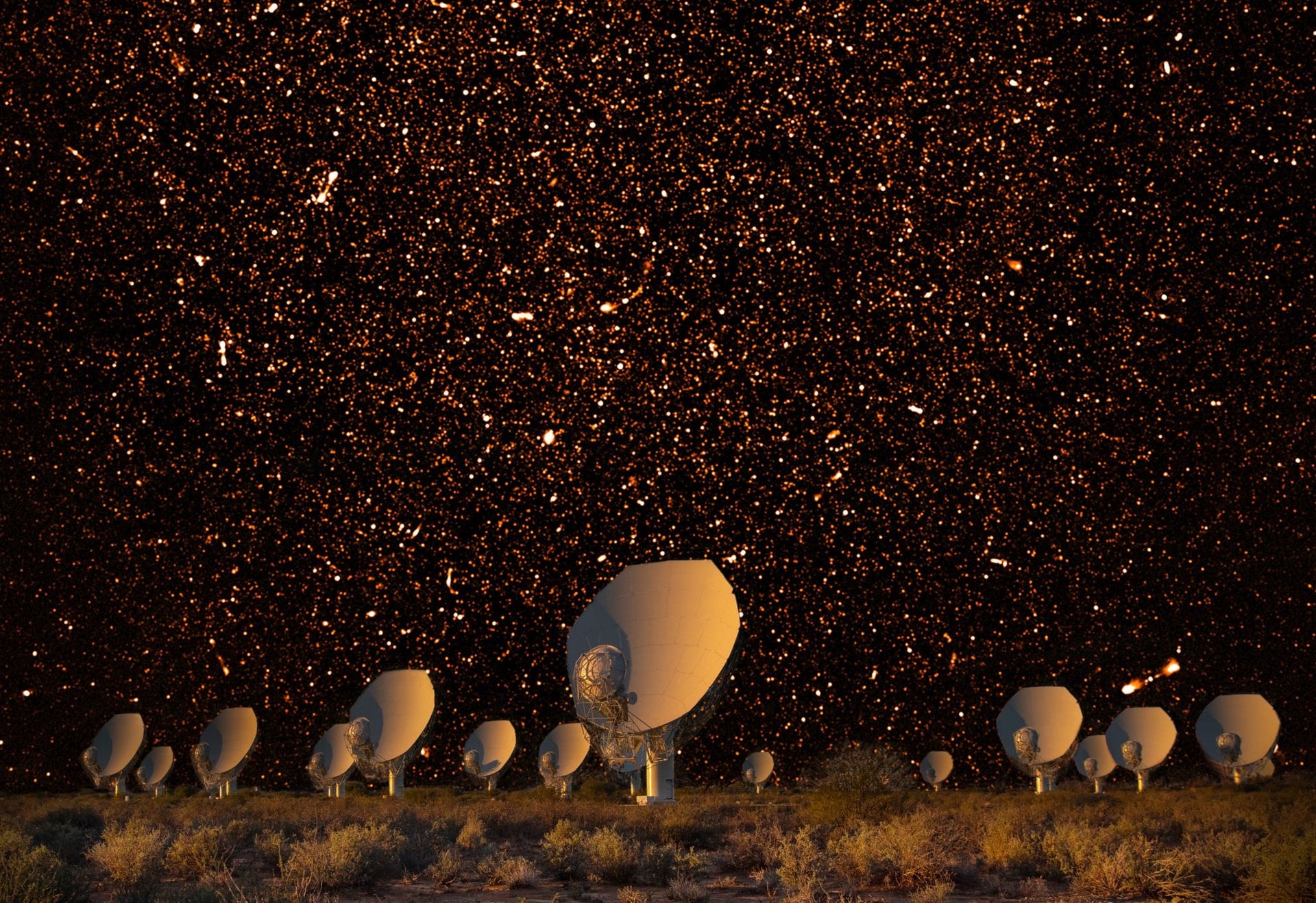
The primary challenge in Hydrogen Intensity Mapping is the presence of "foregrounds." Our own Milky Way galaxy, as well as human-made radio frequency interference (RFI) from satellites and ground-based electronics, produces radio noise that is orders of magnitude brighter than the 21-cm signal from the distant universe. Lead author Sourabh Paul, a Research Associate at the University of Manchester, noted that isolating the signal required accounting for instrumental effects and the complex "noise" of the modern world.
The successful extraction of this signal from archival data suggests that the MeerKAT archives are a treasure trove of untapped cosmological information. It demonstrates that even observations not specifically designed for intensity mapping can yield profound insights if the calibration and foreground removal techniques are sufficiently advanced.
Collaborative Efforts and Expert Perspectives
The research was a global endeavor, drawing on expertise from the Jodrell Bank Centre for Astrophysics at the University of Manchester, the University of the Western Cape, the Royal Observatory’s Institute for Astronomy at the University of Edinburgh, the South African Radio Astronomy Observatory (SARAO), and McGill University in Montreal.
The successful detection has been hailed as a proof-of-concept for the next generation of radio astronomy. "This is a very exciting milestone," said Sourabh Paul. "Hydrogen intensity mapping has long been seen as a promising way to map the universe efficiently, but the signal is extremely faint and difficult to isolate. Detecting it directly with MeerKAT shows that this technique is becoming a practical tool for cosmology."
Professor Laura Wolz, a co-author from the University of Manchester and a specialist in intensity mapping, emphasized the versatility of the MeerKAT array. She noted that the signal was extracted from data originally intended for other scientific purposes, which highlights the "enormous scientific value" of the observatory. This sentiment was echoed by Dr. Zhaoting Chen of the University of Edinburgh, who pointed out that intensity mapping allows researchers to study both the evolution of galaxies and the underlying distribution of dark matter across vast cosmic volumes.
The Path Toward the Square Kilometer Array (SKA)
The success of MeerKAT is a direct precursor to the Square Kilometer Array (SKA), an intergovernmental project to build the world’s largest radio telescope. The SKA will eventually consist of thousands of dishes and up to a million low-frequency antennas spread across sites in South Africa and Australia.
MeerKAT currently serves as the "South African" component of the SKA-Mid array. The future SKAO (Square Kilometer Array Observatory) will combine the power of MeerKAT with the Inyarrimanha Ilgari Bundara (the Murchison Radio-astronomy Observatory) in Western Australia. By integrating data from both hemispheres, the SKA will provide unprecedented sensitivity, allowing for Hydrogen Intensity Mapping on a scale never before seen.
The implications for cosmology are profound. By mapping the distribution of neutral hydrogen over billions of years, astronomers hope to solve some of the most pressing mysteries in physics, including:
- The Nature of Dark Energy: By measuring how the large-scale structure of the universe has changed over time, researchers can better understand the repulsive force that is causing the expansion of the universe to accelerate.
- Dark Matter Distribution: Since hydrogen tends to pool in the gravitational wells created by dark matter, mapping hydrogen allows scientists to "see" the invisible scaffolding of the universe.
- Galaxy Formation and Evolution: Understanding how much neutral hydrogen was available at different epochs helps explain how galaxies grew, merged, and eventually exhausted their fuel for star formation.
Technical Analysis of Potential Impact
The direct detection of the 21-cm signal using a single observatory is a technical triumph because it bypasses the need for "cross-correlation." Previously, to confirm a signal was indeed hydrogen from a specific distance, radio astronomers often had to compare their data with optical maps of galaxies in the same region. If the radio "bumps" matched the locations of known galaxies, the signal was considered real.
By achieving a direct detection, the Manchester and Western Cape team has proven that radio telescopes can operate independently to map the "dark" parts of the universe—regions where galaxies may be too small or too obscured by dust to be seen by optical instruments like the Hubble or James Webb Space Telescopes. This independence is crucial for exploring the "Epoch of Reionization" and the "Cosmic Dawn," periods in the early universe where the first stars were just beginning to form.
Furthermore, the efficiency of HIM cannot be overstated. A traditional galaxy survey might take years to map a specific volume of the sky to a certain depth. In contrast, HIM can survey the same volume in a fraction of the time, providing a "big picture" view of cosmic evolution. As next-generation observatories come online, the volume of space surveyed will grow exponentially, potentially leading to a new "standard model" of cosmology informed by radio data.
Conclusion
The direct detection of distant hydrogen signals by the MeerKAT telescope marks the beginning of a new era in radio astronomy. It transitions Hydrogen Intensity Mapping from a theoretical and experimental concept into a robust, practical tool for astronomical discovery. As the scientific community prepares for the full operation of the Square Kilometer Array, the work of Sourabh Paul and his colleagues provides a clear roadmap for how we will map the final frontiers of the observable universe.
By peering into the faint radio whispers of the Karoo sky, astronomers are not just looking at gas; they are looking at the history of everything. The success of MeerKAT ensures that South Africa remains at the forefront of this global scientific journey, providing the data necessary to answer the most fundamental questions about our origin and the ultimate fate of the cosmos.