admin
admin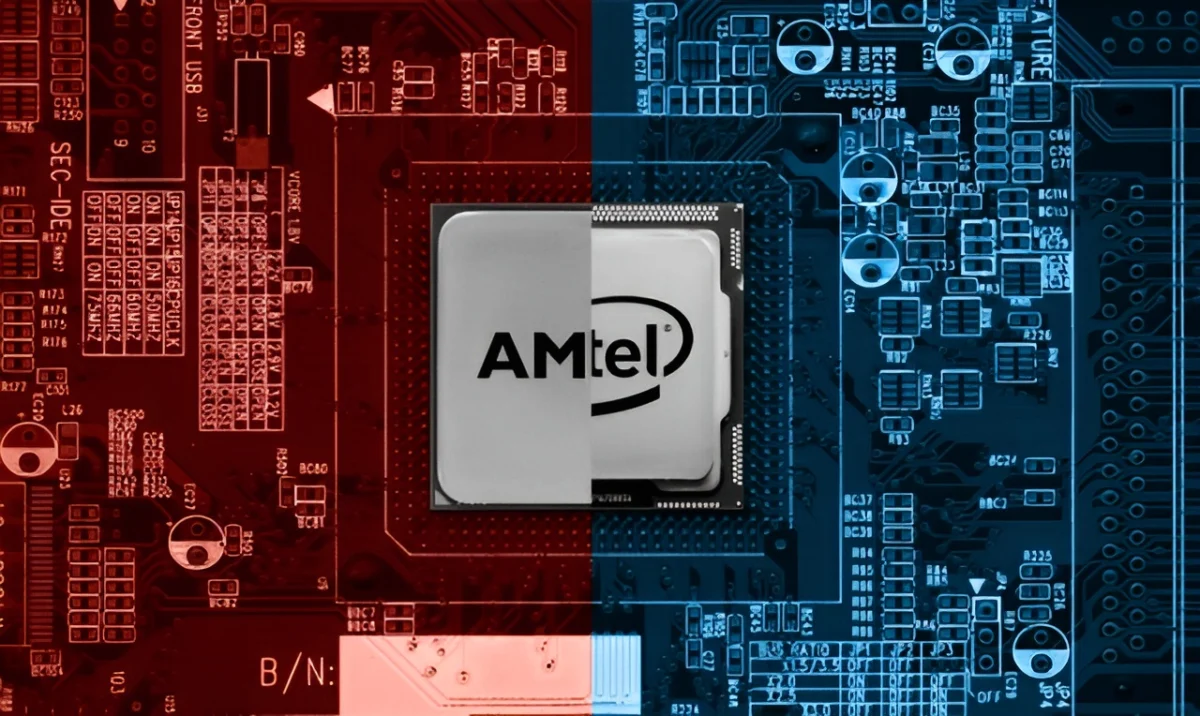
The global semiconductor landscape is currently undergoing a tectonic shift that has seen Intel Corporation, the long-standing titan of the industry, cede market territory at a rate not seen in three decades. Despite a reported 59 percent year-over-year surge in data center revenue during the second quarter of 2026, Intel’s overall grasp on the x86 processor market has weakened significantly. According to the latest industry data from Mercury Research, Intel’s share of the CPU market has plummeted to levels last recorded in 1995, marking a historic low for the Santa Clara-based chipmaker as its primary rival, Advanced Micro Devices (AMD), continues its relentless upward trajectory.
For the first time in 31 years, Intel’s share of the x86 CPU market has dipped below the 70 percent threshold. The Mercury Research report indicates that Intel’s share now stands at 69.3 percent, a decline of 6.5 percent year-over-year and a sequential drop of approximately 1 percent. When the data is expanded to include semicustom, embedded, and Internet of Things (IoT) products, the figures become even more stark for the incumbent leader. In this broader category, Intel’s market share for Q2 2026 fell to 65.9 percent, representing a 4.6 percent annual decline. Conversely, AMD has successfully captured 34.1 percent of this total market, solidifying its position as a formidable and increasingly dominant alternative.
The Battle for the Data Center: A Discrepancy in Accounting
The most intense theater of competition remains the server and data center segment, where high-margin processors drive corporate profitability and influence the future of cloud computing. On the surface, Mercury Research’s raw data suggests Intel maintains a comfortable lead with 65.5 percent of the server CPU market compared to AMD’s 34.5 percent. However, these figures require a more nuanced analysis to reflect the true competitive dynamics between the two firms.
The disparity in market share reporting often stems from how each company categorizes its products. Intel’s data center segment includes embedded CPUs specifically designed for networking and storage applications. In contrast, AMD excludes these types of processors from its data center reporting, categorizing them elsewhere. When analysts normalize these figures to create an "apples-to-apples" comparison, the landscape shifts dramatically. After accounting for these reporting differences, AMD’s actual share of the server CPU market is estimated to have grown by 9.2 percent year-over-year, reaching a record 46.4 percent. This leaves Intel with 53.6 percent of the true server market, a margin that has narrowed with surprising speed over the last 24 months.
This shift is corroborated by secondary data from Jon Peddie Research (JPR), which also tracks shipment volumes and market trends. JPR’s findings align with the Mercury Research tabulation, showing AMD’s server CPU market share increasing from roughly 27 percent in mid-2025 to over 33 percent in the most recent quarter. The consensus among analysts is that AMD’s EPYC processor line continues to gain traction among major cloud service providers like Amazon Web Services, Microsoft Azure, and Google Cloud due to superior core density and power efficiency.
The PC Market and the Impact of Declining Shipments
The consumer and enterprise PC market tells a similar story of AMD’s encroachment. In the client segment, AMD’s share grew by 6.4 percent year-over-year to reach a record 30.3 percent. This milestone marks the first time AMD has consistently held more than 30 percent of the PC market, a feat that seemed impossible during the "Bulldozer" architecture era of the early 2010s.

This growth for AMD comes during a period of volatility for the broader PC industry. Total desktop PC shipments saw a significant 20 percent year-over-year decline in Q2 2026. This contraction is largely attributed to a post-pandemic market correction and a longer-than-expected replacement cycle for hardware purchased during the 2020-2022 period. Despite the shrinking "pie" of total shipments, AMD has managed to take a larger slice, suggesting that when consumers and IT departments do decide to upgrade, they are increasingly opting for Ryzen-based systems over Intel’s Core offerings.
The shift in the PC market is also being driven by the emergence of "AI PCs." Both companies have integrated Neural Processing Units (NPUs) into their latest silicon—Intel with its Meteor Lake and Lunar Lake architectures, and AMD with its Ryzen AI series. While Intel has marketed its AI capabilities aggressively, AMD’s early lead in integrating dedicated AI hardware into its mobile chips appears to be paying dividends in market share gains.
Historical Context: From the "Wintel" Era to the Modern Rivalry
To understand the gravity of Intel’s current position, one must look back to 1995. This was the era of the original Pentium processor and the beginning of the "Wintel" duopoly that dominated global computing for decades. Throughout the late 1990s and 2000s, Intel rarely saw its market share dip below 80 percent, except for a brief period in the mid-2000s when AMD’s Athlon 64 processors challenged Intel’s NetBurst architecture.
The current decline is fundamentally different from previous cycles. It is not merely a product of one successful architecture from a competitor, but rather a sustained execution gap. Intel’s struggles with its 10nm and 7nm (Intel 4) process nodes over the last several years allowed AMD, which utilizes TSMC’s leading-edge manufacturing, to take the lead in performance-per-watt and transistor density. While Intel’s "IDM 2.0" strategy under CEO Pat Gelsinger aims to regain process leadership by 2025/2026, the momentum of the market has proven difficult to arrest.
Intel’s Strategic Response and Future Roadmap
Despite the loss in market share, Intel is not without a counter-strategy. The company’s recent earnings call for Q2 2026 highlighted several key pillars for a potential turnaround. Most notably, Intel confirmed that its 14A node—the first to utilize High-Numerical Aperture (High-NA) Extreme Ultraviolet (EUV) lithography—is on track for risk production starting in 2027. This node is critical for Intel’s goal of leapfrogging TSMC and reclaiming the title of the world’s most advanced semiconductor manufacturer.
Furthermore, Intel has signaled a significant hike in its Capital Expenditure (CapEx) for the coming year. This increase suggests that the company has secured confirmed orders for its Intel Foundry services, which seeks to manufacture chips for external customers, including potential rivals. By diversifying its business model to include foundry services, Intel hopes to offset the volatility of its internal chip sales and leverage its massive domestic manufacturing footprint in the United States.
Intel’s 59 percent growth in data center revenue also provides a glimmer of hope. While market share is down, the total addressable market (TAM) for data center silicon has expanded so rapidly due to the AI boom that Intel is still generating record revenues in certain sub-segments. The company is betting heavily on its Gaudi AI accelerators and its Xeon "Granite Rapids" and "Sierra Forest" processors to maintain its relevance in the age of generative AI.

The Role of AI Mania and Market Implications
The "AI mania" currently gripping the tech industry is a double-edged sword for traditional CPU manufacturers. On one hand, the massive investment in AI infrastructure has diverted some budget away from traditional general-purpose CPUs toward specialized GPUs and AI accelerators produced by NVIDIA. This "crowding out" effect explains why Intel’s market share can fall even as the industry experiences record growth in specific financial metrics.
On the other hand, every AI server requires high-end CPUs to manage the workload orchestration. AMD’s success in capturing nearly 50 percent of the adjusted server market suggests that they are winning the "head node" battle in AI clusters. For Intel to reverse this trend, it must convince hyperscalers that its latest Xeon processors offer a better TCO (Total Cost of Ownership) when paired with modern AI workloads.
Industry analysts suggest that the next 18 to 24 months will be the most critical in Intel’s 58-year history. If the 18A and 14A nodes deliver on their promises of performance and yield, Intel could begin to claw back share by 2028. However, if AMD continues to execute on its Zen 5 and Zen 6 roadmaps without delay, the 30-year lows currently being witnessed may become the new baseline for the industry.
Broader Economic and Industry Impact
The shift in market power has broader implications for the global supply chain. Intel’s commitment to building "megafabs" in Ohio and Germany, supported by government subsidies such as the CHIPS Act, is predicated on the company maintaining a certain level of market dominance or successfully transitioning to a foundry model. A continued decline in market share could put pressure on the company’s ability to fund these multi-billion-dollar investments, despite the planned CapEx hikes.
For consumers, the increased competition has been an unequivocal benefit. The aggressive rivalry has accelerated the move toward higher core counts, better integrated graphics, and more efficient mobile processors. However, the industry remains wary of a potential "monopoly flip" where AMD gains enough power to dictate pricing, a role Intel held for much of the last three decades.
As of the close of Q2 2026, the semiconductor industry stands at a crossroads. Intel’s historic decline in market share is a stark reminder of the speed at which the technology sector moves. While the company remains a financial powerhouse with deep engineering talent, the "inertia" of its previous missteps continues to weigh on its market position. Meanwhile, AMD stands perched on an ascendant trajectory, ready to capitalize on a new era of computing defined by artificial intelligence and distributed workloads. The battle for the heart of the world’s data centers and personal computers is far from over, but the current data suggests that the era of unquestioned Intel dominance has firmly come to an end.