Sisilia Frederika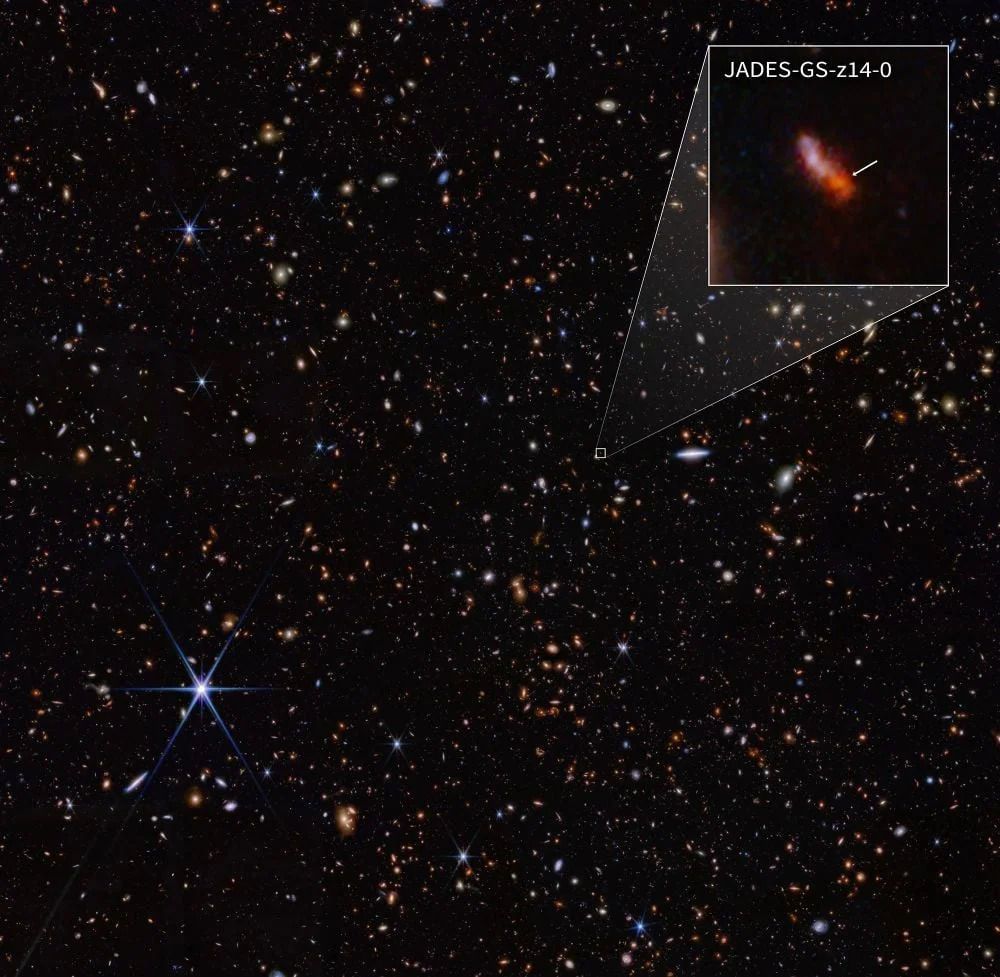
The Initial Mass Function and the Problem of Visibility
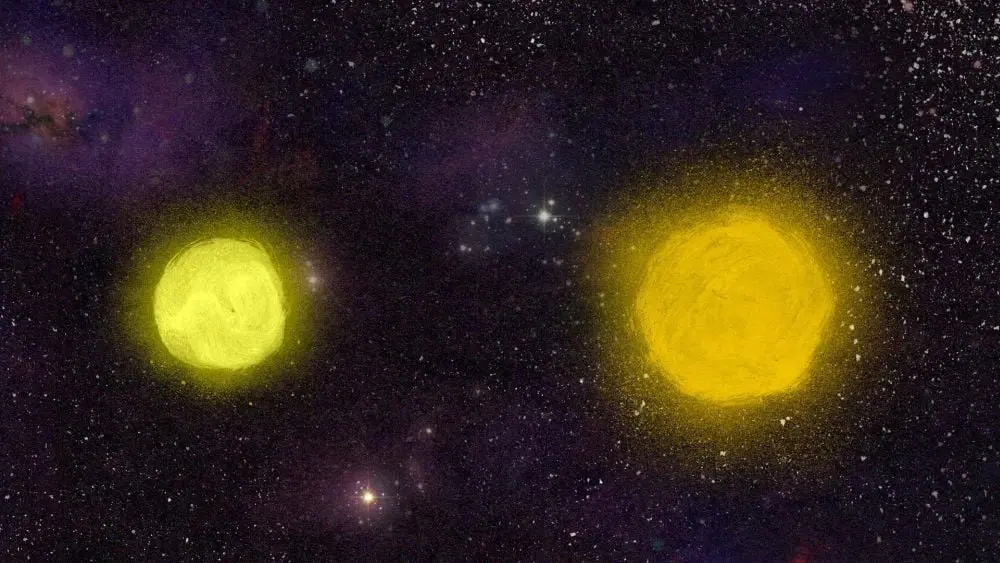
To understand why galaxy masses are being recalculated, one must first understand how astronomers weigh objects they can never touch. Because telescopes primarily capture light, scientists must infer the total mass of a galaxy by looking at its luminosity and color. This inference relies on the Initial Mass Function (IMF), a statistical distribution that describes the relative numbers of stars of different masses that form in a single generation. For decades, the gold standard for this calculation has been the Milky Way’s IMF. In our own galaxy, we can observe individual stars across the mass spectrum, from massive, short-lived blue giants to tiny, long-lived red dwarfs.
However, when observing galaxies billions of light-years away, individual stars—especially the small, dim ones—cannot be resolved. Astronomers instead analyze the "integrated light" of the entire galaxy. The problem with this method is that the brightest stars, which are the most massive, produce the vast majority of a galaxy’s light. These "skyscrapers" of the stellar community effectively drown out the "small houses"—the low-mass stars that actually constitute the bulk of a galaxy’s physical weight.
Lead author Chloe Cheng, who conducted this research as part of her doctoral work at Leiden University, uses a vivid urban analogy to explain the phenomenon. If a distant galaxy were a city viewed from a great distance, an observer would only see the gleaming skyscrapers. Without a way to see the smaller residential buildings nestled between them, the observer would underestimate the total population and density of the city. By applying the Milky Way’s IMF to distant galaxies, astronomers were essentially assuming that every "cosmic city" had the same ratio of skyscrapers to houses as our own neighborhood. The new research suggests this assumption was flawed; early galaxies were far more crowded with "small houses" than anyone realized.
Methodology: Combining the Power of JWST and the VLT
The research team, led by Mariska Kriek and including Cheng and Martje Slob, utilized a sophisticated combination of data to reach their conclusions. They focused on nine "quiescent" galaxies—those that have already ceased active star formation—at a redshift of approximately $z approx 0.7$. While this redshift corresponds to a period when the universe was about half its current age, the stars within these galaxies are much older, having formed during the very early stages of cosmic history.
The team employed the JWST’s Near-Infrared Spectrograph (NIRSpec) instrument to obtain ultra-deep spectra of these galaxies. To provide a more comprehensive view, they supplemented this data with observations from the Very Large Telescope’s (VLT) Large Early Galaxy Astrophysics Census (LEGA-C). By analyzing the specific chemical signatures and absorption lines in the light from these galaxies, the researchers were able to detect the subtle influence of low-mass stars.
"Until recently, measurements like these were simply impossible," noted co-author Martje Slob. The sensitivity of NIRSpec allowed the team to see past the glare of the most luminous stars to find the "hidden mass" in the form of M-dwarfs and other low-mass stellar bodies. The findings were consistent across the sample: the most massive quiescent galaxies exhibited a "bottom-heavy" IMF, meaning they had a significant excess of low-mass stars compared to the Milky Way.
A Chronology of Cosmological Tension
The tension between observation and theory has been building since the JWST’s first deep-field images were released in 2022. The standard model of cosmology, known as $Lambda$CDM (Lambda Cold Dark Matter), predicts that the first galaxies formed from the gradual hierarchical merging of smaller gas clouds and "proto-galaxies." This process was thought to be slow, meaning that massive, well-organized galaxies should not have existed until billions of years after the Big Bang.
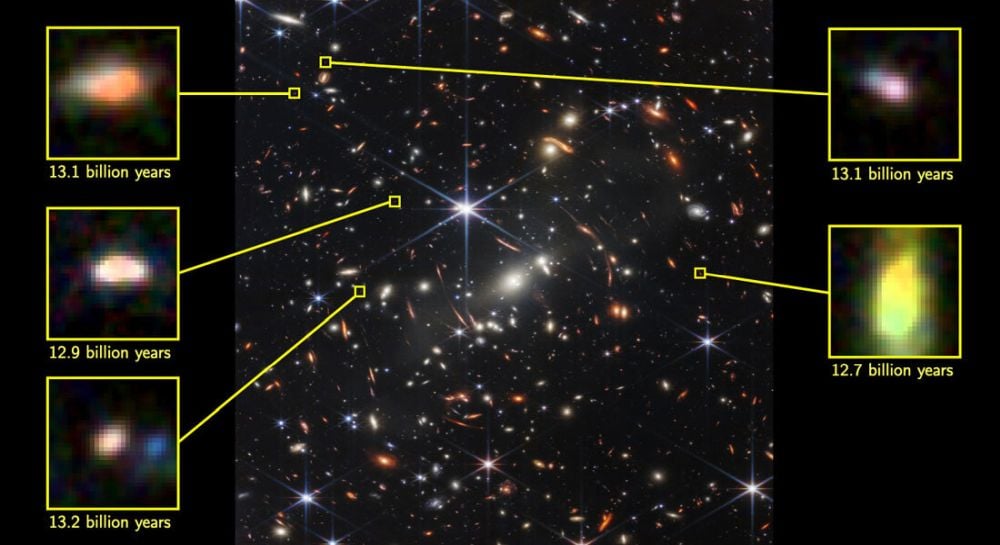
- The First Discovery (Late 2022): JWST identifies galaxies at redshifts $z > 10$ (within 500 million years of the Big Bang) that appear remarkably bright and structured.
- The "Universe Breaker" Debate (2023): Initial mass estimates suggest these galaxies contain as much stellar mass as the Milky Way does today. Theorists argue that there wasn’t enough baryonic matter (normal matter) in the early universe to form stars that quickly.
- The IMF Re-evaluation (2024-2025): Researchers begin to question the "Milky Way assumption." If the IMF was different in the early universe—perhaps due to higher temperatures or different gas densities—the mass estimates might be wrong.
- The Current Findings: Cheng and her team demonstrate that the IMF is indeed different, but instead of solving the problem by making galaxies lighter, the "bottom-heavy" IMF makes them significantly heavier.
The most striking aspect of the new study is the discovery that the oldest galaxy in their sample—one that formed at a redshift $z > 5$—possessed the most bottom-heavy IMF. This implies that the further back in time we look, the more mass is hidden in low-mass stars. If this trend holds for the "impossibly early" galaxies discovered by JWST at $z = 10$ or $z = 14$, their actual masses could be four times higher than the already "impossible" figures previously reported.
Implications for Galaxy Formation and Dark Matter
These findings place a significant strain on galaxy formation models. If these early galaxies were four times more massive than previously thought, it implies an incredibly high efficiency of star formation. In the standard model, gas must cool and collapse within dark matter halos to form stars. The new data suggests that almost all the available gas in these early halos must have been converted into stars with near-perfect efficiency, a scenario that contradicts current simulations of gas feedback and supernova regulation.
Furthermore, this "hidden mass" affects our understanding of the relationship between dark matter and visible matter. If galaxies are more massive in terms of stars, the ratio of dark matter to baryonic matter in the early universe may need to be recalibrated. This could suggest that dark matter halos were either more massive than expected or that they were able to collect and condense normal matter much more rapidly than current physics explains.
Beyond Stars: The Potential for Early Planets
The implications of a bottom-heavy IMF extend beyond the weight of galaxies; they touch upon the history of the entire universe, including the potential for life. Mariska Kriek, who led the research project, pointed out that low-mass stars are the primary hosts for exoplanets. Red dwarfs (M-dwarfs), the very stars found in excess in these early galaxies, are known to be the most common sites for planetary systems in our own neighborhood.
"As many planets orbit low-mass stars, this could even indicate that more planets formed in the early universe than we had previously assumed," Kriek stated. If the early universe was more prolific in producing low-mass stars, it follows that it may have been more prolific in producing planetary systems. This shifts the "habitable window" of the universe, suggesting that the building blocks for planetary systems—and perhaps life—were present in vast quantities much earlier than previously believed.
Future Outlook and the Search for Answers
The research by Cheng and her colleagues marks a major leap in observational astronomy, but it also opens a new chapter of questions. The scientific community must now determine why the early universe favored the production of low-mass stars. Conditions in the early universe were vastly different from the modern Milky Way; the gas was "pristine" (lacking heavy elements like carbon and oxygen), and the cosmic microwave background radiation provided a higher "floor" for temperatures. Usually, higher temperatures are thought to favor higher mass stars, so the discovery of a "bottom-heavy" IMF in these ancient systems presents a theoretical puzzle that will require new simulations to solve.
As the JWST continues to peer deeper into the "Cosmic Dawn," astronomers will look to apply these new IMF models to the most distant objects ever detected. If the "hidden mass" identified by the Leiden team is a universal feature of the early cosmos, the history of the universe is not just a story of things happening faster than we thought—it is a story of a universe that was much more crowded, much heavier, and perhaps much more "planetary" than our models ever dared to predict. The "tension" in cosmology is no longer just a discrepancy in numbers; it is a signal that our fundamental narrative of cosmic growth requires a profound rewrite.