Sisilia Frederika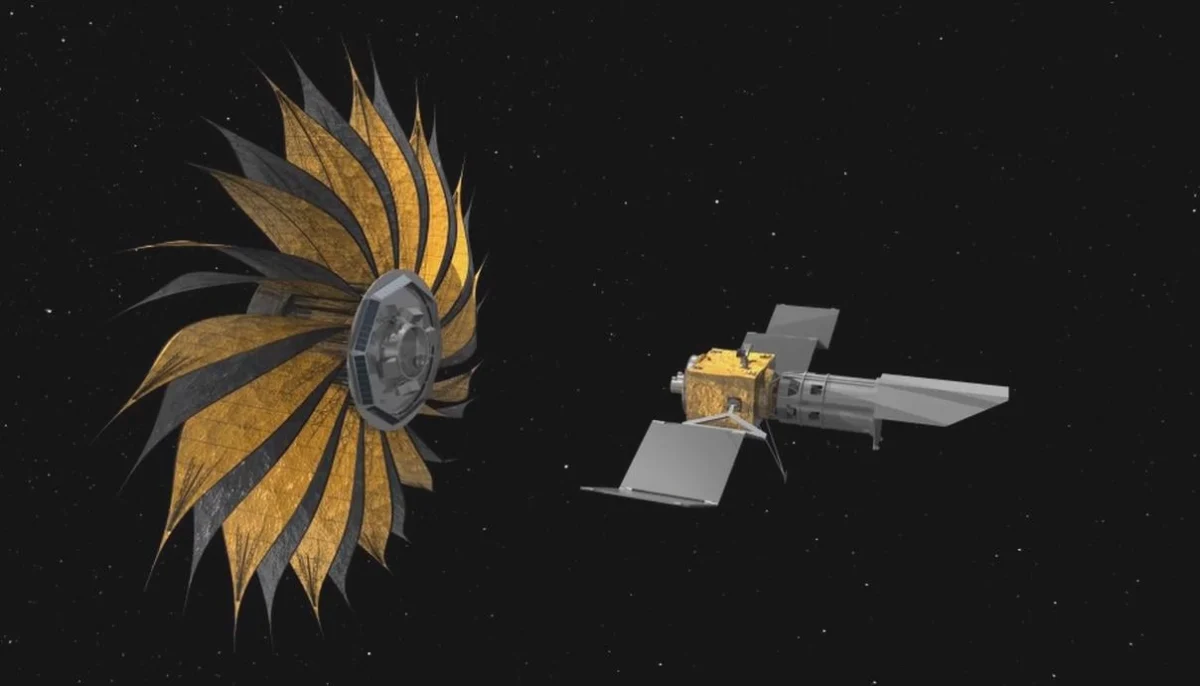
A NASA-led research consortium is advancing a transformative approach to deep-space exploration by proposing a "shortcut" to the direct imaging of Earth-like exoplanets through a synergistic combination of space-based and ground-based technologies. This ambitious initiative, known as the Hybrid Observatory for Earth-like Exoplanets (HOEE), seeks to pair a massive, high-precision orbital starshade with the next generation of terrestrial "Extremely Large Telescopes" (ELTs) to bypass the inherent limitations of current space observatories. By positioning a specialized occulter nearly 175,000 kilometers from Earth, the team aims to suppress the overwhelming glare of distant stars, allowing the reflected light of rocky, temperate planets to be captured by the massive mirrors of ground-based facilities. This hybrid architecture promises to deliver high-resolution optical observations of solar systems within 20 light-years of our own, potentially identifying habitable worlds and chemical signatures of life as early as the next decade.
The Engineering of an Artificial Eclipse
The primary challenge in exoplanetary science is the extreme contrast between a star and its orbiting planets. In the visible light spectrum, an Earth-like planet is typically ten billion times fainter than its host star. Current space-based instruments, including the James Webb Space Telescope (JWST) and the upcoming Nancy Grace Roman Space Telescope, utilize internal coronagraphs to block starlight. However, these internal mechanisms are often limited by the diffraction of light within the telescope’s own optics.
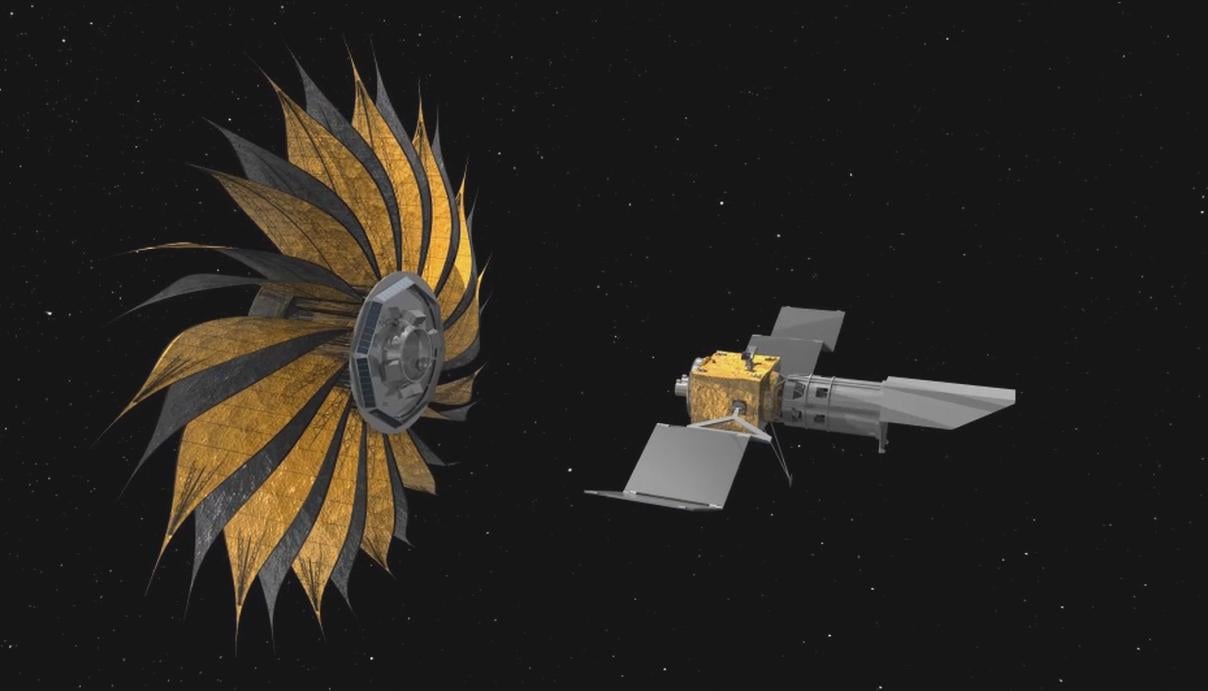
The HOEE concept solves this by moving the "mask" outside the telescope and into deep space. The proposed starshade is a massive, sunflower-shaped occulter designed to cast a "perfect shadow" over a ground-based telescope. According to the project team, led by senior NASA astrophysicist Vladimir Airapetian and Nobel laureate John Mather, the starshade would likely feature a 50-meter-diameter central disk surrounded by 48 precision-engineered petals, each 24.5 meters in length.
When positioned precisely along the line of sight between a target star and a telescope on Earth, the starshade creates an artificial eclipse. This suppression of stellar glare occurs before the light even enters Earth’s atmosphere, allowing the ground-based telescope to collect the faint, reflected photons from the planet itself. This method is significantly more efficient than current space-based imaging, as it leverages the immense light-gathering power of ground-based mirrors that are far larger than any currently feasible for launch into orbit.
Strategic Partnership with the Extremely Large Telescope
The HOEE mission is designed to work in tandem with the European Southern Observatory’s (ESO) Extremely Large Telescope (ELT). Currently under construction atop Cerro Armazones in Chile’s Atacama Desert, the ELT will feature a 39-meter primary mirror, making it the largest optical/infrared telescope in the world. While the ELT is scheduled to achieve "first light" by late 2030, its ability to image Earth-sized planets in the habitable zones of Sun-like stars is limited by atmospheric turbulence and the sheer brightness of host stars.
By utilizing the HOEE starshade, the ELT’s sensitivity would be enhanced by orders of magnitude. The starshade would hover in a long, elliptical "astro-stationary" orbit, synchronized with the Earth’s rotation to maintain a steady alignment with the Chilean observatory. This alignment requires unprecedented precision; the starshade must be repositioned within six meters of accuracy across a distance of 175,000 kilometers. To achieve this, the spacecraft would employ a sophisticated propulsion system, likely using chemical thrusters for station-keeping and solar electric propulsion for transitioning between different star targets.
Chronology of Development and Funding
The conceptual framework for the starshade has existed for decades, originally championed by early space pioneers like Lyman Spitzer. However, the technical requirements for deployment and alignment have only recently become achievable.
- 2024–2025: The HOEE team refines the structural design, focusing on inflatable architectures to minimize launch mass. The goal is to keep the total mass under 1,500 kg, allowing it to fit within a standard commercial launch vehicle’s fairing.
- 2026: A foundational paper detailing the HOEE’s capabilities is published in the journal Nature Astronomy, establishing the scientific validity of the hybrid approach.
- 2027: The team expects to receive Phase B funding from the NASA Innovative Advanced Concepts (NIAC) program. This phase will involve rigorous testing of the petal deployment mechanisms and the microthruster systems, which are expected to use hot hydrogen gas for ultra-fine adjustments.
- 2030–2032: Alignment with the ELT’s operational schedule. If funding and development remain on track, the starshade could be launched shortly after the ELT becomes fully operational, marking the beginning of the hybrid observation era.
The Search for Biosignatures and Extrasolar Auroras
The scientific objectives of HOEE extend beyond mere detection. The project is specifically optimized to search for the chemical precursors of life. Because the hybrid system operates in optical light, it can perform high-fidelity spectroscopy on the atmospheres of exoplanets.
Vladimir Airapetian has highlighted a unique strategy: searching for extrasolar auroras. By targeting active stars—specifically F, G, and K-type stars in their first billion years of existence—astronomers hope to witness massive solar flares interacting with planetary atmospheres. These interactions would produce red and green auroras, which serve as spectral "fingerprints" for nitrogen and oxygen.
"We are looking for the spectral lines that signal an atmosphere capable of supporting life as we know it," Airapetian noted during a presentation in Paris. The ability to separate the light of a planet from its host star with such clarity would allow for the detection of an "Exo-Earth" within the first minute of observation, a feat currently impossible with any other existing or planned instrument.
Economic and Technical Feasibility
One of the most compelling arguments for the HOEE is its cost-effectiveness relative to dedicated flagship space missions. While NASA’s proposed Habitable Worlds Observatory (HWO) is estimated to cost upwards of $11 billion and may not launch until the 2040s, the HOEE is projected to cost approximately $1 billion.
By offloading the "light collection" duties to existing ground-based infrastructure, NASA can focus its budget on the "starlight suppression" technology. The use of an inflatable structure is a key component of this cost-saving strategy. An inflatable disk and petals would significantly reduce the complexity of the mechanical deployment systems and allow for a lighter, more affordable launch.
Furthermore, the hybrid model allows for iterative upgrades. While the starshade remains in orbit, ground-based telescopes can be equipped with newer, more advanced spectrometers and cameras as technology evolves, extending the scientific lifespan of the mission without the need for expensive space-servicing missions.
Broader Impact on Astrobiology and Global Cooperation
The HOEE mission represents a shift toward international and inter-agency cooperation in the quest to find life beyond Earth. The collaboration between NASA (providing the space-based occulter) and the European Southern Observatory (providing the ground-based collector) sets a precedent for future "distributed" observatory systems.
Analysis of the project suggests that HOEE could provide the first definitive evidence of a "Second Earth" decades earlier than previously anticipated. By focusing on stars within a 20-light-year radius—a neighborhood that includes systems like Alpha Centauri, Tau Ceti, and Epsilon Eridani—the mission brings the search for life into our immediate galactic backyard.
The implications for astrobiology are profound. If HOEE identifies oxygen-nitrogen atmospheres on rocky planets orbiting Sun-like stars, it would confirm that the conditions for life are common in the universe. Conversely, if such signatures are not found despite the hybrid telescope’s extreme sensitivity, it would suggest that Earth-like environments are rarer than current statistical models predict.
Conclusion: From Impossible Dream to Buildable Reality
For decades, the starshade was viewed as a theoretical ideal that was too difficult to execute. The precision required to fly a 50-meter object 175,000 kilometers away and align it perfectly with a telescope on a rotating Earth seemed insurmountable. However, advancements in autonomous navigation, propulsion, and materials science have moved the concept into the realm of the possible.
As the ESO’s Extremely Large Telescope nears completion in the Chilean desert, the HOEE offers a timely opportunity to maximize the return on investment for the world’s most powerful ground-based observatories. By creating a temporary, artificial eclipse in the depths of space, NASA and its partners may soon pull back the curtain on the cosmos, revealing the pale blue dots that have hitherto remained hidden in the glare of their parent suns. The successful deployment of HOEE would not only mark a milestone in engineering but would represent a pivotal moment in humanity’s understanding of its place in the universe.