Sisilia Frederika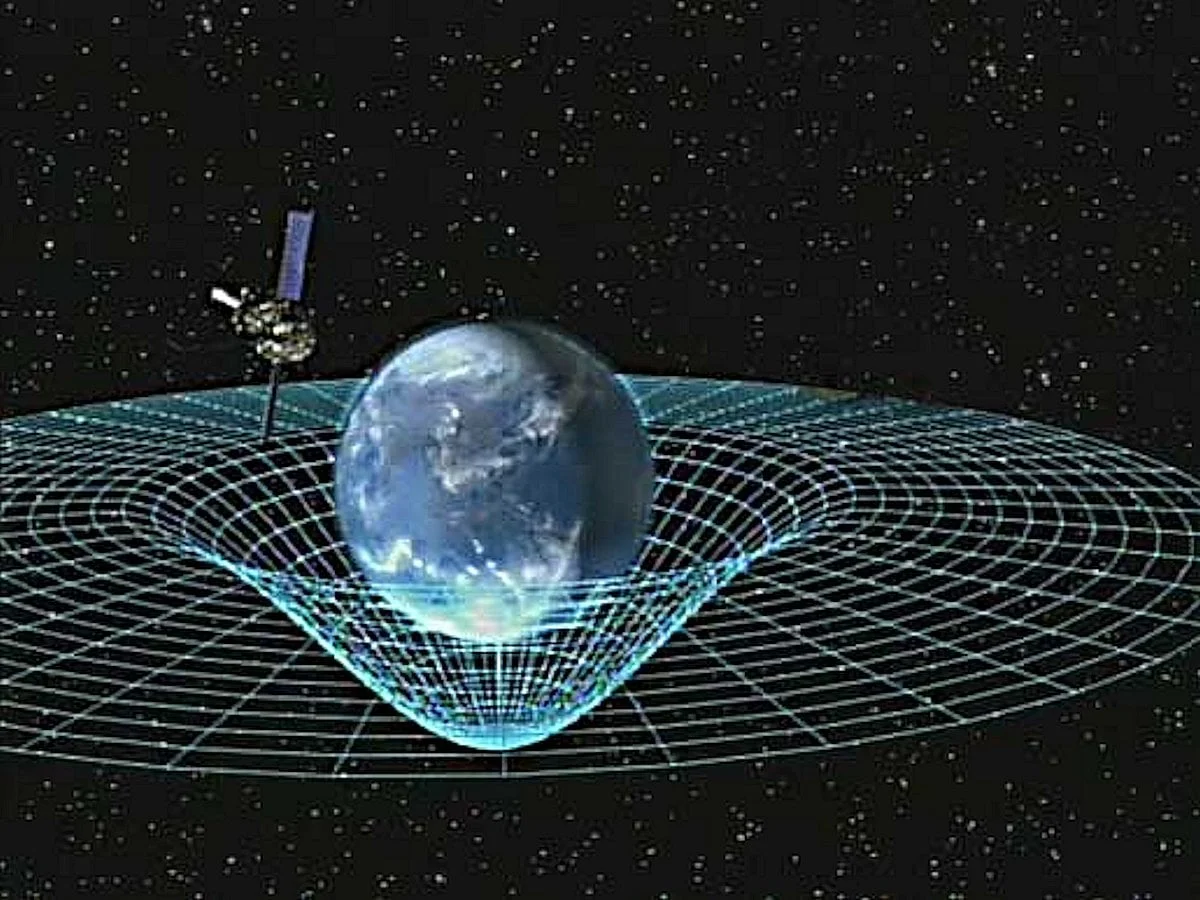
In 1969, the theoretical physicist Roger Penrose, who would later be awarded the Nobel Prize in Physics in 2020, proposed a revolutionary mechanism that challenged the traditional understanding of black holes as inescapable cosmic drains. Known as the Penrose Process, this theory suggests that energy can be extracted from a rotating black hole, effectively turning one of the most destructive forces in the universe into a potential power source. While the event horizon remains a point of no return for matter and light, the unique gravitational environment surrounding a spinning black hole allows for a "theft" of rotational energy that complies with the fundamental laws of thermodynamics and general relativity.
The foundation of this concept lies in the transition from a static universe to a dynamic, rotating one. Most early models of black holes, based on the Schwarzschild metric, assumed a non-rotating mass. However, in 1963, New Zealand mathematician Roy Kerr solved the field equations of general relativity for a rotating uncharged mass. This "Kerr metric" revealed that rotating black holes possess a unique region of spacetime called the ergosphere, where the very fabric of the universe is forced to rotate along with the black hole. This phenomenon, known as frame dragging, is the key to understanding how a spacecraft or a particle could theoretically return from a black hole’s vicinity with more energy than it initially possessed.
The Evolution of Spacetime Theory: From Passive Stage to Dynamic Fluid
To comprehend how energy extraction is possible, it is necessary to examine the evolution of how physicists conceptualize space and time. In the classical Newtonian framework, space was viewed as an absolute, immutable stage—a three-dimensional void where events occurred but which remained unaffected by the matter within it. This "Level 1" understanding treats space as a passive backdrop.
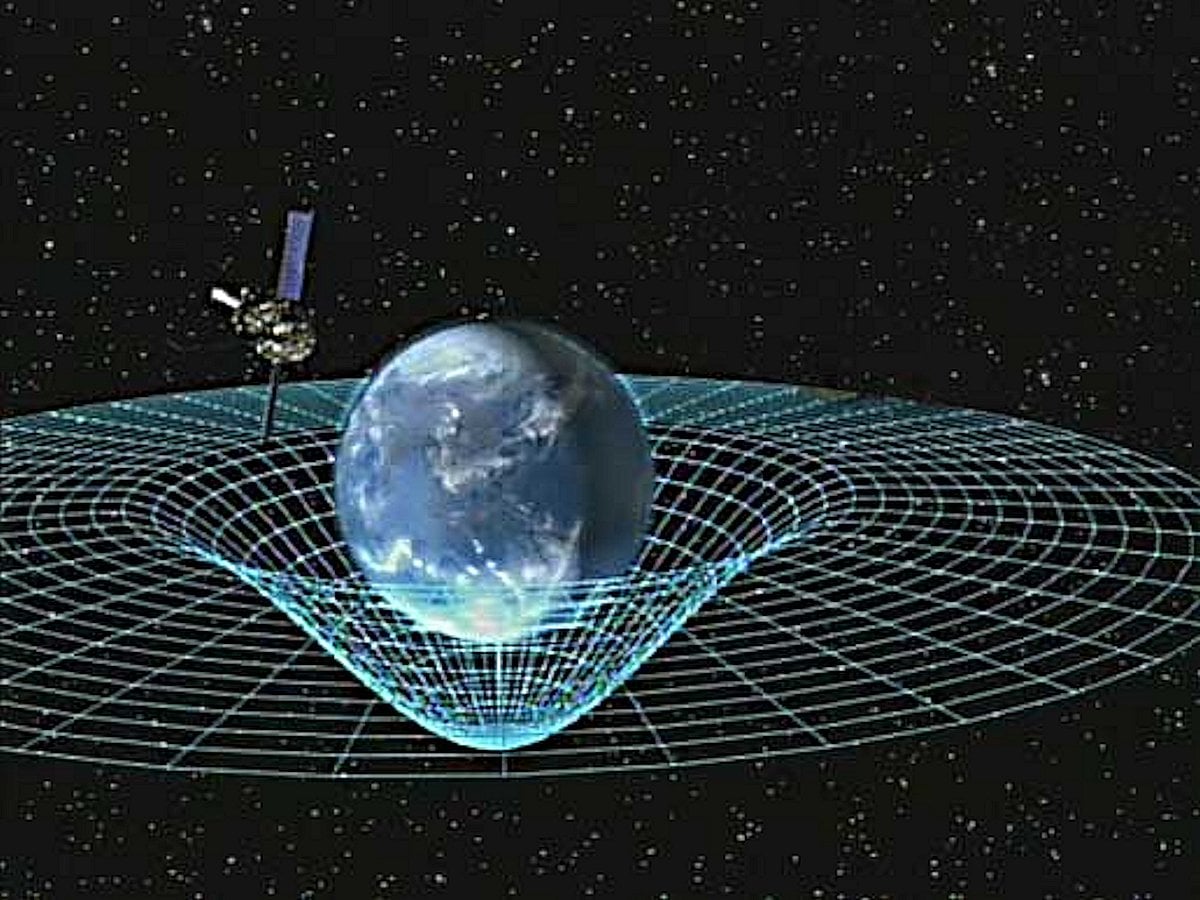
The shift to "Level 2" occurred with Albert Einstein’s publication of General Relativity in 1915. Einstein demonstrated that spacetime is a four-dimensional manifold that is inextricably linked to the mass and energy it contains. In this view, gravity is not a force acting at a distance but rather the curvature of spacetime itself. Mass tells spacetime how to curve, and spacetime tells mass how to move. This model successfully predicted the bending of starlight and the orbital precession of Mercury, yet it still largely treated spacetime as a geometric shape.
The "Level 3" conceptualization, which is essential for understanding the Penrose Process, treats spacetime as a dynamic participant with fluid-like properties. While spacetime is not a literal fluid composed of molecules, general relativity allows for mathematical descriptions where the vacuum of space behaves as if it has a flow. Near a massive, rotating object, spacetime is not merely curved; it is twisted. This "torsion" of the vacuum means that an observer at rest relative to distant stars would find it impossible to remain stationary near a rotating black hole. They would be swept along by the rotation of space itself, a phenomenon termed "frame dragging" or the Lense-Thirring effect.
Frame Dragging: The Lense-Thirring Effect
Predicted in 1918 by Austrian physicists Josef Lense and Hans Thirring, frame dragging describes how a massive spinning object "drags" the local inertial frames of spacetime around it. If one imagines a spinning spoon in a jar of thick honey, the honey immediately adjacent to the spoon rotates at the same speed as the spoon, while the honey further away rotates more slowly. In the vacuum of space, a rotating mass does the same to the geometry of the universe.
This is not a mechanical friction or a result of an atmosphere; it is a fundamental property of gravity. The magnitude of this effect is generally negligible around common celestial bodies. For instance, the Earth’s rotation drags spacetime by an incredibly small amount—roughly one part in a few trillion. However, near a black hole, where gravity is at its most extreme, frame dragging becomes the dominant physical reality.
The region where this effect becomes inescapable is called the ergosphere. Located just outside the event horizon, the ergosphere is a flattened, oblate volume of space where the frame-dragging effect is so intense that matter must move faster than the speed of light (relative to a distant observer) just to appear stationary. Because this region lies outside the event horizon, objects can still enter and exit the ergosphere, provided they have sufficient velocity and the correct trajectory.
The Mechanics of the Penrose Process
The Penrose Process utilizes the unique physics of the ergosphere to "steal" a portion of the black hole’s angular momentum. The theoretical procedure involves a spacecraft or a mass entering the ergosphere and, at a specific point, splitting into two separate components.
- Entry: A mass (or "payload") enters the ergosphere, moving in the same direction as the black hole’s rotation.
- Fission: Within the ergosphere, the payload is split into two pieces. This could be achieved through a chemical explosion or a simple mechanical separation.
- Trajectory Alignment: The separation is calculated so that one piece is ejected into a trajectory that falls across the event horizon and into the black hole. Crucially, this piece is sent "against" the rotation of the black hole, effectively possessing "negative energy" relative to an observer at infinity.
- Escape: The second piece is flung outward, exiting the ergosphere and returning to distant space.
According to the principle of conservation of energy, if the piece that fell into the black hole had negative energy, the piece that escaped must have more energy than the original whole. This "excess" energy is not created from nothing; it is taken directly from the black hole’s rotational kinetic energy. As a result of this process, the black hole’s spin slows down slightly, and its total mass-energy decreases.
Mathematical models suggest that this process is incredibly efficient. While nuclear fusion—the process powering the stars—converts about 0.7% of mass into energy, the Penrose Process could theoretically convert up to 29% of a black hole’s total mass into usable energy.
Scientific Validation and Historical Chronology
While the Penrose Process remains a theoretical construct for human engineering, the underlying physics of frame dragging have been rigorously tested and confirmed.
- 1918: Lense and Thirring use Einstein’s equations to predict that rotating masses should drag spacetime.
- 1963: Roy Kerr publishes the mathematical solution for rotating black holes, defining the ergosphere.
- 1969: Roger Penrose proposes the energy extraction mechanism.
- 2004–2011: NASA’s Gravity Probe B mission provides direct empirical evidence of frame dragging. The satellite, orbiting Earth, utilized four ultra-precise gyroscopes. After years of data collection, researchers confirmed that the Earth’s rotation caused a "frame-dragging" drift of approximately 39 milliarcseconds per year, matching Einstein’s predictions with high precision.
- 2020: Observations of a pulsar-white dwarf binary system (PSR J1141-6545) provided further evidence of frame dragging in a high-gravity environment, showing the orbit of the pulsar precessing due to the white dwarf’s rotation.
Broader Implications and Cosmic Powerhouses
The implications of the Penrose Process extend far beyond theoretical "space mining." It provides a vital explanation for some of the most energetic phenomena in the known universe. Astronomers have long observed "relativistic jets"—colossal streams of plasma shooting out from the centers of galaxies at nearly the speed of light. These jets are believed to be powered by a variation of the Penrose Process known as the Blandford-Znajek process.
In the Blandford-Znajek model, magnetic fields replace the "payloads" of Penrose’s original theory. A spinning black hole’s frame dragging twists the magnetic field lines of the surrounding accretion disk. This twisting creates a powerful electromagnetic circuit that extracts rotational energy from the black hole and flings matter outward in the form of high-speed jets. This explains how quasars—the active nuclei of distant galaxies—can shine with the brightness of a trillion stars despite being only the size of our solar system.
Future Prospects and Civilizational Impact
While humanity is currently centuries, if not millennia, away from the technology required to reach a black hole, the Penrose Process offers a theoretical "end-game" for advanced civilizations. In the 1970s, physicist Freeman Dyson and others speculated that a truly advanced society (a Type II or III on the Kardashev scale) might cluster around black holes to harness their rotational energy as the stars in the universe begin to fade.
From a journalistic and scientific perspective, the Penrose Process serves as a reminder that black holes are not merely "holes" or voids, but complex physical objects with properties that can be understood and potentially utilized. It bridges the gap between abstract general relativity and practical thermodynamics. As our ability to image black holes improves—following the success of the Event Horizon Telescope in capturing images of M87 and Sagittarius A—scientists hope to measure the "spin" of these objects with enough precision to see the effects of frame dragging in real-time.
The universe, as Penrose demonstrated, is not a collection of isolated objects but a dynamic system where the very vacuum can be tapped for power. The "free energy" offered by a black hole is the ultimate testament to the counterintuitive and awe-inspiring nature of general relativity, proving that even in the darkest reaches of space, there is energy to be found for those who understand the rhythm of the cosmic dance.