Sisilia Frederika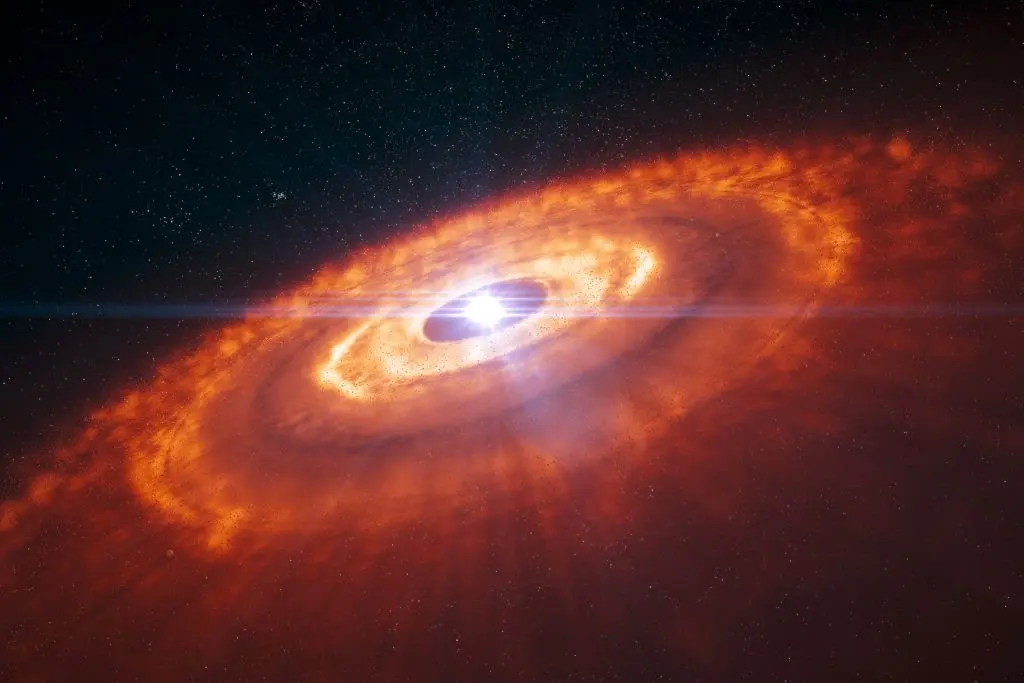
The origin of the Solar System has long been understood through the lens of the Nebula Theory, which posits that approximately 4.5 billion years ago, a massive rotating cloud of interstellar gas and dust collapsed to form our Sun and the surrounding accretion disk. From this swirling debris, the planets emerged, yet the precise mechanics of their birth have remained a subject of intense scientific scrutiny. For decades, researchers have debated two primary pathways for planetary growth: the hierarchical collision of large, kilometer-sized rocks known as planetesimals, or the more gradual accumulation of millimeter-sized pebbles drawn in by the gravitational pull of developing planetary embryos.
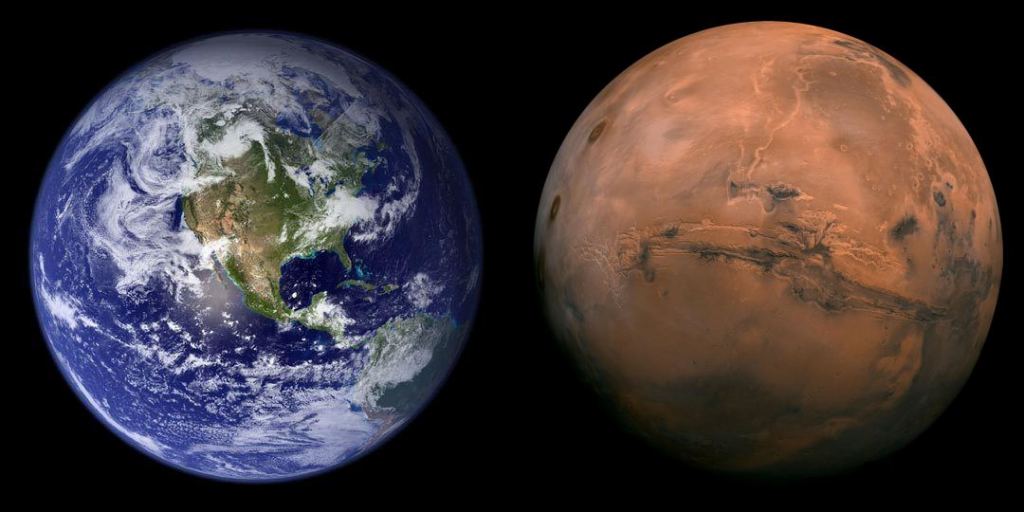
New evidence published in the journal Nature Astronomy by an international team led by the University of Copenhagen suggests that the answer is not a matter of one process over the other, but rather a complex hybrid of both. Crucially, the study reveals that Earth and Mars—despite being neighbors in the inner Solar System—followed remarkably different evolutionary trajectories. While Earth appears to have been built primarily through the efficient accretion of cosmic pebbles, Mars followed a more violent path dominated by the collision of planetesimals.
The Mystery of Planetary Accretion
To understand the significance of these findings, one must look at the two competing models of planetary formation that have dominated the field of astrophysics. The first, the "Planetesimal Theory," suggests that the early Solar System was a chaotic shooting gallery. In this scenario, dust grains clumped together to form small rocks, which eventually grew into planetesimals. These bodies, ranging from a few kilometers to hundreds of kilometers in diameter, then collided with one another in high-energy impacts, eventually merging to form full-sized planets.
The second model, "Pebble Accretion," is a more recently developed theory. It suggests that once a planetary embryo reaches a certain mass, it can efficiently "sweep up" vast quantities of small pebbles from the surrounding gas disk. This process is significantly faster than planetesimal collisions and can account for the rapid growth of planetary cores before the gas disk dissipates.
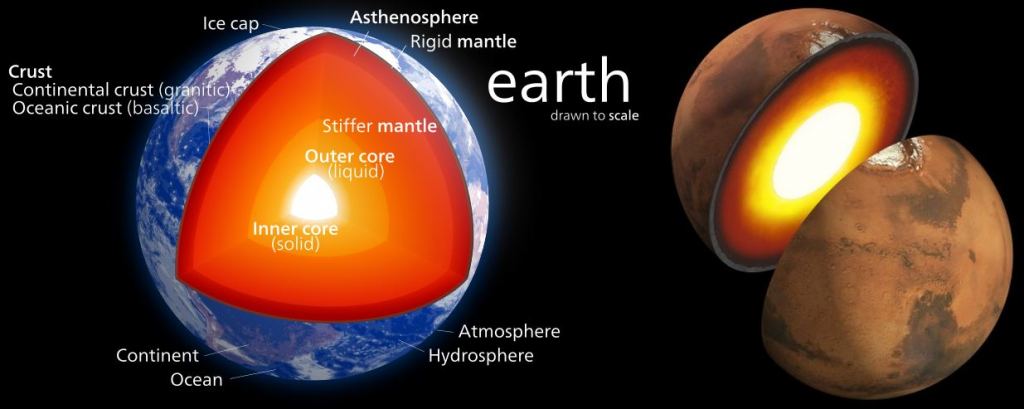
The research team, led by Assistant Professor Haiyang S. Wang and Professor Anders Johansen from the Center for Star and Planet Formation at the University of Copenhagen’s Globe Institute, sought to determine which of these processes was dominant. They were joined by experts from ETH Zürich, the Nevada Center for Astrophysics (NCfA), and the Lunar and Planetary Laboratory at the University of Arizona. By analyzing the chemical fingerprints left behind in the mantles of Earth and Mars, they reconstructed the formative years of our planetary neighborhood.
Chemical Forensics: The Role of Volatile Elements
The methodology employed by the researchers relied on "chemical forensics." Because the physical evidence of the early Solar System was largely destroyed by billions of years of geological activity, the team focused on the elemental composition of the planetary mantles. Specifically, they examined volatile elements—substances like sodium, zinc, and potassium that have relatively low boiling points and evaporate easily when subjected to high temperatures.
"It is a major detective job to figure out what happened back then when most of the evidence disappeared long ago," Professor Anders Johansen noted. However, the chemical signatures of these elements remain trapped within the rocky layers of the planets. "Even after 4.5 billion years, the compositions of Earth’s and Mars’ mantles remain the same. You can think of them as an imprint of the formation process."
The researchers discovered that volatile elements are lost at different rates depending on the formation method. Pebbles, due to their high surface-area-to-mass ratio, tend to lose volatile elements more efficiently as they travel through the warm inner regions of the accretion disk toward a growing planet. Large planetesimals, conversely, shield their volatile contents more effectively within their interiors during collisions, though they still undergo significant heating.
Divergent Origins: Earth vs. Mars
The most striking revelation of the study is the disparity between Earth and Mars. Conventional wisdom often assumed that because the two planets formed in the same region of the Solar System, they likely shared a similar birth story. The data, however, suggests a starkly different reality.
According to the team’s statistical modeling, at least 75 percent of Earth’s mass originated from the accretion of pebbles onto two primary young protoplanets. These protoplanets grew rapidly by vacuuming up material from the disk, with planetesimal collisions contributing only about 25 percent of the final mass. This "pebble-heavy" diet explains Earth’s specific volatile element profile.
In contrast, Mars appears to be the product of a much more "traditional" planetesimal-based growth. The researchers found that roughly three-quarters of Mars’ mass came from the collision of large planetesimals, with pebble accretion playing a secondary role, contributing only about 25 percent of its mass.
"The most surprising result was that Earth and Mars appear to have formed in different ways," said Assistant Professor Haiyang S. Wang. "You might have expected that two planets formed side by side in the same solar system would share a more similar formation history."
Statistical Modeling and Scientific Assumptions
The team’s conclusions are the result of rigorous Monte Carlo simulations and advanced statistical modeling. However, the researchers are transparent about the uncertainties inherent in such deep-time reconstructions. The models rely on several key assumptions regarding the initial conditions of the Solar System.
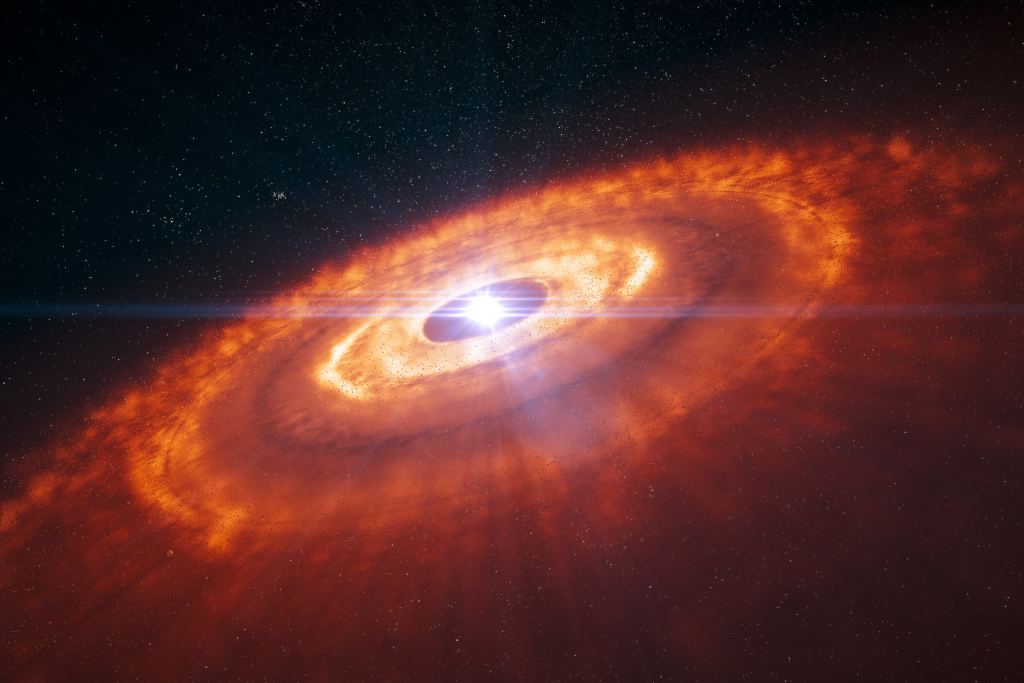
One primary assumption involves the chemical composition of the original accretion disk. Since we cannot travel back in time to sample the gas and dust that orbited the young Sun, scientists use "primitive" meteorites and other celestial bodies as proxies. For the Mars model, the researchers assumed that the planetesimal building blocks were chemically similar to the asteroid Vesta, a well-studied protoplanetary remnant in the asteroid belt.
Furthermore, the model acknowledges that volatile loss is a complex thermodynamic process. While it is generally accepted that pebble accretion leads to higher volatile depletion than giant impacts, the exact ratios can fluctuate based on the local temperature of the disk and the speed of the accretion process. Despite these variables, Wang emphasized that the core conclusion remained robust across various scenarios: the fundamental "recipe" for Earth was different from the "recipe" for Mars.
Implications for Exoplanet Habitability
The findings from the University of Copenhagen extend far beyond our own Solar System. Understanding the mechanisms of planetary formation is essential for the burgeoning field of exoplanet research. As astronomers discover thousands of planets orbiting distant stars, the central question remains: which of these worlds are capable of supporting life?
Habitability is inextricably linked to a planet’s inventory of volatile elements. Water, carbon, and nitrogen—the building blocks of life—are all volatile substances. If a formation pathway, such as pebble accretion, leads to a significant loss of these elements, it could dictate whether a planet ends up as a lush, water-rich world like Earth or a dry, barren rock.
"If we understand how planets lose volatile elements during their formation, we can also become better at predicting how much water and other life-supporting substances they ultimately retain," Johansen explained.
This research arrives at a pivotal moment for observational astronomy. The Nancy Grace Roman Space Telescope, which recently launched, features a Wide Field Instrument with a field of view 100 times greater than that of the Hubble Space Telescope. Its mission includes the direct imaging of exoplanets and the study of protoplanetary disks around young stars. By observing these "planet factories" in real-time, scientists can compare the Copenhagen team’s models with actual data from other solar systems.
Furthermore, the upcoming Habitable Worlds Observatory (HWO), slated for the 2040s, will possess the sensitivity required to characterize the atmospheres of Earth-sized planets in the habitable zones of Sun-like stars. By identifying the chemical compositions of these distant worlds, the HWO will allow researchers to apply the "volatile element" framework to determine if those planets formed via pebble accretion or planetesimal collisions, and what that means for their potential to harbor oceans and life.
A New Paradigm in Planetary Science
The study published in Nature Astronomy marks a shift toward a more nuanced view of the early Solar System. Rather than a monolithic process where one mechanism rules all, the formation of planets appears to be a highly localized and diverse phenomenon. The fact that Earth and Mars could have such different origins despite their proximity suggests that the early accretion disk was a place of extreme heterogeneity.
This research also highlights the superiority of chemical analysis over traditional isotope-based approaches. While isotopes have long been used to track the origin of planetary material, they can often be interpreted in multiple ways, leading to conflicting theories. The focus on volatile element abundance provides a more direct and precise metric for the thermal and physical history of a planet.
As the scientific community digests these findings, the focus will likely shift toward the other planets in our system. Could Venus, often called Earth’s "evil twin," have formed through a pebble-dominated process similar to Earth’s, only to have its evolution take a catastrophic turn? Or did it, like Mars, follow a path of violent impacts?
The work of Wang, Johansen, and their colleagues has provided a new set of tools to answer these questions. By looking at the "imprints" left in the rocks beneath our feet and the red dust of our neighbor, we are finally beginning to piece together the chaotic, diverse, and fascinating story of how our corner of the universe came to be. This "detective job," as Johansen described it, is far from over, but the blueprint for the inner Solar System has never been clearer.