Sisilia Frederika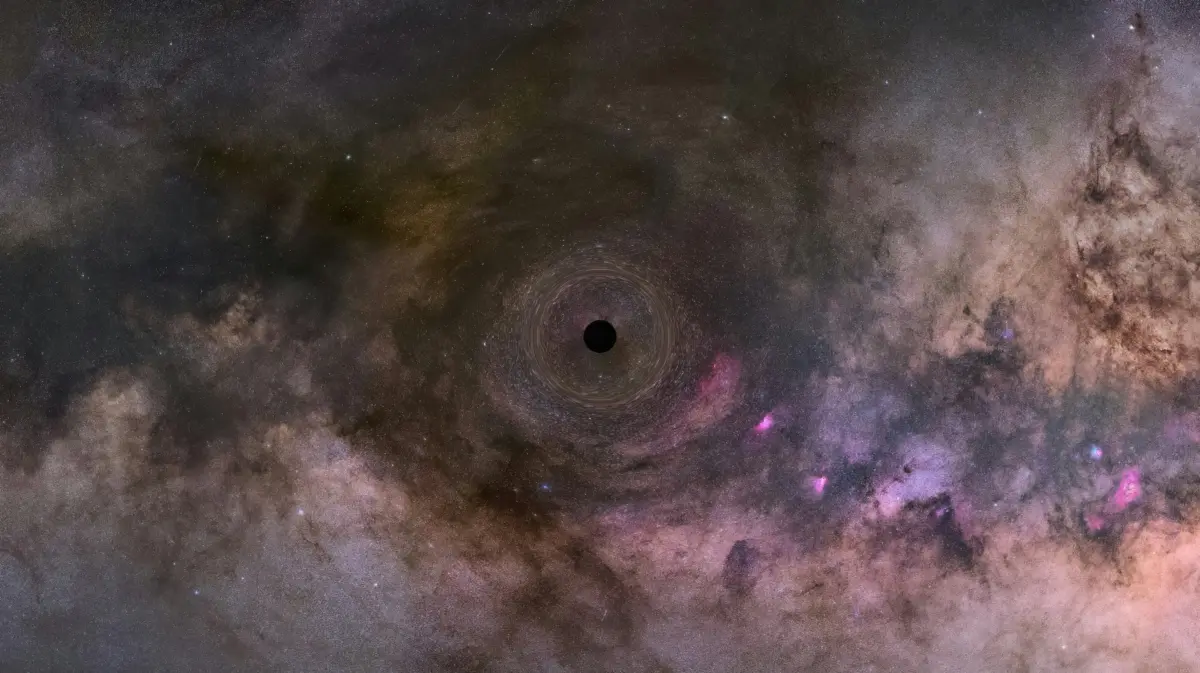
The discrepancy between theoretical astrophysics and observational reality has long presented a challenge to our understanding of the Milky Way, particularly regarding the census of stellar-remnant black holes. According to established stellar evolution models, the dynamics of our galaxy suggest that hundreds of millions of black holes should be drifting through the interstellar medium. These objects are the inevitable corpses of massive stars that ended their lives in supernova explosions. However, despite decades of searching with the world’s most advanced observatories, astronomers have confirmed the existence of only about 70 such objects within our galaxy. This massive "missing" population represents one of the most significant observational gaps in modern astronomy, a gap that the University of Southampton is now attempting to bridge through a massive collaborative effort.
Known as the Black Hole Hunters project, this initiative hosted on the Zooniverse platform represents a sophisticated convergence of space-based photometry, artificial intelligence, and the collective power of global citizen science. Led by Dr. Adam McMaster, a researcher who recently transitioned from The Open University to the University of Southampton, the project aims to identify the "hidden monsters" of our galaxy—black holes that are neither actively feeding nor emitting the high-energy radiation typically used to spot them. By enlisting tens of thousands of amateur astronomers to sift through data that has already been pre-filtered by machine learning algorithms, the project seeks to turn the tide in the hunt for these elusive cosmic entities.
The Challenge of Cosmic Invisibility
The fundamental difficulty in locating black holes stems from their very nature. Because their gravitational pull is so intense that not even light can escape their event horizons, black holes are inherently invisible against the blackness of space. Historically, the few dozen black holes discovered in the Milky Way were identified because they were "active." These objects are typically part of X-ray binary systems, where the black hole is locked in a tight orbit with a companion star. As the black hole’s gravity strips material from its neighbor, that material forms an accretion disk that heats up to millions of degrees, emitting powerful X-rays and radio waves.
However, the vast majority of black holes in the galaxy are believed to be "quiescent" or isolated. If a black hole is drifting alone in the void or orbiting a star at a great distance without actively devouring it, it produces no light, no X-rays, and no radio signatures. For traditional astronomical techniques, these objects are effectively ghosts. To find them, scientists cannot look for the objects themselves; they must look for the way their immense gravity warps the fabric of spacetime and affects the light of stars positioned behind them.
Einstein’s Solution: Gravitational Microlensing
The methodology behind the Black Hole Hunters project finds its roots in Albert Einstein’s General Theory of Relativity. Einstein predicted that gravity could act as a lens, bending the path of light as it passes near a massive object. When a black hole—a point of extreme mass—passes directly between Earth and a distant background star, its gravity acts like a magnifying glass. This phenomenon, known as gravitational microlensing, causes the background star to appear temporarily and significantly brighter from our perspective.
In the broader universe, this effect can create "Einstein rings," where the light of a distant galaxy is smeared into a perfect circle around a foreground cluster. On a stellar scale within our own galaxy, the effect is more subtle: a precise, symmetrical spike in the star’s "light curve"—a graph showing the star’s brightness over time. While most microlensing events are one-time occurrences caused by a wandering black hole passing a star by chance, the Black Hole Hunters project is specifically interested in a more predictable variation known as "gravitational self-lensing."
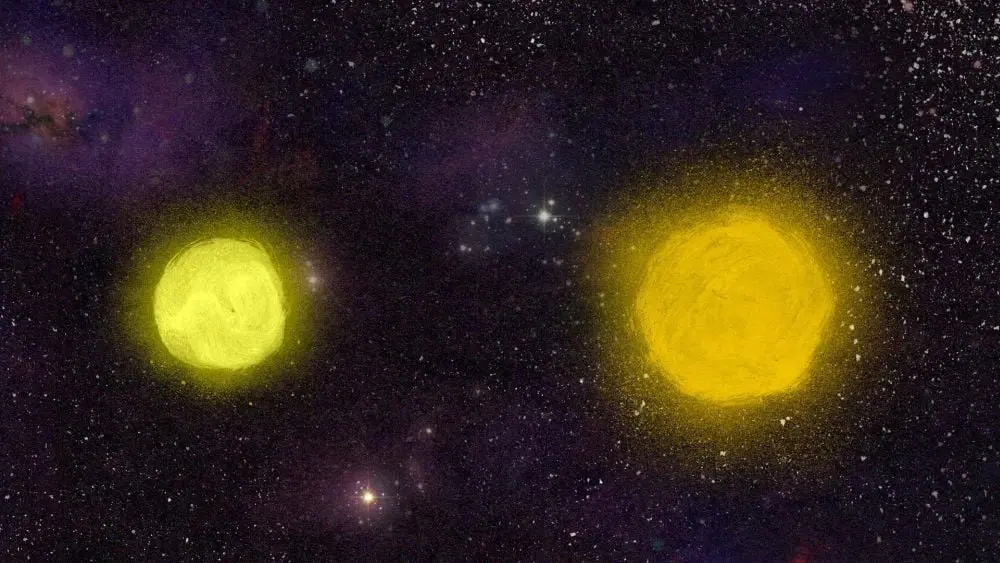
Self-lensing occurs when a black hole and a normal star are in a binary orbit, but are far enough apart that no mass transfer (and thus no X-ray emission) occurs. As the black hole periodically passes in front of its companion star from Earth’s line of sight, it creates a repeating "pulse" of brightness in the star’s light curve. Identifying these periodic spikes allows astronomers to calculate the mass of the invisible companion, potentially confirming it as a black hole.
Evolution of the Project: From SuperWASP to TESS
The Black Hole Hunters project was originally launched in 2021, utilizing data from the Super Wide Angle Search for Planets (SuperWASP). SuperWASP is one of the most successful ground-based surveys for detecting transiting exoplanets, but it faced inherent limitations when applied to the search for black holes. Ground-based data is subject to "noise" from the Earth’s atmosphere, interference from the moon, and unavoidable gaps in observation caused by daylight and weather conditions. These "weather gaps" made it difficult to distinguish a true gravitational lensing event from a mere atmospheric fluctuation or an instrumental glitch.
Recognizing these hurdles, Dr. McMaster and his team overhauled the project’s data pipeline. The revamped project now utilizes data from NASA’s Transiting Exoplanet Survey Satellite (TESS). Launched in 2018, TESS is a space-based observatory designed to scan the entire sky for temporary drops in stellar brightness caused by orbiting planets. Because it operates in the vacuum of space, TESS provides incredibly "clean" data, capturing the light curves of hundreds of thousands of stars every few minutes without the interference of an atmosphere.
This shift to TESS data has transformed the search. The satellite’s high-cadence observations provide a near-continuous stream of data, making it the ideal tool for spotting the brief, precise brightening events characteristic of gravitational lensing. However, the sheer volume of data produced by TESS—millions of light curves—is far too vast for any single team of professional astronomers to analyze.
The Synergy of Artificial Intelligence and Human Intuition
To manage the deluge of TESS data, the Black Hole Hunters project has integrated advanced machine learning. An AI algorithm was developed to perform the initial "triage," scanning through millions of stellar light curves and categorizing them into "interesting" or "boring" candidates. This computational filter can process in days what would take a human researcher decades to complete.
Despite the power of AI, it is not infallible. Machine learning algorithms are frequently "tricked" by natural stellar phenomena. Sunspots, pulsating variable stars, and eclipsing binaries (where two stars pass in front of each other) can create signatures that mimic the appearance of a lensing event. Furthermore, TESS itself occasionally suffers from electronic glitches or "jitter" that an AI might misinterpret as a discovery.
This is where the "citizen science" element becomes critical. Human beings possess a natural, highly evolved capacity for pattern recognition that currently exceeds even the most sophisticated AI when it comes to identifying anomalies. By presenting the "interesting" candidates to volunteers on the Zooniverse platform, the project utilizes human intuition to weed out the false positives.
Grace Clarke, an undergraduate at the University of Southampton and a project volunteer, emphasized that participants do not need a background in astrophysics. The task involves looking at a graph and identifying specific shapes—looking for the tell-tale symmetrical "hump" of a lensing event amidst the background noise. This collaborative "human-in-the-loop" system ensures that the final list of candidates passed on for professional follow-up is of the highest possible quality.
Project Timeline and Current Progress
The journey of the Black Hole Hunters project reflects the rapid evolution of digital astronomy:
- October 2021: The project officially launches on Zooniverse, initially focusing on the SuperWASP dataset.
- 2022-2023: Researchers identify the limitations of ground-based data and begin developing a new pipeline for TESS data. Dr. Adam McMaster moves to the University of Southampton, bringing the project to a new hub of astrophysical research.
- 2024: The project is relaunched with TESS data and integrated AI filtering. A "media blitz" is initiated to bolster volunteer numbers.
- Present Status: As of late 2024, the project has engaged nearly 23,000 volunteers who have collectively performed almost 12,000,000 classifications. The current phase of the survey is approximately 43% complete.
The project is currently in a critical phase of data processing. The goal is to finish the classification of the current TESS sector data to generate a "shortlist" of black hole candidates. Once this list is finalized, the team at the University of Southampton will coordinate with major observatories—potentially including the Hubble Space Telescope or the James Webb Space Telescope—to perform follow-up observations and confirm the masses of the suspected black holes.
Broader Implications for Galactic Science
The successful identification of even a few dozen new black holes through this project would have profound implications for our understanding of the universe. First, it would provide empirical evidence to support or refine stellar evolution models. If the project finds fewer black holes than predicted, it may suggest that our understanding of supernova mechanics is flawed, or that more massive stars end their lives as neutron stars than previously thought.
Second, mapping the distribution of these "hidden" black holes helps astronomers understand the dynamical history of the Milky Way. Knowing where these objects are located—and whether they are mostly in binaries or wandering solo—provides clues about how star clusters form and dissolve over billions of years.
Finally, the project serves as a blueprint for the future of "Big Data" astronomy. With upcoming missions like the Vera C. Rubin Observatory expected to produce 20 terabytes of data every night, the combination of AI pre-filtering and citizen science validation seen in Black Hole Hunters will likely become the standard methodology for discovery in the 21st century.
As the Black Hole Hunters project nears its halfway mark, the call for more "armchair astronomers" continues. For the volunteers involved, the reward is the potential to be the first human eyes to ever see the signature of a previously unknown monster lurking in our galactic backyard—a reminder that in the age of supercomputers, the human element remains indispensable to the voyage of discovery.