Sisilia Frederika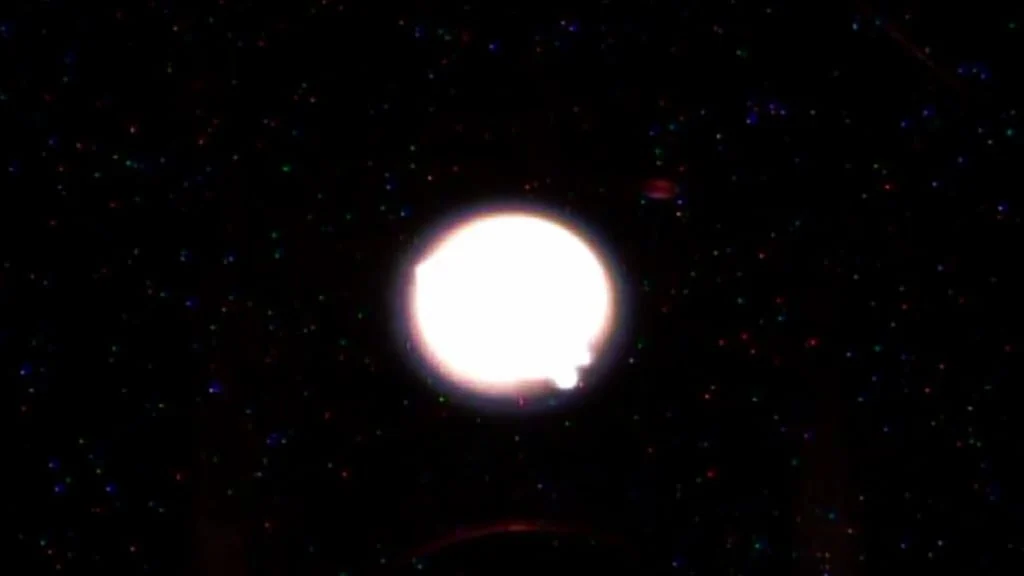
The risk of fire represents one of the most significant existential threats to crewed space exploration, a danger that mission planners at NASA and international space agencies prioritize above almost all other hardware or environmental hazards. While the vacuum of space itself is lethal, it is the confined, oxygen-rich environment of a spacecraft or lunar habitat that presents a unique and terrifying vulnerability. For decades, the aerospace industry has relied on a rigorous but terrestrial-based protocol known as NASA-STD-6001B to screen materials for flight. However, as humanity prepares for a permanent presence on the Moon through the Artemis program, researchers are realizing that the physics of fire in partial gravity remains a dangerous unknown. To address this gap, a collaborative team from NASA’s Glenn Research Center, Johnson Space Center, and Case Western Reserve University has developed the Flammability of Materials on the Moon (FM2) experiment, a mission designed to bridge the gap between Earth-bound theory and extraterrestrial reality.
The Limitations of Terrestrial Testing: The NASA-STD-6001B Standard
To appreciate the necessity of the FM2 mission, one must first examine the current benchmark for spaceflight safety. The NASA-STD-6001B test, often referred to as "Test 1," is the primary gatekeeper for any material intended for use in a crewed cabin. The procedure is deceptively simple: a six-inch flame is applied to the bottom of a vertically mounted material sample in an environment that mimics the spacecraft’s atmospheric pressure and oxygen concentration. If the material burns more than six inches or sheds burning debris that could ignite other surfaces, it is deemed a failure and prohibited from use in habitable volumes.
While this test has provided a baseline of safety for the Space Shuttle and International Space Station (ISS) eras, it is fundamentally limited by the environment in which it is conducted. On Earth, gravity dictates the behavior of fire through a process called buoyancy-driven convection. As a flame heats the surrounding air, the hot gases become less dense and rise, creating a vacuum that draws in fresh, cool oxygen from below. This constant cycle feeds the flame and gives it its familiar upward-pointing shape. In the microgravity of the ISS, this cycle is broken. Without the "up and down" provided by gravity, hot gases do not rise. Instead, flames form spherical "blobs" that move slowly and are primarily sustained by the station’s mechanical ventilation systems.
The Unique Danger of Lunar Gravity
The transition from the microgravity of the ISS to the partial gravity of the Moon (approximately 1/6th of Earth’s gravity) introduces a complex middle ground that may actually be more hazardous than either extreme. In a recent paper detailing the FM2 mission, researchers argue that lunar gravity could create a "Goldilocks" condition for combustion.
On Earth (1g), the rapid upward flow of hot gases can sometimes lead to a phenomenon known as "blowoff." In cases where a material is only marginally flammable, the speed of the convective current can essentially "outrun" the flame’s ability to consume fuel, effectively blowing the fire out. Conversely, in microgravity (0g), the lack of airflow can cause a fire to self-extinguish as it becomes choked by its own carbon dioxide byproduct, unless a fan is blowing.
On the Moon (0.16g), the convective flow is present but significantly slower than on Earth. This reduced flow is strong enough to continually resupply a flame with fresh oxygen, but not fast enough to cause a blowoff. Consequently, materials that pass the NASA-STD-6001B test on Earth—because the 1g environment extinguishes them—might burn persistently and uncontrollably in a lunar habitat. This realization has forced NASA to reconsider the safety margins for every material planned for the Artemis lunar base.
A Legacy of Orbital Fire Research: From Mir to Saffire
The FM2 mission is the culmination of decades of research into how fire behaves when separated from Earth’s gravity. The history of fire in space is marked by several key milestones:
- The Apollo 1 Tragedy (1967): A flash fire during a launchpad test killed three astronauts, leading to a complete overhaul of material standards and the realization that high-pressure, pure-oxygen environments are incredibly volatile.
- The Mir Space Station Fire (1997): An oxygen-generating canister ignited on the Russian station Mir, creating a torch-like flame that blocked the path to the escape craft. This remains the most serious fire incident in the history of crewed spaceflight.
- The BASS and FLEX Experiments: Over the last decade, astronauts on the ISS have conducted more than 1,500 controlled combustion experiments. However, these are limited to small-scale flames to protect the station’s crew and systems.
- The Saffire Missions: To study large-scale fires, NASA developed the Spacecraft Fire Safety (Saffire) experiments. These were conducted inside uncrewed Northrop Grumman Cygnus cargo capsules. After the Cygnus departed the ISS and before it re-entered Earth’s atmosphere, researchers ignited large sheets of cotton, fiberglass, and acrylic. Saffire revealed that flames in microgravity can spread in the opposite direction of airflow and burn more intensely on thinner materials—defying Earth-based predictions.
Despite the success of Saffire, it only provided data for microgravity. The FM2 mission represents the first time scientists will have the opportunity to observe these dynamics in a sustained partial-gravity environment.
The FM2 Mission Architecture: Science on the Lunar Surface
The Flammability of Materials on the Moon experiment will be delivered to the lunar surface via the Commercial Lunar Payload Services (CLPS) program. This initiative utilizes private lunar landers to carry NASA-funded science to the Moon, providing a cost-effective platform for high-risk, high-reward research.
The FM2 hardware consists of a self-contained, pressurized combustion chamber. Inside, four different solid fuel samples will be mounted and ignited sequentially. The experiment is designed to be fully autonomous, as the complexities of lunar communication and the hazardous nature of the test preclude real-time human intervention.
To capture the data, the chamber is equipped with an array of sophisticated sensors:
- High-Speed Cameras: These will record the flame’s geometry, spread rate, and color, which indicates the temperature and chemical efficiency of the burn.
- Radiometers: These sensors will measure the heat flux emitted by the flame, providing data on how much thermal energy is transferred to surrounding surfaces.
- Oxygen and Carbon Dioxide Sensors: These will track the rate of fuel consumption and the buildup of toxic byproducts in real-time.
Unlike terrestrial drop towers, which provide only about five seconds of weightlessness, or parabolic "vomit comet" flights, which provide roughly 25 seconds, the FM2 experiment will allow for minutes of continuous burning. This duration is critical for observing how a fire stabilizes and spreads over time—data that is impossible to gather anywhere else.
Implications for the Artemis Program and Martian Exploration
The timing of the FM2 mission is critical. NASA’s Artemis program aims to land the first woman and the next man on the Moon in the coming years, with the long-term goal of establishing the Artemis Base Camp. This base will consist of pressurized habitats, rovers, and laboratories, all of which must be designed with the most accurate fire safety data available.
If the FM2 data reveals that certain materials are more flammable in 1/6g than they are in 1g, it could lead to a massive re-evaluation of the materials used in spacesuits, wall liners, and electronic insulation. Furthermore, the data will serve as a vital stepping stone for Mars exploration. Mars has a gravity of 0.38g (roughly 3/8th of Earth’s). By comparing 0g, 0.16g (Moon), and 1g (Earth), scientists can create a mathematical curve to predict how fire will behave on the Martian surface, ensuring that the first pioneers on the Red Planet are protected by standards rooted in extraterrestrial physics rather than Earth-bound assumptions.
Expert Perspectives and Institutional Analysis
Researchers at NASA Glenn Research Center, the lead institution for FM2, have emphasized that this mission is about more than just checking boxes on a safety list. It is about fundamental physics. "We are moving from a reactive safety posture to a predictive one," notes a technical summary associated with the project. "By understanding the fluid dynamics of partial-gravity combustion, we can design habitats that are inherently fire-resistant rather than just relying on extinguishers after a fire starts."
While some critics argue that the cost of sending a "glorified furnace" to the Moon is high, the consensus among the scientific community is that the cost of an undetected fire hazard is infinitely higher. The data from FM2 will be shared with international partners, including the ESA (European Space Agency) and JAXA (Japan Aerospace Exploration Agency), contributing to a global standard for deep-space safety.
As the FM2 mission prepares for its launch, it stands as a testament to the meticulous planning required for human expansion into the solar system. Fire, the tool that first allowed humanity to conquer the Earth, remains one of our greatest challenges as we attempt to conquer the stars. Through the data gathered on the lunar surface, NASA hopes to ensure that the light of human presence on the Moon comes from the glow of its habitats, not the heat of an uncontrolled flame.