Vera Intan Clara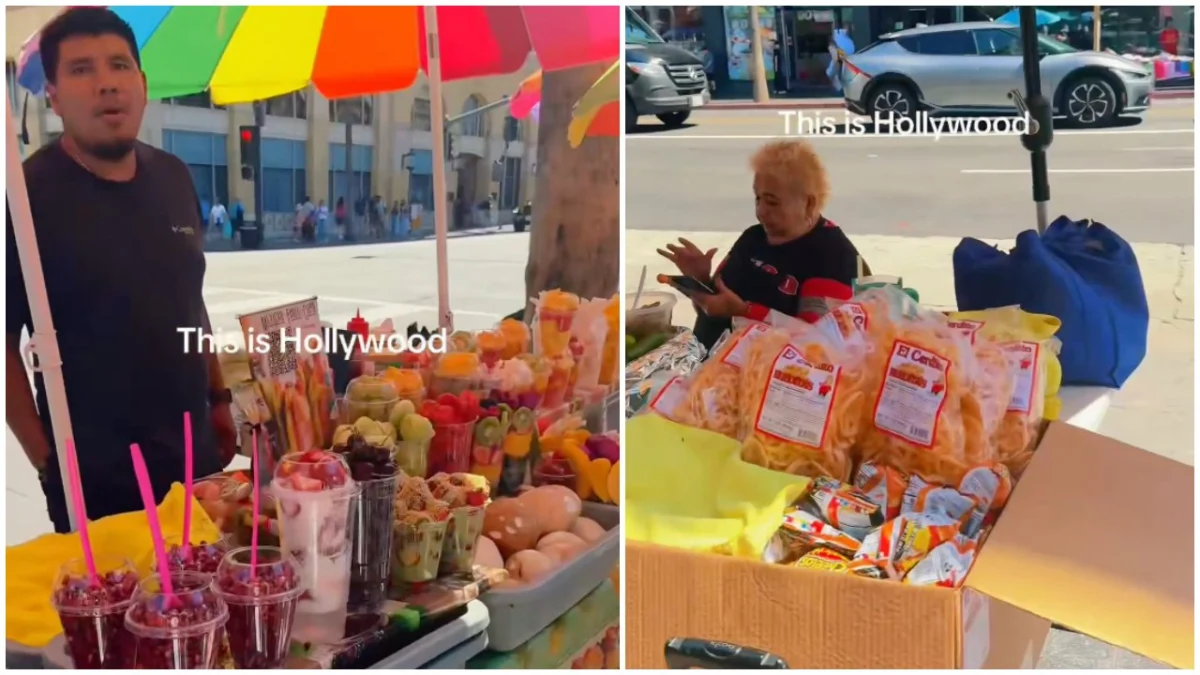
A recent social media post has ignited a fervent debate regarding the evolving landscape and cultural character of the iconic Hollywood Walk of Fame in Los Angeles, California. The viral content, shared by X user @WallStreetApes, juxtaposes contemporary scenes of the famed boulevard with a commentary suggesting a departure from its historical image, alleging it now resembles "the streets of Mexico" dueled by "illegal food vendor carts" and punctuated by "Mexican music blasting." The post concludes with the provocative assertion that importing the "3rd world" inevitably leads to becoming the "3rd world," fueling a broader discussion about urban change, immigration, and cultural identity in one of America’s most recognizable tourist destinations.
The Hollywood Walk of Fame: A Legacy of Stardom and Tourism
The Hollywood Walk of Fame, inaugurated in 1960, stands as a monumental tribute to achievements in the entertainment industry, attracting millions of tourists annually. Spanning 15 blocks of Hollywood Boulevard and three blocks of Vine Street, it features over 2,700 brass stars embedded in the sidewalks, each bearing the name of a celebrity. Beyond its symbolic importance, the Walk of Fame is a vital economic engine for Hollywood, drawing visitors who contribute significantly to local businesses, hotels, and restaurants. For decades, the area has been synonymous with glitz, glamour, and the American dream, embodying a particular vision of success and cultural aspiration. The perceived alteration of its visual and auditory environment, as highlighted by the X post, touches upon deeply ingrained notions of what this landmark represents to both locals and international visitors.
The area’s consistent high foot traffic has historically made it a magnet for street performers, souvenir vendors, and various informal economic activities. While some level of street commerce has always been part of its vibrant atmosphere, the specific nature and prevalence of food vendors, particularly those with a distinct cultural identity, have become a point of contention for some observers. The recent video, under 30 seconds in length, depicts a bustling scene along the Walk of Fame, characterized by numerous food carts and individuals offering souvenirs for sale, a sight not entirely unfamiliar in major tourist hubs globally. However, the X user’s framing of these activities, particularly the emphasis on "illegal food vendor carts" and the cultural origins of the music, casts these everyday urban phenomena in a politically charged light.
The Evolution of Street Vending Regulations in Los Angeles
The debate around street vending in Los Angeles is not new but has undergone significant shifts in recent years. For decades, sidewalk vending was largely illegal across most of the city, subject to fines and confiscation of goods. This created a challenging environment for a vast informal economy, primarily driven by immigrant communities seeking economic opportunities. Many vendors operated in the shadows, facing constant risk of enforcement.
A pivotal change occurred in 2018 when the Los Angeles City Council voted to decriminalize street vending and establish a permit system. This landmark decision, spurred by statewide legislation (SB 946) aimed at promoting economic equity and reducing the criminalization of low-income entrepreneurs, sought to bring vendors into the formal economy. The new regulations, fully implemented in 2020, established a framework for obtaining permits, adhering to health and safety standards, and designating permissible vending zones. The intention was to regulate an existing reality, ensuring public safety and cleanliness while supporting small businesses.
However, the transition has not been without its complexities. The permitting process can be arduous, involving multiple agencies (Department of Public Health, Bureau of Street Services) and fees, posing barriers for some vendors, especially those with limited English proficiency or resources. Furthermore, enforcement remains a challenge. While operating without a permit is no longer a criminal offense, it can still result in administrative citations and fines. The distinction between a legally operating vendor with all requisite permits and an unpermitted one is often not immediately apparent to the public or even easily verifiable in a casual observation. This ambiguity fuels claims of "illegality" without concrete evidence, as highlighted by the X user’s post.
Demographic Realities and Cultural Dynamics of Los Angeles
The X user’s explicit comparison of the Walk of Fame to "the streets of Mexico" and the focus on "Mexican music" and "illegal food vendor carts" brings to the forefront the demographic realities of Los Los Angeles County. According to the United States Census Bureau, 49 percent of Los Angeles County’s population identifies as Hispanic or Latino, making it the largest ethnic group in the county. This demographic composition reflects a long and deep history of Mexican and broader Latin American immigration to Southern California, a region that was historically part of Mexico before the Treaty of Guadalupe Hidalgo in 1848.
Given these figures, it is not surprising to observe a significant presence of Hispanic or Latino residents engaged in various entrepreneurial activities, including street vending, across the county. This cultural presence extends beyond commerce, influencing the city’s cuisine, music, art, and overall cultural fabric. Mexican and other Latin American culinary traditions are deeply embedded in Los Angeles’s food scene, from high-end restaurants to beloved street food. The sounds of mariachi, cumbia, and norteño music are common throughout many neighborhoods, reflecting the diverse cultural tapestry of the city.
The comments section of the viral X post quickly became a battleground for differing perspectives on these demographic and cultural shifts. Some commenters vehemently pushed back against the original post’s narrative, asserting the long-standing historical presence of Mexicans in the region. One user retorted, "Mexicans were here long before you buddy. We’re a mix of indigenous people. Learn your history." Others broadened the scope, pointing out the diverse origins of street vendors, stating, "You are wrong. It’s not Mexicans, most of the people you see are from Venezuela, Colombia, from Central or South America." This highlights the complexity of attributing cultural identity and origin to individuals based solely on superficial observations and underscores the broader Latin American migration patterns to the United States.
Conversely, a segment of commenters echoed the sentiment of the original X user, expressing concern over the perceived "illegality" of the vendors and the cultural changes. Allegations such as "I’ll bet you not one of them pays ANY TAXES" and "That is 100% illegal! I can’t believe they allow this" were common, reflecting anxieties about economic fairness, regulatory compliance, and urban management. These statements underscore a division in public opinion, with some viewing the street vendors as a sign of uncontrolled urban decay and others seeing them as a vibrant, economically necessary component of urban life.
Implications for Urban Planning, Tourism, and Cultural Identity
The controversy surrounding the Hollywood Walk of Fame underscores several critical implications for urban planning, the tourism industry, and the evolving cultural identity of Los Angeles.
Urban Planning and Public Space: The presence of numerous street vendors, whether permitted or not, significantly impacts the use and perception of public space. City planners and urban designers face the challenge of balancing accessibility, pedestrian flow, cleanliness, and commercial activity. While vendors add vitality and convenience, an excessive or unmanaged presence can lead to overcrowding, litter, and potential safety concerns. The city’s ongoing efforts to designate specific vending zones, manage waste, and ensure public health compliance are central to integrating this informal economy into the urban fabric without compromising public welfare or the aesthetic appeal of landmark areas.
Tourism Experience: For tourists visiting the Walk of Fame, the experience can vary widely. Some might embrace the lively, bustling atmosphere and diverse food offerings as an authentic, immersive urban experience. Others, particularly those expecting a more pristine, sanitized, or historically consistent image of Hollywood, might find the increased vendor presence disruptive or visually dissonant with their expectations. The perception of "cleanliness" and "order" often plays a significant role in tourist satisfaction, and viral posts like the one in question can influence potential visitors’ impressions even before they arrive. The Hollywood Chamber of Commerce and local business improvement districts (BIDs) often work to maintain a balance that preserves the area’s iconic status while accommodating modern urban dynamics.
Economic Equity and Entrepreneurship: Street vending serves as a crucial economic ladder for many individuals and families, particularly within immigrant communities where formal employment opportunities may be limited due to language barriers, legal status, or lack of credentials. The ability to start a small business with relatively low overhead provides a pathway to self-sufficiency and contributes to the local economy through consumer spending. Advocacy groups for street vendors consistently highlight the importance of these micro-enterprises for economic equity and community resilience, arguing that supportive policies can empower vulnerable populations and foster local entrepreneurship.
Cultural Integration and Identity: The most profound implication lies in the debate over cultural integration and the evolving identity of American cities. The X user’s rhetoric of "import the 3rd world, become the 3rd world" reflects a nativist viewpoint that perceives cultural diversity and immigration as a threat to an idealized, static national identity. Such narratives often conflate immigration with illegality and economic decline, overlooking the historical contributions of immigrant communities to American society and economy. Los Angeles, a city built on successive waves of migration, is a prime example of a metropolis whose vibrancy is inextricably linked to its multiculturalism. The presence of diverse food, music, and entrepreneurial activity can be seen not as a degradation, but as an enrichment of the urban experience, reflecting the globalized nature of modern cities.
Official Responses and Ongoing Challenges
While no direct official statements were immediately available in response to this specific viral post, city authorities in Los Angeles have consistently addressed the broader issues surrounding street vending. The Los Angeles Police Department (LAPD) and the Bureau of Street Services are responsible for enforcing vending regulations, often focusing on areas with high foot traffic like the Walk of Fame. Their approach typically involves education about permit requirements, issuing warnings, and, if necessary, administrative citations rather than criminal arrests for unpermitted vending. The city’s Department of Public Health regularly inspects food vendors to ensure compliance with health codes, a critical aspect of public safety that differentiates regulated vendors from potentially unsafe operations.
Local business associations, such as the Hollywood Chamber of Commerce, frequently engage with city officials on matters related to public order, cleanliness, and the overall visitor experience on the Walk of Fame. They often advocate for effective enforcement of regulations to ensure a harmonious environment for both brick-and-mortar businesses and permitted street vendors, while also addressing concerns about sidewalk congestion and competitive fairness.
The ongoing challenge for Los Angeles remains how to effectively manage its street vending program. This involves streamlining the permit application process, increasing outreach and education for vendors, ensuring consistent and fair enforcement, and providing adequate infrastructure (such as trash receptacles and public restrooms) to support increased activity in public spaces. The city aims to strike a balance between fostering economic opportunity for micro-entrepreneurs and maintaining a safe, clean, and accessible environment for all residents and visitors.
Conclusion: A Mirror to Broader Societal Debates
The viral X post regarding the Hollywood Walk of Fame serves as more than just a commentary on street aesthetics; it acts as a microcosm for broader societal debates on immigration, cultural change, economic opportunity, and the very definition of urban identity in contemporary America. The diverse reactions online – ranging from historical corrections and defenses of cultural diversity to allegations of illegality and concerns over urban decay – highlight the deep divisions and differing values within the public sphere.
As Los Angeles continues to evolve, shaped by its rich history and dynamic demographics, the Walk of Fame will undoubtedly remain a focal point for these discussions. The visual and auditory tapestry of the city’s most famous boulevard is a reflection of its people – a complex, vibrant, and ever-changing mosaic. The challenge for policymakers and citizens alike is to navigate these changes with a commitment to equity, sustainability, and an appreciation for the multifaceted nature of urban life, ensuring that iconic spaces like the Hollywood Walk of Fame continue to thrive as symbols of both local culture and global appeal. The path forward requires nuanced understanding, robust policy, and a willingness to engage with the realities of a diverse and dynamic metropolis, rather than succumbing to simplistic or polarizing narratives.