Sisilia Frederika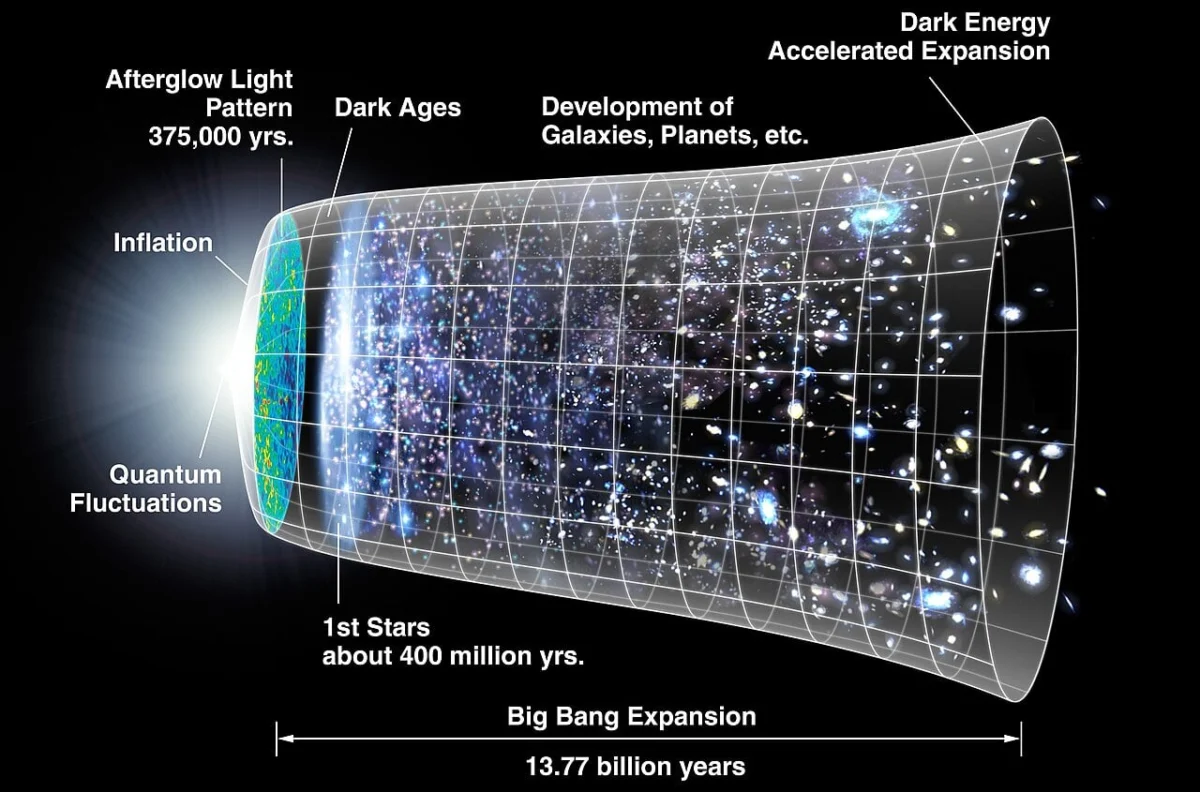
In a milestone for modern astrophysics, an international collaboration led by researchers at the University of Queensland’s School of Mathematics and Physics (UQ-SMP) has unveiled the most comprehensive dataset of supernovae ever compiled. The project, which synthesizes three decades of astronomical observations with cutting-edge survey data, includes detailed information on 2,884 Type 1a supernovae. This massive repository is now being used to probe the fundamental nature of dark energy, the enigmatic force that accounts for roughly 70% of the energy-matter density of the universe and is responsible for its accelerating expansion. The findings, published in the Publications of the Astronomical Society of Australia, suggest that the prevailing scientific understanding of dark energy as a constant force may be incomplete, potentially necessitating a significant revision of the Standard Model of Cosmology.
The Significance of Type 1a Supernovae as Cosmic Yardsticks
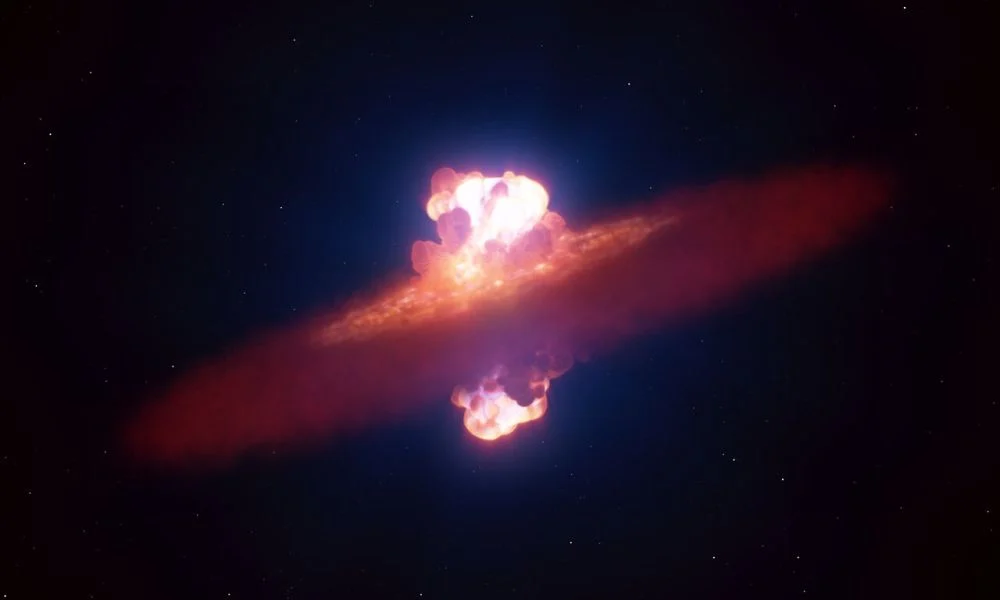
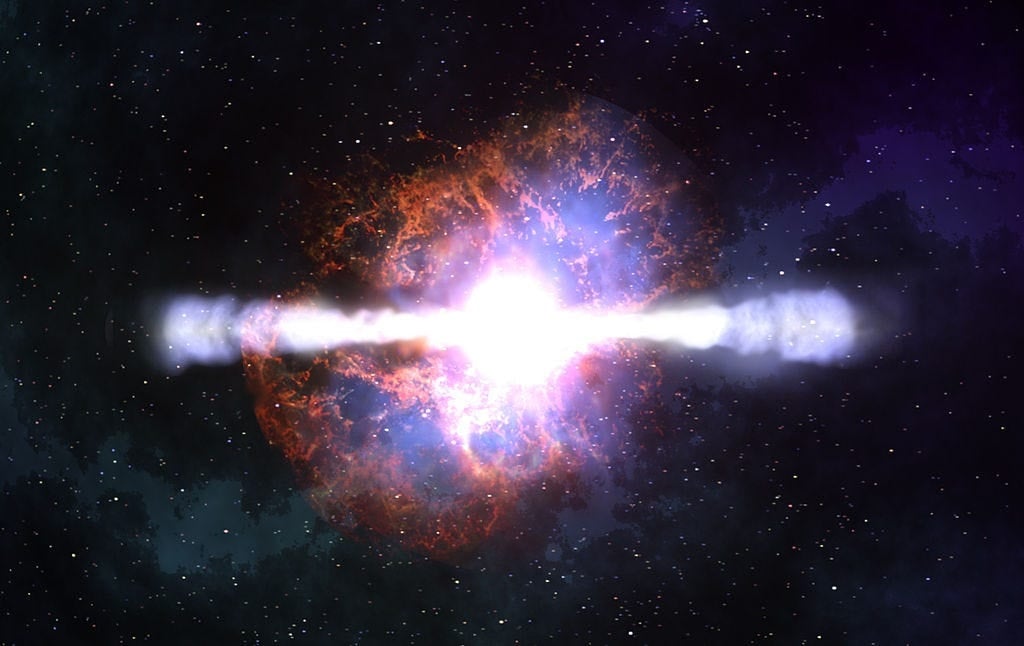
The cornerstone of this research lies in the observation of Type 1a supernovae, a specific and rare class of stellar explosion. These events occur approximately once every 500 years in a typical galaxy and are the result of catastrophic interactions in binary star systems. Specifically, a Type 1a supernova occurs when a white dwarf—the dense remnant of a star that has exhausted its nuclear fuel—accumulates too much matter from a companion star or merges with another white dwarf. Once the white dwarf exceeds the Chandrasekhar limit (roughly 1.4 times the mass of the Sun), it triggers a runaway thermonuclear explosion.
For astronomers, Type 1a supernovae are invaluable because they function as "standard candles." Because these explosions occur at a nearly uniform mass threshold, they exhibit a consistent intrinsic brightness. By comparing this known luminosity with how bright the supernova appears from Earth, scientists can calculate precise distances across billions of light-years. These measurements allow researchers to map the expansion history of the universe. If the universe’s expansion were slowing down due to gravity, distant supernovae would appear brighter; however, observations since the late 1990s have shown they are fainter than expected, proving that the expansion of the cosmos is actually accelerating.
A Thirty-Year Synthesis: Building the Largest Dataset
The newly released dataset is the culmination of decades of international effort. Led by Ryan Camilleri, a Ph.D. candidate at UQ-SMP, the team integrated 30 years of historical supernova measurements with the latest results from the Dark Energy Survey (DES), which released its three-year data results in 2024. The collaboration involved a diverse group of scientists from Australia, the United States, the United Kingdom, South Africa, Spain, and France.
To create a cohesive and reliable framework, the researchers had to reconcile data from various telescopes and instruments that operate across different wavelengths and with varying levels of precision. This required a monumental reanalysis of legacy data using modern computational techniques. "We’ve rebuilt three decades of astronomical observations into a single, consistent framework," Camilleri stated. By unifying these disparate sources, the team was able to reduce statistical uncertainties and create a more accurate picture of how the universe has evolved over time.
The integration process also involved combining supernova data with other cosmological probes, such as the Cosmic Microwave Background (CMB)—the "relic light" left over from the Big Bang—and large-scale maps of galaxy distribution. This multi-messenger approach ensures that the findings are not merely the result of local anomalies but reflect the broad-scale dynamics of the universe.
Technical Innovations: Accounting for Dust and Lensing
One of the primary challenges in using supernovae for distance measurements is the interference caused by the interstellar medium. Cosmic dust can absorb and scatter light, making a supernova appear redder and fainter than it actually is—an effect known as "reddening." If not properly accounted for, this could lead to errors in distance calculations. The UQ-led team applied advanced modeling to filter out the effects of dust, ensuring that the luminosity measurements remained accurate.
Furthermore, the study incorporated the effects of gravitational lensing. According to Einstein’s General Theory of Relativity, massive objects like galaxy clusters can warp the fabric of spacetime, acting as a magnifying glass for light passing behind them. This can subtly brighten or distort the appearance of distant supernovae. By factoring in these magnifications, the researchers were able to refine their data to a degree of precision previously unattainable.
"We also incorporated more subtle effects such as gravitational lensing, which is the bending and magnification of light around large objects as it travels from a supernova to Earth," Camilleri explained. This meticulous attention to detail has provided the team with a dataset robust enough to challenge long-held cosmological assumptions.
Challenging the Lambda Cold Dark Matter (ΛCDM) Model
For the past several decades, the Standard Model of Cosmology, known as the Lambda Cold Dark Matter (ΛCDM) model, has been the bedrock of our understanding of the universe. In this model, "Lambda" ($Lambda$) represents the cosmological constant—a term originally proposed by Albert Einstein. In modern theory, Lambda is synonymous with dark energy, characterized as a constant energy density that fills space homogeneously and does not change over time.
However, the new dataset suggests that this "constant" may not be constant at all. The team’s analysis indicates a deviation from the predictions of the ΛCDM model, suggesting instead that the influence of dark energy may vary over time. This concept, often referred to as "quintessence" or time-varying dark energy, implies that the strength of the force pushing galaxies apart could be evolving.
"Instead of confirming the standard model of cosmology, which assumes dark energy is fixed and unchanging, we have more evidence that dark energy may change over time," Camilleri noted. If dark energy is indeed dynamic, it would mean that the future of the universe—whether it ends in a "Big Freeze," a "Big Rip," or a "Big Crunch"—depends on the specific trajectory of this evolution.
Supporting Evidence from DESI and JWST
The UQ-SMP findings do not exist in a vacuum; they are bolstered by several other high-profile studies released in the mid-2020s. In 2024, the Dark Energy Spectroscopic Instrument (DESI) collaboration announced results from its first year of observations, which also hinted at a time-varying dark energy component. DESI uses 5,000 robotic "eyes" to map the positions of 40 million galaxies, measuring the "relic sound waves" (Baryon Acoustic Oscillations) from the early universe.
Similarly, observations from the James Webb Space Telescope (JWST) have provided new insights into the "Hubble Tension"—the persistent discrepancy between the rate of expansion measured in the local universe versus the rate predicted by the CMB. The JWST’s ability to observe in the infrared has allowed for even more precise calibrations of standard candles, further suggesting that the standard $Lambda$CDM model might be missing a crucial piece of the puzzle.
Professor Tamara Davis, a leading astrophysicist at the University of Queensland and a co-author of the study, emphasized the convergence of these different lines of evidence. "Our supernova data from DES in 2024 first showed hints that dark energy may be time-varying, and this new compilation also sees a deviation from the standard model, although in a slightly different direction," she said. "Similarly, results from the Dark Energy Spectroscopic Instrument (DESI) found hints of variations in dark energy in its surveys of relic sound waves from the early universe."
Broader Impact on Theoretical Physics
The implications of a time-varying dark energy extend far beyond the realm of observational astronomy. If the cosmological constant is not a constant, it could provide a vital clue for unifying the two pillars of modern physics: General Relativity and Quantum Mechanics. Currently, General Relativity describes gravity on a macroscopic scale, while Quantum Mechanics describes the behavior of particles on a subatomic scale. The two theories are famously incompatible, particularly when it comes to calculating the energy density of the vacuum—a value that quantum field theory predicts to be 120 orders of magnitude larger than what is actually observed as dark energy.
"All of this research may also hold the clue to explain how gravity and quantum physics fit together," Professor Davis added. "We know these two theories are each immensely successful in their own realms, so if we can figure out how to put them together, that would be a huge step in theoretical physics."
A dynamic dark energy could suggest that the vacuum energy of space is coupled to some as-yet-undiscovered field. This could lead to a "Theory of Everything" that resolves the long-standing "Cosmological Constant Problem."
Future Outlook: The Next Generation of Surveys
As the scientific community digests this massive dataset, preparations are already underway for even more ambitious projects. The Vera C. Rubin Observatory in Chile, equipped with the Legacy Survey of Space and Time (LSST), is expected to discover millions of supernovae over the next decade. Unlike previous surveys that focused on thousands of objects, the LSST will provide a cinematic view of the sky, allowing for a statistical precision that could finally confirm or refute the time-varying dark energy hypothesis.
Additionally, NASA’s upcoming Nancy Grace Roman Space Telescope is designed specifically to investigate dark energy using both supernova measurements and weak gravitational lensing. These future missions will build upon the foundation laid by the UQ-SMP team, using the consistent framework developed by Camilleri and his colleagues to process unprecedented volumes of data.
The paper detailing the supernova dataset and its cosmological implications is now available in the Publications of the Astronomical Society of Australia, with a companion paper focusing on the host galaxy mass measurements also released. As researchers continue to refine these models, the scientific world remains on the precipice of a paradigm shift that could redefine our understanding of the origin, evolution, and ultimate fate of the cosmos. By challenging the constancy of dark energy, the UQ-led team has opened a new chapter in the quest to solve the greatest mystery in the universe.