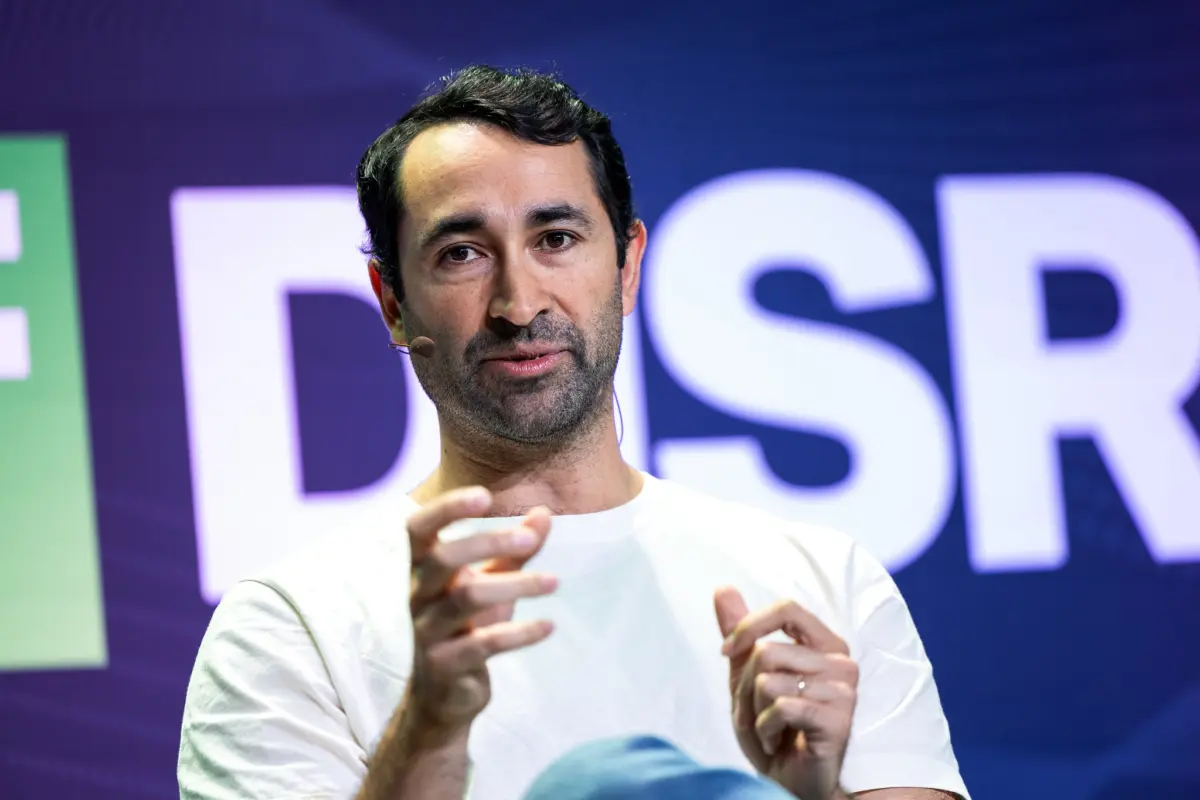
Sonny Valindra

Rohit Patel, a pivotal figure in Meta’s artificial intelligence development for the past eight years, has officially left the tech giant to embark on a new venture, TechCrunch has exclusively learned. Patel, who formerly held the position of Director at Meta’s Superintelligence Labs, has unveiled Ndoc, a startup poised to redefine productivity software. Ndoc is being positioned as an AI-native successor to established suites like Microsoft Office and Google Workspace, aiming to consolidate fragmented workflows into a unified, intelligent platform.
This departure marks the latest in a series of high-profile exits from Meta, signaling a potential shift in talent and strategic focus within the company. Patel’s departure follows that of Joel Kaplan, Chief Global Affairs Officer, who left after 15 years; AI researcher Andrew Tulloch; and Emily Dalton Smith, Head of Product for AI-for-Work. These exits, occurring over recent months, suggest a broader trend of experienced individuals seeking new opportunities or pursuing independent projects in the rapidly evolving AI landscape.
The Genesis of Ndoc: A Unified AI Workspace
Patel’s vision for Ndoc extends beyond simply integrating AI features into existing productivity tools. The core philosophy behind Ndoc is to replace the current, often disjointed, method of working across multiple applications such as Excel, Word, PowerPoint, Tableau, and even the ubiquitous "ChatGPT copy-paste" workflow. Instead, Ndoc aims to provide a single, cohesive workspace where all colleagues can collaborate seamlessly, regardless of their individual subscription status to the platform.
The Ndoc interface is meticulously designed to bring together three essential components into a unified layout. The "Stage" tab serves as the primary area for presenting key findings, akin to traditional slide decks, but also accommodating dynamic dashboards, interactive simulations, and compact applications. Complementing this is the "Narrative" tab, which houses detailed analyses, meticulously numbered citations, automatically generated figures, and the crucial "why" behind the data presented. Finally, the "Model" tab provides transparent access to the underlying datasets and the Python scripts used in their analysis and visualization, offering an unprecedented level of auditability.
Reinforcement Learning Roots and Trustworthy AI
Patel’s extensive background at Meta, where he concentrated on reinforcement learning—a machine learning paradigm where AI agents learn through trial and error to maximize rewards—and the critical assessment of AI output trustworthiness, has deeply influenced Ndoc’s architecture. He firmly believes that for AI-generated content, particularly in decision-making contexts like spreadsheets and presentations, the ability for users to scrutinize and verify the AI’s work is paramount. This commitment is reflected in Ndoc’s design, which makes the underlying Python scripts readily accessible.
"Even if you don’t know any Python, you can ask [the AI chat] to explain, ‘Hey, what does this script do? Which line has my formula?’ And you can verify that formula," Patel explained in an interview. "There’s nothing hidden behind the curtain here." This emphasis on transparency directly addresses growing concerns about the "black box" nature of some AI systems, fostering a greater sense of confidence and control for users.
Practical Application and Contextual Intelligence
In practice, Ndoc empowers users to upload datasets and instruct the AI to perform comprehensive analyses, subsequently generating narratives that explain the findings. A key differentiator is Ndoc’s ability to incorporate document-specific context, including the intended audience, desired tone, and even a "memory" that retains information across individual users, specific documents, team interactions, and the broader company context. "It maintains a memory across your person, that particular document, your team, and your company," Patel noted, highlighting the platform’s potential for sophisticated, context-aware assistance.
Furthermore, Ndoc is built and fine-tuned using a blend of open-source AI models. Patel stated that this foundational approach, developed from scratch, results in significantly lower operational costs compared to alternatives that rely on expensive frontier AI models. While Patel initially anticipated cost-efficiency to be a primary draw, early user feedback indicated a stronger preference for the unified workspace experience. "I thought that’s what people would be excited about, but people don’t care about that," he admitted. "What people are excited about is that they love seeing all their end-to-end in one place."
Reinventing the Digital Document and Embracing Open Source
Patel’s ambition extends to fundamentally reinventing the concept of a digital document. He envisions documents being exportable as a singular ".ndoc.html" file, a format that can be universally opened in any web browser. His intention to make this format open-source is a significant factor in his decision to leave Meta and pursue Ndoc independently. At a large corporation, achieving consensus on an open-source format would likely involve navigating the complexities of input from "hundreds of people and opinions on how the format should look," a process Patel deemed too slow for his vision.
"Humans can only move at human pace, whereas… I can move at the pace of what AI can do," Patel stated, underscoring his desire for rapid innovation and development. This agile approach is crucial in the fast-paced AI industry, where new breakthroughs and competitive offerings emerge at an unprecedented rate.
Navigating a Crowded Competitive Landscape
The ambition to establish Ndoc as the de facto platform for enterprise work is a formidable undertaking, particularly for a founder leading a nascent team of three without external funding. The competitive arena is already populated by major technology players and well-funded AI labs, all vying for dominance in the enterprise AI space.
Companies like OpenAI, Anthropic, Meta itself, SpaceXAI, and Google have all introduced enterprise AI tools designed to integrate with existing workplace applications such as Google Workspace and Microsoft 365. These tools aim to enable AI models to function directly within these established ecosystems. Last month, OpenAI further intensified the competition by launching "Space," a collaborative workspace within ChatGPT, directly challenging traditional productivity suites.
Patel acknowledges the competitive threat posed by these initiatives but argues that many are fundamentally misinterpreting the core need. "Companies are basically attaching AI to spreadsheets and it fills your cells for you," he critiqued. "It just sort of kills my soul. This is like if you just figured out electricity, and then you decided the best use case is to put lights on my bulls that till my soil. No. Get a tractor." He believes these incremental integrations, while convenient, fail to address the systemic inefficiencies of current workflows.
The rationale behind major AI labs attempting to integrate their models into existing workflows stems from the inherent difficulty in altering established user habits and replacing entire software suites. Patel recognizes this challenge and has proactively built connectors to facilitate the import of existing data from users’ current tools, easing the transition.
A Commitment to User Love and Agile Execution
Patel has set a high personal bar for Ndoc’s development: "My bar was that I’m not going to release anything I don’t love using." He emphasized that his own optimized AI workflows serve as a benchmark, and if he finds himself reverting to older methods while using Ndoc, it signifies a failure in the tool’s design. This commitment to user experience is evident in his acknowledgment of "a graveyard of tools that did not meet that bar."
Similarly, Patel is adopting a deliberate approach to fundraising, prioritizing customer validation. "I didn’t want to take money until I had some proof that people love the product," he stated. This customer-centric strategy aims to ensure that any future investment is directed towards a product with demonstrable market appeal and user satisfaction.
Current Status and Future Outlook
As of Tuesday, Ndoc is actively engaged in an enterprise pilot program and has opened an alpha version to a limited number of individuals who have joined the waitlist. While initial access is free, the platform will operate on a usage and token-based payment model. Patel anticipates releasing a beta version in the coming weeks, with a full public launch projected for next year.
For Patel, the emphasis remains on rapid execution. He believes that "Execution is extremely cheap… so go execute on a suboptimal plan and worry about it later. By the time you make the best plan, the execution will be done by somebody else." This philosophy underscores his commitment to iterative development and a proactive stance in a rapidly evolving technological landscape.
The implications of Ndoc’s emergence are significant. Should it succeed in its ambitious goal of unifying productivity workflows and challenging the dominance of established players, it could fundamentally alter how individuals and organizations approach their daily work. The emphasis on transparency, AI trustworthiness, and an open-source future for document formats positions Ndoc as a potentially disruptive force, driven by a founder with a clear vision and a deep understanding of AI’s potential. The success of Ndoc will hinge on its ability to attract users, demonstrate tangible productivity gains, and navigate the intense competition from established tech giants and emerging AI startups.