Chandra Wibowo

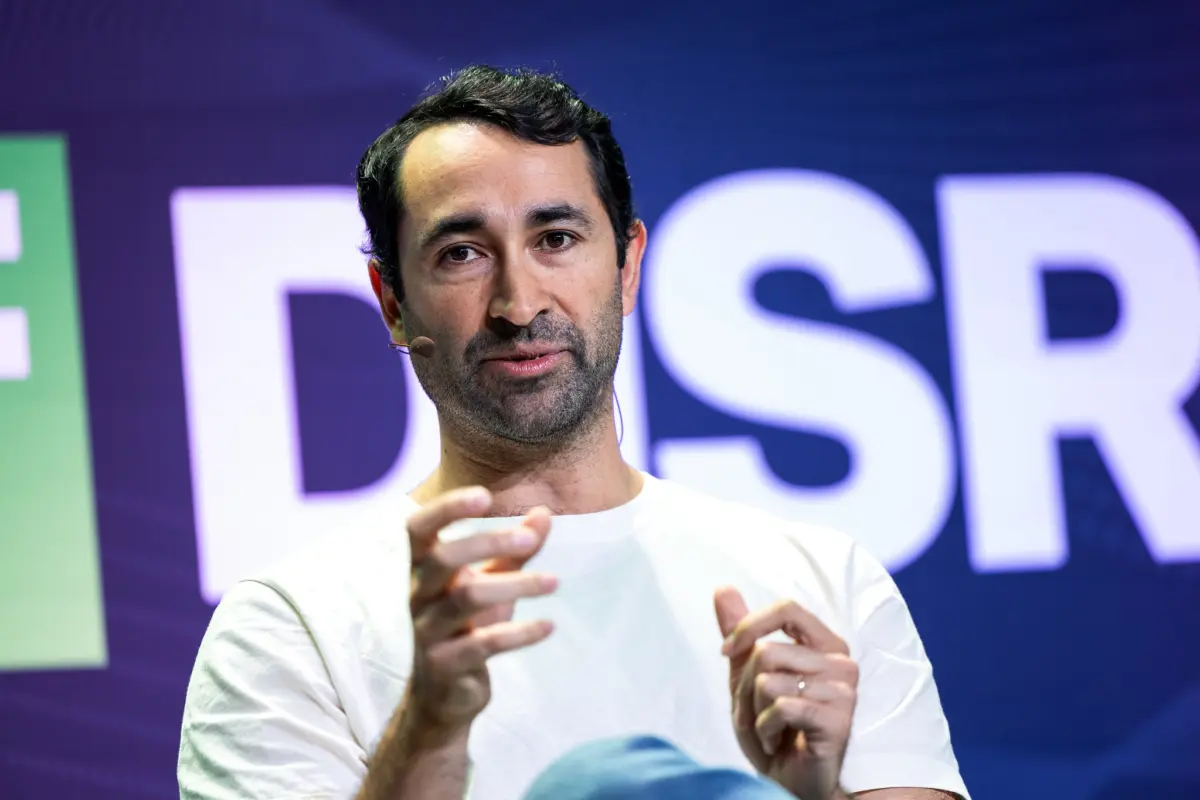
Jordi Visser, founder of Visser Labs and a seasoned Wall Street veteran with a three-decade career that includes leadership roles at Morgan Stanley and Weiss Multi-Strategy Advisers, has posited a compelling thesis: cryptocurrencies may offer a superior return on investment compared to artificial intelligence (AI) stocks themselves, as the AI revolution matures. Visser articulated this perspective in a recent interview with Cointelegraph’s Trade Secrets podcast, suggesting that while the initial explosive gains in AI-focused equities might be harder to replicate, the burgeoning demand for crypto payments and tokenized assets, driven by AI agents, is poised to unlock significant value within the digital asset space.
"Without AI, I don’t think crypto would be going through this bull market," Visser stated, underscoring the profound interconnectedness he perceives between the two rapidly evolving sectors. This conviction has led Visser to broaden his investment portfolio beyond the established giants like Bitcoin, Ether, and Solana, into a more diversified basket of altcoins.
Visser’s overarching argument hinges on the transformative potential of AI agents. He envisions a future where these intelligent software entities will act as proxies for individuals, executing trades and managing financial transactions on their behalf. "AI agents are effectively the same as the App Store or the smartphone for crypto," he analogized, drawing a parallel to the revolutionary impact of mobile technology on broader digital adoption. In this paradigm, users would define their financial objectives and instructions, while AI agents would handle the intricate execution on blockchain networks. This increased utility and accessibility, driven by AI agents, is expected to significantly boost activity in tokenized assets and crypto payment systems, thereby extending the investment opportunity beyond the hardware and software providers directly building AI infrastructure.
The Maturing AI Market: From Fireworks to Sustainable Growth
Visser’s cautious optimism regarding AI stocks stems from his observation that the initial "fireworks show" of rapid, often speculative, growth may be winding down. He noted that by mid-May, he had begun reducing his exposure to companies like memory chipmaker Micron. His reasoning was that both hedge funds and retail investors had become overwhelmingly concentrated in AI-related investments, creating a crowded trade. "One of the reasons that Bitcoin and Ethereum were having such a hard time is because the focus was completely on AI," Visser explained, implying that capital was being diverted away from digital assets towards the perceived immediate gains in AI equities.
The financial performance of major AI players in recent quarters has indeed been remarkable, fueling investor enthusiasm. For instance, Microsoft reported in late April that its AI business was generating revenue at an annualized rate of $37 billion, more than doubling from the previous year. Similarly, Micron, a key supplier of memory chips crucial for AI hardware, reported in March that its fiscal second-quarter revenue had nearly tripled to $23.86 billion. These figures underscored the significant commercialization and demand for AI-driven products and services.
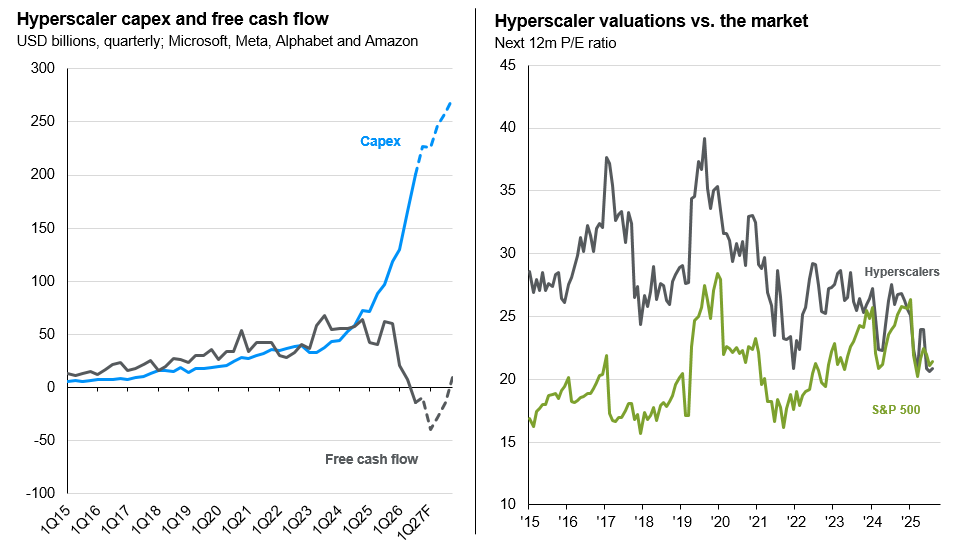
However, Visser points to a shift in market dynamics. He tracks a 100-stock AI portfolio that, while up approximately 40% year-to-date, has exhibited greater volatility than Bitcoin on a rolling 126-day basis. This suggests a maturing market where initial speculative fervor is giving way to more nuanced assessments of profitability and sustainability. The substantial capital expenditures required for AI infrastructure development, often exceeding current operational cash flows, are becoming a focal point. Oracle, for example, reported $55.7 billion in capital expenditures for fiscal year 2026 against $32 billion in operating cash flow, necessitating significant debt financing to fund its cloud infrastructure and AI ambitions.

"I didn’t say AI was over. AI fireworks show is over," Visser clarified, emphasizing that he still foresees years of growth in computing demand driven by AI agents. However, he advises investors to temper their expectations for the kind of parabolic returns seen in the initial phase of the AI boom.
AI’s "Smartphone Moment" for Crypto
The analogy of AI agents as crypto’s "smartphone moment" is central to Visser’s thesis. He argues that just as smartphones democratized access to the internet and mobile applications, AI agents will similarly simplify and broaden the adoption of cryptocurrencies and blockchain-based financial services. This increased utility and user-friendliness is anticipated to drive organic demand for digital assets.
The demand for AI compute power itself is also a significant, albeit perhaps more direct, driver. As AI models become more sophisticated and widespread, they require vast amounts of processing power. This demand directly benefits companies involved in semiconductor manufacturing, cloud computing, and data center operations. However, Visser’s argument extends beyond these direct beneficiaries. He posits that the output of AI, in the form of intelligent agents and automated financial processes, will necessitate and utilize cryptocurrencies.
For instance, AI agents tasked with managing portfolios might autonomously execute trades on decentralized exchanges, requiring native tokens or stablecoins for transaction settlement. Similarly, AI-driven supply chain management systems could leverage tokenized assets to represent ownership or track goods, with payments settled via cryptocurrency. This creates a fundamental demand for the underlying blockchain infrastructure and its associated digital assets.
Expanding Crypto Bets: Beyond the Big Three
Reflecting his conviction in this evolving landscape, Visser has significantly diversified his crypto holdings. Until August, his portfolio was concentrated in Bitcoin, Ether, and Solana. While Bitcoin remains his largest position, he has since begun acquiring a wider array of tokens.
His inclusion of Dogecoin in his broader market tracking index is a notable signal. Visser views meme coins like Dogecoin as indicators of returning retail enthusiasm, which he considers crucial for sustaining a broader and more inclusive market rally. "They’re the energy of the space and they’re the ones that are going to fuel this as other people get involved," he stated, highlighting the psychological and participatory role of retail investors in driving crypto adoption.
To monitor this expanding market, Visser maintains an equally weighted index comprising 42 tokens and four publicly traded stocks. He reports that this index has outperformed Bitcoin since June, and he intends to hold all its constituents, suggesting a belief in the collective growth potential of a diversified digital asset portfolio.
Privacy as a Key Thematic Investment
Within his broader crypto allocation, Visser has identified privacy as a key thematic investment. He is not betting on a single company but on the fundamental importance of privacy in an increasingly digital and AI-driven world. "I’m not betting on one company, but I believe in privacy," he asserted.
Visser anticipates that the proliferation of AI will amplify concerns around privacy and identity protection. As AI systems become more capable of data analysis and pattern recognition, the potential for fraud, surveillance, and other forms of digital abuse is likely to increase. This heightened risk environment, he believes, will drive greater demand for privacy-enhancing technologies and cryptocurrencies. Projects like Zcash and Monero, which are designed with advanced privacy features, align with this investment thesis. The ability of these cryptocurrencies to obscure transaction details offers a compelling alternative for users seeking to protect their financial activities from prying eyes, a concern that may only grow as AI becomes more pervasive.
Risks and Future Outlook
Despite his bullish outlook on crypto’s role in the AI era, Visser acknowledges potential headwinds. A severe downturn in the AI market that broadly impacts equity markets could pose a threat to his optimistic case for cryptocurrencies. "I don’t think that would end the bull market, but I definitely think it would retest the lows that we just saw," he commented, indicating that while crypto might prove resilient, it would not be entirely immune to a significant market shock originating from the AI sector.
The historical performance data illustrates the recent divergence. While AI stocks experienced a surge, Bitcoin saw a decline of 10.85% year-to-date by mid-May, and Ether dropped approximately 25.86% during the same period, according to TradingView data. This period coincided with the intense focus on AI equities.
The broader implication of Visser’s analysis is a potential recalibration of investment strategies. As the AI boom matures from its initial speculative phase into a more established growth cycle, investors may find that the indirect beneficiaries, such as the cryptocurrency ecosystem that will facilitate and be utilized by AI agents, offer more compelling long-term value creation. The shift from direct investment in AI technology providers to leveraging the infrastructure and applications enabled by AI, including decentralized finance and tokenized economies, represents a significant strategic pivot. The coming years will likely reveal whether Visser’s prediction of cryptocurrencies outperforming AI stocks holds true as the intertwined evolution of these transformative technologies unfolds.