Sisilia Frederika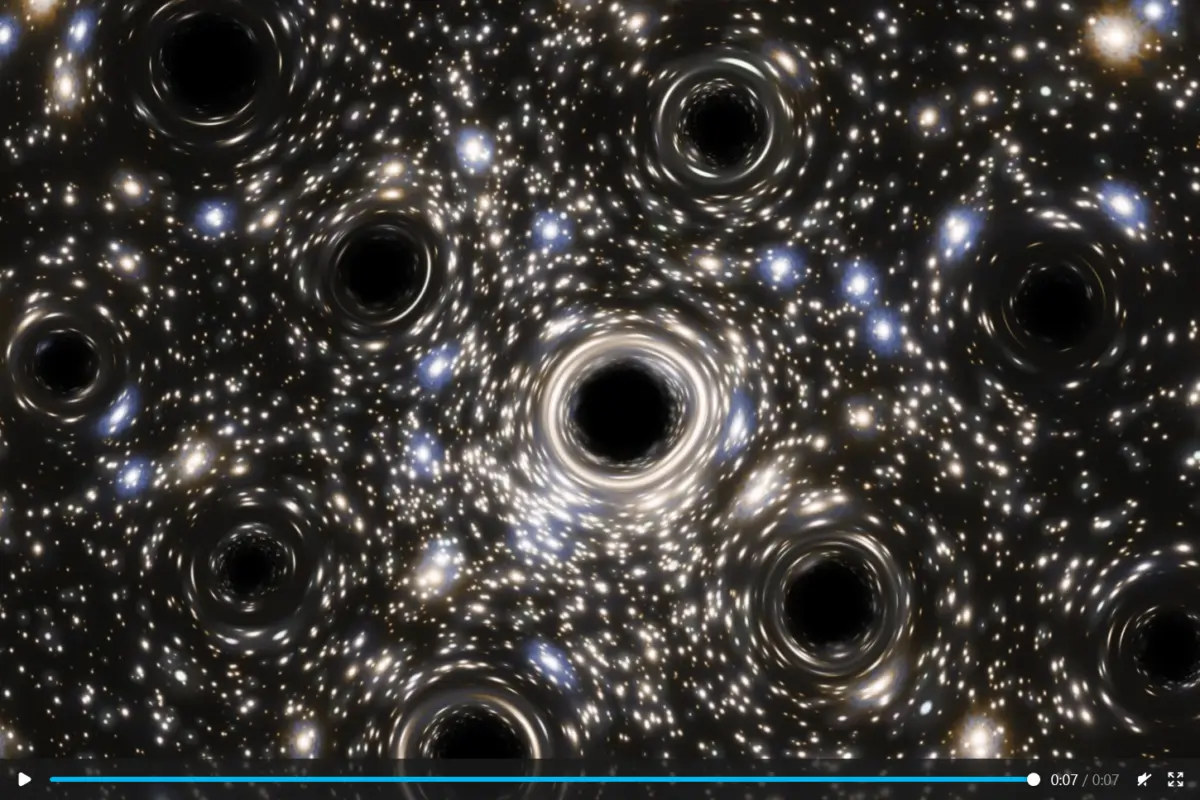
Researchers from Yale University and the University of North Texas have identified a significant class of black holes that do not reside within the gravitational anchors of galactic centers but instead traverse the interstellar void. These "wandering" black holes, which can travel through the cosmos for billions of years, are now being recognized as critical keys to unlocking the history of the universe. In a study published in The Astrophysical Journal Letters, the research team suggests that these rogue entities were once supermassive black holes (SMBHs) situated at the hearts of galaxies before being displaced by violent galactic mergers. This shift in perspective offers a new framework for understanding the origins of black holes and the complex evolutionary paths of the galaxies that once hosted them.
The study was spearheaded by Emma Jane Weller, an Astronomy PhD candidate at Yale University. She was supported by Professor Priyamvada Natarajan, the Chair of Yale’s astronomy department and a leading figure in the study of dark matter and black hole formation, and Colin J. Burke, a postdoctoral fellow with joint affiliations at Yale and the University of North Texas. Their work utilizes advanced cosmological modeling to demonstrate that the current location of a black hole is not merely a matter of chance, but a record of its host galaxy’s structural history.
The ASTRID Simulation: A Digital Reconstruction of the Cosmos
To reach these conclusions, the research team employed ASTRID, one of the most sophisticated high-resolution cosmological simulation suites currently available to the scientific community. Unlike many previous simulations that focused on specific clusters or limited timeframes, ASTRID models the evolution of the universe from its infancy to the present day, covering a span of approximately 12.6 billion years. This includes the complex interactions between dark matter, interstellar gas, star formation, and the growth of black holes.
A critical technical feature of the ASTRID simulation is its handling of black hole positioning. In traditional cosmological models, researchers often "fix" black holes at the geometric centers of galaxies to simplify the computational load. However, ASTRID allows for a more dynamic and realistic approach. It models the specific gravitational forces that act upon black holes as they interact with their surroundings. This allows black holes to move naturally through the gas and stellar populations of their host galaxies. By tracking these movements, the Yale and UNT team could distinguish between black holes that remained stable at the galactic core and those that were ejected or nudged into "wandering" orbits.
The simulation focused on galaxies with stellar masses ranging from 10 million to 1 trillion Solar masses. This wide range allowed the team to observe how the size and gravitational depth of a galaxy influence the likelihood of a black hole becoming a wanderer. The data revealed that the process of displacement is significantly more pronounced in low-mass galaxies. In these smaller systems, the gravitational "well" is shallower, making it easier for a black hole to be knocked out of the center during a merger or a significant gravitational disturbance.
The Mechanics of Displacement and Galactic Mergers
The primary driver behind the creation of wandering black holes is the process of galactic merging. When two galaxies collide, their respective central black holes eventually begin a gravitational dance, spiraling toward one another. Under certain conditions, these black holes can merge, but the process often involves a massive release of gravitational waves. If these waves are emitted asymmetrically, they can provide a "recoil kick" to the newly formed black hole, potentially ejecting it from the center of the galaxy entirely.
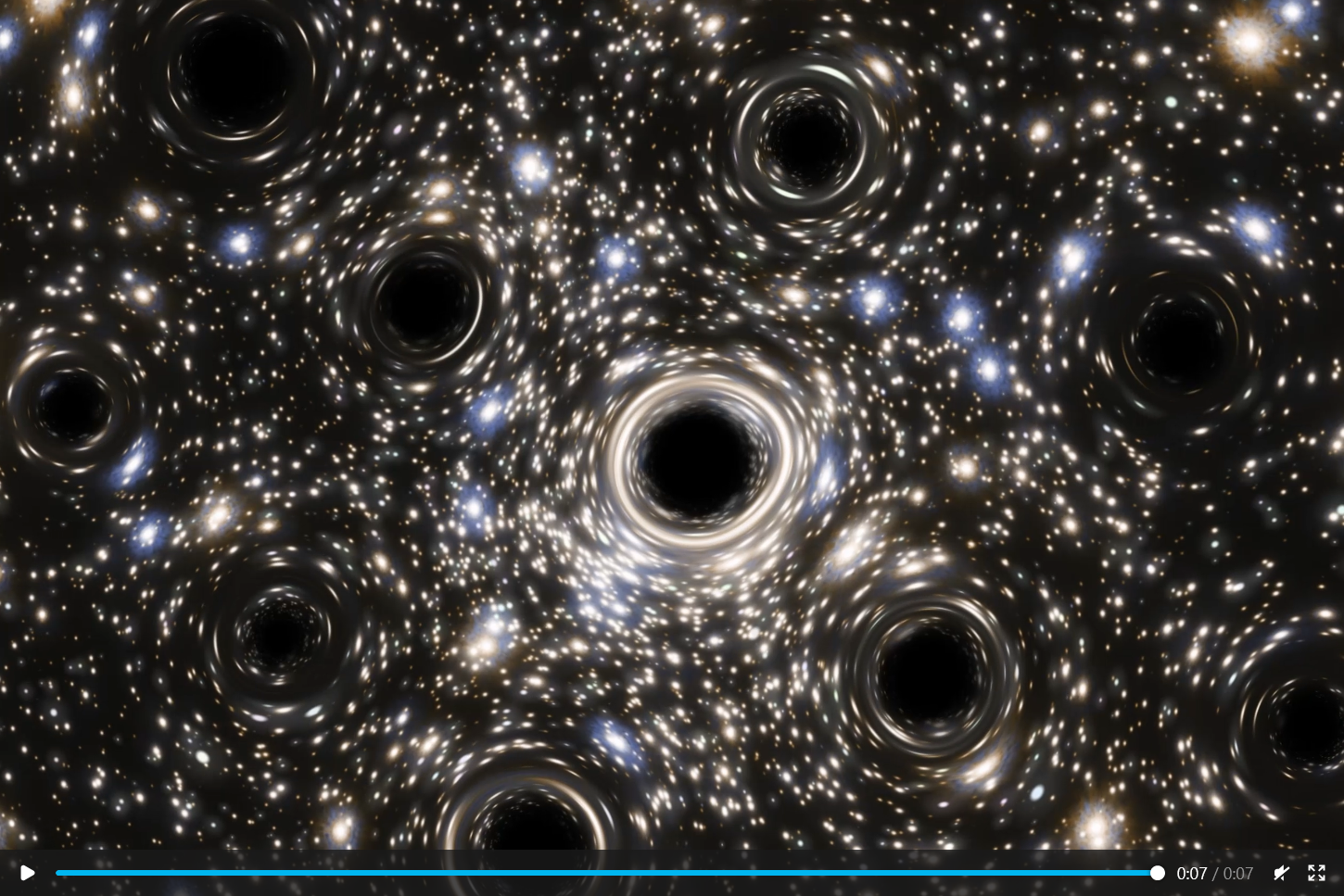
In other scenarios, a third black hole might be introduced during a subsequent merger before the first two have settled, leading to a three-body interaction that flings one of the black holes into the outer reaches of the galaxy or into intergalactic space. The researchers found that these wanderers do not simply disappear; they continue to exist in the galactic halo or the surrounding void, carrying the "imprint" of the collision that displaced them.
"Our results show that considering wandering black holes, in addition to centered black holes, is essential for understanding the origins and dynamics of massive black holes and the histories of their host galaxies," stated Weller. This suggests that any census of black holes in the universe that only looks at galactic centers is fundamentally incomplete.
Solving the "Seed" Mystery: Heavy vs. Light Origins
One of the most profound implications of the study concerns the "seed" theories of black hole formation. Scientists have long debated how supermassive black holes—those millions or billions of times the mass of our Sun—could have grown so large so quickly in the early universe. There are two primary competing theories:
- Light Seeds: This theory posits that the first generation of stars (Population III stars) collapsed to form relatively small black holes, roughly 10 to 100 times the mass of the Sun. Over billions of years, these seeds coalesced and consumed gas to become supermassive.
- Heavy Seeds: This theory, of which Professor Natarajan is a leading proponent, suggests that "Direct Collapse Black Holes" (DCBHs) formed from massive clouds of gas in the early universe. These clouds bypassed the star-formation stage and collapsed directly into black holes with masses 10,000 to 100,000 times that of the Sun.
The ASTRID simulation showed that low-mass galaxies are particularly adept at retaining information about these initial seeds. Because these galaxies have undergone fewer mergers and less internal transformation than giant elliptical galaxies, the black holes within them—whether centered or wandering—serve as "time capsules." By studying the masses and locations of wanderers in these smaller galaxies, astronomers can work backward to determine whether they began as light or heavy seeds.
Natarajan noted the significance of this "memory" in black holes: "Their present-day locations carry the imprint of everything that has happened to their host galaxies. By separating black holes at galactic centers from those that are wandering, we can begin to disentangle these two histories. Some of the universe’s most revealing black holes may be the ones that have wandered away."
Correlation with Star Formation and Galactic Evolution
The research also uncovered a correlation between a galaxy’s star-formation activity and the presence of wandering black holes. The data suggests that galaxies currently undergoing active star formation are more likely to host wandering black holes. This is likely because star formation is often triggered by the same mergers and gas inflows that cause gravitational instability and black hole displacement.
Conversely, "quiescent" or "dead" galaxies—those that have ceased forming new stars—are more likely to have their black holes settled firmly at their centers. In these systems, the gravitational environment has had billions of years to stabilize, allowing displaced black holes to eventually sink back toward the center through a process known as dynamical friction, or for the galaxy to have completed its structural evolution.
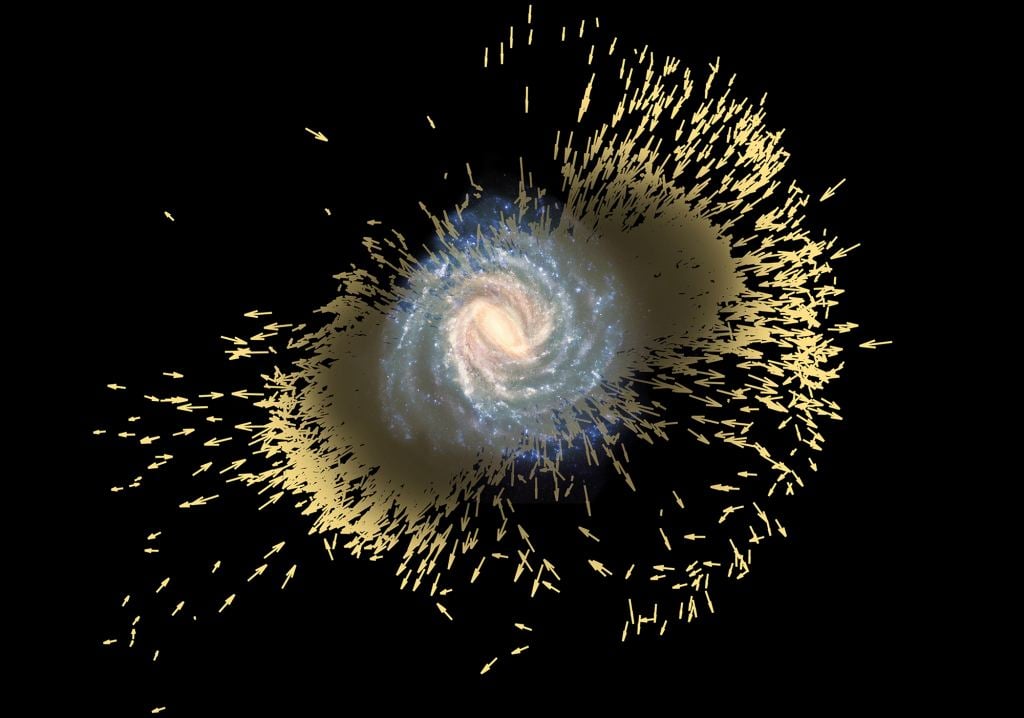
This finding provides a new diagnostic tool for astronomers. By observing the position of a black hole, researchers can make inferences about the recent merger history and the star-formation timeline of a galaxy without needing to observe the entire history of the system.
Future Observational Frameworks
While the ASTRID simulation provides a theoretical and computational foundation, the next step involves physical observation. Identifying wandering black holes is inherently difficult because they are often "dark"—they are not actively consuming large amounts of matter and thus do not emit the bright radiation characteristic of active galactic nuclei (AGN).
However, the researchers propose a multi-wavelength approach to find them:
- Deep X-ray Observations: Even a wandering black hole can emit X-rays if it passes through a pocket of interstellar gas.
- Optical and Infrared Spectroscopy: These tools can detect the gravitational influence of a black hole on nearby stars or track the movement of "off-center" light sources.
- Radio Astronomy: Extremely sensitive radio telescopes can pick up the faint signatures of black holes interacting with the magnetic fields of a galaxy.
- Tidal Disruption Events (TDEs): When a wandering black hole passes too close to a star, it can tear the star apart, creating a brilliant "flare" that can be detected by transient surveys.
"Each of these methods can probe different parts of the population," Weller explained. "By combining observations with the results from simulations, we may be able to identify the imprints of black hole formation and galaxy evolution."
Broader Cosmological Impact
The discovery that wandering black holes are a common and significant part of the cosmic landscape changes our understanding of the "Cosmic Web"—the large-scale structure of the universe. It suggests that the space between galaxies is not as empty as once thought, but is populated by massive gravitational entities that influence the distribution of dark matter and gas.
Furthermore, this research has implications for the future of gravitational wave astronomy. Facilities like the Laser Interferometer Space Antenna (LISA), a space-based gravitational wave detector planned for the 2030s, will be able to detect the mergers of the very black holes that Weller and her team are studying. By predicting the frequency and location of these "roaming" mergers, the Yale-UNT study provides a roadmap for what LISA might find.
As scientists continue to refine their models of the early universe, the "wanderers" once dismissed as outliers are proving to be essential characters in the story of cosmic growth. They represent the scars of ancient galactic collisions, preserved in the vacuum of space, waiting to reveal the secrets of how the first massive structures in the universe came to be. Through the lens of the ASTRID simulation, the history of the universe is no longer just found in its centers, but in the vast, silent spaces in between.