admin
admin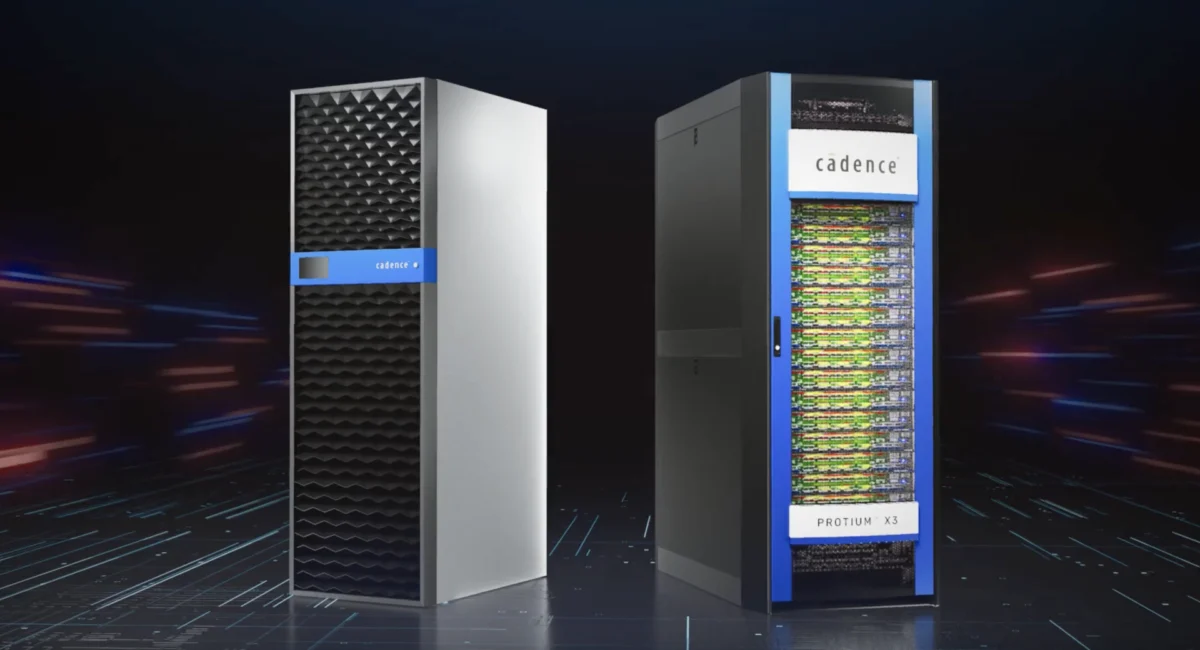
The landscape of global semiconductor development is currently undergoing a transformative shift as Chinese electronic design automation (EDA) firms integrate advanced artificial intelligence to bypass international technological constraints. Empyrean Technology, China’s leading provider of chip design software, recently announced a significant breakthrough in the application of agentic AI within its design suites. During the 2026 International Integrated Circuit Innovation Expo held in Shenzhen, Empyrean’s Chairman, Liu Weiping, revealed that the firm has successfully utilized autonomous AI agents to reduce the duration of complex circuit layout tasks from four weeks to just one week—a 75% increase in efficiency. This development marks a pivotal moment in China’s broader strategy to achieve semiconductor self-sufficiency and mitigate the impact of ongoing Western export controls on high-end chip-making equipment and software.
The Strategic Importance of Electronic Design Automation
To understand the magnitude of Empyrean’s announcement, it is necessary to contextualize the role of EDA in the semiconductor ecosystem. Often referred to as the "cradle of the chip industry," EDA consists of sophisticated software tools used to design, simulate, and verify the intricate patterns of integrated circuits (ICs). As modern chips now house tens of billions of transistors, manual design is a physical impossibility. EDA tools automate the placement and routing of these transistors, ensuring that the final hardware functions as intended without electrical interference or thermal failure.
Historically, the EDA market has been dominated by a "Big Three" oligopoly: Synopsys and Cadence Design Systems, both headquartered in the United States, and Siemens EDA (formerly Mentor Graphics), based in Germany. These firms sit at the absolute upstream of the supply chain, providing the essential blueprints and verification tools that giants like NVIDIA, Apple, and AMD rely upon. For China, dependence on these Western entities represents a critical vulnerability. Following the 2022 and 2023 export restrictions imposed by the U.S. Department of Commerce—which specifically targeted EDA software used for Gate-All-Around Field-Effect Transistor (GAAFET) architectures—Beijing has prioritized the development of domestic alternatives. Empyrean Technology has emerged as the national champion in this effort, tasked with closing the generational gap between domestic tools and global standards.
The Evolution of Agentic AI in Circuit Design
The integration of "agentic" AI represents the next frontier in automation. Unlike traditional AI, which often operates on a request-response basis or provides static predictions, agentic AI refers to systems capable of autonomous reasoning, planning, and executing multi-step tasks to achieve a specific goal. In the context of chip design, an AI agent can analyze a circuit’s requirements, identify potential bottlenecks in the layout, and iteratively test thousands of routing permutations without human intervention.
Liu Weiping’s disclosure regarding the reduction of design times highlights the practical application of this technology. By deploying an agentic EDA platform, Empyrean is moving beyond simple "AI-assisted" features toward a "self-driving" design process. The transition from a month-long manual or semi-automated layout process to a single week suggests that the AI can now handle the nuances of physical design—such as signal integrity and power distribution—with a level of precision that previously required extensive human oversight. This speed is critical for Chinese firms that are currently racing against time to modernize their domestic fabrication capabilities before further international restrictions are enacted.

Chronology of China’s EDA and Semiconductor Policy
The breakthrough by Empyrean Technology does not exist in a vacuum but is the result of a multi-year industrial policy aimed at decoupling from Western technology stacks. A timeline of recent events illustrates the momentum behind this shift:
- August 2022: The United States Bureau of Industry and Security (BIS) implements export controls on EDA software specifically designed for the development of chips using GAAFET structures, essential for 3nm nodes and below.
- 2023-2024: China’s "Big Fund" (National Integrated Circuit Industry Investment Fund) enters its third phase, injecting billions of dollars into domestic toolmakers, with Empyrean being a primary beneficiary.
- Early 2026: Global leaders Synopsys and Cadence announce their respective agentic AI platforms, leveraging partnerships with Microsoft Azure and NVIDIA’s Hopper and Blackwell GPU architectures.
- June 2026: China’s Ministry of Industry and Information Technology (MIIT) issues a comprehensive development plan for the information and communications industries, emphasizing "autonomous and controllable" supply chains.
- Last Week: Empyrean Technology publicly demonstrates its agentic AI capabilities in Shenzhen, signaling that the domestic industry is keeping pace with the AI-integration trends of its Western counterparts.
Comparative Analysis: Domestic Progress vs. Global Standards
While Empyrean’s 75% reduction in design time is an impressive feat, the firm operates in a hyper-competitive global environment. Western firms have also been aggressive in their AI adoption. Synopsys.ai and Cadence’s Cerebrus platform use machine learning to optimize "Power, Performance, and Area" (PPA), often yielding results that surpass those of experienced human engineers.
However, Empyrean’s challenge is unique. While Synopsys and Cadence can optimize their software to run on the latest NVIDIA H100 or Blackwell GPUs, Chinese firms must often optimize their EDA tools for domestic hardware or older, non-sanctioned GPU clusters. This "compute constraint" has forced Chinese developers to become more efficient in their algorithmic approaches. The focus on agentic AI—which emphasizes "smarter" planning over "brute-force" computation—may be a strategic response to the limited availability of high-end AI training hardware in the region.
Furthermore, several emerging startups, such as Agentrys and Cognichip, are entering the fray, attempting to reinvent EDA from the ground up using Large Language Models (LLMs) and specialized agents. Empyrean’s move to develop a dedicated agentic EDA platform suggests a consolidation of this trend, where the established domestic leader is absorbing the innovations of the startup ecosystem to maintain its dominance within the Chinese market.
Government Support and the MIIT Development Plan
The timing of Liu Weiping’s remarks is closely aligned with the regulatory environment in Beijing. The Ministry of Industry and Information Technology (MIIT) recently reinforced its commitment to the "information and communications industries" through a new development plan. This plan specifically highlights the need for breakthroughs in "bottleneck" technologies, of which EDA is arguably the most significant.
Government-backed incentives are increasingly focused on fostering "Little Giants"—specialized small and medium-sized enterprises that dominate niche sectors of the supply chain. By integrating AI into EDA, Empyrean is fulfilling a dual role: it is providing a commercial product that improves the productivity of Chinese chip designers at firms like SMIC (Semiconductor Manufacturing International Corporation) and CXMT (ChangXin Memory Technologies), and it is serving as a proof-of-concept for the viability of a completely domestic, high-tech supply chain.

Broader Implications for the Semiconductor Supply Chain
The successful deployment of agentic AI in chip design has implications that extend far beyond software. For Chinese manufacturers, faster design cycles mean a faster "time-to-market" for specialized chips. This is particularly relevant in the fields of Deep Ultraviolet (DUV) lithography optimization and vertical transistor designs.
As China remains restricted from acquiring Extreme Ultraviolet (EUV) lithography machines from ASML, domestic firms are forced to rely on DUV multi-patterning techniques to achieve advanced nodes (7nm and potentially 5nm). Multi-patterning is notoriously difficult to design and verify, as it requires splitting a single layer of a chip into multiple masks. Agentic AI is perfectly suited for this level of complexity, as it can manage the intricate geometric constraints and alignment issues inherent in multi-patterning far more efficiently than traditional software.
Additionally, the push toward 3D DRAM and advanced packaging (such as Chiplets) requires a fundamental rethinking of EDA. The ability of Empyrean’s AI to handle circuit layouts in a fraction of the usual time suggests that Chinese designers may be better equipped to experiment with these "More than Moore" scaling strategies, which rely on architectural innovation rather than just shrinking transistor sizes.
Industry Reaction and Future Outlook
Industry analysts have noted that while Empyrean’s progress is significant, the ultimate test will be the integration of these tools into high-volume manufacturing environments. Reliability is paramount in semiconductor design; a single error in the EDA process can lead to a "spun" wafer, costing millions of dollars in lost materials and time.
Observers from the international community remain divided on whether China can fully close the EDA gap. Some argue that the collaborative ecosystem between U.S. EDA firms and foundries like TSMC creates a "flywheel effect" that is difficult to replicate. Others suggest that the sheer volume of engineering talent in China, combined with the existential necessity of succeeding under sanctions, is creating a high-pressure environment where radical innovations like agentic AI can flourish more rapidly than in established markets.
As Empyrean Technology continues to refine its agentic EDA platform, the focus will likely shift toward "full-flow" automation—where AI manages every stage of design from initial specification to final "tape-out." If Empyrean can maintain this trajectory, it will not only provide a shield against external sanctions but may eventually emerge as a formidable competitor on the global stage, challenging the long-standing dominance of the Western "Big Three." For now, the 75% reduction in layout time stands as a clear signal: the Chinese semiconductor industry is no longer merely reacting to constraints but is actively utilizing the AI revolution to redefine the rules of chip design.