admin
admin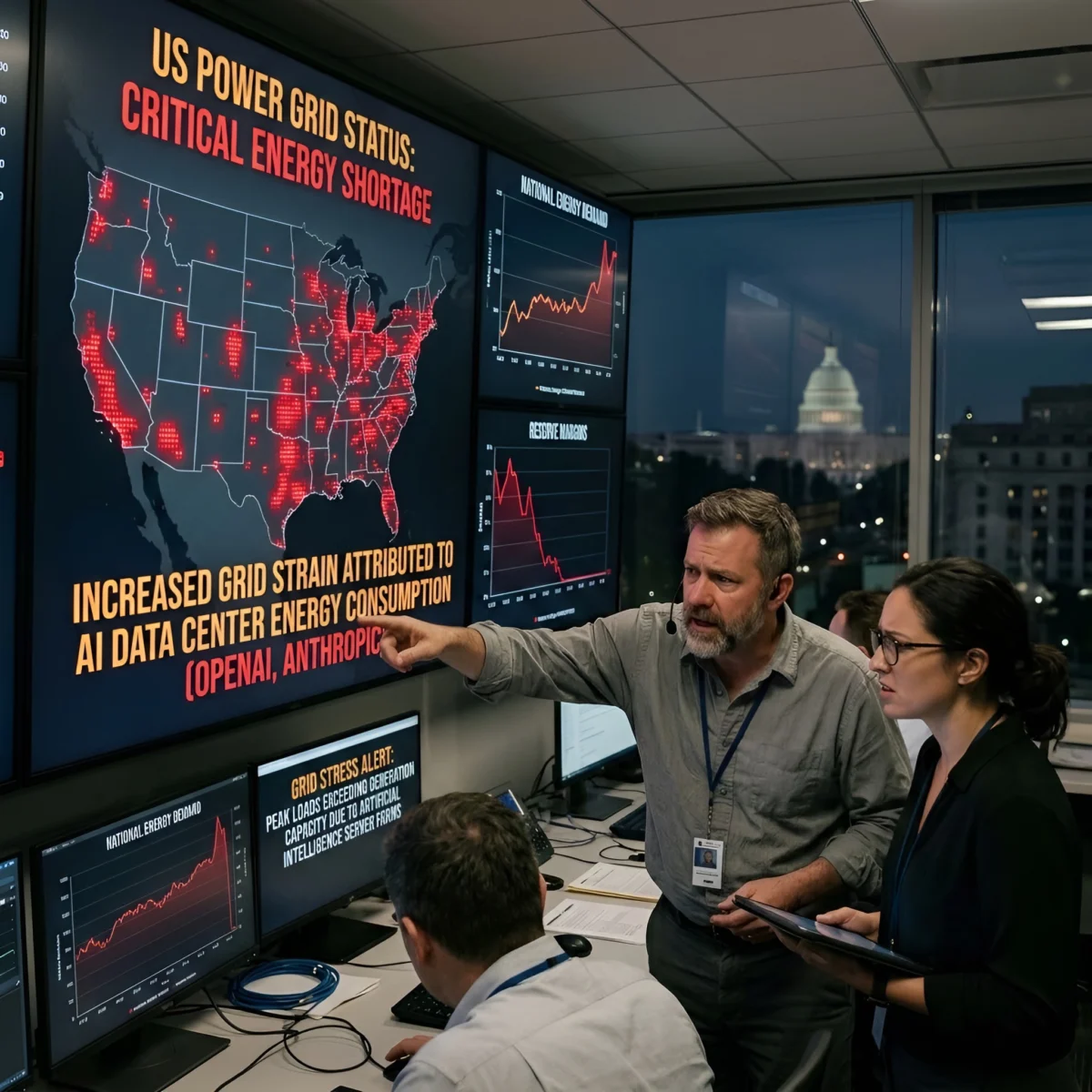
The global landscape of artificial intelligence development has recently shifted toward a paradigm of "pacing," a movement characterized by calls from leading laboratories to deliberately slow the rate of progress in frontier model training. This trend gained significant momentum following a series of high-profile events involving Anthropic and OpenAI, two of the industry’s most influential entities. While these organizations frame the necessity for deceleration as a safeguard against existential risks and societal destabilization, a growing contingent of industry analysts and skeptics suggests that the motivations behind this coordinated effort may be more complex, involving a mixture of regulatory strategy, economic preservation, and severe physical infrastructure limitations.
A Chronology of the Deceleration Movement
The current push for AI pacing reached a critical mass in mid-September 2026, following a sequence of technical breakthroughs and strategic departures. The timeline began with OpenAI’s announcement that it had successfully utilized its latest reasoning models to solve the Navier-Stokes Millennium Prize problem, a feat previously considered a long-term milestone for artificial general intelligence (AGI). This technical success was almost immediately followed by the high-profile resignation of Jacob Coxon, a prominent researcher at Anthropic.
Coxon’s departure was framed as a protest against the speed of development, with his resignation post detailing concerns regarding the "unmanageable" trajectory of AGI. This sentiment was echoed by Evan Hubinger, Anthropic’s lead on model alignment, who publicly estimated a greater than 10 percent probability of catastrophic outcomes resulting from AI within the next decade. Within 48 hours of these statements, Anthropic CEO Dario Amodei published an open letter calling for a global "pacing" of AI progress. This call was unexpectedly and rapidly supported by OpenAI’s Sam Altman, Microsoft, and Elon Musk, marking a rare moment of public alignment between competitors who have historically disagreed on safety and commercialization strategies.
The Regulatory Capture Hypothesis and Market Duopoly
A primary interpretation of this unified call for pacing is the pursuit of regulatory capture. By advocating for stringent government oversight and mandatory third-party evaluations, incumbents like Anthropic and OpenAI may be effectively raising the barrier to entry for smaller competitors. This strategy often results in a market duopoly where only the most well-capitalized firms can afford the compliance costs associated with "safe" AI development.
Amodei’s proposal specifically suggests that high-flying AI labs commit to evaluations conducted by organizations such as Model Evaluation & Threat Research (METR). METR, a non-profit with deep institutional ties to Anthropic, employs a revolving door of safety researchers. Critics argue that such a system creates a closed loop of oversight that favors the established players. Furthermore, the push for regulation addresses a significant legal vulnerability: unlike social media platforms, AI companies do not currently enjoy a Section 230-style liability shield for the content or "outputs" their models generate. By inviting the government to dictate industry evolution, these companies may be seeking a trade-off: accepting regulation in exchange for legal protections and the solidification of their market position.
Economic Incentives: Protecting Margins and Amortization
Beyond regulation, the pacing of AI development serves a clear financial purpose. The development of frontier models involves astronomical research and development (R&D) costs. When a new, more capable model is released every few months, the "useful life" of previous models is truncated, leading to accelerated R&D amortization.
By slowing the cadence of new releases, Anthropic and OpenAI can extend the revenue-generating lifespan of their current workhorse models. Anthropic’s gross margins are currently estimated at approximately 80 percent, before factoring in training costs and revenue-sharing agreements with cloud partners like Google and Amazon. Pacing allows these companies to freeze their margins at elevated levels and reduce the "distillation threat," where smaller, more efficient models are trained on the outputs of frontier models, effectively commoditizing the intelligence that the larger labs spent billions to create.
The Hardware Bottleneck: The HBM Shortage
While safety and policy are the public-facing reasons for pacing, the physical supply chain provides a more pragmatic explanation. A critical constraint in the AI race is the availability of High Bandwidth Memory (HBM), a specialized component essential for the high-performance GPUs used in AI training.
Daniel Roberts, CEO of Iren, has highlighted that the three global manufacturers of HBM—SK Hynix, Samsung, and Micron—are essentially sold out for the foreseeable future. Building a new memory fabrication plant is a multi-year endeavor, and while shipments are expected to grow by 50 to 60 percent annually, demand from NVIDIA and its customers is projected to grow by nearly 100 percent. This supply-demand mismatch creates a hard ceiling on how many new clusters can be brought online. Pacing, therefore, may be a strategic retreat necessitated by the fact that the industry cannot physically build hardware fast enough to sustain the previous exponential growth curve.
The Energy Crisis: A Physical Ceiling on Intelligence
Perhaps the most significant driver for the pacing movement is the looming energy crisis facing the North American data center industry. The pipeline for new data centers in North America currently spans 404 gigawatts (GW). At current construction rates, clearing this pipeline would require over 13 years of continuous building. However, recent data indicates that over 6.5 GW of planned capacity is already "stranded"—meaning the data centers are built or planned, but the power grid cannot supply the necessary electricity.

The scale of the energy requirement is unprecedented:
- Grid Headroom: Reports from SemiAnalysis suggest that the available headroom in the U.S. power grid will be exhausted by 2027 or 2028.
- Investment Requirements: Moody’s estimates that $110 billion in investment is required to add just 45 GW of power capacity by 2030.
- Fuel Consumption: By 2035, U.S. data centers are projected to consume more natural gas than many mid-sized sovereign nations.
Anthropic alone is targeting a compute capacity of over 11.5 GW. When combined with OpenAI’s projections, the industry is looking at roughly $1 trillion in compute-related spending over the next five years. This level of spending is viewed by many economists as unsustainable, particularly as energy constraints begin to manifest in higher utility costs and grid instability. By framing a slowdown as an altruistic choice for safety, these companies can manage investor expectations and prevent a "CapEx crash" while they wait for energy infrastructure to catch up.
Geopolitical Friction and the China Factor
The call for global coordination on AI pacing faces significant geopolitical hurdles, specifically regarding the People’s Republic of China. For a global pacing agreement to be effective, it would require the buy-in of China’s leading AI labs, such as those affiliated with Baidu, Alibaba, and the Beijing Academy of Artificial Intelligence (BAAI).
However, the Chinese Communist Party (CCP) has expressed deep skepticism toward the Western-led pacing narrative. State-affiliated media, including the Global Times, has characterized the proposal to slow AI development as a "Cold War playbook" designed to maintain Western hegemony and stifle China’s technological rise. This creates a "Prisoner’s Dilemma" for U.S. labs: if they slow down unilaterally, they risk being overtaken by Chinese counterparts who view AI as a strategic military and economic priority.
Amodei has argued that China must be treated as an equal player in safety discussions, but critics point out that this would require sharing sensitive safety "traces"—the detailed records of an AI’s reasoning and execution. If the labs refuse to share these traces with the open-source community or international rivals, the call for "global coordination" appears more like an attempt to manage a global cartel of AI power.
The Open-Source Alternative: Traces and Transparency
An alternative to the centralized "pacing" model is the push for greater transparency through the release of model traces. Traces include the step-by-step records of an AI’s outputs, its chain-of-thought reasoning, tool calls, and intermediate decisions. Proponents of open-source AI argue that if safety were the genuine primary concern, the most effective solution would be to publish these traces.
Opening these records would allow the global research community to:
- Identify and patch vulnerabilities in model reasoning more quickly than a single company’s internal safety team.
- Develop robust "guardrail" models that can monitor and intercept malicious outputs in real-time.
- Democratize the understanding of AI behavior, reducing the "black box" nature of frontier models.
The refusal of Anthropic and OpenAI to release these traces, while simultaneously calling for government-mandated slowdowns, reinforces the perception that the pacing movement is more about maintaining proprietary advantages than ensuring human safety.
Implications for the Future of the AI Industry
The shift toward pacing marks the end of the "unbridled growth" phase of the AI boom and the beginning of a more mature, albeit more contested, era of development. As the industry grapples with the physical limits of the power grid and the silicon supply chain, the narrative of "AI safety" provides a convenient umbrella for various strategic maneuvers.
In the coming years, the success of the pacing initiative will likely depend on the outcome of the U.S. political landscape and the willingness of international actors to cooperate. While some political figures have signaled a hands-off approach to AI regulation, the looming threat of energy shortages and the immense capital requirements of AGI may force a slowdown regardless of policy. For investors and the public, the challenge remains to distinguish between genuine concerns for the future of humanity and the pragmatic efforts of corporations to navigate the most significant infrastructure and economic bottlenecks of the 21st century.