admin
admin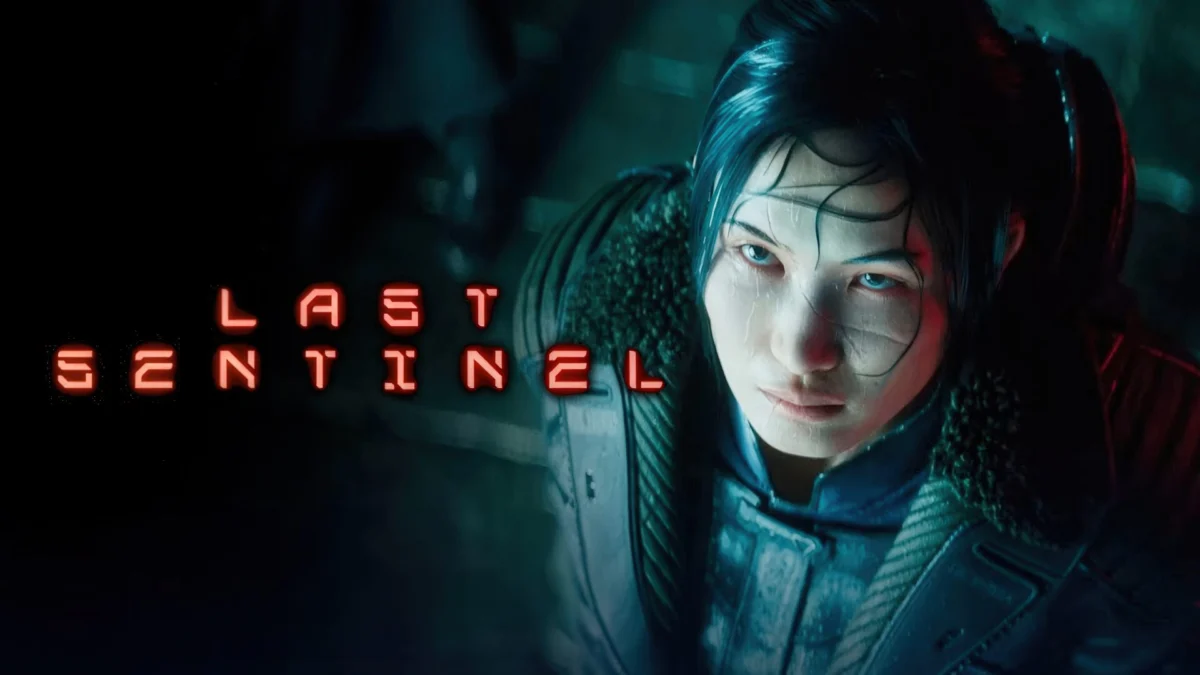
The ambitious gaming project known as Last Sentinel, once positioned as a premier competitor to the Grand Theft Auto franchise, has effectively collapsed following years of internal turmoil, budgetary overruns, and a lack of clear creative direction. According to a comprehensive report by Bloomberg’s Jason Schreier, the project’s developer, Lightspeed LA, was hit with approximately 80 layoffs this week, signaling the near-total cessation of development on what was meant to be a flagship title for its parent company, the Chinese conglomerate Tencent. While Tencent has publicly disputed the characterization of the project as being "shut down," industry insiders and former employees describe a studio in retreat and a project that failed to meet its lofty expectations.
The story of Last Sentinel is emblematic of the high-stakes, high-cost world of "prestige" AAA game development, where even the backing of one of the world’s largest technology companies and a roster of industry veterans cannot guarantee success. The project’s failure highlights the immense difficulty of breaking into the open-world crime genre, a space dominated for decades by Rockstar Games.
The Genesis of Lightspeed LA and the Quest for a GTA Killer
Lightspeed LA was established in late 2019 and early 2020 with a specific, high-profile mission: to create a Western-style blockbuster that could compete on the global stage. To lead this effort, Tencent recruited Steve Martin, the former head of Rockstar San Diego. Martin brought with him an impressive pedigree, having played a key role in the development of seminal titles such as Grand Theft Auto V and Red Dead Redemption 2.
Based in Irvine, California, the studio was granted significant autonomy and a massive budget, reportedly reaching into the hundreds of millions of dollars. The vision for their debut project, Last Sentinel, was nothing short of revolutionary. It was conceived as a cyberpunk open-world crime game set in a science-fiction reimagining of Tokyo. The game was to feature a female protagonist and emphasize a "vertical" city design, blending traditional driving and freeform gameplay with a futuristic, dystopian aesthetic.
To build this world, Martin leveraged the "pandemic boom" of the video game industry in 2020 and 2021. During a period when tech and gaming companies were aggressively hiring, Lightspeed LA reportedly offered six-figure salaries and lucrative benefits packages to lure talent away from established giants. The studio successfully recruited veterans from Naughty Dog, Blizzard Entertainment, Riot Games, and Rockstar, assembling a "dream team" of developers who had worked on some of the most successful franchises in history.
From The Game Awards to Development Hell: A Chronology of Decline
The public unveiling of Last Sentinel occurred at The Game Awards in December 2023. The cinematic trailer showcased a high-fidelity vision of a futuristic Tokyo, complete with rain-slicked streets, advanced robotics, and a gritty atmosphere. However, the absence of actual gameplay footage raised immediate concerns among industry analysts and potential players.
Following the reveal, the studio entered a period of relative silence, punctuated only by the release of four "development diaries" on YouTube. While these videos were intended to build hype, they were later criticized by internal sources as being "hype reels" that masked a lack of tangible progress. One notable video featured acclaimed voice actor and performance director Troy Baker, who described the story as a "middle finger to tropes." Baker claimed the game would subvert all expectations of the action-adventure genre, yet the team behind the scenes was struggling to implement the very basics of that genre.
The internal reality at Lightspeed LA was reportedly far different from the polished image presented to the public. Sources cited by Bloomberg described a series of systemic issues that plagued the studio throughout its six-year history:
- Lack of Creative Vision: Despite the "cyberpunk Tokyo" premise, the game allegedly lacked a cohesive core loop. Developers struggled to define what made the game unique beyond its setting.
- Scale Disparity: While the team numbered in the hundreds, it remained significantly smaller than the workforce required for modern open-world masterpieces. For comparison, Rockstar Games utilized over 2,000 developers to bring Red Dead Redemption 2 to completion.
- Management Friction: Steve Martin’s management style was described as "polarizing." Former employees cited slow decision-making processes and a top-down approach that stifled the creativity of the veteran staff they had worked so hard to recruit.
- Missed Deadlines: The project repeatedly blew past internal milestones, leading to escalating costs and growing impatience from Tencent leadership in Shenzhen.
The July Ultimatum and the Final Attempt at Rescue
The situation reached a critical tipping point in early 2024. Tencent organized a comprehensive internal playtest to gauge the game’s viability. The feedback was reportedly "near-unanimous" in its negativity. Testers described the experience as unpolished, confusing, and, most crucially, "not fun."

In response to these results, Tencent leadership issued a stark ultimatum: Lightspeed LA had until July 2024 to produce a substantially improved build that demonstrated a clear path to market. If the studio failed to meet this quality bar, the project would face cancellation.
In a last-ditch effort to save Last Sentinel, the studio brought in Todd Papy, a renowned creative director known for his work on the God of War series. Papy joined the project in its final three months, focusing his efforts on refining the combat mechanics, mission structure, and core gameplay systems. Despite Papy’s expertise, the window for improvement was too narrow. By the July deadline, the game still lacked the graphical fidelity and "AAA polish" necessary to compete with the likes of Grand Theft Auto VI or even contemporary titles like Cyberpunk 2077.
Following the failure to meet the ultimatum, Tencent made the decision to "not move forward" with the current version of the project, leading to the layoffs of roughly 80 employees—a significant portion of the Irvine-based workforce.
Tencent’s Response and the Future of Lightspeed LA
In the wake of the Bloomberg report, Tencent issued a carefully worded statement that sought to downplay the finality of the situation. The company stated that it plans to "shift the creative and development direction of Last Sentinel to meet player expectations." Furthermore, the company asserted that Lightspeed LA "remains open and continues to build games."
Industry analysts suggest that Tencent’s statement may be an attempt to preserve the value of the intellectual property or to keep the door open for a smaller-scale reboot. It is possible that the assets created for Last Sentinel could be repurposed for a different project, perhaps one with a smaller scope or a mobile-first focus, which aligns more closely with Tencent’s historical strengths. However, the departure of key talent and the mass layoffs suggest that the original vision for a high-end "GTA rival" is effectively dead.
Broader Industry Implications: The "Veteran Studio" Paradox
The collapse of Last Sentinel serves as a cautionary tale regarding the "veteran studio" model. In recent years, the gaming industry has seen a surge of new studios founded by former leads of legendary projects. While these studios often secure massive initial funding based on the reputation of their founders, they frequently encounter the same hurdles: the difficulty of building a studio culture from scratch, the rising costs of AAA development, and the "feature creep" that often accompanies ambitious new IPs.
Furthermore, the failure of Last Sentinel reflects a shift in Tencent’s broader strategy. For years, the Chinese giant sought to diversify its portfolio by funding expensive Western "prestige" titles. However, as the global economy has tightened and the costs of game development have ballooned, Tencent appears to be pivoting back toward safer bets, such as mobile integration, live-service games, and established franchises.
The "hundreds of millions of dollars" lost on Last Sentinel represents one of the most significant financial write-offs in recent gaming history for a project that never reached the public. It underscores the reality that in the modern era, having the right names on a masthead and a nearly bottomless bank account is no longer a guarantee that a game will ever see the light of day.
Conclusion and Chronology of Events
The dissolution of the original Last Sentinel project marks the end of an era for Lightspeed LA’s initial ambitions. The timeline of the project’s rise and fall provides a clear view of the challenges inherent in modern game development:
- Late 2019/Early 2020: Lightspeed LA is founded in Irvine, CA, led by Steve Martin.
- 2020-2021: Rapid expansion and aggressive recruitment of talent from Rockstar, Naughty Dog, and Blizzard.
- December 2023: Last Sentinel is officially revealed at The Game Awards with a cinematic trailer.
- Early 2024: Internal playtests return overwhelmingly negative feedback; Tencent issues a July deadline for improvement.
- Spring 2024: Todd Papy is brought on to salvage core systems.
- July 2024: The project fails to meet the quality bar set by Tencent.
- Late 2024: Mass layoffs hit the studio; reports surface of the project’s effective cancellation.
As the industry continues to consolidate and face economic headwinds, the story of Last Sentinel will likely be cited as a prime example of the risks associated with chasing the "GTA-style" blockbuster dream. For now, the neon-soaked streets of a sci-fi Tokyo remain a distant, unrealized vision.