admin
admin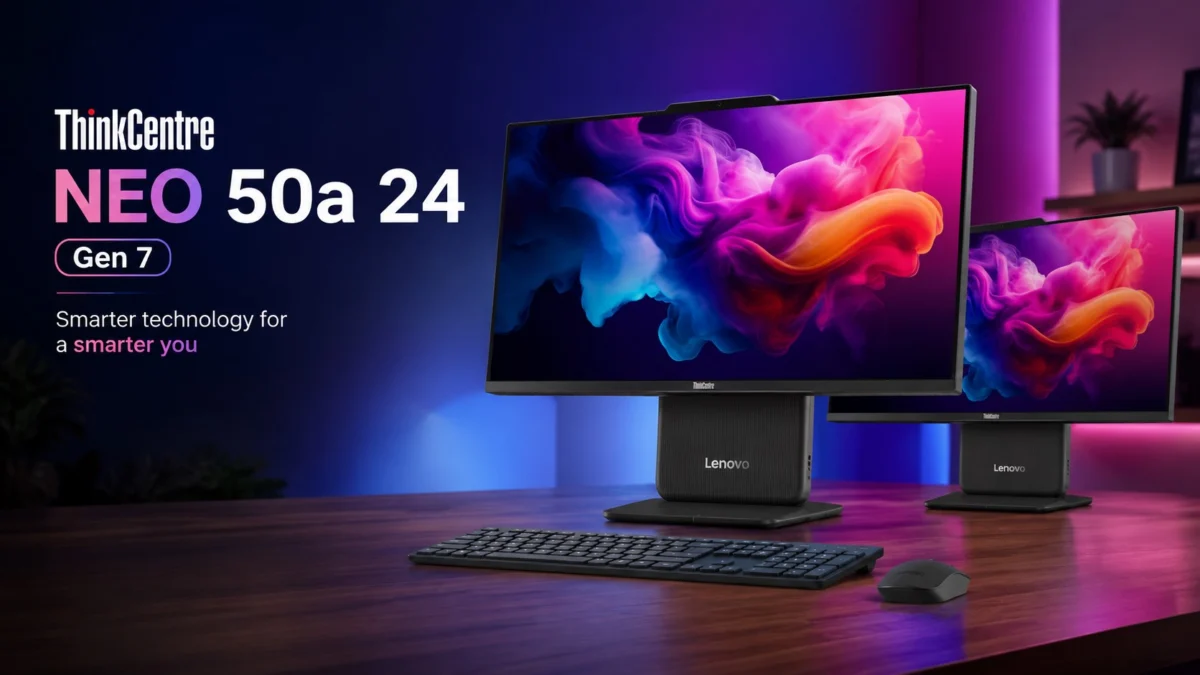
The headline feature of the Gen 7 refresh is the transition to Intel’s "Wildcat Lake" processor family, specifically the Intel Core 5 320 and the Intel Core 7 350. These processors represent a significant architectural pivot from the Lunar Lake configurations found in the previous generation. By adopting Wildcat Lake, Lenovo is positioning the ThinkCentre Neo 50a as a pioneer in the entry-level professional desktop space, offering a balance of performance and thermal efficiency that is tailored for the modern, space-constrained workspace.
Architectural Evolution: The Arrival of Wildcat Lake
The integration of Intel Wildcat Lake CPUs marks a sophisticated step forward for the ThinkCentre Neo line. These processors are part of Intel’s Series 3 branding, designed to provide high-efficiency performance for everyday business tasks without the thermal overhead of high-wattage enthusiast chips. The Core 5 320 and Core 7 350 utilize a 6-core configuration, structured in a 2+4 arrangement. This consists of two Performance cores (P-cores) and four Low-Power Efficient cores (LP-E cores).
Technically, the Wildcat Lake architecture shares a lineage with the more publicized Panther Lake chips. It utilizes Cougar Cove P-cores for heavy-duty processing tasks and Darkmont LP-E cores for background operations and energy-saving states. This hybrid architecture is particularly effective in an All-in-One chassis where cooling solutions are often more compact than those found in traditional tower PCs. By leveraging the same core designs as flagship mobile chips, the ThinkCentre Neo 50a Gen 7 promises a responsive user experience in multitasking scenarios, such as running video conferencing software alongside intensive web applications and office suites.
Memory and Storage: A Focus on Speed and Reliability
To complement the new processor architecture, Lenovo has equipped the Gen 7 desktops with high-bandwidth memory. The systems come with either 16 GB or 32 GB of LPDDR5X RAM. Notably, this memory is clocked at 7467 MT/s, which is significantly faster than the DDR4 or standard DDR5 found in many competing budget-to-mid-range AIOs. However, it is important for IT procurement officers to note that this memory is soldered directly to the motherboard. While this design choice allows for thinner chassis profiles and lower power consumption, it precludes end-user memory upgrades.

In contrast to the fixed memory, Lenovo has provided a degree of modularity in storage. The ThinkCentre Neo 50a 24 Gen 7 features dual M.2 slots, supporting up to two M.2 Solid State Drives (SSDs) with a maximum capacity of 1 TB each. This dual-drive capability is a rare and welcome addition in the 24-inch AIO category, allowing businesses to separate operating system files from data storage or to set up redundant storage configurations for critical business data.
The 120Hz Display: Setting a New Standard for Business AIOs
Perhaps the most visible upgrade in the Gen 7 series is the display. While the previous generation utilized standard 60Hz refresh rates common in office environments, the new model features a 23.8-inch IPS panel with a 120Hz refresh rate. This shift is significant; higher refresh rates are no longer viewed solely as a "gaming" feature. In a professional context, a 120Hz display reduces motion blur during scrolling and provides a much smoother visual experience when navigating complex spreadsheets or creative software. Furthermore, there is growing evidence that higher refresh rates can help reduce eye strain during prolonged work sessions, a key factor for employee wellness in corporate settings.
The display maintains a functional 1080p (Full HD) resolution with an anti-glare coating, ensuring visibility under the harsh overhead lighting typical of modern offices. Furthermore, the panel covers 99% of the sRGB color gamut, making it suitable for basic graphic design, marketing content creation, and ensuring that corporate branding looks accurate across the organization.
Connectivity and Industrial Design
The ThinkCentre Neo series has always been defined by its "Neo" branding—aimed at modern, minimalist offices that require a clean aesthetic without sacrificing connectivity. The Gen 7 continues this trend with a robust I/O (Input/Output) selection. For wireless networking, the PCs are equipped with WiFi 6 and Bluetooth 5.4, ensuring compatibility with the latest peripherals and high-speed wireless routers. For environments requiring maximum security and stability, a 1 Gbps LAN port is included for wired ethernet connections.
The physical port layout is designed for accessibility:

- Rear I/O: Features multiple USB Type-A ports for legacy peripherals and a high-speed USB Type-C port with 20 Gbps bandwidth, ideal for fast data transfers from external NVMe drives.
- Side I/O: The left side of the chassis includes an additional USB-C port, a USB-A port, and a 3.5mm combo audio jack, allowing users to quickly plug in headsets or flash drives without reaching behind the screen.
The design maintains the sleek, "hidden" cable management and minimalist stand that have become hallmarks of the ThinkCentre Neo line, helping to reduce desk clutter in open-plan offices.
Chronology of the Release and Market Context
The timing of this release is noteworthy. Lenovo launched the Gen 6 ThinkCentre Neo 50a just weeks prior to this announcement. The Gen 6 was characterized by its use of Lunar Lake architecture. The rapid jump to Gen 7 suggests that Lenovo is moving toward a more agile hardware deployment strategy. By releasing the Gen 7 with Wildcat Lake so quickly, Lenovo is effectively segmenting its AIO market: the Gen 6 may serve as a specialized high-efficiency option, while the Gen 7 targets a broader professional audience looking for the latest refinements in the Series 3 Intel ecosystem.
This strategy aligns with the broader industry trend of "just-in-time" hardware updates. As Intel and AMD shorten their release cycles, OEMs like Lenovo, HP, and Dell are forced to update their product lines more frequently to remain competitive. Lenovo’s position as the market leader allows it to be the first to market with these new architectures, often setting the benchmark for the rest of the industry.
Strategic Implications and Business Impact
The launch of the ThinkCentre Neo 50a 24 Gen 7 has several implications for the PC market and enterprise users. First, it signals that the 120Hz refresh rate is becoming the new baseline for professional displays. As users become accustomed to high-refresh-rate screens on their smartphones and high-end laptops, the 60Hz office monitor is increasingly seen as a legacy technology.
Second, the use of Wildcat Lake processors with a focus on LP-E (Low-Power Efficient) cores reflects a growing corporate emphasis on ESG (Environmental, Social, and Governance) goals. By deploying desktops that consume less power at idle and during light tasks, large corporations can significantly reduce their overall energy footprint when scaled across thousands of workstations.

Industry analysts suggest that Lenovo’s decision to solder the RAM while providing dual SSD slots is a calculated trade-off. "The modern workforce is increasingly reliant on cloud-based applications," notes one hardware analyst. "In this environment, raw memory capacity is often less critical than storage speed and system reliability. By soldering the LPDDR5X, Lenovo ensures the highest possible memory speeds and stability, which are critical for the ‘always-on’ nature of modern business."
Conclusion: A Refined Vision for the Modern Workspace
With the ThinkCentre Neo 50a 24 Gen 7, Lenovo has delivered a machine that is more than just a spec bump. It is a refined tool designed for a specific niche: the modern professional who requires a clutter-free desk, a high-quality visual experience, and the latest in efficient processing technology. By skipping the traditional annual update cycle in favor of an immediate jump to Wildcat Lake, Lenovo has signaled its commitment to staying at the absolute forefront of the PC hardware curve.
As businesses prepare for the 2025 fiscal year, the Gen 7 AIO stands as a compelling option for fleet refreshes. It balances the high-performance requirements of modern software with the practical needs of the IT department, offering a future-proofed display and a storage-expandable architecture that should serve organizations well for years to come. While the non-upgradable RAM may be a deterrent for some, the inclusion of 7467 MT/s speeds and 120Hz displays sets a high bar that competitors will likely scramble to meet in the coming months.