admin
admin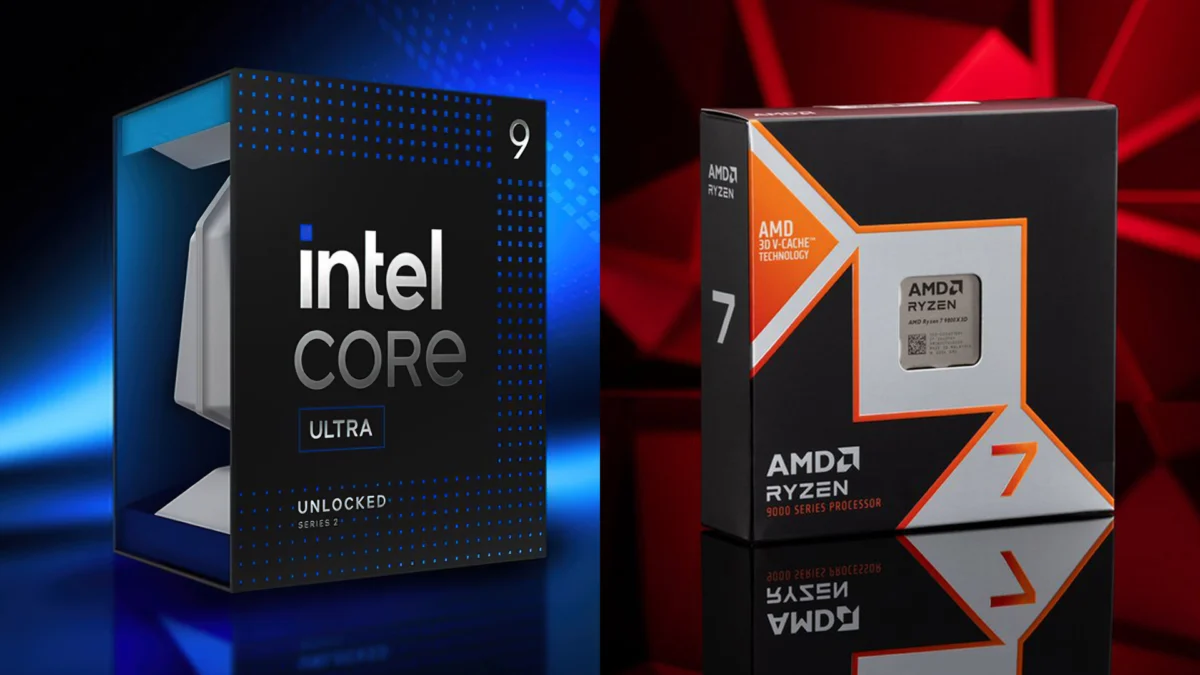
The Magnitude of the Sales Slump
Recent tracking data provided by industry analysts, including the prominent sales tracker @TechEpiphanyYT, reveals that CPU sales at Mindfactory have plummeted to levels previously thought unthinkable for a major retailer. In a recent two-week period, the total number of CPUs sold barely crossed the 1,000-unit threshold. To put this in perspective, AMD accounted for approximately 860 units, while Intel trailed significantly with a mere 140 units.
While AMD continues to maintain a dominant market share within the DIY enthusiast space—often exceeding 85% to 90% of total sales—the sheer lack of volume is the more pressing story. When these figures are compared to January 2025, the decline is staggering. During the start of the previous year, shipments were nearly 25 times higher than they are today. Even during July 2025, which was considered a relatively sluggish month for hardware sales, Mindfactory was still moving over 13,000 units per week. The current drop to roughly 500 units per week represents a near-total evaporation of the retail upgrade cycle.

Interconnected Shortages: The RAM and SSD Crisis
The root cause of this sales paralysis is not a lack of interest in new CPU architectures, but rather the ballooning "total cost of ownership" for a new PC. The industry is currently mired in a severe shortage of memory and storage components. These shortages are not isolated incidents but are the result of a fundamental shift in semiconductor manufacturing priorities.
The rise of high-performance computing (HPC) and the global explosion of Artificial Intelligence (AI) infrastructure have forced major memory manufacturers like Samsung, SK Hynix, and Micron to reallocate their production lines. High Bandwidth Memory (HBM3 and HBM4), which is essential for AI accelerators, offers significantly higher profit margins than standard consumer DDR5 RAM. As a result, the supply of consumer-grade DRAM has tightened, leading to price hikes that have doubled or even tripled the cost of memory kits compared to 2024 levels.
Similarly, the SSD market has been impacted by cuts in NAND flash production and a shift toward high-capacity enterprise drives. For the average consumer, the cost of a 2TB or 4TB NVMe Gen5 drive has reached a point where it often rivals the cost of the CPU itself. When a builder realizes that the "supporting" components—RAM, SSD, and a high-quality power supply—now cost more than the core processing units, the incentive to start a new build vanishes.

Motherboard Shipments Hit Record Lows
The motherboard market serves as perhaps the most accurate barometer for new PC builds, as these components are rarely purchased as standalone upgrades compared to CPUs or GPUs. The data from Mindfactory indicates a "steep" decline that veteran market analysts describe as unprecedented in the last decade.
In late 2024, Mindfactory was consistently reporting between 3,000 and 5,000 motherboard shipments per week. By the final week of March 2026, those numbers had cratered to just over 1,000 units. The decline is particularly sharp for Intel’s latest platforms. Despite the launch of new sockets meant to entice users, Intel’s LGA 1851 and LGA 1700 platforms combined are seeing a fraction of the movement seen by AMD’s AM5 and even the aging AM4 platform.
The reluctance to purchase motherboards suggests that users are choosing to maintain their current systems rather than transitioning to newer platforms that require expensive DDR5 memory. This "wait-and-see" approach has created a bottleneck that is affecting every tier of the supply chain, from local distributors to global manufacturers like ASUS, MSI, and Gigabyte.

The "AI Slop" and Market Displacement
A term gaining traction among hardware enthusiasts and analysts to describe the current state of the industry is "AI Slop." This refers to the perceived over-saturation of AI-branded features and the industry’s pivot toward enterprise AI at the expense of the traditional consumer PC market.
For the past two years, the narrative in the tech world has been dominated by the "AI PC." While manufacturers have integrated Neural Processing Units (NPUs) into the latest silicon from AMD and Intel, the retail data suggests that consumers are largely unimpressed or unwilling to pay the "AI premium." Furthermore, because the fabrication capacity at foundries like TSMC is being monopolized by AI giants, the production of mid-range and budget-friendly consumer chips has taken a backseat. This has resulted in a market where only high-end, expensive components are readily available, further alienating the budget-conscious DIY builder.
Comparative Trends: Amazon and Global Markets
The trend is not limited to German retailers. Data from Amazon’s global CPU sales charts shows a similar, albeit less centralized, decline. While Amazon benefits from a larger, more diverse customer base, the ranking of top-selling hardware has remained stagnant for months. Older, discounted parts like the AMD Ryzen 7 7800X3D and even the Ryzen 5 5600X continue to top the charts, indicating that when consumers do buy, they are opting for older, proven value over the latest, more expensive releases.

Industry observers note that the second week of February 2026 saw a total of nearly 1,500 CPU shipments at Mindfactory. By mid-April, that number had already dropped by 50% when taking the combined stats of the preceding two weeks. This downward trajectory shows no immediate signs of stabilization, leading to concerns that the DIY market may be entering a period of long-term hibernation.
Broader Economic Implications and Future Outlook
The current volatility in the PC component market is reflective of broader macroeconomic pressures. Inflation has reduced discretionary spending across Europe and North America, and the PC, once a staple of home entertainment and productivity, is increasingly competing with more affordable alternatives like gaming consoles or high-end laptops.
The shift toward pre-built systems and laptops is also a factor. Systems integrators (SIs) often have long-term supply contracts that insulate them—and their customers—from the immediate price shocks of the retail RAM and SSD markets. As a result, many would-be builders are finding it more economical to buy a pre-assembled machine than to source individual parts, a reversal of the traditional DIY value proposition.

Looking forward, the recovery of the retail hardware sector depends on several key factors:
- Normalization of Memory Production: Until memory manufacturers rebalance their production to include more consumer DRAM, prices will remain a barrier to entry.
- The "Killer App" for AI: For the "AI PC" to become a reality in the retail space, software developers must produce consumer-facing applications that justify the hardware investment.
- Intel’s Competitive Response: Intel’s currently low sales volume (14% market share at Mindfactory) suggests a need for a significant price or performance correction to regain the interest of the enthusiast community.
For now, the data from Mindfactory serves as a stark reminder of how fragile the enthusiast ecosystem can be when supply chain issues and shifting corporate priorities collide. With sales 25 times lower than they were a year ago, the hardware industry is facing a transformative moment that may redefine the relationship between manufacturers and the DIY community for years to come. Analysts will be watching the summer months closely to see if back-to-school demand or potential price cuts from AMD and Intel can provide the necessary spark to reignite a market that is currently flickering at record lows.