Vera Intan Clara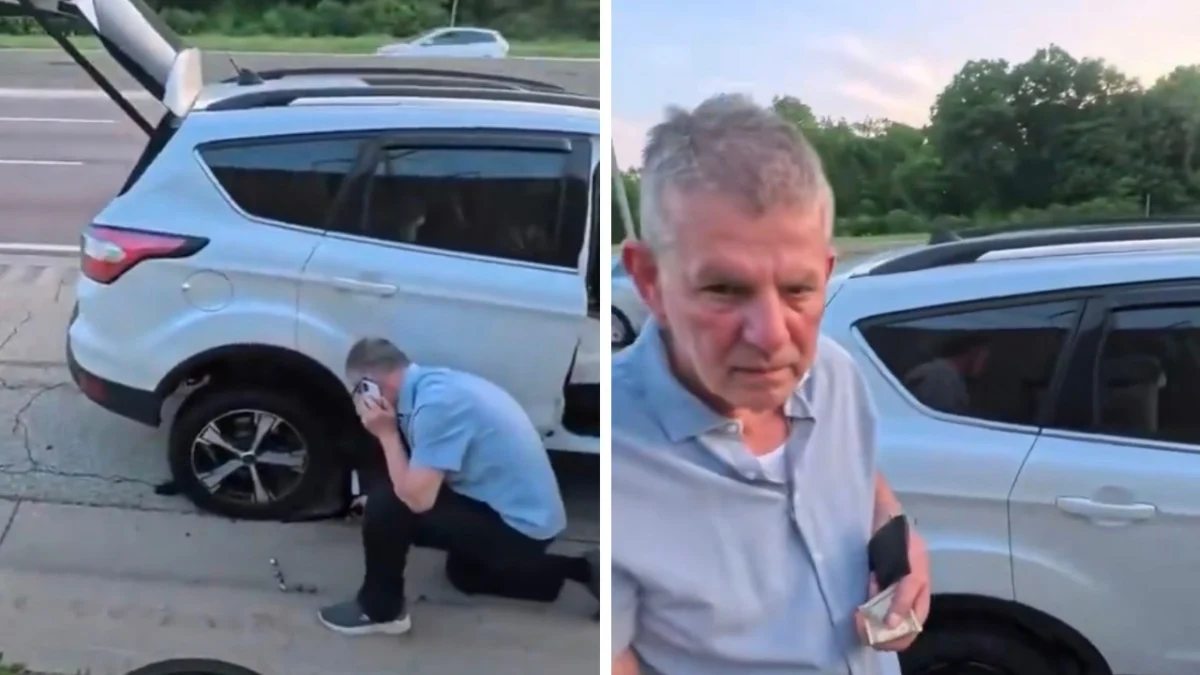
A Chicago-based mobile mechanic has garnered widespread attention and sparked a robust global debate following a video documenting his impromptu assistance to a stranded motorist on a busy roadway. The footage, which captured the mechanic successfully freeing a severely seized wheel that had defied previous attempts at removal, quickly became a viral sensation. While the initial act of kindness drew universal praise, the subsequent interaction involving a monetary tip has sharply divided public opinion across various social media platforms, prompting deeper conversations about the nature of altruism, the value of skilled labor, and the complexities of content attribution in the digital age.
The Incident Unfolds: A Timely Intervention on a Chicago Thoroughfare
The core event, recorded by the mobile mechanic known professionally as Mechanicoco, took place on an unspecified but clearly active Chicago-area roadway. The video opens with Mechanicoco approaching a white SUV, its driver visibly distressed and engaged in a futile struggle with a tire change. The motorist explains his predicament: despite having removed the lug nuts, the wheel remained immovably affixed to the vehicle’s hub. He further detailed that he had been attempting to free the wheel for over an hour, and even a previous good Samaritan had stopped to offer assistance, only for both to fail in their efforts. This scenario, common yet often underestimated in its difficulty, presented a clear and immediate challenge.
Mechanicoco, assessing the situation, quickly diagnosed the issue as a "seized wheel," a phenomenon where rust and corrosion effectively weld the wheel to the hub, often exacerbated by environmental factors and lack of regular maintenance. Recognizing the driver’s genuine distress and the potential danger of being stranded on a busy road, the mechanic made the decision to intervene. He retrieved specialized tools from his service vehicle, including a heavy-duty floor jack and various striking and prying instruments. The video meticulously captures his methodical approach: lifting the SUV, carefully working around the wheel, and applying a series of precise maneuvers designed to break the corrosive bond. After a determined effort, the wheel dramatically broke free, much to the palpable relief of the stranded driver.
Following the successful resolution of the mechanical issue, a pivotal moment occurred that would later fuel much of the online discourse. The relieved driver, profusely thanking Mechanicoco, reached into his pocket and offered a cash gratuity. Mechanicoco initially declined the money, a gesture often associated with acts of pure altruism. However, the driver’s persistent insistence, reiterating his gratitude and desire to compensate for the unexpected, professional assistance, eventually led the mechanic to accept a $40 tip. The interaction concluded with further expressions of thanks from the driver, who was then able to resume his journey.
From Local Act to Global Phenomenon: The Viral Journey of the Footage
The initial recording of this roadside encounter was first shared by Mechanicoco on his TikTok channel (@mechanicoco) on June 8, 2026. Within days, the compelling narrative of kindness and skilled intervention began its rapid ascent through the digital ecosystem. The video quickly amassed millions of views on TikTok, demonstrating its immediate resonance with a broad audience. Its appeal lay not only in the dramatic resolution of a frustrating problem but also in the authentic human interaction it portrayed.
The content’s virality was further amplified as it transcended its original platform. Copies and re-uploads began appearing on Facebook, Instagram, YouTube, and other major social media sites. A significant inflection point in its global reach occurred on July 31, 2026, when the X account "Body Cam Cops" reposted the video. This particular repost, while massively successful in terms of viewership, notably omitted any credit or link back to Mechanicoco, the original creator. This practice, unfortunately common in the rapid-fire sharing environment of social media, inadvertently shifted a portion of the subsequent discussion towards issues of intellectual property and creator attribution, running parallel to the ethical debate surrounding the tip. The X repost alone garnered immense attention, contributing significantly to the video’s multi-platform viewership and cementing its status as a widely recognized piece of viral content.
The Mechanics of a Stuck Wheel: Understanding the Challenge
The scenario faced by the stranded driver is a surprisingly common, albeit often frustrating, automotive issue. A wheel can become "seized" or "stuck" to the hub assembly for several primary reasons. The most prevalent cause is galvanic corrosion, a process where dissimilar metals (the steel hub and the aluminum alloy wheel) come into contact in the presence of an electrolyte, such as road salt or moisture. This creates a small electrical current that accelerates oxidation, effectively bonding the two surfaces together. Rust formation on the hub’s mating surface or within the center bore of the wheel can also contribute to this tenacious adhesion.
Another factor is over-tightening of lug nuts. While not directly causing the wheel to seize, excessively tightened lug nuts can deform the wheel or hub slightly, making it more difficult to remove even after the nuts are loosened. Standard vehicle-supplied tire wrenches are often inadequate for breaking free such stubborn connections, a point many online commenters echoed. Professional mechanics typically employ specialized tools, including impact wrenches, heavy hammers (often applied with specific techniques to avoid damage), penetrating lubricants, and robust jacks, to safely and effectively dislodge a seized wheel. The average motorist, lacking these tools and the expertise, is frequently left in a precarious and potentially dangerous situation, highlighting the value of professional roadside assistance. Industry data indicates that tire-related issues, including flats and seized wheels, account for approximately 15-20% of all roadside assistance calls annually, underscoring the everyday relevance of Mechanicoco’s intervention.
Public Discourse: Altruism, Professionalism, and the Ethics of Compensation
The immense traction of Mechanicoco’s video quickly translated into a deluge of public comments and reactions, largely centered around two distinct, yet interconnected, themes: the act of kindness itself and the acceptance of the $40 tip.
The initial wave of reactions overwhelmingly praised Mechanicoco’s selfless act. Viewers lauded his decision to stop and assist a stranger in distress, especially given the apparent complexity of the problem and the driver’s prolonged struggle. Comments such as "God bless them both, the one helped without expecting anything back. The other rewarded him without having to," encapsulated the sentiment of admiration for both parties. Many shared their own frustrating experiences with seized wheels, validating the difficulty of the task and reinforcing the mechanic’s expertise. "That tire was really stuck," one user wrote, "I’ve run into that a couple times." Others pointed out the inadequacy of standard car tools: "The included wrench that comes with the car would never loosen them." This initial phase of commentary highlighted the universal appreciation for human compassion and professional competence.
However, the discussion took a more contentious turn regarding the acceptance of the $40 tip. A significant segment of viewers expressed disappointment, viewing the monetary exchange as a tarnishing of the perceived pure altruism of the act. "I’m disappointed you took the money," one commenter argued, "You ruined it for me." This perspective often stems from a societal ideal that acts of kindness, particularly unsolicited ones, should be free from financial consideration, preserving their perceived moral purity.
Conversely, a robust defense of Mechanicoco’s decision quickly emerged. Supporters argued that the driver’s repeated insistence on offering compensation transformed the tip from a simple payment into a sincere gesture of gratitude. "People saying he shouldn’t take the money—the man wanted to thank him," a user commented, adding, "He didn’t have to stop either." This viewpoint emphasized the driver’s autonomy in expressing thanks and acknowledged the mechanic’s own agency. Furthermore, many highlighted the professional aspect of Mechanicoco’s intervention. As a mobile mechanic, his skills are his livelihood. While the initial stop might have been altruistic, the subsequent application of specialized knowledge, tools, and time constituted a professional service. Therefore, accepting a voluntary tip, especially one that is modest compared to typical service call fees (which can range from $75-$150 or more for a roadside tire service, excluding parts), was seen as entirely appropriate and a recognition of his expertise and effort. This perspective resonated with many who understand the economic realities of skilled trades and the importance of valuing professional labor, even when rendered in an impromptu fashion.
The Digital Attribution Debate: Creator Rights in the Viral Ecosystem
Beyond the ethics of compensation, the video’s journey across social media platforms reignited another ongoing debate: the issue of intellectual property and content attribution. The fact that the highly popular X repost by "Body Cam Cops" omitted credit to Mechanicoco, the original creator, became a point of contention for many viewers and content creators. This incident serves as a microcosm of a larger problem within the digital landscape, where original content is frequently re-shared without proper citation, often leading to the original creator being disassociated from their work and potentially losing out on recognition, engagement, and even monetization opportunities.
This practice not only diminishes the effort of the creator but also raises ethical questions about the ownership and responsible dissemination of digital media. While "Body Cam Cops" undoubtedly amplified the video’s reach, the lack of attribution underscored the challenges faced by independent creators in protecting their work in an environment optimized for rapid, often uncredited, sharing. The incident serves as a reminder for platforms and users alike about the importance of respecting intellectual property rights and fostering a culture of proper attribution.
Broader Impact and Implications: Valuing Skills, Fostering Kindness
The viral success of Mechanicoco’s video extends beyond a simple roadside assistance story; it offers several broader implications for society, the automotive service industry, and the digital sphere.
Firstly, it significantly elevates the profile and perceived value of mobile mechanics. In an era where many services are becoming increasingly on-demand and personalized, mobile mechanics represent a crucial segment of the automotive repair industry. Their ability to bring specialized tools and expertise directly to a stranded motorist provides invaluable convenience and safety. The video implicitly showcases the specialized skills required for tasks that appear simple but can be incredibly complex without the right knowledge and equipment. It underscores the idea that not all problems can be solved by an average person with standard tools, thereby reinforcing the necessity and value of professional trades.
Secondly, the incident powerfully reaffirms the enduring human capacity for kindness and community support. Despite the debates surrounding the tip, the fundamental act of one individual stopping to help another in a moment of vulnerability resonated deeply. It served as a refreshing counter-narrative to the often-cynical tone of online interactions, reminding viewers of the positive impact that simple acts of benevolence can have. The discussion, in its entirety, reflects society’s ongoing grappling with how to reconcile acts of kindness with the realities of a service-oriented economy and the inherent value of skilled labor.
Finally, the video’s viral trajectory and the subsequent debate over attribution highlight the complex, often unwritten, rules governing content sharing and ownership in the age of social media. It brings to the forefront the responsibilities of platforms and users to ensure that creators are recognized for their contributions, fostering a more equitable digital ecosystem.
In conclusion, Mechanicoco’s roadside intervention in Chicago, captured and disseminated across global digital platforms, has become more than just a viral video. It has transformed into a multifaceted case study, prompting millions to reflect on the interplay between spontaneous altruism and professional service, the economic value of specialized skills, and the ethical imperatives of content attribution in our increasingly interconnected world. The discussion continues to evolve, demonstrating the power of a single act of kindness to spark profound and far-reaching conversations.