Sonny Valindra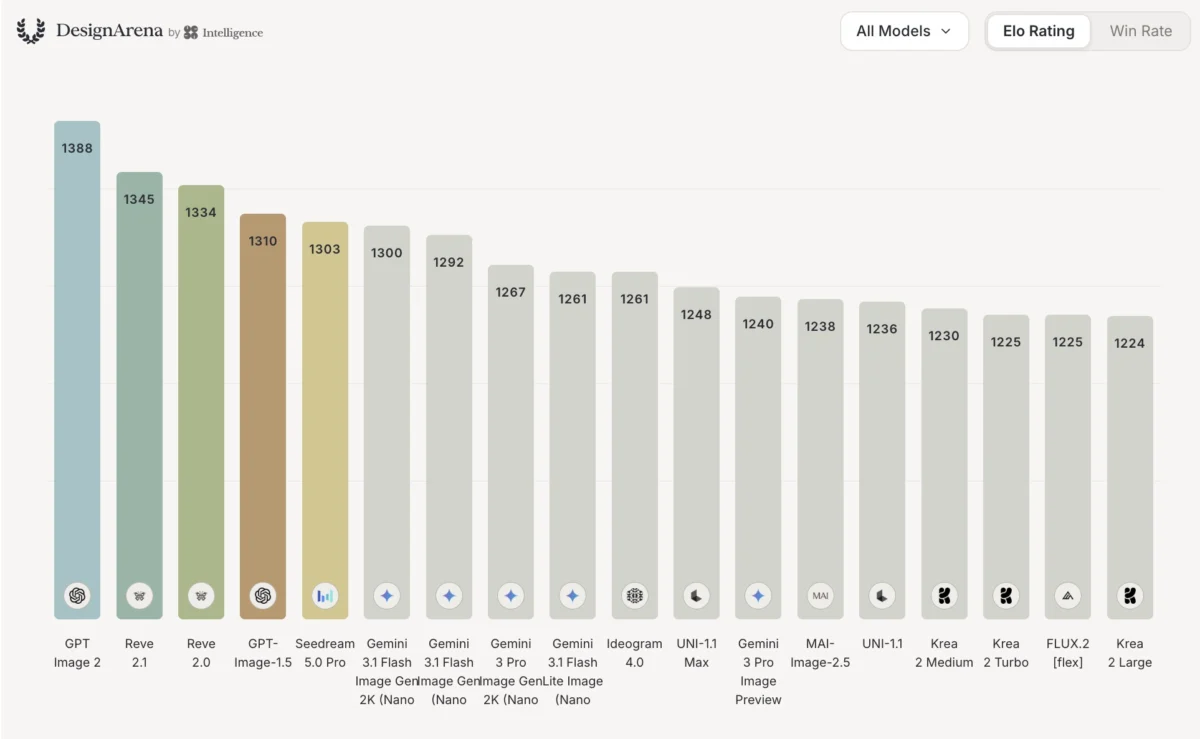
Intelligence, the burgeoning AI company behind the widely adopted Design Arena platform, announced today a significant milestone in its growth trajectory with the successful closure of a $7.9 million seed funding round. The investment, spearheaded by prominent venture capital firm Index Ventures, saw substantial participation from influential entities including Conviction (backed by Sarah Guo and Mike Vernal), A*, and Valkyrie, among other strategic investors. This infusion of capital is poised to accelerate Intelligence’s mission to bridge the critical gap in AI development: scalable and reliable human feedback for generative models.
The genesis of Intelligence and its flagship product, Design Arena, can be traced back to a curious observation made by co-founder Grace Li and a group of college friends just weeks before their anticipated graduation in 2025. Their initial foray into building an AI game engine, while capable of producing functional games, consistently fell short in delivering the crucial element of "fun." This unexpected outcome presented a fundamental challenge: how does one objectively quantify and measure the subjective experience of enjoyment in AI-generated content? The team concluded that human judgment remained an indispensable component, prompting an intense brainstorming session focused on developing scalable methods for gathering authentic human feedback.
This pivotal realization led to the creation of Design Arena, a sophisticated AI tool that has rapidly garnered global acclaim, now boasting an impressive user base of 5.3 million individuals worldwide. The platform’s success underscores a significant unmet need within the AI industry. As Grace Li articulated, "It was the missing bottleneck for a lot of these models to make improvements in the design space." The immediate validation of their solution came swiftly; within a week of its inception, Intelligence secured its inaugural major deal with a frontier AI lab, marking the commencement of its rapid ascent.
Design Arena: A User-Centric Approach to AI Feedback
For the everyday user, interacting with Design Arena offers an experience akin to navigating a highly advanced model router. The interface features a familiar ChatGPT-style chat window for inputting prompts, complemented by distinct dropdown menus for specifying various content formats, including websites, images, and over a dozen other visual modalities. Upon submitting a request, users are presented with a series of "A vs. B" comparative choices. This iterative process allows users to rank a selection of generated outputs from best to worst, providing granular feedback on aesthetic appeal, functionality, and overall user preference.
While this feature provides a valuable service for individual users seeking optimal AI-generated content, the true transformative power of Design Arena lies in its enterprise applications. For AI companies and "frontier labs" – entities at the forefront of AI research and development – Design Arena serves as an inexhaustible source of instantaneous human feedback for their media-generating models. The platform’s design cleverly capitalizes on user indifference regarding the specific underlying models being evaluated. As Li explained, users are primarily motivated by obtaining the highest quality output, making their comparative rankings an unfiltered reflection of genuine user desires and preferences. This unbiased data is precisely what these advanced AI models require to refine their design capabilities and improve their output quality.
A Lucrative Market for Human Evaluation Data
The demand for such nuanced human-driven evaluation data has proven to be substantial, translating into significant revenue for Intelligence. Grace Li indicated that Design Arena is currently generating an impressive $60 million in Annual Recurring Revenue (ARR), firmly establishing the company as a critical player in providing essential human-led evaluation data for the rapidly evolving AI landscape. This financial success highlights the industry’s recognition of the inherent limitations of purely automated evaluation metrics, which can be susceptible to manipulation or "gaming."
The Hugging Face breach, which dramatically unfolded last week, served as a stark reminder of the vulnerabilities associated with purely automated benchmarks. In contrast, Design Arena’s model offers a more robust and secure approach. Crucially, the platform requires users to log in to access their generated outputs. This authentication mechanism enables Intelligence to meticulously track how user preferences evolve across different geographical regions and over time. Li noted, for instance, that web dashboards in Asia often exhibit a more maximalist design aesthetic, a subtle yet significant insight into cultural design preferences. These qualitative data points are invaluable complements to quantitative automated benchmarks, offering a deeper, more human-centric understanding of AI performance.
Navigating the Competitive Landscape of Human Evaluation Startups
While Intelligence and Design Arena are experiencing significant traction, the broader market for human evaluation in AI is not without its challenges and competitive dynamics. The cautionary tale of Yupp, which shuttered its operations earlier this year despite raising $33 million from prominent investors like Chris Dixon of a16z crypto, serves as a testament to the complexities of this space. Yupp, too, had garnered a substantial user base of over 1.3 million and secured some frontier models as clients, yet ultimately struggled to build a sustainable long-term business. This outcome underscores the importance of not just user acquisition but also a viable and scalable business model in this nascent field.
Despite such setbacks, other startups leveraging human evaluation for AI development appear to be thriving. LM Arena, which employs a similar comparative ranking methodology but focuses specifically on text-based responses, recently secured a remarkable $150 million in Series A funding in January, achieving a valuation of $1.7 billion just four months after formally launching its paid product. This rapid growth indicates a strong market appetite for AI tools that can effectively harness human intelligence to refine and improve AI capabilities across various domains.
The Strategic Significance of the Seed Round
The $7.9 million seed funding secured by Intelligence is strategically significant for several reasons. Firstly, it validates the company’s core premise: that human feedback is not merely a desirable addition but a fundamental necessity for the advancement of generative AI. The investment will likely fuel further research and development into enhancing the Design Arena platform, potentially expanding its capabilities to evaluate a wider array of AI outputs and incorporate more sophisticated feedback mechanisms.
Secondly, the strong backing from experienced investors like Index Ventures, Conviction, A*, and Valkyrie signals a high level of confidence in Intelligence’s management team and its market potential. These investors bring not only capital but also valuable industry expertise, strategic guidance, and a network of connections that can prove instrumental in the company’s future growth and expansion. The participation of Sarah Guo and Mike Vernal of Conviction, known for their astute investments in the AI sector, further bolsters Intelligence’s credibility.
Thirdly, the funding will enable Intelligence to scale its operations more aggressively. This includes expanding its global reach, further developing its enterprise sales strategies, and potentially investing in more advanced data analytics to extract even deeper insights from its vast user base. The company’s ability to track evolving user tastes across different continents, as exemplified by the observation on design preferences in Asia, highlights the potential for granular, data-driven insights that can inform AI development on a global scale.
Broader Implications for the AI Ecosystem
The success of Intelligence and the Design Arena platform has broader implications for the entire AI ecosystem. It reinforces the notion that the future of AI development is not solely about building more powerful algorithms but also about establishing robust feedback loops that ensure these technologies align with human values, preferences, and needs. As AI models become increasingly capable of generating complex content, the ability to reliably and scalably evaluate the quality, desirability, and ethical implications of that content becomes paramount.
The emphasis on human judgment also serves as a crucial counterpoint to the often-hyped narratives surrounding AI’s autonomous capabilities. While AI can automate many tasks, the nuanced understanding of human experience, creativity, and subjective preference remains an area where human input is indispensable. Design Arena’s model democratizes this process, allowing millions of individuals to contribute to the shaping of future AI technologies.
Furthermore, the company’s ability to generate significant ARR suggests that there is a clear and present business case for investing in human-AI collaboration. This could spur further innovation in areas such as AI ethics, bias detection, and the development of AI systems that are more aligned with societal goals. The data Intelligence collects could also prove invaluable for researchers studying human-computer interaction, design trends, and cultural influences on technology adoption.
In conclusion, Intelligence’s $7.9 million seed funding round represents a significant validation of its innovative approach to AI model evaluation. With Design Arena at its core, the company is poised to play a pivotal role in shaping the next generation of AI technologies by ensuring they are not only functional but also enjoyable, useful, and aligned with human preferences. The investment underscores the growing recognition that in the pursuit of advanced artificial intelligence, the human element remains an irreplaceable and invaluable component.