Galang Taruna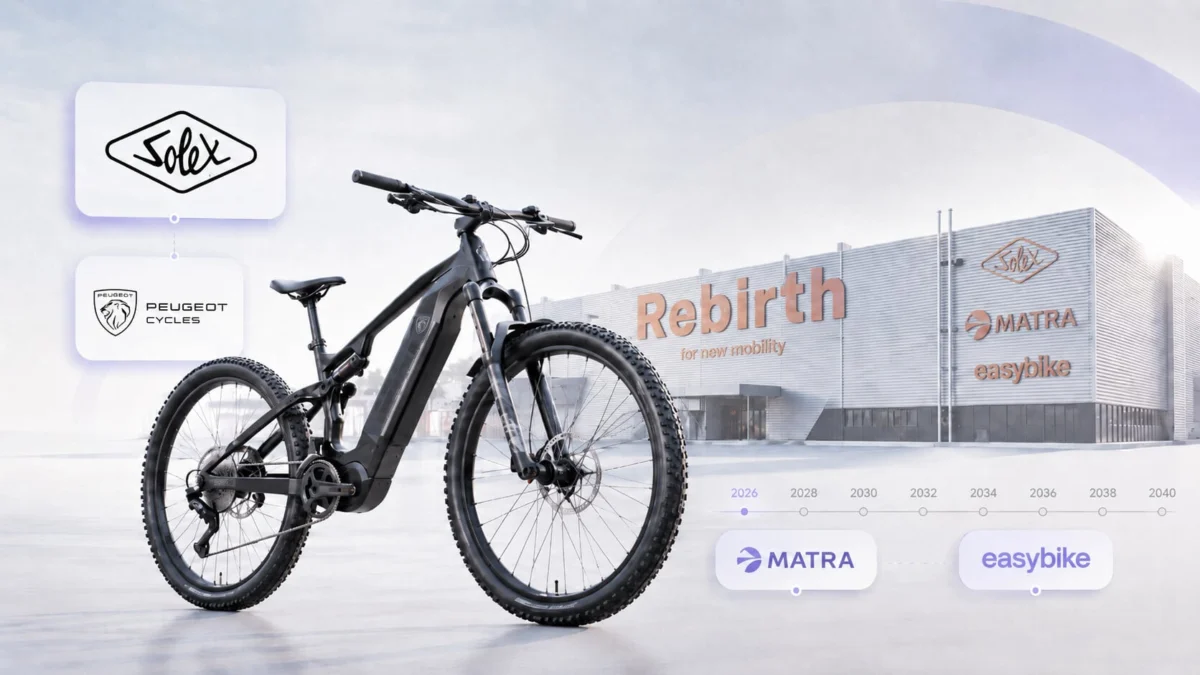
In a strategic move poised to reshape the European cycling landscape, the French industrial powerhouse Rebirth Group has articulated a bold vision for its extensive portfolio of heritage bicycle brands. Following a series of significant acquisitions over the past three years, including household names like Peugeot Cycles, Solex, Matra, Gitane, Lejeune, and Easybike, the group is now preparing for a wave of product launches and international expansion. This ambitious roadmap, detailed by President Gregory Trebaol during an exclusive two-hour interview, underscores a commitment to innovation, heritage, and the revitalization of French industrial savoir-faire.
A Strategic Portfolio: Breathing New Life into Heritage Brands
Rebirth Group’s strategy is fundamentally rooted in its name: to "give birth again to brands." This philosophy, as articulated by Trebaol, necessitates an acceptance of an initial phase of experimentation and refinement. "When you have certain brands that have been somewhat dormant for a few years, you must not make a mistake. You have to test, you have to do a lot of things. This is true for Solex. This is true for other brands," Trebaol explained. This approach stands in stark contrast to what he describes as the industry’s prevalent "me too" culture, where products are often white-labeled and rebranded without genuine innovation or respect for brand identity. "Our capital, above all, is the brands. We are not there to launch ‘me too’ products, to take things that exist off a shelf and badge them, even if that could serve us and allow us to say: ‘Here, it’s ready, because we took something existing, put a nice color and a sticker on it.’"
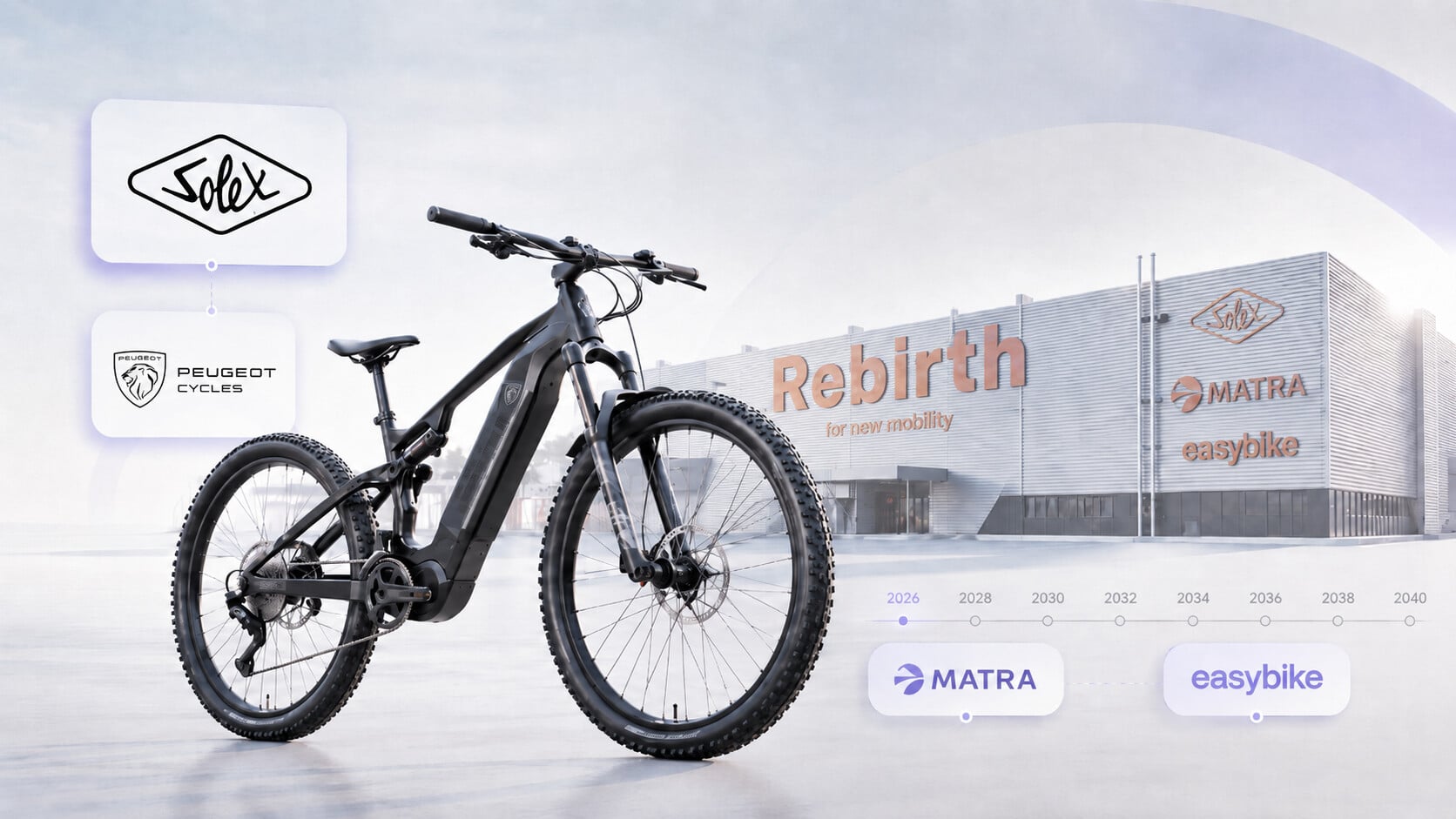
The group currently operates Peugeot Cycles under license and fully owns Solex, Matra, Gitane, Lejeune, and Easybike. These brands collectively represent a significant slice of French cycling history, spanning utility, leisure, and performance segments. The interview, conducted in mid-June at the group’s headquarters, delved into various critical subjects, including the future of Angell and Cowboy, the operations at the Saint-Lô factory, and the comprehensive strategic direction for each brand under the Rebirth umbrella. The overarching goal is to leverage the inherent brand equity and historical resonance of these names to carve out distinct market positions in a rapidly evolving global cycling market, particularly within the burgeoning electric bike and light mobility sectors.
Peugeot Cycles: Global Ambitions and a Renewed Legacy
The journey with Peugeot Cycles began in the summer of 2023 at the ProDays exhibition in Paris. It was there that Rebirth Group observed Stellantis and Cycleurope’s decision to terminate their licensing agreement for Peugeot Cycles by December 31, 2025. This impending termination was a significant factor in Cycleurope’s shareholders deciding to divest the company. Trebaol swiftly recognized the opportunity, analyzing Cycleurope’s precarious position: "In 2025, I have a renewal of the Véligo market that I will not have. I lose Peugeot. I have a renewal of the La Poste market, and if I don’t get it, I also lose La Poste."
Rebirth Group acted decisively, formally expressing its interest to Stellantis in January 2024. The subsequent acquisition of Cycleurope was rapid and comprehensive, demonstrating Rebirth’s commitment to an integrated industrial project rather than a piecemeal asset grab. "We absolutely did not want a piecemeal sale: we detest that. What interests us is the real industrial project we are capable of building in Romilly," Trebaol emphasized. The speed of the transaction was remarkable: "First visit on April 28, letter of intent on May 10, signing on July 23. We were the fastest."

The acquisition, effective in October 2024, was guided by three core objectives. First, to safeguard the existing structure, the Romilly site, its workforce, and teams, by implementing a new industrial project. Second, to secure the renewal of the critical La Poste contract, which was successfully achieved in October 2025. Third, to secure a new licensing agreement for Peugeot Cycles, signed in February 2026. "These were the three axes we set ourselves as a turnaround program," Trebaol stated.
The new agreement, publicly announced in June 2026 during the 24 Hours of Le Mans automobile race, extends the Peugeot Cycles license until 2042. This long-term commitment allows for an expansive product range covering urban, VTC (hybrid), gravel, road, and mountain bikes. Serial production is slated to commence in October 2026 at the Romilly-sur-Seine facility, with commercialization rolling out between late 2026 and early 2027 through networks like Vélo & Oxygen and OVELO, utilizing Michelin tires. Further innovation is planned with DJI Avinox-motorized models expected in spring 2027, signaling a blend of traditional cycling expertise with modern technology.
Beyond the initial launch, the strategic imperative for Peugeot Cycles is internationalization. "For Peugeot, the roadmap is internationalization and the launch of a broader range than that presented at Le Mans, which was a capsule collection of six or seven models. So it’s about expanding the Peugeot Cycles range," Trebaol confirmed. He views Peugeot Cycles as a critical asset capable of providing "international reach and traction for the other brands" within the group. This international push demands careful market adaptation. Trebaol noted, "We realize that we will have to adapt bikes to different markets, even for a neighboring country like Germany." While mountain and road bikes might share common platforms, urban mobility and commuting segments require tailored solutions to meet diverse usage patterns and investment levels. A testament to this global ambition, Peugeot Cycles products are set to arrive in Japan by October 2026, featuring specific designs catering to the unique preferences of the Japanese market. Trebaol underscored Rebirth’s deep, albeit relatively recent, engagement in the cycling sector, stating, "It’s only twenty or twenty-two years that we’ve been in cycling. We’ve often been challenged that we were atypical as a group and that we hadn’t been in bikes for eighty years, although with Peugeot, it’s been over seventy years." This long-term vision positions Peugeot Cycles as a cornerstone of Rebirth’s global strategy, aiming to restore its prominence on the world stage.
Solex: The Electric Cyclomoteur’s Return and Lessons Learned

Solex, a brand synonymous with accessible personal mobility, receives a significant portion of Trebaol’s strategic focus. Rebirth Group acquired Solex in 2013, initially concentrating on electric-assist bicycles. "When we took over Solex, we entered with limited risk, as we took over the electric-assist bicycle branch," Trebaol recalled. This segment continues to be active, with models like the "Signature" e-bike maintaining a presence. However, the true potential for Solex, according to Trebaol, lies in the revival of its iconic cyclomoteur. "I have always said, and I continue to say, that Solex has its place in electric-assist bicycles, through its models. But what will truly make Solex flourish significantly is the cyclomoteur: bringing a concept back to life."
Trebaol’s market analysis points to an underserved segment: "The electric cyclomoteur represents a real market segment, in France and Europe, perhaps more so in Latin Europe. This concept has not really been addressed in the electric sector. There’s the scooter, the superscooter, the fatbike, but this light cyclomoteur has not been reinterpreted." The path to this reinterpretation has, however, been fraught with challenges. A first prototype, developed by the in-house design studio, was showcased at ProDays 2023. While internally admired, it failed to resonate with a crucial audience: Solex collectors. "It was a beautiful product. But we present something at a show, we are convinced, and a whole collective of collectors replies: ‘It’s great, it’s nice, it’s pretty, but it’s not Solex. In any case, it’s not the 3800.’" This feedback forced a critical re-evaluation, leading to the difficult decision to scrap the initial design, despite an investment of "perhaps 200,000 or 300,000 euros." Trebaol explained the pragmatic choice: "Do we continue to invest in a product that risks having mixed success? Or do we consider that it served us, that we learn from it, and that we reinvest in something else, which this time must achieve unanimity?"
The group opted for the latter, bringing in a new design team and restarting from scratch. The result is the "i3800," a design that Trebaol believes is much more aligned with Solex’s DNA. He draws a parallel to the automotive industry: "When Peugeot relaunches the 205 through the 208 GTI, there is necessarily a parallel with the birth of the Solex i3800." The i3800 is meticulously crafted to evoke the spirit of the original 3800 while integrating modern electric technology. Its official unveiling is scheduled for late 2026 at EICMA in Milan, a prominent international exhibition for motorcycles and mopeds, strategically chosen to highlight its identity as a cyclomoteur rather than a bicycle. The product is now in its industrialization phase, with confidence high regarding its market acceptance. "I think we have something that achieves unanimity. To date, we haven’t had any blocking points on the design, style, usage, or target."
While cautious about sales volumes, Trebaol references the 2007 e-Solex, which sold 15,000 units in its first year in a nascent market, proving the inherent demand for Solex. However, he also acknowledged its shortcomings: outsourcing, early lithium battery challenges, inadequate finish quality from Asian factories, and a price point (initially €999, then €1,199) that was too low for its technical specifications. The new i3800 aims to overcome these past issues by blending cutting-edge technology with the authentic lifestyle appeal of the 3800. The brand’s 80th anniversary is being celebrated with special initiatives, including a dedicated Solex point of sale on Île de Ré, featuring over 250 electric Solex bikes for rental, and plans for limited edition series. This requires enhanced production agility, which the group aims to achieve with future industrial tools.

Matra, Easybike, and Gitane: Driving Volume and Specialized Markets
Beyond the high-profile re-launches of Peugeot and Solex, Rebirth Group is systematically developing its other key brands to cover a broad spectrum of the cycling market.
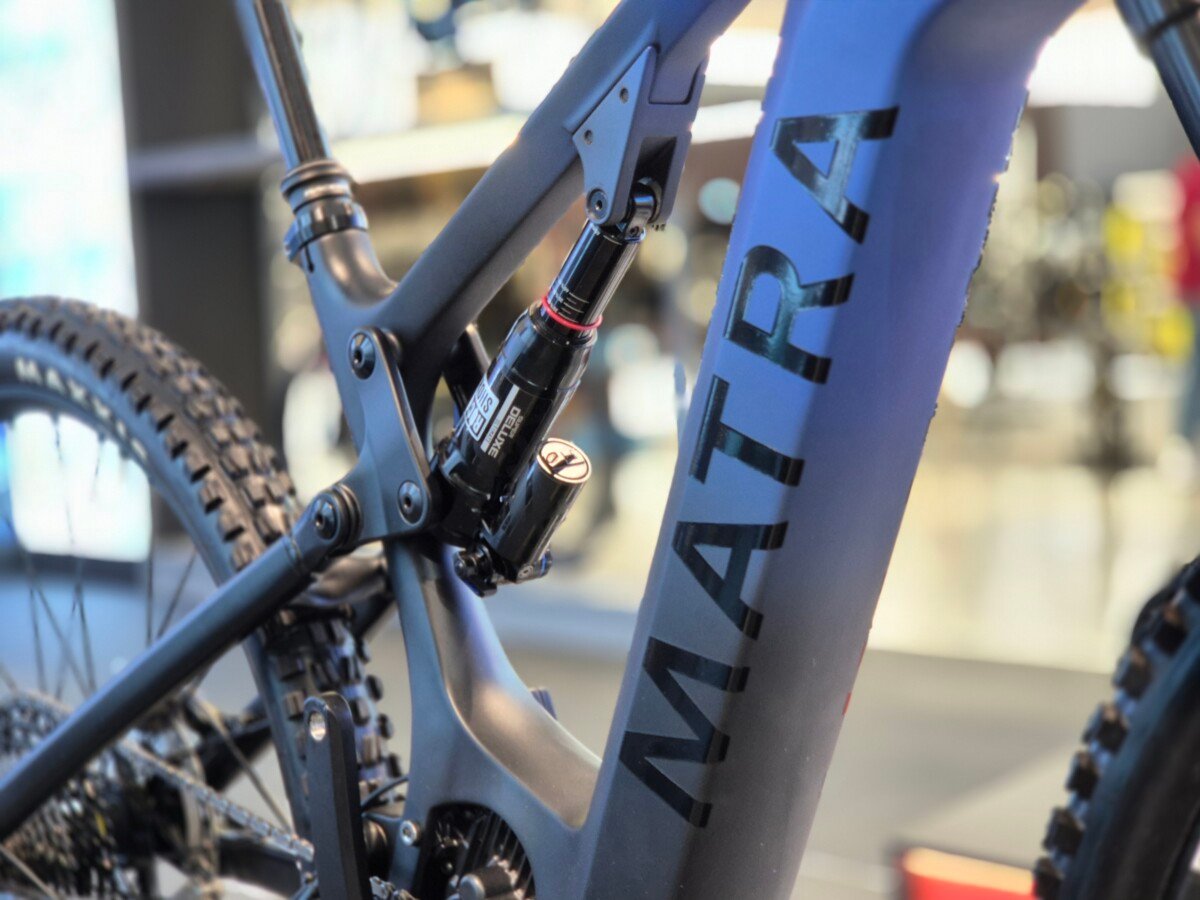
Matra, known for its innovative spirit, is set to return with an entirely new range exclusively motorized by Yamaha. This strategic decision reinforces Rebirth’s partnership with Yamaha, which began in 2023. "Matra also arrives with a new range, entirely motorized by Yamaha, with a strong stance. Many brands have decided not to use Yamaha. We have chosen to be 100% Yamaha, to have something differentiating, something French, and a link that will go beyond France," Trebaol explained. The collaboration extends beyond Matra, with Yamaha actively involved in Solex projects and discussions ongoing for Peugeot, suggesting a deep and expanding technological alliance that will define much of Rebirth’s motorized product offerings. This partnership aims to leverage Yamaha’s renowned motor technology to provide Matra bikes with a distinct performance edge and reliability, appealing to a segment of riders looking for robust and high-quality electric assistance.
Easybike, the group’s historical brand, is undergoing a complete overhaul. Positioned as offering "good value for money," Easybike is critical for volume and market accessibility. A new 2026-2027 collection is anticipated for late summer or early September, marking a pivotal year for the brand’s repositioning. This revamp aims to ensure Easybike remains competitive in the crowded entry-to-mid-range e-bike market by offering compelling features and reliable performance at an attractive price point, thus serving as a vital entry point for many consumers into the Rebirth ecosystem.

Gitane continues to be a cornerstone for Rebirth’s B2B operations, primarily driven by its renewed contract with La Poste. Signed in October 2025 and extending until 2030-2031, this contract involves the management, maintenance, supervision, and renewal of La Poste’s fleet of 17,000 bicycles. This fleet is notably the largest in Europe, covering an astonishing 500,000 kilometers daily. "There is today a very big Gitane program, notably thanks to the renewal of the major contract with La Poste," Trebaol highlighted. This robust B2B foundation not only provides significant revenue but also informs Gitane’s public positioning, which is centered "around family, discovery, and accessibility," leveraging its widespread recognition and association with everyday utility and reliability. Gitane’s role ensures a stable base of operations and market presence while supporting the more niche or premium aspirations of other brands.
Lejeune: Niche Focus in Road and Gravel Cycling
Lejeune, a brand specializing in road and gravel bikes, joined the Rebirth Group in 2021 and is strategically positioned to complement the broader portfolio. Trebaol outlined its recent activations: "The Lejeune range will be presented at ProDays, then will be immediately activated at a major event: the 24 Hours of Le Mans Vélo, on August 29." This two-pronged approach ensures both trade exposure and direct engagement with cycling enthusiasts.
Lejeune’s positioning is distinct from Peugeot Cycles, focusing on a "technical but accessible" approach. While Peugeot aims for international and broader appeal, Lejeune targets a more specialized segment of riders who appreciate performance and specific disciplines like gravel and road cycling without necessarily seeking premium international branding. Models like the Touareg (with GRX) and Tramuntana (with Dura-Ace, Ultegra, and 105 components) were showcased at ProDays, alongside a historic bike, emphasizing both contemporary performance and heritage. The brand’s participation in the 24 Hours of Le Mans Vélo, a prestigious endurance event, further solidifies its commitment to the performance cycling community and provides a high-visibility platform for its new range. Lejeune’s role is to cater to the discerning cyclist, offering high-quality, focused products that maintain a strong connection to French cycling tradition.
The Road Ahead: Challenges and Opportunities for Rebirth
Rebirth Group’s ambitious strategy hinges on successfully executing a tight schedule of product launches and industrial ramp-ups. Key milestones include the start of Peugeot production at Romilly in October 2026, the presentation of the i3800 at EICMA in November, the release of the new Easybike collection around September, and the arrival of the first new Peugeot Cycles models in stores by the end of 2026. These dates serve as critical checkpoints for a group that has previously faced delays, particularly with the Solex cyclomoteur project. The scale of this undertaking is significant, requiring meticulous planning, robust supply chain management, and effective market communication to ensure that each revitalized brand meets its specific objectives.
The strategy, while promising, is not without its challenges. Market acceptance of the new Solex i3800, especially after the previous prototype’s reception, will be crucial. International expansion for Peugeot Cycles demands a nuanced understanding of diverse consumer preferences and competitive landscapes. Integrating new technologies, like DJI Avinox motors, requires flawless execution and reliability. Furthermore, the group’s commitment to local production at Romilly-sur-Seine, while commendable for its industrial and employment benefits, necessitates efficient operations to remain competitive against global manufacturing hubs.
However, the potential rewards are substantial. By focusing on the intrinsic "brand capital" of these iconic French names, Rebirth Group aims to differentiate itself in a crowded market. The blend of heritage, innovation, and strategic partnerships (like with Yamaha) could enable Rebirth to re-establish a significant French presence in the global cycling industry, driving both economic growth and national pride. The success of this venture could also inspire other European industrial groups to invest in revitalizing dormant heritage brands, fostering a new era of locally produced, high-quality goods. As the deadlines loom, the cycling world watches closely to see if Rebirth Group can truly fulfill its promise of bringing these beloved brands back to life, not just in name, but in spirit and market impact.