Lina Irawan
The landscape of software development is currently undergoing its most significant paradigm shift since the transition from command-line interfaces to Integrated Development Environments. Approximately six years ago, the technical community was embroiled in a heated debate regarding the relevance of "manual" text editors like Vim and Emacs in an era of increasingly powerful IDEs. At the time, the consensus among many was that the sheer capability of modern IDEs made the use of terminal-based editors appear antiquated. However, this perspective was met with fierce resistance from veteran developers who viewed their tools not merely as software, but as "sharp tools"—extensions of the craftsman’s hand that provided a level of precision and customizability that automated environments could not match. Today, that debate has evolved into a much more complex challenge: the rise of agentic engineering and the widening gap between the speed of AI-generated code and the human capacity to trust it.
The Philosophy of the Sharp Tool
To understand the current tension in developer tooling, one must first recognize the historical value placed on "unconscious competence." As noted in the seminal work The Pragmatic Programmer by David Thomas and Andrew Hunt, developers are essentially craftsmen. A master woodworker does not think about the mechanics of their chisel; the tool becomes an extension of their intent. For the experienced Vim or Emacs user, the memorization of "secret" keystrokes eventually transforms into a fluid, thought-speed interaction with the codebase.
Tricia Gee, a prominent developer productivity advocate, suggests that this deep-seated muscle memory is a primary barrier to the adoption of new, automated tools. When a developer knows their IDE or editor intimately, they achieve a state of flow where the tool disappears. Introducing an AI agent into this process is not merely a matter of learning a new interface; it requires a fundamental refactoring of the mental model used to create software. For decades, the goal of developer tooling was to provide predictability and reliability. A compiler or a linter functions on deterministic logic—input A always produces output B. Agentic AI, by contrast, is probabilistic, introducing a level of "fuzziness" that many veteran engineers find inherently unsettling.
The Trust Paradox: Data from the 2025 Developer Survey
The transition toward AI-enabled development is supported by significant adoption rates, yet it is simultaneously hampered by a crisis of confidence. According to the 2025 Stack Overflow Developer Survey, a striking paradox has emerged in the engineering community. While usage of AI tools among developers rose from 76% to 84% over the past year, trust in the accuracy and reliability of these tools fell from 40% to 29%.
This "trust gap" highlights a critical flaw in the current trajectory of agentic engineering. In a traditional environment, if a kitchen knife—to use a common industry metaphor—constantly changed its weight, balance, and edge, a chef could never build the trust required for high-speed precision work. Current AI models are in a state of constant flux; updates to underlying Large Language Models (LLMs) can change how they interpret prompts or generate code overnight. This lack of stability makes it difficult for developers to incorporate AI into their core "muscle memory" workflows.
Furthermore, the language of development is shifting. Bjarne Stroustrup, the creator of C++, has long argued that code is a "precise statement of a solution." Natural language, specifically English, is often too ambiguous for the high-stakes requirements of software engineering. When developers move from writing precise code to "prompting" an agent, they are trading specificity for speed—a trade-off that often results in hidden technical debt.
Disruption of the Software Development Life Cycle (SDLC)
The traditional SDLC was designed as a series of checks and balances. Product managers defined requirements, architects designed the structure, engineers wrote the code, and QA teams attempted to break it. This process was inherently human-centric and built on the foundation of peer review and accountability. Agentic engineering, however, collapses these stages. An AI agent can move from requirement to deployment-ready code in seconds, bypassing the traditional gates that ensured quality and security.
- Requirements Volatility: In the past, unclear requirements led to slow development. Now, unclear requirements lead to the rapid generation of the wrong software. As Scott Hanselman, VP of Developer Community at Microsoft, points out, if a requirement is not explicitly stated in a prompt—such as the need for ARM architecture compatibility—the AI will simply fill in the blanks with its own probabilistic assumptions.
- The Review Bottleneck: The industry has long joked that a 10-line pull request (PR) gets ten comments, while a 500-line PR gets a "looks good to me" (LGTM) stamp. Agentic tools produce massive diffs instantly. Human reviewers are now tasked with auditing hundreds of lines of AI-generated code, a task that is both mentally taxing and prone to oversight.
- The Rise of "WET" Code: Laly Bar-Ilan, Chief Scientist at Bit, notes that while the "Don’t Repeat Yourself" (DRY) principle is a cornerstone of good engineering, AI is inherently "WET" (Write Everything Twice). Because agents often lack the context of an entire organizational codebase, they frequently reinvent components—like buttons or authentication modules—that already exist, leading to bloated and inconsistent repositories.
Economic and Operational Implications
The shift toward AI-generated code also carries significant hidden costs. While the "cost" of generating a line of code has dropped toward zero, the cost of validating, running, and maintaining that code remains high. In the cloud-native era, infrastructure costs are tied to compute, memory, and traffic. AI agents that prioritize speed over efficiency may produce code that is computationally expensive or poorly optimized for cloud environments.
Moreover, the cost of failure has never been higher. Downtime, security breaches, and the opportunity costs of fixing "hallucinated" bugs can quickly outweigh the initial productivity gains of using an AI agent. This has led to the emergence of a new suite of "AI-repair" tools, such as AI Site Reliability Engineers (SREs) and automated memory managers, designed to patch the holes left by the initial coding agents. However, as industry experts warn, adding more tools to a broken process does not fix the underlying culture.
Re-engineering Accountability and Culture
To bridge the trust gap, engineering organizations are beginning to redefine the role of the human in the loop. Charity Majors, CTO of Honeycomb, emphasizes that the "loop" belongs to the human, not the machine. The responsibility for a production failure lies with the person who pushed the commit, regardless of whether an AI wrote the code or an IDE assisted in the process.
To foster this accountability, new collaborative norms are emerging:
- Prompt Transparency: Some teams are now requiring that PRs include the transcripts of the conversation with the AI agent. This allows reviewers to see the "thought process" and the specific constraints given to the AI.
- Shared Prompting: Moving away from "siloed" development, some organizations encourage team-based prompting in shared environments, ensuring that multiple sets of human eyes are on the logic before it is even generated.
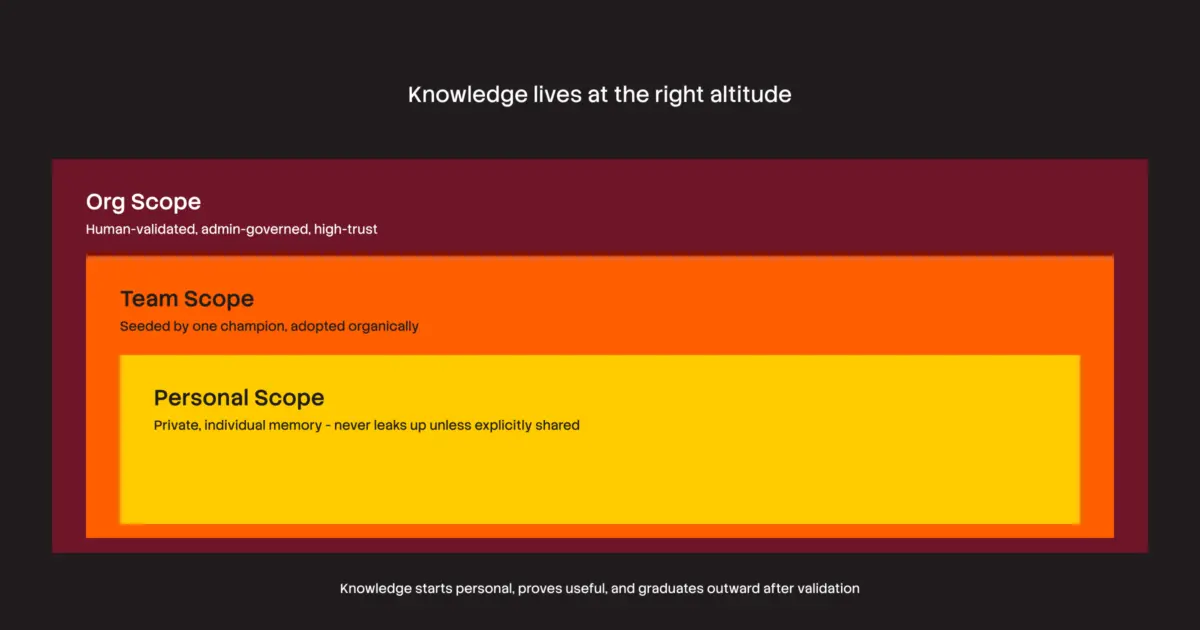
- Contextual Knowledge Bases: Tools like Stack Overflow for Teams (Internal) are being used to feed verified, company-specific knowledge into AI agents, reducing the likelihood of hallucinations and ensuring that the AI adheres to existing architectural standards.
The Path Forward: From Code Generation to System Integrity
The future of software engineering will likely not be defined by who can generate the most code, but by who can build the most trustworthy systems. The "vibe coding" era—where developers rely on the general "feel" of an AI’s output—is a temporary phase that must give way to more rigorous, explicitly defined workflows.
Successful teams will be those that treat AI agents as powerful but fallible assistants rather than autonomous replacements. This involves maintaining a "sharp tool" mentality: taking the time to understand the nuances of the AI, building robust feedback loops, and knowing when to eschew the non-deterministic nature of LLMs in favor of a "humble bash script" that has worked for a decade.
As the industry moves forward, the focus must shift from the speed of the "sprint" to the stability of the "marathon." Trust is built through predictability and shared responsibility. While agentic engineering offers a glimpse into a future of unprecedented productivity, that productivity is only valuable if the resulting software is reliable, secure, and maintainable. The challenge for the next generation of developers is not just to talk to the terminal, but to ensure they remain the masters of the conversation.