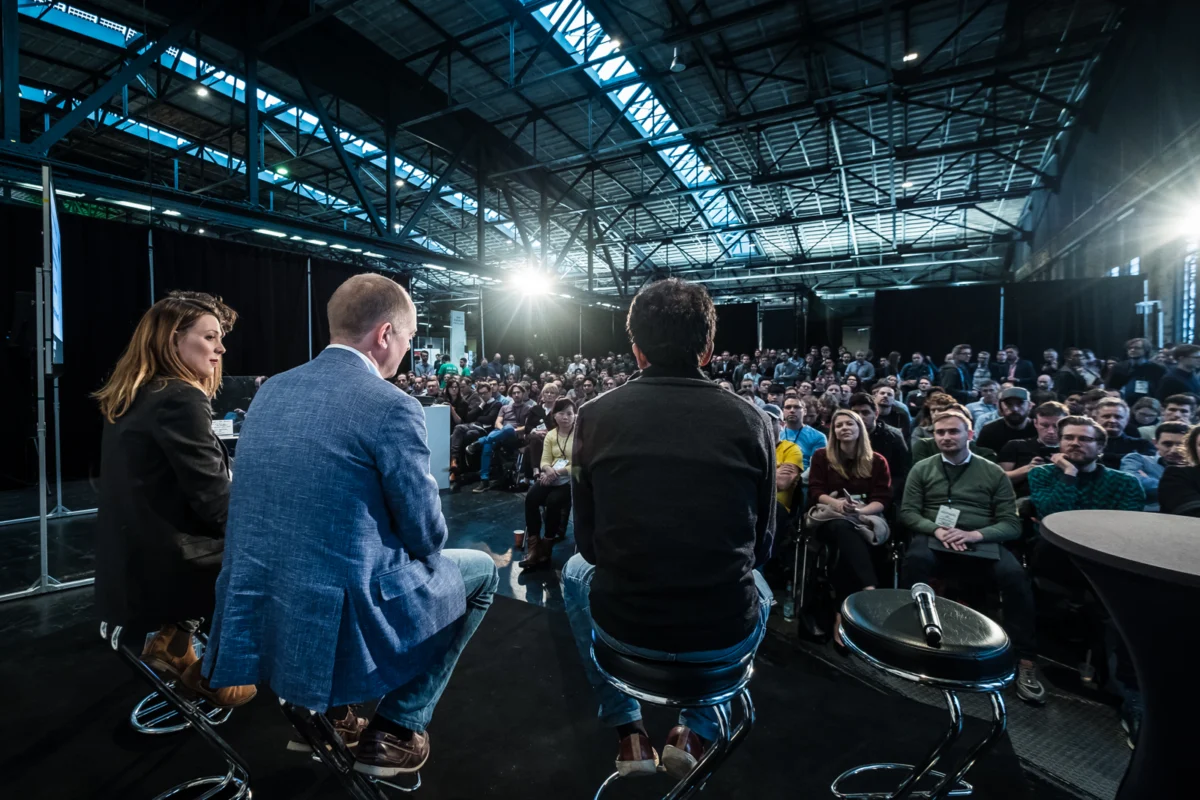
Lina Irawan
The rapid integration of artificial intelligence into software development has created a visible rift within engineering organizations, where a small subset of developers leverages coding agents to achieve output levels that far outpace their peers. This phenomenon, often characterized by "100x" productivity gains, has prompted leadership teams to scrutinize these high performers in an attempt to replicate their success across entire departments. However, emerging insights from industry leaders suggest that these outliers are not necessarily defined by innate brilliance or seniority, but by their position on a behavioral spectrum of technology adoption.
Vivek Raghunathan, Senior Vice President of Engineering at Snowflake, recently addressed this organizational challenge during an episode of the Leaders of Code podcast. Drawing on concepts from reinforcement learning, Raghunathan categorized the engineering workforce into two distinct groups: "explorers" and "exploiters." According to his analysis, approximately 5% of an engineering organization consists of explorers—individuals who are inherently driven to experiment with new tools, push the boundaries of AI agents, and discover novel workflows without being prompted by management. The remaining 95% are exploiters, professionals who prioritize the completion of their primary tasks and prefer to use "paved paths" or established methodologies rather than spending time on experimental discovery.
The Evolution of AI in Software Engineering
To understand the current urgency surrounding AI adoption, it is necessary to examine the timeline of development tools over the last decade. For years, integrated development environments (IDEs) relied on static analysis and basic "IntelliSense" to provide code completion. The landscape shifted dramatically in June 2021 with the technical preview of GitHub Copilot, which introduced large language models (LLMs) into the developer workflow. By 2023, the emergence of more sophisticated models like GPT-4 and Claude 3, along with agentic frameworks such as AutoGPT and specialized coding agents like Cursor and Devin, transformed AI from a mere autocomplete tool into an active collaborator capable of writing entire modules, debugging complex systems, and managing documentation.
As these tools matured, the performance gap between those who embraced them and those who maintained traditional workflows widened. This transition has forced engineering managers to reconsider how they evaluate talent and productivity. The traditional metrics of "lines of code" or "story points" are becoming increasingly obsolete in an era where an AI agent can generate hundreds of lines of functional code in seconds.
Industry Data and Adoption Trends
Recent data supports the observation that AI is no longer a niche interest but a fundamental shift in the industry. According to the 2024 Stack Overflow Developer Survey, which polled over 65,000 developers, approximately 76% of respondents are currently using or planning to use AI tools in their development process. However, the depth of this usage varies significantly. While many use AI for simple tasks like documentation or explaining code snippets, only a small fraction—correlating with Raghunathan’s 5% explorer estimate—is using AI to fundamentally re-architect how software is built.
Furthermore, a study conducted by GitHub in 2023 revealed that developers using AI tools completed tasks up to 55% faster than those who did not. In specific scenarios involving complex refactoring or boilerplate generation, the gains were even more pronounced. These statistics underscore why leadership teams are eager to "clone" the traits of their most successful AI adopters.
The Fallacy of the "Special" Engineer
A common misconception among leadership is that the engineers achieving massive gains with AI were already the most senior or "star" performers. Raghunathan argues that this is rarely the case. The traits that AI amplifies—curiosity, adaptability, and a willingness to learn through trial and error—do not always align with traditional seniority or reputation. In many instances, junior or mid-level engineers who are more comfortable with the "black box" nature of AI are outperforming senior architects who may be more resistant to changing their established mental models.
This shift suggests that AI is a "great equalizer" that rewards those who can best prompt and orchestrate agents rather than those who possess the deepest knowledge of syntax or legacy systems. Consequently, any strategy that focuses solely on training "top" engineers in AI is likely to fail because it misidentifies the population most likely to drive innovation.
Strategic Pitfalls in AI Adoption
Organizations often fall into several traps when attempting to scale AI productivity. The first is designing a strategy solely for the "exploiters." By focusing only on providing a "paved path"—such as a standardized company-wide AI tool with restricted settings—leadership raises the productivity floor but caps the ceiling. Without allowing for the experimentation of the explorers, the company will never discover the frontier of what is possible with new, emerging technologies.
The second pitfall is designing exclusively for the "explorers." When leadership builds an AI strategy around the dazzling demos of a few individuals, they often fail to move the needle for the other 95% of the organization. A few high-profile success stories do not translate into organizational efficiency if the majority of the team continues to work using outdated methods.
The third mistake is treating AI proficiency as a hiring problem rather than a development problem. Raghunathan notes that it is nearly impossible to identify an "explorer" through external interviews alone, as these traits are often context-dependent and revealed through internal work. The more effective lever for leadership is to move the existing workforce along the scale from exploiter to explorer.
Building a Mechanism for Organizational Movement
To bridge the gap between the 5% and the 95%, engineering managers must implement structured mechanisms that facilitate the transfer of knowledge. This process involves several key components:
1. Identifying and Empowering Explorers
Explorers are typically self-identifying. They are the engineers who demo new tools during lunch-and-learns or build internal prototypes over the weekend. Instead of viewing this as a distraction from "sprint work," managers should treat these discoveries as raw material. Explorers should be given the space to validate new tools and workflows, with the understanding that their "output" is the discovery of a new "paved path" for the rest of the team.
2. Structured Learning and Mentorship
Knowledge of AI tools does not spread through osmosis. Organizations must create formal communities of practice where explorers can mentor those in the middle of the adoption scale. This might include "prompt engineering" workshops, shared libraries of successful AI-generated templates, or pair-programming sessions focused specifically on using coding agents.
3. Improving the Paved Path
The goal is not to turn every engineer into an explorer. Most engineers (the 95%) are correctly focused on delivering features and maintaining systems. For this group, the objective is to ensure that the "paved path" they follow is constantly being upgraded by the findings of the explorers. As soon as a new AI workflow is proven to be 20% more efficient, it should be integrated into the standard development environment for everyone.
Measuring Success through Movement
Instead of focusing on outlier anecdotes, leadership should measure the "movement along the scale." Useful metrics include:
- The percentage of the engineering org that has integrated AI agents into their daily workflow.
- The reduction in time spent on "boilerplate" tasks across the entire department.
- The number of engineers who have moved from "no usage" to "regular usage" of AI tools within a quarter.
By tracking these metrics, managers can determine if their "bridge-building" efforts are working or if the gap between the explorers and the rest of the team is continuing to widen.
Broader Implications and Future Outlook
The shift toward AI-augmented engineering has profound implications for the future of the tech industry. As AI agents become more capable, the role of the software engineer is evolving from a "writer of code" to an "orchestrator of systems." This requires a fundamental change in how engineering education and career development are approached.
From an organizational standpoint, companies that successfully build a pipeline for turning exploratory discoveries into exploitable workflows will have a significant competitive advantage. They will be able to iterate faster, maintain leaner teams, and respond to market changes with greater agility. Conversely, organizations that fail to bridge the gap between their outliers and their majority risk stagnation, as their most talented "explorers" may seek environments that better value their contributions, while their "exploiters" fall behind industry standards.
In conclusion, the goal for engineering leadership is not to find a "special" type of person and hire more of them. It is to build a resilient system that identifies internal innovators, extracts their knowledge, and continuously elevates the performance of the entire organization. The "100x engineer" should not be an anomaly to be marveled at, but a blueprint for the future of the entire team. As Vivek Raghunathan suggests, the task is to ensure that the lightning of innovation strikes not just once, but becomes a repeatable and scalable part of the company’s DNA.