admin
admin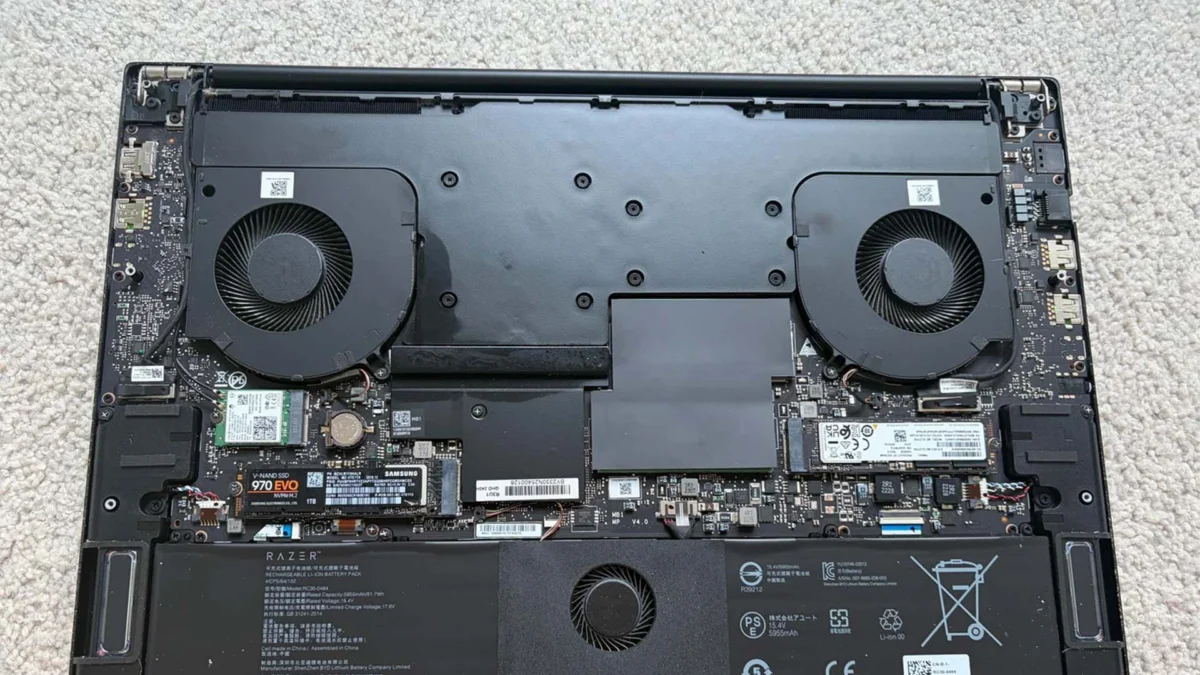
The Razer Blade series has long been positioned as the "MacBook of gaming laptops," a moniker earned through its sleek aluminum unibody design, high-end specifications, and premium price points. However, a growing body of evidence from the user community suggests that a fundamental design flaw in the vapor chamber cooling systems of recent models, specifically the Blade 16 and Blade 18, may be leading to catastrophic hardware failures. Reports indicate that a critical seal in the vapor chamber—referred to as the "fill port"—is prone to weakening and breaking, resulting in a total loss of thermal conductivity and, in some cases, visible condensation within the chassis.
The Mechanics of Vapor Chamber Failure in High-End Portables
To understand the severity of the reported issues, it is necessary to examine the technology at the heart of modern high-performance laptop cooling. Traditional gaming laptops utilize copper heat pipes, which contain a small amount of liquid that evaporates near the heat source (the CPU or GPU) and condenses at the cooling fins. A vapor chamber operates on the same phase-change principle but utilizes a flattened, hollow chamber instead of individual pipes. This allows for a much larger surface area for heat absorption and more efficient thermal spreading across the laptop’s internal footprint.
In a correctly functioning vapor chamber, the internal environment is a partial vacuum containing a working fluid. The "fill port" is the point where the chamber is evacuated and the fluid is injected before being hermetically sealed. According to technical investigations shared by the enthusiast community, Razer’s implementation in certain Blade 16 and 18 models features a seal that may not withstand the repeated thermal expansion and contraction cycles inherent in high-performance gaming.
When this seal fails, the vacuum is lost and the working fluid escapes. Without the phase-change cycle, the copper assembly becomes a passive heat sink with significantly reduced thermal mass. This leads to a paradoxical symptom reported by affected users: the laptop’s fans blow cold air even as the internal components reach critical temperatures. Because the heat is no longer being transported from the silicon dies to the exhaust fins, the cooling system effectively becomes a thermal insulator rather than a conductor.

Chronology of a Failure: The Blade 18 Incident
The gravity of this defect was highlighted recently by a Razer Blade 18 owner, identified as Redditor "Low-Field6977," who detailed a sudden and total failure of his machine’s cooling capabilities. The user reported that the laptop, which costs upwards of $4,000 depending on the configuration, transitioned from peak performance to unusable within a matter of hours.
The sequence of events began during a session of the hardware-intensive racing simulator Forza, where the laptop initially delivered high frame rates. By the following morning, the system was unable to launch applications. Initial troubleshooting steps, including driver updates and software resets, proved fruitless. Upon physical inspection, the owner noted that the air being exhausted by the fans was cold, despite the system throttling due to extreme heat.
Further investigation revealed visible condensation on the left side of the vapor chamber. This phenomenon occurs when the working fluid leaks from the sealed environment and interacts with the internal atmosphere of the laptop. For a device that had never been opened or subjected to physical trauma, such a failure points toward a manufacturing or design defect rather than user error. The user’s predicament was exacerbated by the fact that the unit had recently fallen out of its standard warranty period, leaving them with few options for recourse.
The Economic Impact and the $2,000 Repair Quote
One of the most contentious aspects of the Razer hardware failure ecosystem is the cost of out-of-warranty repairs. In the case of the Blade 18 failure, the owner reported being quoted approximately $2,000 for a repair. This figure represents nearly 50% of the original purchase price of the laptop.
The high cost is attributed to Razer’s integrated assembly approach. While the motherboard itself may remain functional, the vapor chamber is a complex, proprietary component that is not readily available on the secondary market. Razer does not currently participate in comprehensive "Right to Repair" programs that would allow third-party technicians or consumers to purchase individual cooling assemblies at a fair market price.

Consequently, users are often forced to choose between paying an exorbitant fee for a manufacturer-certified repair or possessing a "bricked" luxury device. This pricing structure has drawn sharp criticism from consumer advocates, who argue that a cooling system failure should not necessitate a repair cost equivalent to a new mid-range gaming laptop.
Technical Analysis: Visible vs. Non-Visible Fill Ports
Further research by the community, specifically by contributor "ResoluteFalcon," suggests that the failure rate may be linked to specific revisions of the vapor chamber design. There appear to be two primary versions of the cooling assembly circulating in the Razer Blade 16 and 18 supply chains: one with a visible, protruding fill port and one with a recessed or "non-visible" port.
The analysis suggests that the versions without a visible fill port may be more susceptible to structural failure at the seal point. When the seal breaks, the internal pressure of the vapor chamber equalizes with the external environment. This not only stops the cooling process but can also lead to the "sweating" or condensation effect seen in recent reports. If this moisture comes into contact with the motherboard or other sensitive electronics, a simple cooling failure can escalate into a short-circuit that destroys the entire system.
Broader Context: Razer’s Quality Control Challenges
This vapor chamber issue is not the first time Razer has faced scrutiny over the longevity of its premium hardware. For years, the brand has been associated with "battery bloat," a condition where the lithium-ion batteries in Blade laptops expand over time, often warping the chassis or damaging the trackpad. While Razer eventually addressed this by extending battery warranties to two years for certain models, the reputation for inconsistent quality control remains a hurdle for the brand.
The current situation with the vapor chambers is arguably more severe than battery bloat, as it involves the primary cooling mechanism of the device. High-end laptops equipped with Intel Core i9 processors and NVIDIA RTX 40-series GPUs generate immense amounts of heat. Without a robust and reliable vapor chamber, these components cannot operate at their rated speeds, rendering the "pro" or "extreme" specifications of the laptop moot.

Market Implications and Competitive Standing
The gaming laptop market is more competitive than ever, with brands like ASUS (ROG/TUF), Lenovo (Legion), and MSI (Raider/Stealth) offering comparable performance. Many of these competitors also utilize vapor chamber technology. For instance, the Lenovo Legion 7i and the ASUS ROG Strix SCAR series employ advanced cooling solutions that, thus far, have not exhibited the same pattern of "fill port" seal failures.
If Razer fails to address these cooling concerns through a formal recall or a revised hardware design, it risks alienating its core demographic of enthusiast gamers and creative professionals. The "premium" price tag of a Razer Blade is predicated on the idea of superior build quality and longevity. When a $4,000 investment fails shortly after the one-year warranty mark due to a known manufacturing quirk, the value proposition of the brand is fundamentally undermined.
Industry Reactions and Potential Solutions
As of the current reporting, Razer has not issued a formal statement regarding the specific failure of vapor chamber fill ports. However, the company’s customer service department has historically handled such issues on a case-by-case basis. Industry analysts suggest that for Razer to maintain its market position, it may need to consider the following actions:
- Component Availability: Making replacement vapor chambers available to authorized third-party repair centers to lower the cost of maintenance.
- Extended Cooling Warranties: Similar to the battery bloat resolution, extending the warranty specifically for the cooling assembly could restore consumer confidence.
- Design Revision: Transitioning all future manufacturing to a reinforced fill port design to ensure the hermetic seal remains intact over several years of use.
For current owners of Razer Blade 16 and 18 laptops, thermal monitoring is highly recommended. Users should utilize software to track CPU and GPU temperatures during load. A sudden increase in temperatures, accompanied by unusually cool exhaust air, is a primary indicator of vapor chamber failure. If these symptoms occur while the device is under warranty, immediate contact with technical support is advised before the seal breach leads to secondary moisture damage.
The situation serves as a cautionary tale for the laptop industry at large. As manufacturers push the boundaries of thinness and power, the mechanical limits of cooling technologies like vapor chambers are being tested. For the consumer, it reinforces the importance of researching not just the performance benchmarks of a new device, but its long-term structural reliability and the manufacturer’s commitment to post-purchase support.