Metty Iskandar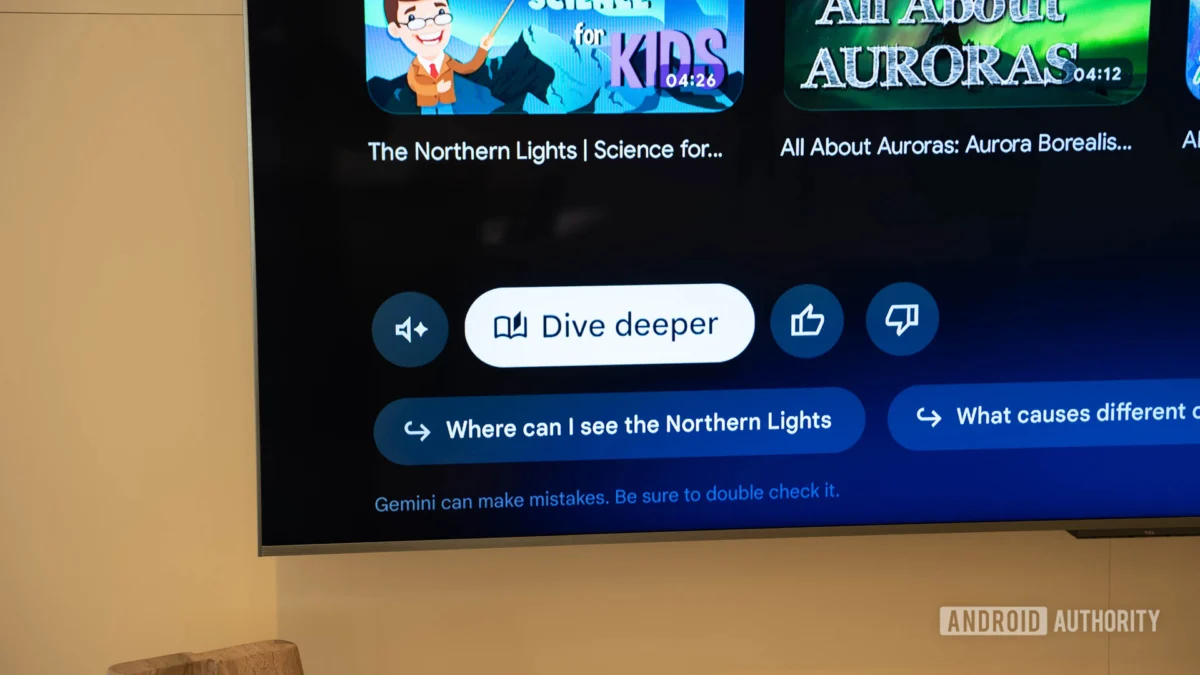
Google is significantly expanding the capabilities of Gemini, its advanced artificial intelligence model, within the Google TV ecosystem, promising a more intuitive and personalized entertainment experience. Following initial teasings at CES 2026, the company has begun rolling out a suite of new features designed to leverage Gemini’s understanding and predictive power, making it easier for users to discover content, get information, and navigate their streaming libraries. This expansion marks a pivotal step in Google’s strategy to embed AI deeply into its consumer platforms, aiming to redefine how individuals interact with their home entertainment.
The recent rollout introduces three key enhancements to Gemini for Google TV. These updates are designed to address common user pain points, such as finding specific content, staying informed about live events, and receiving contextual assistance. The features began their phased deployment to Gemini-enabled devices in the United States starting today, with Canada receiving access to enhanced visual help immediately and deeper integration for sports and other content expected this spring. This staggered approach to regional availability is typical for large-scale software rollouts, allowing Google to monitor performance and gather user feedback before a wider release.
Enhanced Content Discovery and Information Retrieval
One of the most significant additions is the ability for Gemini to provide more comprehensive visual explanations and contextual information directly within the Google TV interface. This feature aims to move beyond simple search results, offering users richer details about actors, directors, plot summaries, and even behind-the-scenes trivia, all presented in an easily digestible format. For instance, a user watching a movie could ask Gemini about a particular actor’s filmography or the historical context of a scene, and receive an immediate, visually augmented response without leaving their viewing experience. This level of integrated assistance could dramatically reduce the friction associated with content discovery and information gathering, transforming passive viewing into an interactive learning experience.
Deeper Integration for Sports and Live Events
For sports enthusiasts, the update brings "deep dives" and "sports briefs" powered by Gemini. This means users can now ask Gemini for real-time updates on live games, historical performance data, team statistics, and even predictions. Beyond live sports, this feature is expected to extend to other live events, such as award shows or breaking news, providing concise summaries and relevant background information. This capability is particularly valuable in an era of fragmented sports viewing and constant news cycles, offering a centralized and intelligent source of information. The "deep dives" suggest that Gemini will be able to go beyond superficial answers, offering detailed analyses and insights that cater to both casual and avid fans.
Expanded Voice Assistant Availability
Beyond the specific feature enhancements, Google also announced plans to broaden the availability of the Gemini for Google TV voice assistant to more international markets. This global expansion is slated to commence this spring, with Australia, New Zealand, and Great Britain being the first wave of countries to receive access. This move signifies Google’s commitment to making its AI-powered entertainment platform accessible to a wider audience, acknowledging the global nature of streaming services and content consumption. The gradual rollout ensures that Google can adapt the assistant’s language models and cultural nuances for each region, optimizing the user experience across diverse linguistic and cultural landscapes.
The Genesis of Gemini on Google TV: A CES 2026 Foreshadowing
The announcements made at CES 2026 served as the initial unveiling of Google’s ambitions for Gemini within Google TV. During the premier consumer electronics show, Google showcased a vision of a more intelligent living room, where AI played a central role in curating and enhancing entertainment. The demonstrations highlighted Gemini’s potential to understand complex natural language queries, predict user preferences, and proactively offer relevant content. At the time, the company emphasized that these were early glimpses of what was to come, with a roadmap pointing towards gradual feature integration over the subsequent months. The current rollout represents the fulfillment of those early promises, bringing tangible AI-driven improvements to users’ devices.
CES, held annually in Las Vegas, has historically been a platform for tech giants to showcase their future strategies and product roadmaps. For Google, CES 2026 provided an opportune moment to underscore its ongoing investment in AI research and development, particularly its application in consumer-facing products. The focus on Gemini and Google TV indicated a strategic push to differentiate its smart TV platform from competitors by offering a superior, AI-powered user experience. The initial buzz generated at the event has now translated into concrete product updates, signaling a sustained effort to evolve the Google TV interface.
Data and User Engagement: The Fuel for Gemini’s Evolution
The effectiveness of AI models like Gemini is heavily reliant on the data they process and the interactions they have with users. Google’s vast ecosystem provides an unparalleled advantage in this regard. By analyzing viewing habits, search queries, and user feedback across its various platforms, Google can continuously refine Gemini’s algorithms. The more users interact with Gemini on Google TV, the better it becomes at understanding individual preferences, predicting content desires, and providing relevant assistance.
This data-driven approach is crucial for features like personalized recommendations and the proactive surfacing of content. As Gemini learns from user behavior, it can move beyond generic suggestions to offer highly tailored recommendations, significantly increasing user satisfaction and engagement with the platform. For example, if a user frequently watches documentaries about space exploration, Gemini might proactively suggest a new documentary on the topic or a related TV series, even before the user explicitly searches for it.
Broader Implications for the Smart TV Landscape
The enhanced integration of Gemini into Google TV has significant implications for the broader smart TV market. As AI becomes more sophisticated and accessible, it is poised to become a defining feature of next-generation entertainment devices. Google’s move could set a new benchmark for what consumers expect from their smart TVs, pushing competitors to invest more heavily in AI capabilities.
The trend towards AI-powered content discovery and personalized experiences is already evident. However, Google’s comprehensive approach, encompassing advanced natural language understanding, visual context, and real-time information retrieval, could position Google TV as a leader in this evolving landscape. The ability to seamlessly integrate AI into the viewing experience, without disrupting the core enjoyment of entertainment, will be key to its long-term success.
Furthermore, the expansion of the Gemini voice assistant to new regions highlights the global ambition of AI integration. As more households adopt smart TVs, the demand for intelligent assistants that can simplify content access and provide instant information will only grow. Google’s proactive expansion into markets like Australia, New Zealand, and Great Britain suggests a strategic effort to capture a significant share of this growing global market.
Future Outlook: A Continual Evolution of the Intelligent Home
The current rollout of Gemini features on Google TV is not an endpoint but rather a significant milestone in Google’s ongoing journey to create a more intelligent and interconnected home. The company’s commitment to AI development, particularly through models like Gemini, suggests that further enhancements and integrations are likely in the future.
One can anticipate deeper connections with other Google services, such as Google Photos, Google Calendar, and even Google Assistant’s broader capabilities. Imagine Gemini being able to remind you of an upcoming event and then suggest a movie that aligns with the theme or actors involved. Or, perhaps, it could learn your favorite recipe from a cooking show and then add the ingredients to your Google Shopping list.
The evolution of AI in entertainment is not just about convenience; it’s about transforming how we interact with technology and how technology understands and serves us. With these new Gemini features, Google is taking a substantial leap forward in realizing that vision for the Google TV platform, promising a future where entertainment is more discoverable, informative, and deeply personal. The continued success of these initiatives will depend on Google’s ability to balance innovation with user privacy and to ensure that AI enhances, rather than overwhelms, the core experience of enjoying content.