Clarissa Hana
A financially motivated threat actor, previously associated with the notorious Medusa ransomware operation, has resurfaced with a new weapon in its arsenal: StormEncryptor. Microsoft Threat Intelligence, which is tracking this group as Storm-1175, has identified recent attacks leveraging a critical authentication-bypass vulnerability (CVE-2026-18577) in N-able’s N-central remote monitoring and management (RMM) tool as the likely initial point of compromise. This development signals a significant shift in tactics for Storm-1175, marking their first observed activity since April 2026 and a departure from their previous reliance on the Medusa ransomware. The actor’s previous modus operandi involved exploiting zero-day and n-day vulnerabilities in a range of widely used enterprise software, including GoAnywhere MFT, SmarterTools SmarterMail, Microsoft Exchange, Invanti Connect Secure, and JetBrains TeamCity.
Evolution of a Threat Actor: From Medusa to StormEncryptor
Storm-1175 is believed to be a China-based threat actor, and their affiliation with Medusa ransomware has been well-documented. The Medusa operation, known for its aggressive tactics and high ransom demands, has been a persistent threat to businesses globally. Historically, Storm-1175 has demonstrated a keen ability to identify and exploit vulnerabilities in popular software solutions, allowing them to gain initial access to victim networks. Their previous campaigns have often involved a rapid progression from initial compromise to data exfiltration and subsequent ransomware deployment, leaving organizations with little time to respond.
The emergence of StormEncryptor represents a strategic evolution for Storm-1175. By developing or acquiring a new ransomware strain, the group aims to evade detection by security solutions that may have been updated to specifically counter Medusa. This also suggests a potential desire to diversify their operational infrastructure and potentially increase their operational security. Microsoft’s observation that this is the first activity seen from Storm-1175 since April 2026 underscores the group’s ability to operate stealthily and rebrand or retool their operations when necessary.

The StormEncryptor Payload and Attack Vector
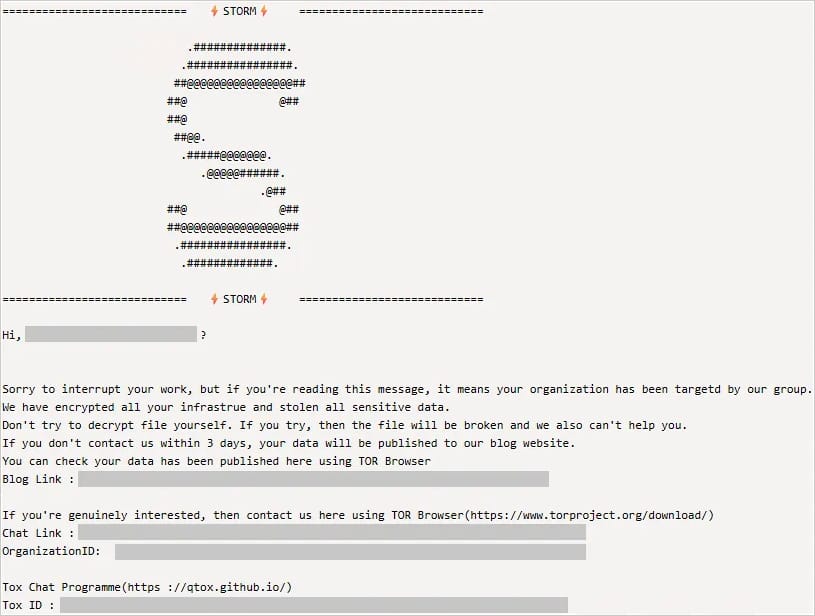
Microsoft’s analysis reveals that StormEncryptor is a ransomware strain developed in C++. Upon successful encryption, it appends the ".encrypted" extension to compromised files. A ransom note, identified as "!!!README_FIRST!!!.txt," is then deposited into every directory where files have been encrypted. This note typically outlines a strict three-day deadline for victims to contact the attackers and negotiate a ransom payment. Failure to comply, the note warns, will result in the public leakage of the stolen data, a common tactic employed by ransomware groups to increase pressure on victims.
The exploitation of the CVE-2026-18577 vulnerability in N-central is a particularly concerning aspect of this campaign. N-central is a widely adopted RMM tool, used by managed service providers (MSPs) and IT departments to remotely manage and monitor client systems. Its widespread deployment means that a successful exploit of this vulnerability could provide attackers with access to a vast number of organizations. The authentication-bypass nature of the flaw suggests that attackers could potentially gain privileged access to the N-central server without needing valid credentials, significantly lowering the barrier to entry for their attacks.
The Attacker’s Toolkit and Rapid Deployment
Once Storm-1175 gains a foothold in a compromised network via the N-central vulnerability, their toolkit is deployed swiftly. Evidence suggests the use of legitimate remote management tools such as AnyDesk and SimpleHelp, which can be misused by attackers to maintain persistent access and control over infected systems. Network discovery is facilitated by tools like Advanced IP Scanner, enabling the attackers to map out the victim’s network infrastructure and identify valuable targets.
A critical step in their attack chain involves the use of Mimikatz, a powerful credential-dumping tool. Mimikatz is designed to extract plaintext passwords, hash, PIN codes, and Kerberos tickets from memory, often targeting the Local Security Authority Subsystem Service (LSASS) process. By obtaining these credentials, Storm-1175 can escalate their privileges within the network, move laterally to other systems, and gain access to sensitive data and critical infrastructure.
Microsoft’s warning emphasizes the speed at which Storm-1175 operates. The transition from initial compromise to data exfiltration and ransomware deployment can occur within a matter of days, if not hours. This rapid pace leaves organizations with a very narrow window to detect and respond to an ongoing attack, making proactive security measures and rapid incident response capabilities paramount.
Official Responses and Mitigation Strategies
In response to the identified vulnerability, N-able has taken swift action. On August 2, 2026, they released a hotfix (2026.3 HF1/build 2026.3.1.7) specifically to address CVE-2026-18577. The company has strongly urged its customers to install this patch immediately to protect their self-hosted N-central servers. Prior to the hotfix release, N-able had provided recommendations for administrators to proactively check for signs of compromise. These indicators included the presence of an svchost.exe file within user document folders, a registered service named "Cloudflared," and inbound network connections originating from specific IP addresses detailed in their advisory.
Microsoft, in its advisories, has reiterated the urgency for organizations to monitor for Storm-1175 activity and to apply all relevant security patches as soon as they become available. The interconnected nature of modern IT environments, particularly those utilizing RMM tools for remote management, means that a single vulnerability can have far-reaching consequences. The threat actor’s demonstrated ability to exploit such vulnerabilities underscores the ongoing need for robust patch management programs and continuous security monitoring.
Broader Implications for Cybersecurity
The emergence of StormEncryptor and the continued activity of sophisticated threat actors like Storm-1175 highlight several critical trends in the cybersecurity landscape:
- Evolution of Ransomware Tactics: Threat actors are not static. They continuously adapt their tools, techniques, and procedures (TTPs) to bypass security defenses and maximize their impact. The development of new ransomware strains is a testament to this ongoing arms race.
- Exploitation of Supply Chain Vulnerabilities: The targeting of RMM tools like N-central demonstrates a continued focus on supply chain attacks. Compromising a single MSP or IT management platform can provide attackers with access to a multitude of end customers, amplifying the potential damage.
- The Importance of Proactive Security: The rapid pace of attacks by groups like Storm-1175 underscores the limitations of purely reactive security measures. Proactive threat hunting, vulnerability management, and the implementation of robust security controls are essential for early detection and mitigation.
- Data Leakage as a Primary Threat: The threat of data exfiltration and subsequent public leakage is a significant motivator for ransom payments. This tactic, often referred to as "double extortion," puts immense pressure on organizations, especially those handling sensitive customer or proprietary data.
- The Role of Threat Intelligence: Microsoft’s detailed tracking of Storm-1175 and its activities provides invaluable intelligence for the broader security community. Sharing this information allows other organizations to better prepare and defend against similar threats.
The cyber threat landscape remains dynamic, with financially motivated actors constantly seeking new avenues for exploitation. The shift from Medusa to StormEncryptor by Storm-1175 serves as a stark reminder that organizations must remain vigilant, continuously update their security postures, and invest in comprehensive defense strategies to protect themselves from evolving threats. The rapid deployment capabilities of these actors necessitate an equally rapid and coordinated response from the cybersecurity industry.