Chandra Wibowo
Bitcoin (BTC) is navigating a challenging start to the new week, trading around the $63,000 mark. However, historical patterns of bear markets appear to be repeating, with the cryptocurrency experiencing a weekly close below a critical long-term trend line, signaling potential further downside pressure. This technical breakdown, coupled with a complex global economic landscape, paints a cautious picture for investors.

Bitcoin’s Weekly Close Below the 200-Week Moving Average: A Historical Warning Sign
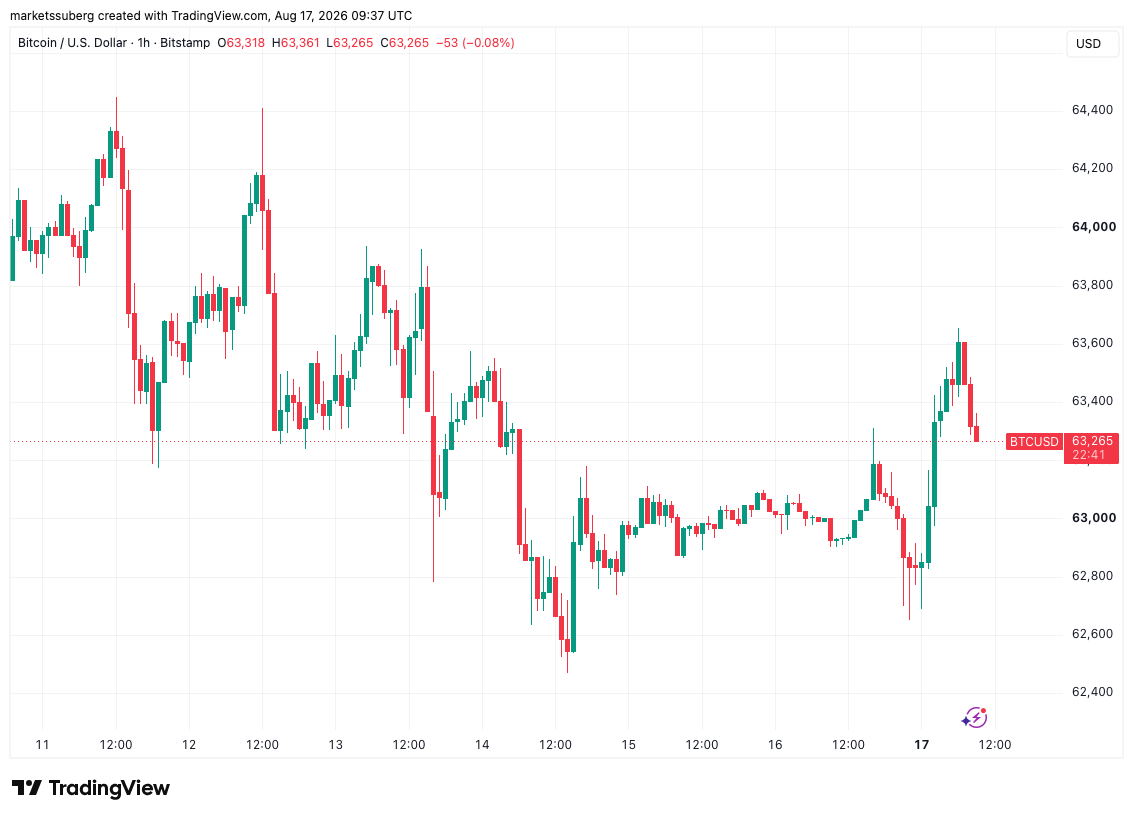
The cryptocurrency market is closely watching Bitcoin’s price action as the week unfolds. Following Sunday’s weekly close, BTC saw a modest rebound, reaching local highs of $63,655 on Bitstamp. Yet, the underlying technical picture remains a significant concern for many analysts. Data from TradingView reveals that BTC/USD has struggled to break free from a narrow trading range, failing to decisively challenge either upward or downward momentum.
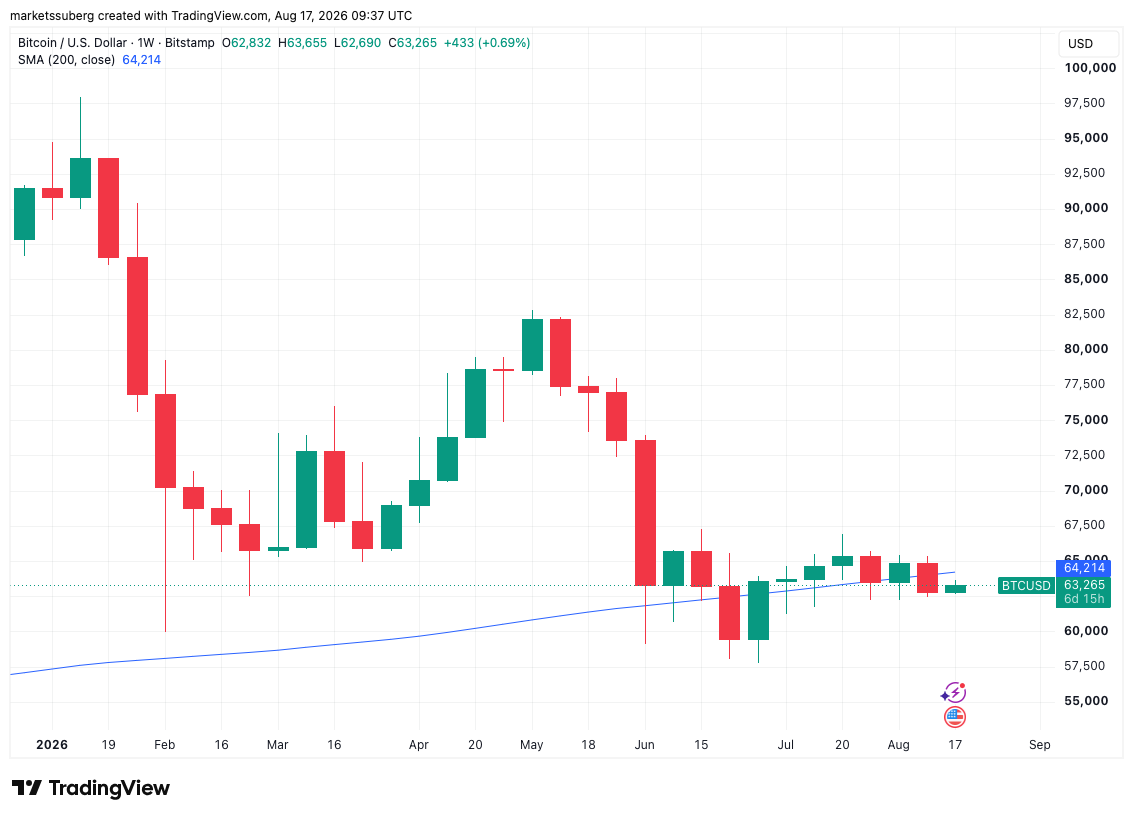
A key development drawing attention is Bitcoin’s return below its 200-week simple moving average (SMA). This long-term technical indicator has historically played a pivotal role in defining market cycles. As previously reported, the 200-week SMA served as a crucial resistance level throughout the protracted bear market of 2022. During that period, Bitcoin struggled to reclaim this level for an extended duration before eventually entering a prolonged bottoming phase.
Analyst Benjamin Cowen highlighted the historical significance of this technical event. "What is interesting is how in both summer 2022/2026, Bitcoin capitulated below the 200W SMA, then bounced, then gave it up in mid-August," Cowen stated on the social media platform X, drawing parallels between current market behavior and past downturns. This observation suggests that a breach of such a significant trend line can often precede further price depreciation, especially if it fails to be reclaimed quickly.
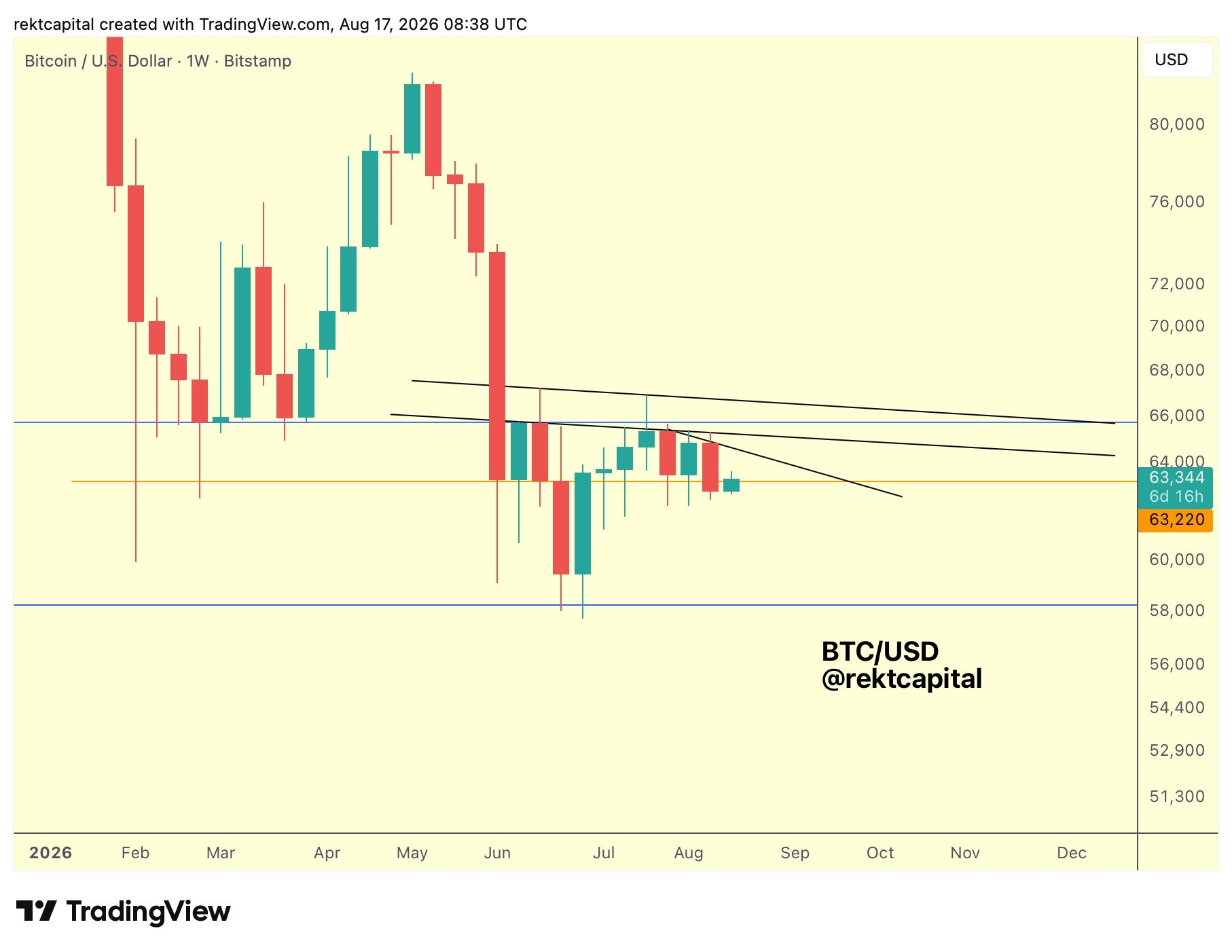
Further reinforcing this bearish sentiment, trader and analyst Rekt Capital noted that Bitcoin’s price failed to meet his target weekly close of $63,220. This inability to achieve the desired closing price, according to Rekt Capital, positions the cryptocurrency for further downward movement within its current trading range, estimated to be between $58,000 and $66,000. "A rejection from $63,220 would fully confirm the breakdown and send price lower within the current ~$58,000-$66,000 Range," Rekt Capital informed his followers on X, accompanied by a detailed chart analysis. The failure to hold above this key level could indicate a shift in market sentiment, with sellers gaining the upper hand.
Global Economic Crosscurrents: Fed Minutes and Japanese GDP in Focus
Beyond technical indicators, macroeconomic factors are exerting considerable influence on the cryptocurrency market. This week’s economic calendar is laden with events that could shape investor sentiment and, consequently, Bitcoin’s price trajectory.
On Friday, preliminary Purchasing Managers’ Index (PMI) data for the manufacturing and services sectors in the United States is scheduled for release. Recent trends have shown these indices in an uptrend, diverging from relatively weaker employment figures, which have undergone several months of downward revisions. This divergence could present a mixed picture of economic health.
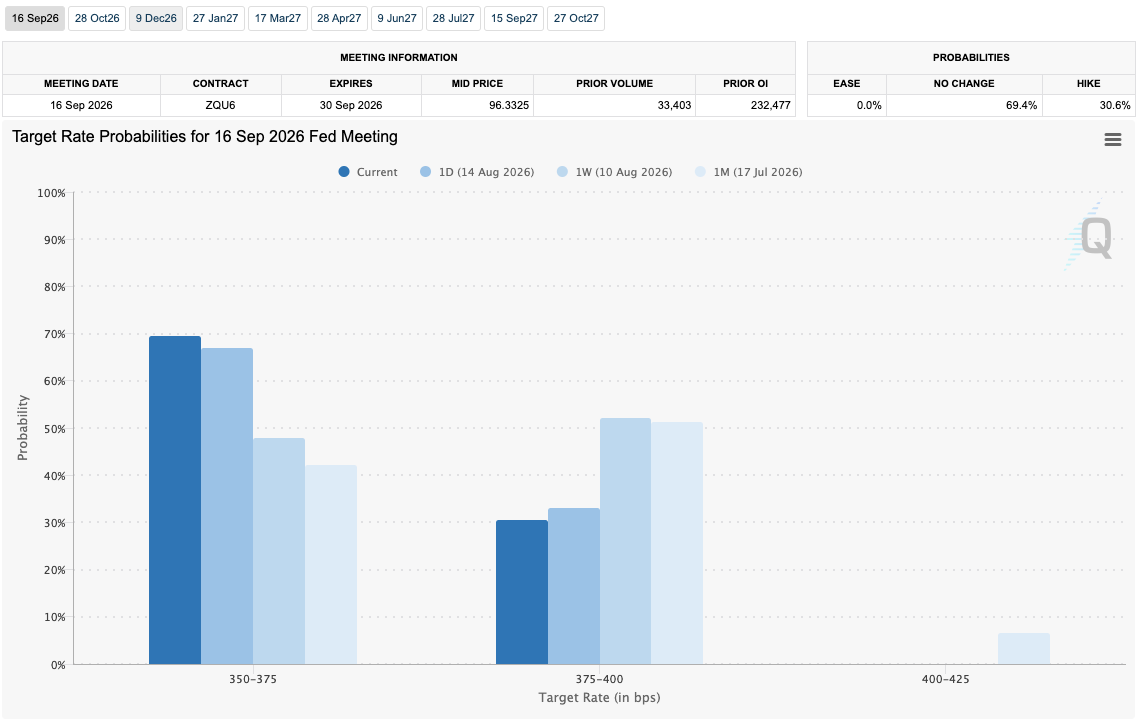
Last week’s releases of the Consumer Price Index (CPI) and Producer Price Index (PPI) offered a more optimistic outlook, painting a softer-than-expected picture of US inflation trends. These data points have prompted a reassessment of future interest rate decisions by the Federal Reserve. The CME Group’s FedWatch Tool currently indicates a nearly 70% probability that the Fed will maintain its current interest rate range of 3.50-3.75% at its upcoming meeting. This contrasts sharply with the 42% probability observed a month ago, suggesting a growing consensus for a pause in rate hikes.
"A pair of reports showing moderating inflation is helping keep the outlook for monetary policy from turning too hawkish," summarized trading resource Mosaic Asset Company in an analysis released on Sunday. However, Mosaic also pointed out that the current CPI, at 3.4% year-on-year, remains significantly above the Fed’s 2% target. This persistent inflation concern, despite recent moderation, keeps the possibility of further monetary tightening on the table, albeit with reduced probability.
The Federal Reserve’s minutes from its July meeting, due for release on Wednesday, will be closely scrutinized. The prior meeting saw a pause in rate hikes, marked by the largest split among Federal Open Market Committee (FOMC) officials over such a move since 1970. This internal dissent underscores the ongoing debate within the Fed regarding the appropriate path of monetary policy. Cleveland Federal Reserve Bank president Beth Hammack, a proponent of a 0.25% rate hike in July, recently questioned the public’s patience if it takes several years to return to the 2% inflation target. "Maybe we’d get there, but if it takes another three to four years to get there, is that OK? Is that enough?" Hammack stated, as quoted by Bloomberg. Her remarks highlight the delicate balance the Fed must strike between controlling inflation and managing economic growth.
Japan’s Economic Woes Cast a Shadow Over Risk Assets
In addition to US economic data, Japan’s recent macroeconomic performance has also become a focal point for global financial markets, including cryptocurrencies. Second-quarter Gross Domestic Product (GDP) figures for Japan significantly missed expectations, adding to concerns about the nation’s economic trajectory. Quarter-on-quarter and year-on-year GDP growth registered at 0.3% and 1.1%, respectively, falling short of the anticipated 0.5% and 2.0%.
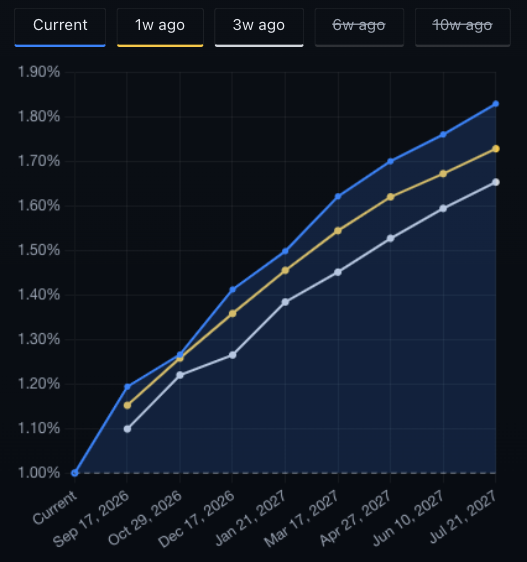
This disappointing economic print arrives at a critical juncture for the Bank of Japan (BoJ). Markets are anticipating a potential interest rate hike from the BoJ in September, moving from its current 1.0% level, amid surging bond yields and a continued weakening of the Japanese Yen. Previously, a rare joint intervention in currency markets by Japan and the United States was noted after the JPY/USD pair reached new 40-year lows, signaling significant concern over currency depreciation.
The latest GDP report also revealed a concerning trend: the first drop in private consumption in eight quarters. This suggests that existing stimulus measures may be losing their efficacy in bolstering consumer confidence. "The boost to consumption from policy measures is already fading, and inflation will increase in H2 as firms will pass on increased costs, deteriorating consumers’ purchasing power," Norihiro Yamaguchi, lead Japan economist at Oxford Economics, told CNBC. This outlook points to potential headwinds for both domestic demand and broader economic activity in Japan.
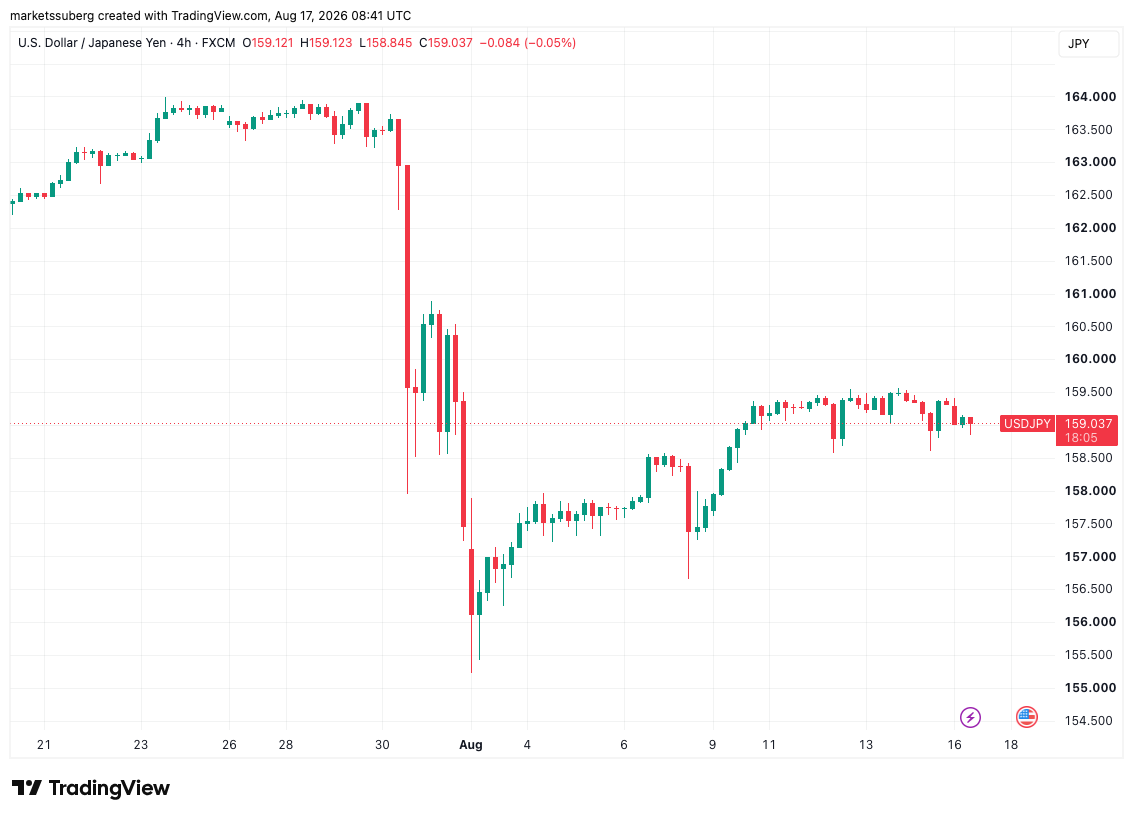
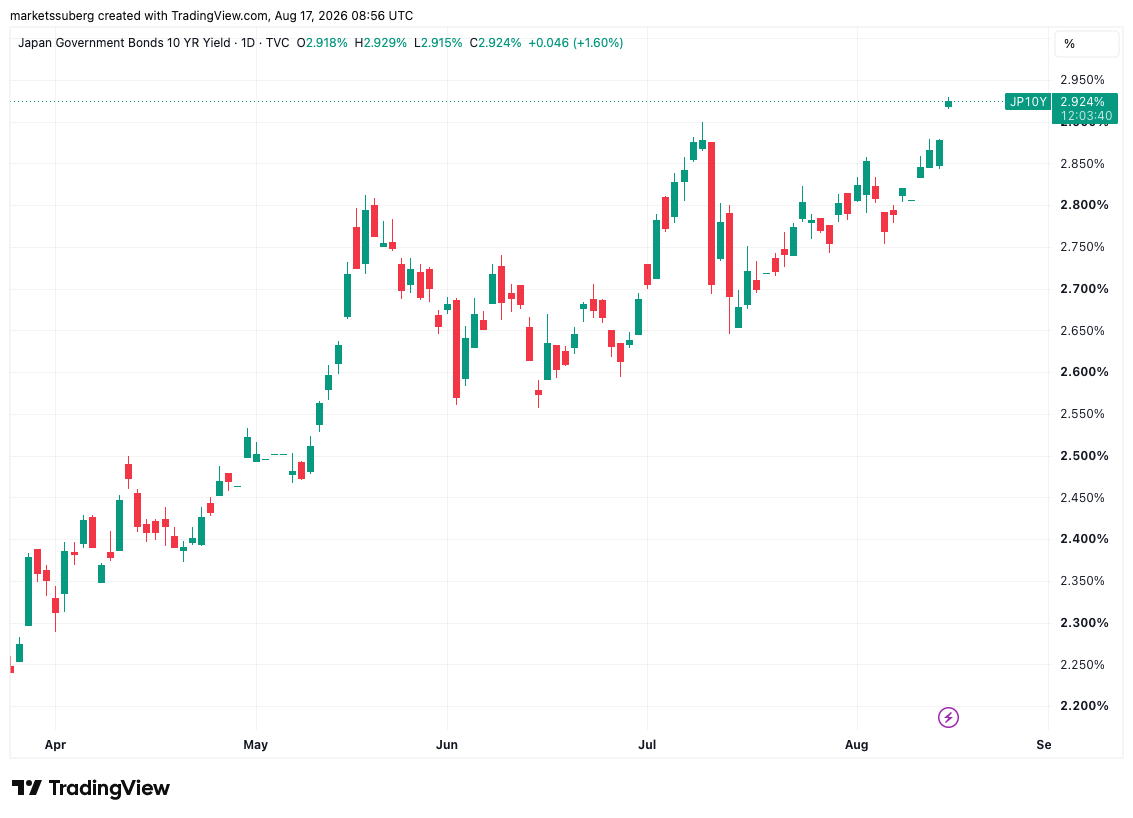
While the yen remained relatively stable near 159 per dollar on Monday following the GDP data, the underlying economic weakness is a significant development. Axel Adler Jr., a contributor to the on-chain analytics platform CryptoQuant, highlighted the potential implications for risk assets. Japan’s 10-year bond yield reached 2.93% on Monday, its highest level since 1996. Adler Jr. cautioned, "For now, this is not a signal to sell risk assets. But the market is approaching an important point: JGB > 3% + further BOJ rate hikes + a stronger yen + rising US Treasury yields." He elaborated that if these factors align, Japan’s monetary policy normalization could lead to a global tightening of financial conditions, impacting both stocks and Bitcoin.
Bitcoin’s Divergence: Consumer Sentiment Plummets as Stocks Soar
A striking divergence in market sentiment is emerging, with record-low consumer confidence in the United States contrasting sharply with the sustained strength of its stock market. This divergence is raising eyebrows and potentially signaling a shift in capital flows, with Bitcoin appearing to be increasingly overlooked.
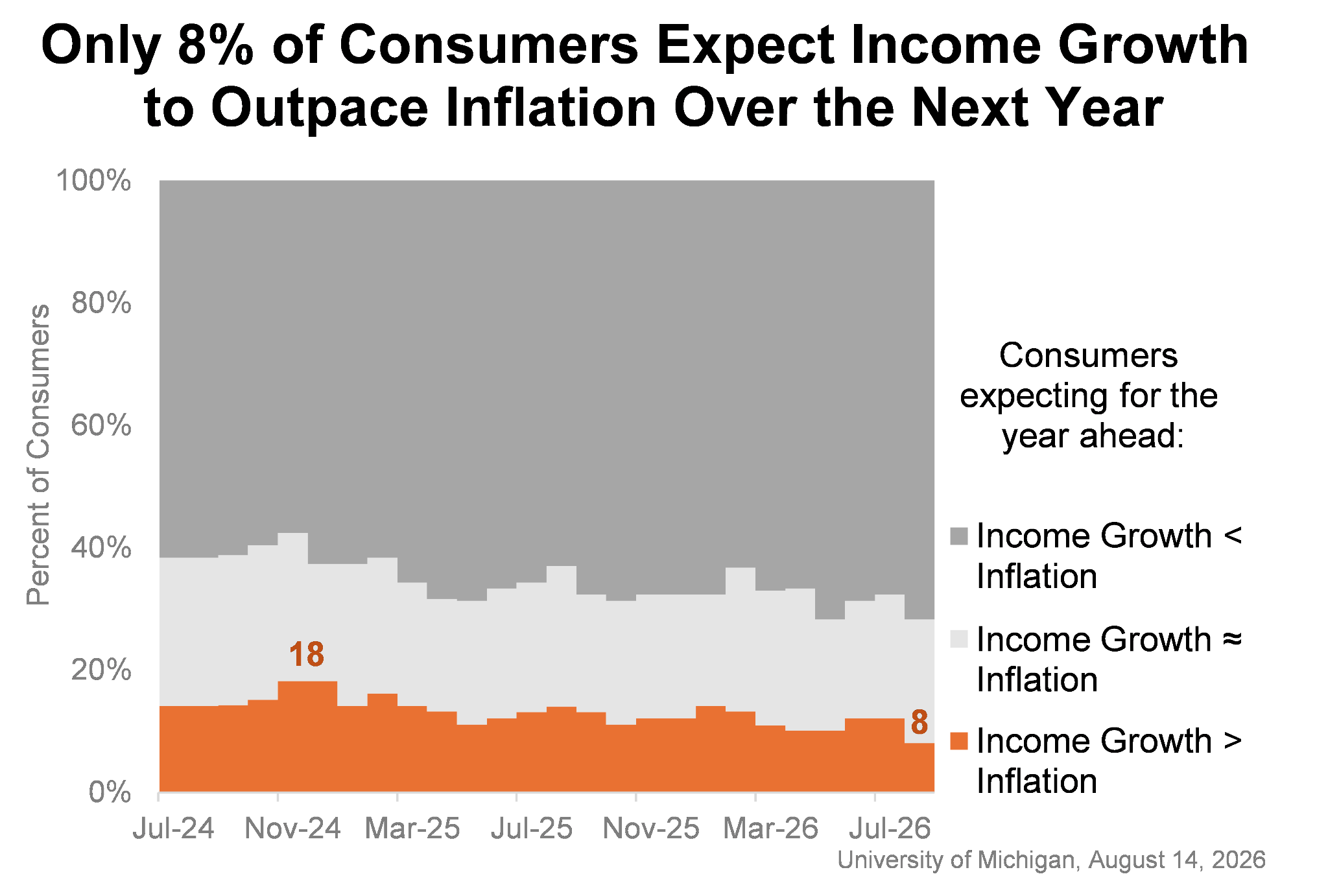
In its latest newsletter, "The Week Onchain," crypto analytics platform Glassnode highlighted this notable discrepancy. "Consumer Confidence remains among the weakest readings of the past decade even after two consecutive improvements, while the US Stock Market Index set a fresh all-time high on August 7 and holds just beneath it," the report stated. The softer US inflation prints contributed to the S&P 500 reaching all-time highs of 7,816 on Thursday, while the University of Michigan’s consumer sentiment survey is projected to decline by 7.6% in August.
Glassnode offered an explanation for this seemingly contradictory situation: "Weak sentiment next to record prices looks like a contradiction until the driver is named: households that expect living costs to rise and the economy to soften are moving out of cash and into assets. The equity market, carried above all by the AI trade, is where that capital lands." This suggests that a segment of the population, despite broader economic concerns, is reallocating capital from cash to assets perceived as potential inflation hedges or growth opportunities, with equities, particularly those driven by the artificial intelligence narrative, being the primary destination.
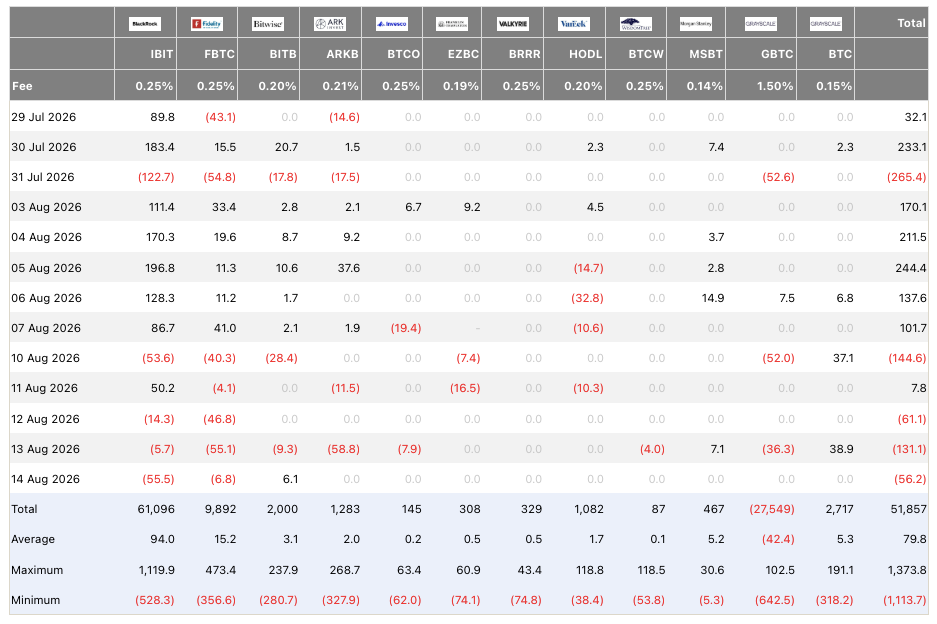
Bitcoin, however, appears to be missing out on this capital rotation. A sustained rebound in institutional inflows to US spot Bitcoin Exchange-Traded Funds (ETFs) would be a crucial indicator of renewed interest. Last week, these ETFs experienced net outflows totaling $267.2 million, according to data from Farside Investors. Only one out of the five trading days saw net inflows, which were a meager $7.8 million, underscoring a subdued institutional demand for Bitcoin-backed investment products. This lack of institutional appetite, coupled with a general cooling of retail interest, contributes to Bitcoin’s current price stagnation.
Exchange Reserves Rise as Whale Activity Shifts
Supply-side dynamics within the Bitcoin market are also presenting a concerning picture for its price trajectory, according to recent analysis by CryptoQuant. The report indicates a notable increase in exchange inflows, particularly from "whales," large holders of Bitcoin. This trend, exacerbated by a persistent absence of significant retail interest, is leading to a reversal in the long-standing trend of declining exchange BTC reserves.
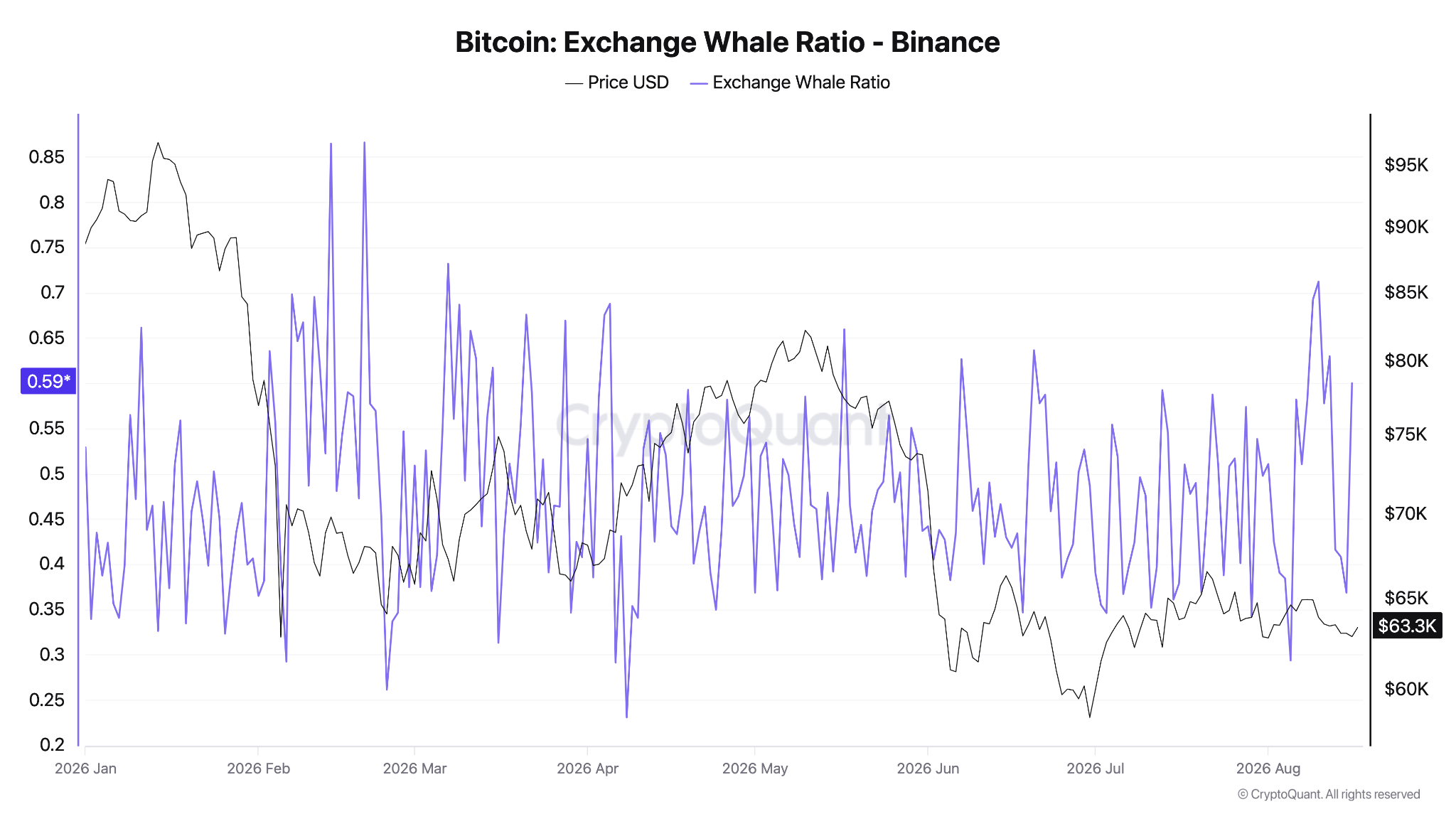
The whale ratio on Binance, a key metric tracking the proportion of whale deposits to total exchange deposits, reached 0.71 on August 10th, its highest point since early March. This signifies a growing dominance of large holders in depositing Bitcoin onto exchanges. "Exchange deposits do not necessarily mean immediate selling, but they increase the amount of BTC available for trading or hedging," CryptoQuant explained. This implies that while immediate selling pressure might not be guaranteed, the increased availability of Bitcoin on exchanges could facilitate more active trading and potentially contribute to price volatility.
Binance’s BTC reserves themselves have seen an upward trend, totaling 674,332 BTC as of Sunday. This represents a 2.57% increase month-to-date and marks the highest reserve levels since November 2025. "The long-running trend of BTC leaving exchanges may therefore be weakening," CryptoQuant observed. This shift away from the trend of coins being withdrawn from exchanges and held in cold storage could indicate a change in investor behavior, with a potential increase in the circulating supply available for trading.
This accumulation of Bitcoin on exchanges is occurring at a time when exchange activity has been heavily influenced by the derivatives market. Since early June, BTC/USD has been trading within a tight range, prompting a surge in futures trading. On Binance, futures trading volume reportedly exceeded spot market volume by a factor of eight in early August. This suggests that a significant portion of market activity is driven by speculation on price movements rather than direct asset accumulation. The growing exchange reserves, coupled with whale inflows, could signal an impending increase in selling pressure or at least a greater availability of Bitcoin for traders to act upon, potentially exacerbating any downward price momentum.
The combination of a key technical indicator signaling bearish sentiment, a complex global macroeconomic environment with potential policy shifts from major central banks, and internal supply-side pressures within the Bitcoin market collectively paints a picture of significant challenges for the cryptocurrency in the near term. Investors and market participants will be closely monitoring these developments for any signs of a shift in trend or further confirmation of existing bearish patterns.