Evan Lee Salim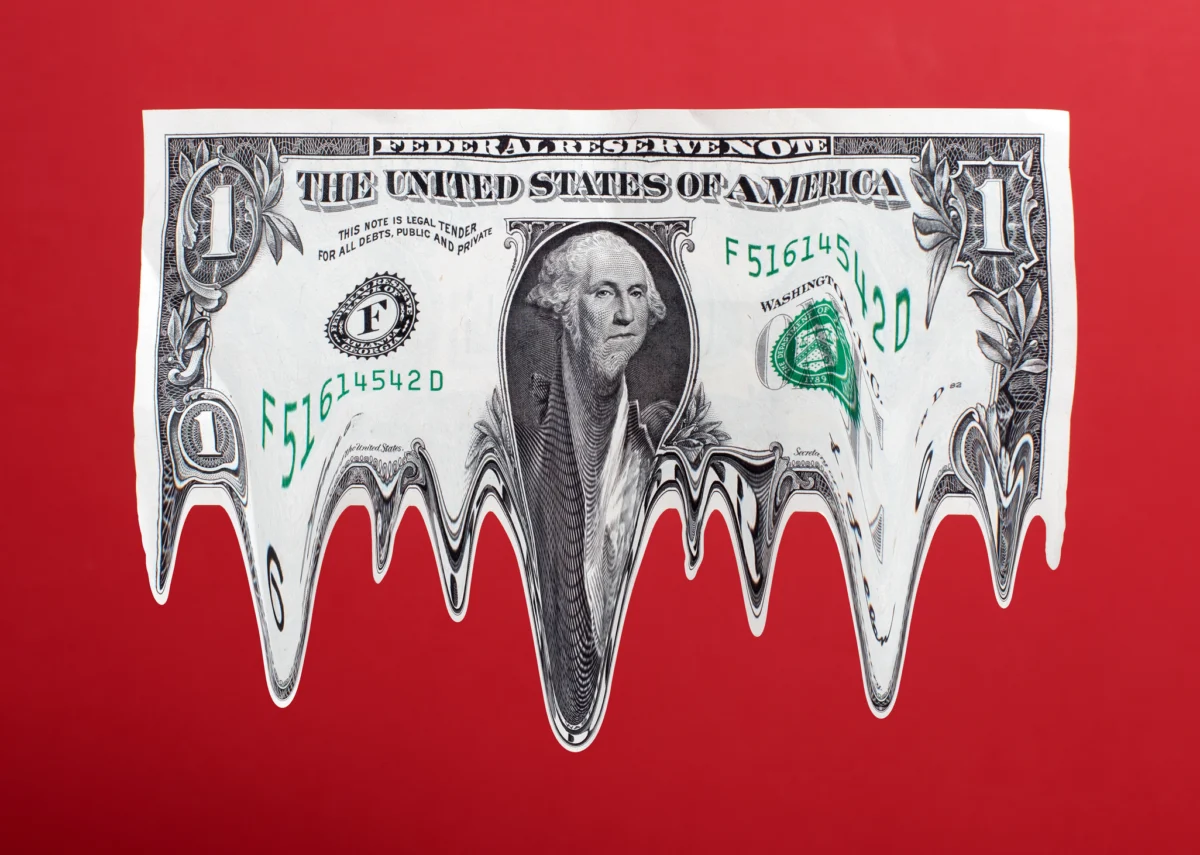
Leopold Aschenbrenner’s hedge fund, Situational Awareness, has divested the majority of its public stock portfolio to Ken Griffin’s Citadel after enduring significant losses over the past month. The move, reported by The Wall Street Journal on Thursday, marks a substantial reversal of fortune for the 25-year-old German-born wunderkind, who has been variously described as "scarily smart" and "brash" and had garnered considerable attention for his audacious entry into the world of high finance. The rapid unwind of positions underscores the volatile nature of speculative investments in the burgeoning artificial intelligence sector, particularly those amplified by leverage.
A Prodigy’s Rapid Ascent and Ambitious Vision
Aschenbrenner’s journey to the helm of a multi-billion-dollar hedge fund is anything but conventional. A true academic prodigy, he enrolled at Columbia University at the remarkably young age of 15 and graduated as valedictorian at 19. Despite having no prior trading experience, his intellect and conviction in the future of AI propelled him into the financial spotlight. His investment thesis, articulated in a series of influential essays, posited that the exponential scaling of AI capabilities would necessitate a colossal build-out of foundational infrastructure, including semiconductors, advanced compute units, high-bandwidth memory, and vast energy resources. This vision formed the bedrock of Situational Awareness, which he launched in 2024.
Before venturing into finance, Aschenbrenner was a prominent figure within OpenAI, the leading AI research and deployment company. He joined their critical "superalignment" team in 2023, a division dedicated to ensuring that future, more powerful AI systems remain aligned with human values and intentions, mitigating potential existential risks. This highly sensitive work placed him at the cutting edge of AI safety research. However, his tenure at OpenAI was cut short. He was dismissed a year later over what the company described as an "improper disclosure of internal information." This period coincided with significant internal upheaval at OpenAI, marked by the departure of key figures from the superalignment team, including co-founder Ilya Sutskever, who subsequently left to start his own AI venture, and AI researcher Jan Leike, who joined rival Anthropic. Amidst this backdrop, Aschenbrenner channeled his insights and ambition into launching his hedge fund.
The Meteoric Rise of Situational Awareness
Upon its inception, Situational Awareness quickly attracted significant capital from a roster of high-profile investors. Early backers included the quantitative trading giant Jane Street, Stripe co-founders Patrick and John Collison, and Meta executives Daniel Gross and Nat Friedman, collectively raising several hundred million dollars. The fund’s initial performance was nothing short of spectacular. Through June of the current year, Situational Awareness reported an astounding return of 439%, according to the Financial Times. This meteoric success saw its assets under management (AUM) swell to an estimated $45 billion at its peak, as reported by CNBC, cementing Aschenbrenner’s status as a rising star in the hedge fund world. The fund’s strategy of heavily investing in companies poised to benefit from the AI infrastructure boom—such as advanced chip manufacturers, data center operators, and energy providers crucial for powering AI—initially paid off handsomely, validating Aschenbrenner’s bold thesis.
A Sudden Reversal: Market Downturn and Amplified Losses
However, the landscape for AI infrastructure investments shifted dramatically in recent months. The sector, which had experienced a speculative frenzy, began to face increasing scrutiny from public investors. Concerns mounted that the massive capital expenditures required for AI infrastructure were not translating into immediate or near-term revenue generation for many companies. This broader decline in investor confidence triggered a sharp downturn across the sector, directly impacting Situational Awareness’s highly concentrated portfolio.
The fund’s positions, many of which were in companies central to Aschenbrenner’s thesis, began to plummet. Among the hardest-hit stocks held by Situational Awareness were memory chip producers like SK Hynix and Sandisk, crucial suppliers of the high-bandwidth memory (HBM) and storage solutions essential for AI training and inference. Clean energy developer Bloom Energy, a player in the energy infrastructure vital for powering increasingly demanding AI data centers, also suffered. Additionally, neocloud provider Nebius Group experienced significant declines. Each of these key holdings reportedly fell by more than 30% over the past month, contributing substantially to the fund’s overall losses.
Compounding these declines was Situational Awareness’s use of leverage, a common yet risky strategy in hedge fund management where borrowed money is used to amplify investment positions. While leverage can significantly magnify gains during upward market trends, it equally magnifies losses when the market turns unfavorable, accelerating the erosion of capital.
Despite the mounting losses, Aschenbrenner maintained an outwardly defiant stance. In a letter to investors dated July 24, seen by the Financial Times, he characterized the market selloff not as a crisis, but as "one of the best buying opportunities since early last year." He actively invited clients to commit fresh capital, with a window opening on August 1, signaling his continued conviction in his long-term thesis. However, according to Bloomberg, this appeal did not garner the hoped-for commitments, indicating investor hesitancy or a lack of confidence in the fund’s immediate recovery strategy.
Citadel’s Strategic Acquisition and Aschenbrenner’s Remaining Portfolio
The culmination of these challenges was the sale of the majority of Situational Awareness’s public stock portfolio to Ken Griffin’s Citadel. This transaction significantly reduced Situational Awareness’s overall assets. Bloomberg reported that the fund’s AUM fell to approximately $10 billion after the sale, a sharp drop from an estimated $20 billion in recent months, as per an earlier Wall Street Journal report.
Citadel’s purchase aligns with a well-established pattern for Ken Griffin’s hedge fund. Citadel has built a formidable reputation for strategically stepping in to acquire attractive assets when other, often highly leveraged, players are forced to unwind their positions during market downturns or liquidity crunches. Interestingly, even prior to this acquisition, Citadel’s own portfolio already featured significant exposure to several of the same AI infrastructure bets that Aschenbrenner had championed, according to data from HedgeFollow. This suggests that, much like Aschenbrenner, Griffin and his team harbor a strong conviction in the long-term potential of the AI infrastructure sector but possess the substantial capital and market resilience to weather short-term volatility and patiently await a recovery.
Crucially, Situational Awareness did not liquidate all its holdings. Multiple reports confirm that the fund retained its investments in private companies, a distinction that could prove vital for its future. Most notably, the fund continues to hold a substantial stake in Anthropic, a prominent AI research and safety company and a direct competitor to OpenAI. This stake is currently valued at an estimated $5 billion, according to Bloomberg, and is widely regarded as a highly appreciating asset. Anthropic was last valued at an astonishing $965 billion in a Series H funding round in May and is expected to go public as early as October. Market analysts anticipate its initial public offering (IPO) could achieve an even higher valuation, potentially offering a significant windfall for Situational Awareness that could offset some of its recent public-market losses.
Beyond Anthropic, Situational Awareness’s private portfolio includes other promising ventures. These include chipmaker MatX, which reportedly raised $500 million, positioning itself as a challenger to established giants like Nvidia in the AI chip space. The fund also holds an investment in Fluidstack, an AI data center startup that was reportedly in talks in April to raise a new round at an $18 billion valuation, just months after hitting a $7.5 billion valuation. These private holdings represent a core strategic asset for the fund as it navigates the aftermath of its public market losses.
Broader Implications for AI Investing and Hedge Fund Dynamics
The saga of Situational Awareness serves as a potent, if cautionary, tale within the broader landscape of artificial intelligence investing. It highlights the immense opportunities, but also the inherent risks and extreme volatility, associated with highly speculative, concentrated bets in rapidly evolving technological sectors. Aschenbrenner’s experience underscores the double-edged sword of leverage, which can amplify both extraordinary gains and devastating losses, particularly for nascent funds or those with less diversified portfolios.
The market’s recent skepticism towards AI infrastructure investments, where massive capital outlays precede significant revenue generation, indicates a maturation of investor sentiment. While the long-term thesis for AI infrastructure remains robust for many, the immediate returns have become a point of contention, leading to a re-evaluation of valuations. The distinction between public market dynamics, which are susceptible to rapid shifts in sentiment and liquidity, and private market valuations, which often reflect longer-term growth potential, is also sharply drawn in this narrative. The continued strength of Situational Awareness’s private holdings, especially Anthropic, suggests that while public market speculation has waned, investor confidence in the foundational private companies building the future of AI remains strong.
For Leopold Aschenbrenner, this event represents a significant challenge to his early career in finance. While his intellectual prowess and initial success were undeniable, the rapid downturn and subsequent forced asset sale will undoubtedly prompt questions about risk management and execution. However, his retention of key private assets leaves a potential path for future recovery and validation of his long-term vision.
For Ken Griffin and Citadel, the acquisition is a classic opportunistic move, reinforcing their reputation as shrewd operators capable of extracting value from market dislocations. By acquiring public assets at what could be a distressed price point, Citadel is positioning itself to benefit from a potential recovery in the AI infrastructure sector, leveraging its deep pockets and patient capital.
As the AI industry continues its rapid evolution, the story of Situational Awareness offers valuable lessons on the complexities of investing in frontier technologies, where brilliant insights must contend with market realities and the unforgiving mechanics of high finance. TechCrunch has reached out to Aschenbrenner for comment regarding these developments.