admin
admin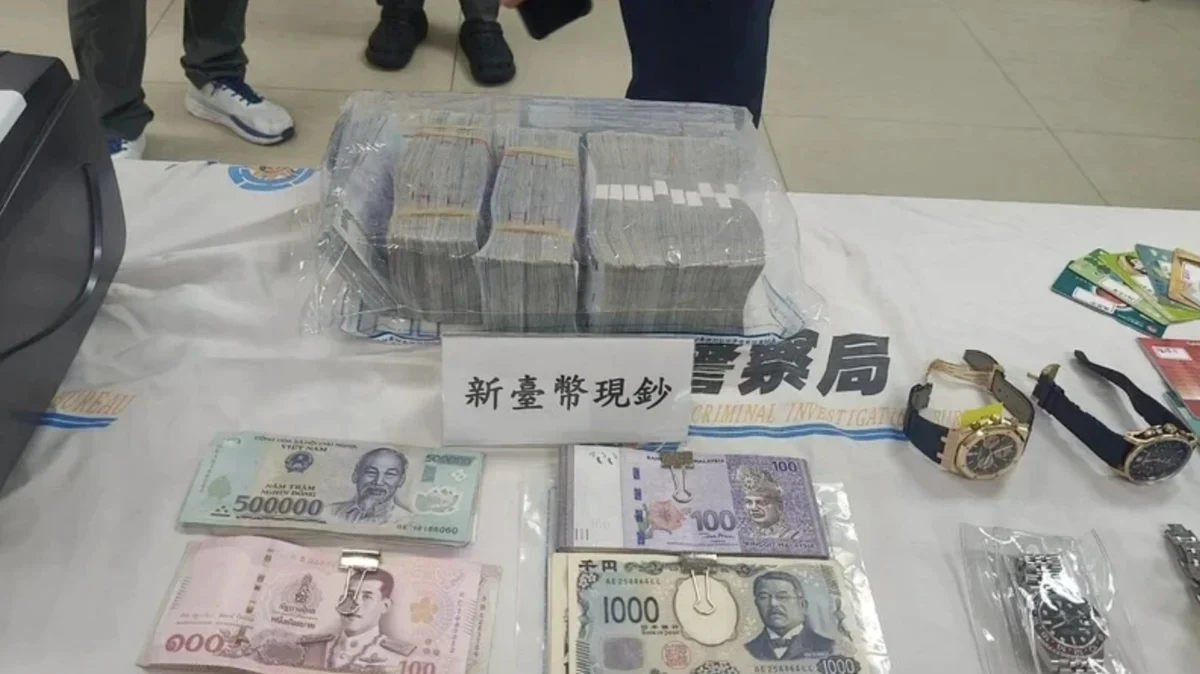
Authorities in Taiwan have dismantled a sophisticated underground banking and money laundering network allegedly spearheaded by a former engineer from the Taiwan Semiconductor Manufacturing Company (TSMC). The individual, identified by the surname Chang, is accused of leveraging his technical background to facilitate illicit cross-border currency exchanges between Taiwan and South Korea, primarily serving the needs of the domestic apparel industry. The investigation, which culminated in a series of coordinated raids during July, has shed light on the increasing intersection of high-tech expertise and shadow banking operations.
The case began to unfold in February when Taiwanese law enforcement received a confidential tip regarding a logistics company suspected of serving as a front for illegal financial transactions. Investigators discovered that the organization was not merely moving physical goods but was functioning as a critical node in a "Hwan-chigi" network—a term often used to describe underground remittance systems that bypass official banking channels to avoid fees, taxes, and regulatory scrutiny.
The Architect: From Semiconductor Engineering to Shadow Banking
The central figure in the operation, Chang, was previously employed at TSMC, the world’s largest contract chipmaker and a cornerstone of the global technology supply chain. According to reports from the United Daily News and other local outlets, Chang left his prestigious role at the foundry due to health complications. However, instead of retiring or seeking traditional employment, he allegedly applied his analytical and mathematical skills to the world of illicit finance.
Beginning in 2018, Chang reportedly established an underground currency exchange network. Police officials noted that Chang utilized his engineering acumen to develop precise profit-calculation formulas and algorithms. These tools allowed the network to capitalize on minute fluctuations in exchange rates between the New Taiwan Dollar (TWD) and the South Korean Won (KRW). By automating and optimizing these calculations, the group was able to offer competitive rates to businesses while maximizing their own profit margins, which were bolstered by the avoidance of official banking levies.
Modus Operandi: Bypassing the Formal Financial Sector
The network primarily targeted Taiwanese apparel companies that source their inventory from major South Korean wholesale markets, such as those in Seoul’s Dongdaemun District. In a typical legal transaction, an importer would purchase goods in Korea and wire payments through a commercial bank, a process that involves transaction fees, currency conversion spreads, and a transparent paper trail for tax authorities.
Chang’s network offered an alternative "all-in-one" service. Apparel retailers in Taiwan would deposit TWD into accounts controlled by the underground network. Simultaneously, the network’s partners in South Korea would pay the suppliers in KRW. By matching these internal credits and debits, the organization effectively moved value across borders without any physical or digital currency actually crossing the national frontier through the SWIFT (Society for Worldwide Interbank Financial Telecommunication) system.
To further obscure the nature of these transactions, the group operated under the guise of a legitimate logistics firm. This front allowed them to bundle financial services with shipping and customs clearance. For many small-to-medium enterprises (SMEs) in the fashion industry, this provided a seamless, albeit illegal, method of managing international supply chains while significantly reducing overhead costs and tax liabilities.
The Integration of Cryptocurrency and Global Exchanges
As the operation grew in complexity, Chang reportedly integrated digital assets into the laundering process to further obfuscate the money trail. This represents a growing trend in shadow banking where traditional underground remittance methods are combined with modern blockchain technology.

According to the Criminal Investigation Bureau (CIB), the network did not rely solely on the "mirroring" of accounts in Taiwan and Korea. They also converted illicitly obtained TWD into stablecoins, specifically Tether (USDT), through domestic cryptocurrency exchanges. These digital assets were then transferred to major global platforms, including Binance and Bybit, or moved into private "cold" wallets.
By layering transactions through various digital wallets and international exchanges, the group created a labyrinthine financial path that was difficult for domestic regulators to track. The funds would eventually be liquidated in South Korea to facilitate payments to exporters or moved back into the traditional financial system through a series of "smurfing" transactions—breaking down large sums into smaller, less conspicuous amounts.
Chronology of the Investigation and Law Enforcement Action
The investigation into Chang’s activities spanned several months, beginning with the initial tip-off in early 2024. The Taiwanese police employed a multi-wave strategy to ensure the capture of both the ringleaders and the supporting infrastructure.
- February 2024: Initial intelligence gathering begins following reports of suspicious activity linked to a logistics firm in northern Taiwan.
- March – June 2024: Surveillance and financial forensic teams map out the network of accounts and identify the key players, including Chang and his associates.
- July 14, 2024: The first wave of raids is executed, targeting primary offices and residences associated with the logistics front.
- July 22, 2024: A second wave focuses on the technical infrastructure, seizing computers, ledgers, and digital wallet keys.
- July 29, 2024: The final phase of the operation results in the arrest of the remaining suspects and the seizure of high-value assets.
In total, authorities conducted 14 searches across several districts. The operation resulted in the arrest of Chang and 11 accomplices who served various roles, from bookkeepers to facilitators within the logistics company.
Seized Assets and Financial Scale
The scale of the operation was reflected in the assets recovered during the police raids. Law enforcement officials seized a variety of currencies and luxury items that highlighted the significant profits generated by the network over its six years of operation. The seized items included:
- Cash: NT$2.55 million in physical New Taiwan Dollars and 1.71 million South Korean Won.
- Cryptocurrency: 1,078 Tether (USDT) coins found in digital wallets.
- Foreign Assets: Various other international assets valued at approximately NT$1.03 million.
- Luxury Goods: Three Audemars Piguet watches and one Rolex watch, which are often used as stores of value in money laundering schemes.
- Vehicles: A high-end Tesla Model S Plaid, allegedly purchased with proceeds from the illicit business.
Following his arrest, Chang was brought before a magistrate and subsequently released on a bail of NT$500,000, pending further legal proceedings.
Legal and Regulatory Context
The activities of Chang and his network fall under the jurisdiction of several strict Taiwanese laws. The primary charges involve violations of the Banking Act and the Money Laundering Control Act.
Under Article 29 of Taiwan’s Banking Act, non-bank entities are strictly prohibited from engaging in "domestic or foreign remittances." Violations of this act are treated with extreme severity due to the threat they pose to the stability of the national financial system. Individuals found guilty of running illegal remittance operations can face prison sentences ranging from three to ten years and substantial fines.
Furthermore, the use of cryptocurrency for the purpose of hiding the origins of criminal proceeds triggers the Money Laundering Control Act. In recent years, Taiwan has significantly tightened its stance on Virtual Asset Service Providers (VASPs), requiring them to implement robust Anti-Money Laundering (AML) and Know Your Customer (KYC) protocols. The fact that Chang was able to move funds through domestic exchanges suggests a potential gap in current enforcement or the use of "mule" accounts to bypass existing safeguards.

Analysis: The Implications of High-Tech Shadow Banking
This case highlights a concerning trend where individuals with high-level technical training apply their skills to circumvent financial regulations. The "brain drain" from legitimate tech sectors into the "gray" or "black" markets poses a unique challenge for law enforcement.
Traditional money laundering investigators are often trained to look for patterns in banking data or physical cash movements. However, when an architect of a scheme possesses the same level of mathematical and system-design expertise as those building the world’s most advanced semiconductors, the "product" they create—in this case, an illicit financial network—is significantly more resilient and difficult to detect.
The reliance of the apparel industry on these networks also points to a broader economic issue. The high costs and bureaucratic hurdles associated with legitimate cross-border trade between Taiwan and South Korea have created a market demand for shadow banking. As long as the "official" channels remain cumbersome or expensive for small businesses, the incentive to use underground networks will persist, despite the legal risks.
Official Responses and Future Outlook
While TSMC has not issued a formal statement regarding its former employee—as the alleged crimes occurred long after his departure from the company—the case has resonated within the tech community. It serves as a reminder of the ethical responsibilities of those possessing highly specialized technical knowledge.
Law enforcement officials have signaled that this operation is part of a broader crackdown on underground banking. A spokesperson for the Criminal Investigation Bureau stated that the integration of logistics and finance is a key area of focus for future task forces. "We are seeing a evolution in how illicit funds are moved," the official noted. "The combination of traditional front companies with modern cryptocurrency layering requires a new level of inter-agency cooperation and technological sophistication from our investigators."
As the legal case against Chang and his 11 associates moves forward, the focus will likely shift to the apparel companies that utilized his services. While many may claim ignorance of the network’s illicit nature, authorities have warned that businesses participating in underground remittances can be held liable for tax evasion and violations of the Banking Act.
The dismantling of this network serves as a landmark case in Taiwan’s ongoing effort to secure its financial borders in an era where digital assets and technical expertise have made those borders increasingly porous. For now, the former engineer who once helped build the foundations of the digital age faces a lengthy legal battle over his role in building a shadow economy.