Sisilia Frederika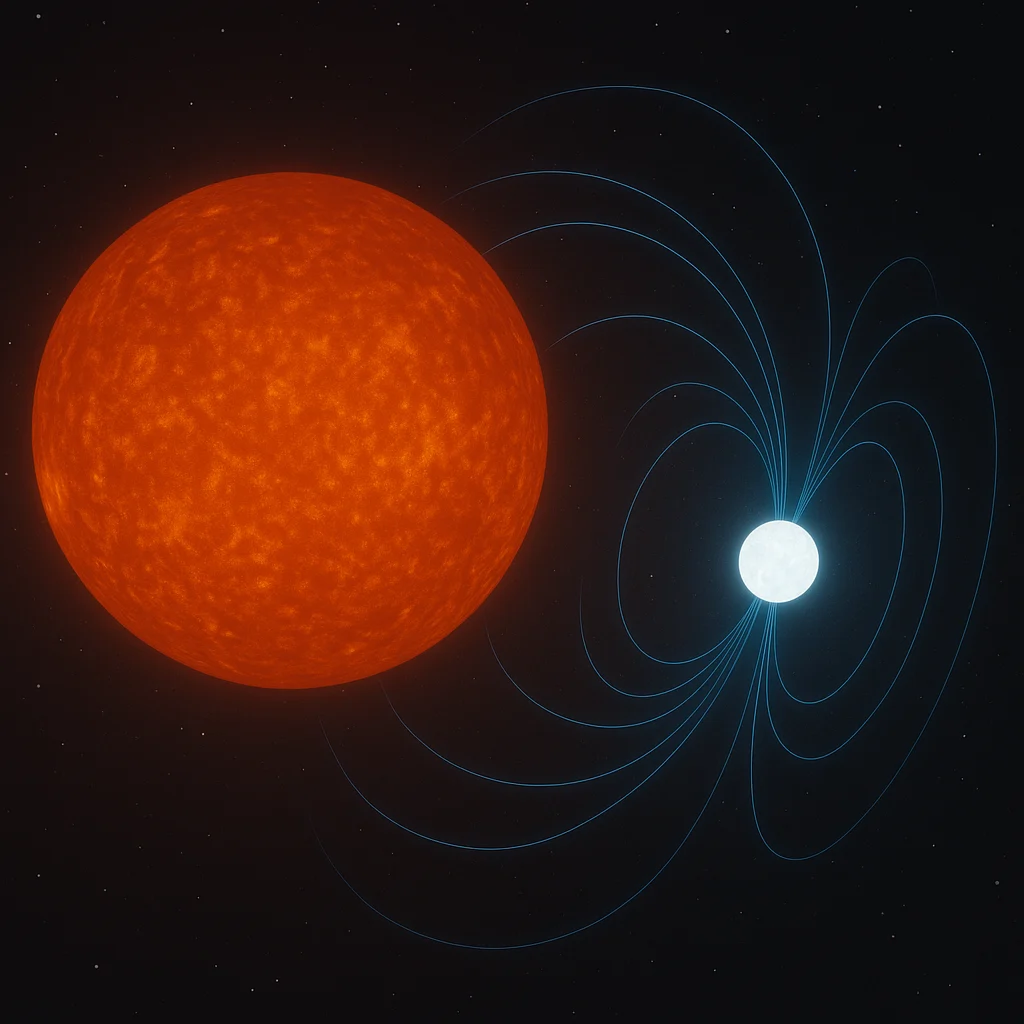
The depths of the cosmos have long been characterized by rhythmic signals, most notably the rapid-fire pulses of neutron stars known as pulsars. These stellar remnants rotate at incredible speeds, emitting beams of radiation that sweep across Earth’s line of sight every few seconds or milliseconds. However, in recent years, astronomers have identified a far more enigmatic class of radio sources: binary star systems that pulse with long-period bursts of radio waves occurring every few minutes. These "slow" pulses have defied traditional pulsar models, leading to a decade of speculation regarding their origin. A groundbreaking study from researchers at the California Institute of Technology (Caltech) has finally provided a definitive explanation. Using advanced supercomputer simulations, the team has mapped the complex interaction between white dwarf stars and their M-type red dwarf companions, revealing how these synchronized pairs act as cosmic radio lasers.
The study, published in The Astrophysical Journal Letters, details how a process known as electron cyclotron maser instability (ECMI) is triggered by the magnetic interplay between two vastly different stellar bodies. Conducted by Yici Zhong and Elias R. Most of Caltech’s Theoretical AstroPhysics Including Relativity and Cosmology (TAPIR) group and the Walter Burke Institute for Theoretical Physics, the research offers a new computational framework for understanding radio emissions in interacting binary systems. By simulating the plasma dynamics and magnetic field lines of these systems, the researchers have confirmed that the same physics governing radio emissions from Jupiter and its moon Io are operating on a much grander, more powerful scale in the far reaches of the galaxy.
The Mystery of Long-Period Radio Transients
For over half a century, radio astronomy was dominated by the study of high-speed transients. Pulsars, discovered in 1967, provided a reliable clock for the universe, with their emissions tied directly to the rapid rotation of highly magnetized neutron stars. When astronomers began detecting radio bursts that repeated on scales of minutes rather than seconds, the existing models began to fracture. These long-period transients did not fit the profile of isolated neutron stars, which would typically lack the energy to produce such intense radio beams if they were rotating that slowly.
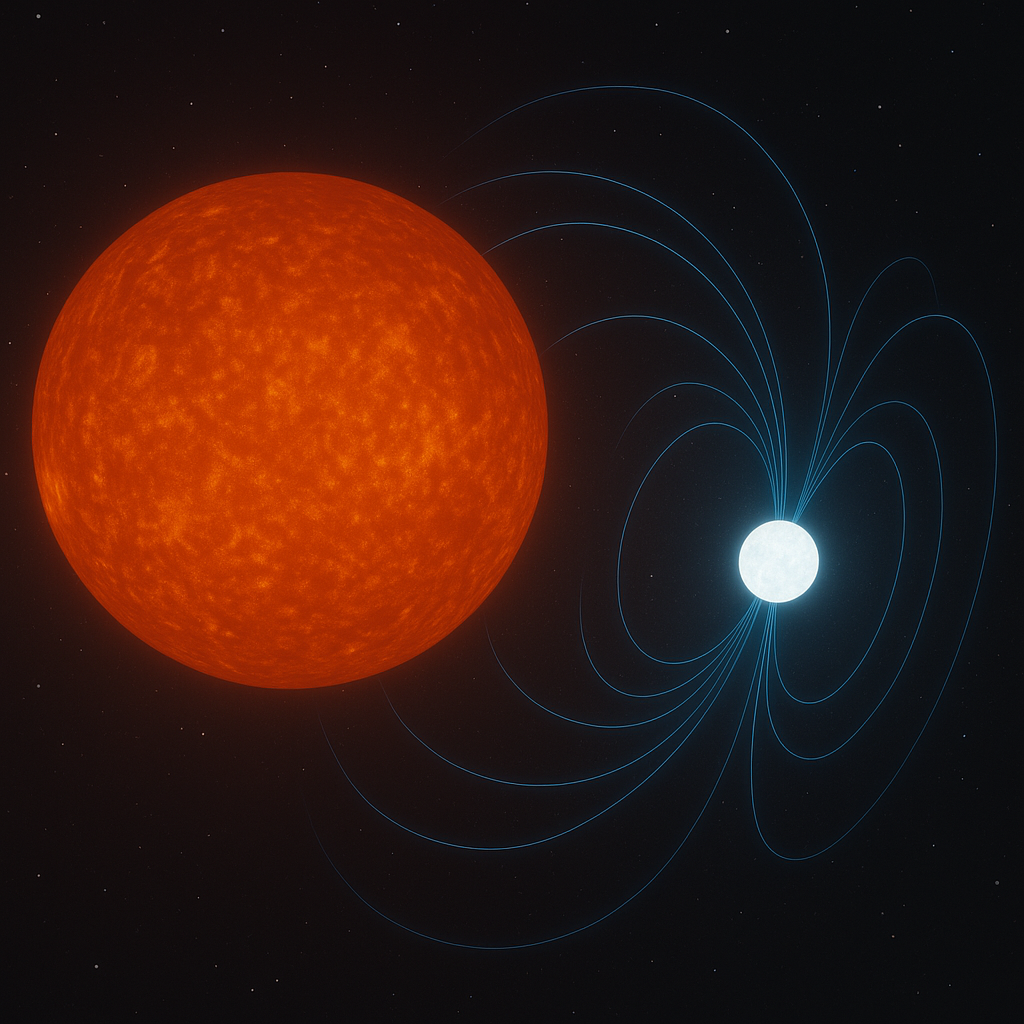
The focus shifted toward binary systems, specifically those containing a white dwarf—the dense, cooling core of a dead Sun-like star—and an M-type red dwarf, the most common and longest-lived class of stars in the universe. These systems, often referred to as WD-MD binaries, are characterized by their close proximity. In many cases, the two stars orbit one another in just a few hours. Astronomers hypothesized that the interaction between the white dwarf’s magnetic field and the red dwarf’s atmosphere was the "engine" behind the radio pulses, but the specific mechanics of how this energy was converted into a directed radio beam (a maser) remained elusive until the Caltech team utilized modern supercomputing power.
A Chronology of Discovery: From Jupiter to the Stars
The theoretical foundation for the Caltech study dates back nearly 70 years. The journey toward understanding WD-MD radio emissions began not in deep space, but within our own solar system.
In 1955, astronomers first observed powerful, sporadic radio bursts emanating from Jupiter. At the time, the source of these bursts was a total mystery. It was not until 1969 that a trio of Caltech scientists—Peter Goldreich, Lee A. DuBridge, and Donald Lynden-Bell—proposed a revolutionary theory. They suggested that Jupiter’s innermost Galilean moon, Io, was acting as a "unipolar inductor." As Io moved through Jupiter’s intense magnetic field, it generated a massive electric potential, creating a circuit that funneled a million-ampere current between the moon and the planet’s poles along a magnetic "tube."
This prediction was later vindicated by the Voyager and Galileo spacecraft, which imaged the "Io footprint" in Jupiter’s aurora and measured the current directly. Scientists eventually realized that this current drove a process called electron cyclotron maser instability (ECMI). In this process, electrons spiraling around magnetic field lines become unstable and emit coherent radio waves, much like a laser but in the radio spectrum.
The new research by Zhong and Most proves that this "Jupiter-Io" mechanism is a universal phenomenon. By applying the same principles to stellar binaries, the researchers have shown that when a white dwarf and a red dwarf are locked in a tight orbital dance, the red dwarf acts like a giant version of Io, sweeping through the white dwarf’s magnetosphere and generating a current that powers a cosmic maser.
Supercomputer Simulations and the ECMI Mechanism
To bridge the gap between planetary physics and stellar astrophysics, Zhong and Most utilized high-performance computing to model the plasma environment of two specific WD-MD systems: GLEAM-X J0704–37 and ILT J1101+5521. These systems were chosen because they represent the "gold standard" of long-period radio transients. GLEAM-X J0704–37, in particular, had been previously identified by Caltech researcher Antonio Rodriguez as a prime candidate for ECMI-driven emission.
The simulations revealed a highly dynamic environment. As the white dwarf rotates and the red dwarf orbits, the magnetic field lines between them become twisted and compressed. This creates a "magnetic bridge" that facilitates the flow of high-energy electrons. The Caltech model specifically tracked how these electrons behave as they move toward the poles of the white dwarf.
The researchers found that the electrons do not move in a simple straight line; instead, they enter a state of collective instability. Elias Most described this phenomenon using a musical metaphor, stating that the electrons "start dancing around magnetic field lines in unison like a Viennese waltz." This synchronized motion is the key to the maser. Because the electrons are moving in unison, the radio waves they emit are coherent, meaning they add together to create an incredibly intense beam that can be detected across thousands of light-years.
Efficiency and Theoretical Implications
One of the most significant findings of the study is the sheer efficiency of the ECMI process in stellar environments. Previous theoretical estimates suggested that only a small fraction of the energy generated by the binary interaction would be converted into radio waves. However, the Caltech simulations demonstrated that the mechanism is ten times more efficient than previously thought.
This increased efficiency explains why these systems are visible to radio telescopes on Earth despite the vast distances involved. It also suggests that there may be a much larger population of these "synchronized stars" in the Milky Way than currently known. If the process is highly efficient, even systems with relatively weak magnetic fields or slower orbital periods might still produce detectable radio pulses.
The study also provides a new "blueprint" for future computational models. By successfully simulating the ECMI in a WD-MD system, Zhong and Most have provided a toolkit for other astrophysicists to study different types of interacting binaries, including those involving neutron stars or even exotic exoplanets orbiting highly magnetized stars.
The Role of the TAPIR Group and the Burke Institute
The success of this research highlights the collaborative environment at Caltech’s TAPIR group and the Walter Burke Institute for Theoretical Physics. Yici Zhong, a Sherman Fairchild Postdoctoral Scholar, and Elias Most, an Assistant Professor and William H. Hurt Scholar, represent a new generation of theoretical astrophysicists using "digital laboratories" to solve age-old mysteries.
By combining relativity, plasma physics, and high-performance computing, the team was able to visualize processes that are impossible to see with traditional telescopes. While telescopes can capture the "output"—the radio pulse—simulations allow scientists to see the "engine" under the hood. This work reaffirms Caltech’s long-standing legacy in this field, connecting the 1969 work of Goldreich and Lynden-Bell to the cutting-edge computational science of 2024.
Broader Impact on the Search for Exoplanets and Stellar Evolution
The implications of this study extend beyond the niche of radio transients. Understanding the magnetic interactions between stars is crucial for the broader study of stellar evolution and habitability. M-type red dwarfs are the most common hosts for exoplanets in the galaxy. However, these stars are known for their intense magnetic activity and frequent flares.
By studying how M-dwarfs interact with the magnetic fields of white dwarfs, scientists can gain insights into how these same stars might interact with the magnetospheres of orbiting planets. If the ECMI process is as efficient as the Caltech study suggests, it could provide a new way to detect exoplanets. A planet orbiting a magnetically active star might produce its own radio maser, serving as a "beacon" that reveals the planet’s presence and the strength of its magnetic field—a key factor in determining whether a planet can retain an atmosphere and support life.
Furthermore, the study sheds light on the final stages of stellar systems. White dwarfs are the end-states of stars like our Sun. Seeing how they continue to interact with surviving companions provides a glimpse into the far future of our own solar neighborhood.
Conclusion and Future Outlook
The work of Zhong and Most has turned a long-standing hypothesis into a demonstrated physical reality. By proving that white dwarf–red dwarf binaries operate as scaled-up versions of the Jupiter-Io system, they have unified planetary and stellar physics under a single mechanism. The confirmation that ECMI is the driving force behind these long-period radio pulses settles a major debate in the field of time-domain astronomy.
As radio observatories like the Square Kilometre Array (SKA) and the Next Generation Very Large Array (ngVLA) come online in the coming decade, they are expected to find thousands of new radio transients. Thanks to the Caltech simulations, astronomers now have the theoretical framework necessary to categorize these finds and understand the complex magnetic dances occurring in the dark reaches of our galaxy. The "Viennese waltz" of electrons, once a hidden phenomenon, is now a cornerstone of our understanding of the synchronized universe.