George Chandra Eka
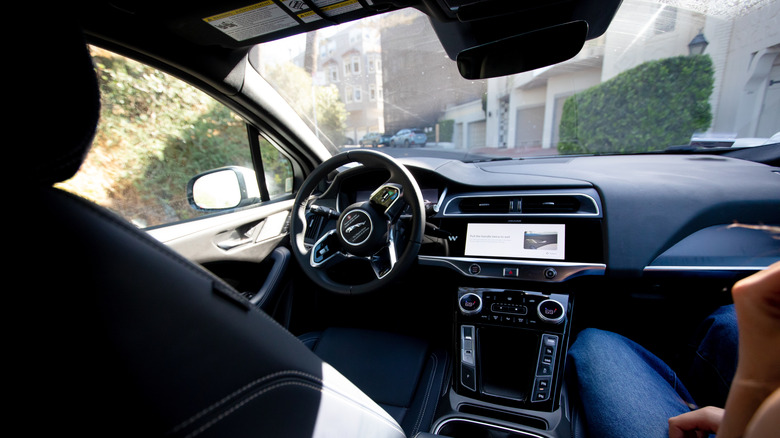
The sight of a vehicle navigating bustling urban traffic with an empty driver’s seat often evokes a sense of futuristic wonder, leading many to believe that companies like Waymo have achieved the pinnacle of automotive autonomy. From a passenger’s vantage point, the experience is seamless: no human steering, no active monitoring required, and the vehicle independently manages the entire journey. This perception, while understandable, belies a critical distinction within the widely accepted framework for driving automation, particularly between Level 4 and the ultimate, Level 5. The core difference isn’t merely about how "independent" a car appears in practice, but rather the defined operational boundaries under which that independence is permitted to exist. Waymo’s current fleet operates at Level 4, a significant achievement, yet still distinct from the universal capability implied by Level 5.
The Society of Automotive Engineers (SAE) J3016 standard, globally recognized for classifying driving automation systems, provides a six-level framework (0-5) that clarifies this intricate progression. At Level 4, an automated driving system (ADS) can execute the complete driving task without human intervention, but only within a specific set of predefined conditions and geographic areas, known as its Operational Design Domain (ODD). Level 5, the highest tier, envisions a system capable of performing all driving tasks under all road and environmental conditions that a human driver could manage, effectively removing any operational boundaries entirely. This crucial distinction underscores why Waymo, despite its impressive capabilities and rider-only services, remains classified as Level 4, and why Level 5 remains an elusive frontier for the entire industry.
Understanding the SAE Driving Automation Levels
To fully appreciate the complexity of achieving Level 5, it is essential to understand the SAE J3016 standard, first published in 2014 and periodically updated to reflect advancements and evolving industry consensus. This framework provides a common language for describing the varying degrees of automation, moving from minimal assistance to full self-driving.
- Level 0: No Automation. The human driver performs all driving tasks, even if the vehicle provides warnings or momentary interventions (e.g., emergency braking).
- Level 1: Driver Assistance. The vehicle can assist the human driver with either steering or acceleration/braking (e.g., adaptive cruise control or lane-keeping assist). The driver remains fully responsible for monitoring the driving environment and performing all other tasks.
- Level 2: Partial Driving Automation. The vehicle can simultaneously assist with both steering and acceleration/braking (e.g., advanced adaptive cruise control with lane centering). The driver must still supervise the system, remain engaged, and be prepared to take control at any moment. Systems like Tesla’s Autopilot and GM’s Super Cruise often fall into this category.
- Level 3: Conditional Driving Automation. This is the first level where the automated driving system can handle the entire driving task under specific conditions, and the human driver is no longer required to continuously monitor the driving environment. However, the system will request the human driver to take over when it encounters situations it cannot handle. The human must be ready to respond within a specified timeframe. Traffic Jam Pilot systems are often cited as examples of Level 3 capabilities.
- Level 4: High Driving Automation. At this level, the automated driving system can perform the entire driving task and monitor the driving environment without human intervention, but only within its defined Operational Design Domain (ODD). If the system exits its ODD or encounters conditions it cannot handle, it will either safely bring the vehicle to a minimal risk condition (e.g., pull over) or, in some implementations, might request human intervention, though the expectation is that it can handle the fallback without human input. Occupants are passengers, not backup drivers. Waymo and Cruise are prominent examples operating at this level within specific geofenced areas.
- Level 5: Full Driving Automation. This is the theoretical pinnacle, where the automated driving system can perform all driving tasks under all roadway and environmental conditions, equivalent to a skilled human driver. There are no ODD limitations. The vehicle can go anywhere, anytime, without any human input or supervision.
Waymo: A Paragon of Level 4 Automation
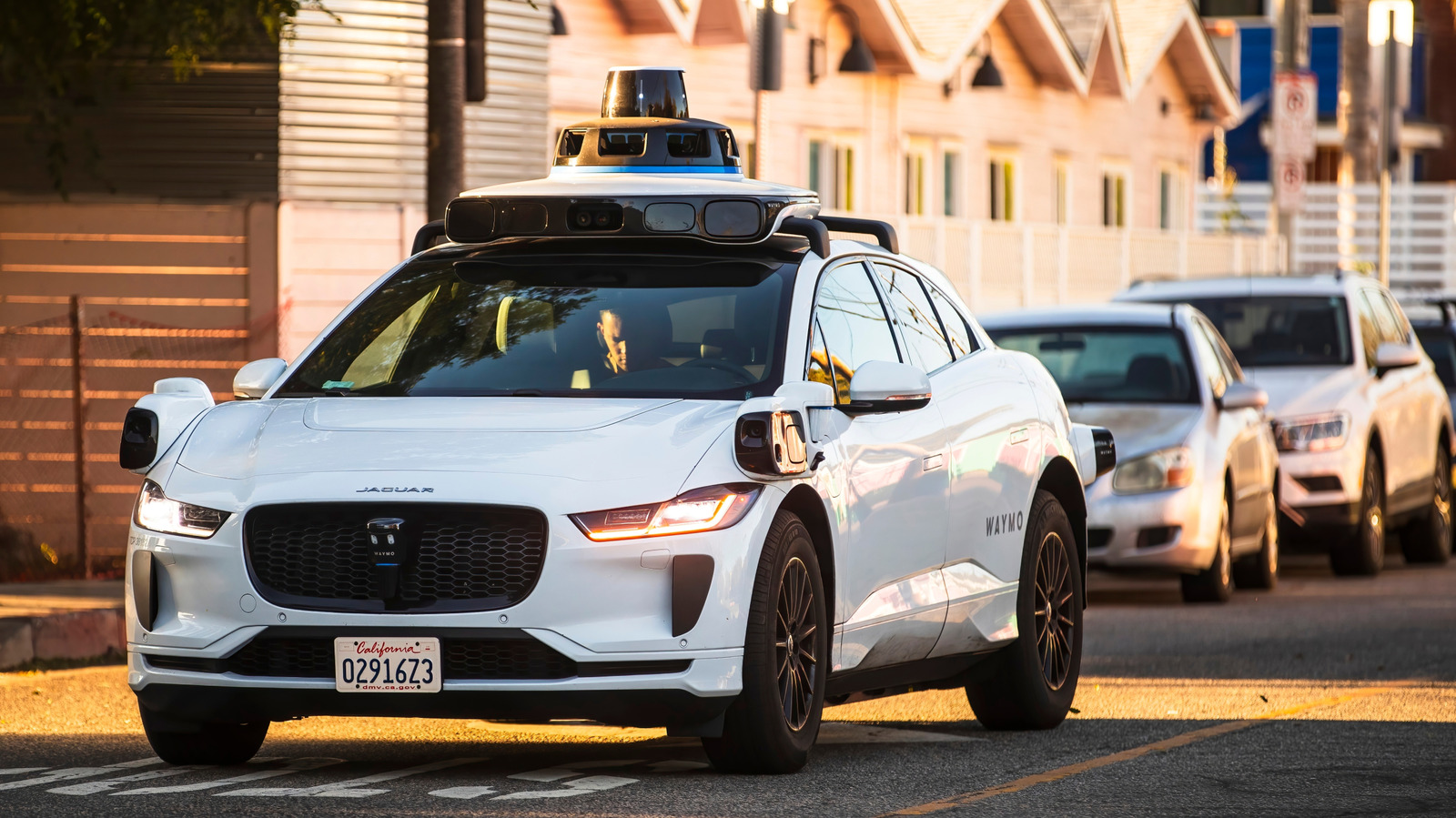
Waymo, originally a project within Google, has been at the forefront of autonomous vehicle development for over a decade. Its "Waymo Driver" system is a sophisticated Level 4 automated driving system, as explicitly stated in the company’s published safety research and regulatory filings. The company’s success in deploying fully autonomous, rider-only services in cities like Phoenix, San Francisco, and soon Los Angeles and Austin, is a testament to the advanced capabilities achievable within the Level 4 paradigm.
The Waymo Driver leverages a multi-modal sensor suite comprising LiDAR, radar, and high-resolution cameras to create a detailed, real-time understanding of its environment. This robust perception system, combined with advanced prediction and planning algorithms, enables Waymo vehicles to navigate complex urban scenarios – including dense traffic, intricate intersections, and interactions with pedestrians and cyclists – without a human safety driver behind the wheel. The system continuously processes vast amounts of data, anticipating actions and making decisions akin to an experienced human driver.
However, the key to its Level 4 classification lies in its Operational Design Domain (ODD). Waymo’s services operate within meticulously mapped and pre-defined geographic areas. These ODDs are not just spatial boundaries; they also encompass specific environmental conditions. For instance, Waymo vehicles are designed to operate safely in certain weather conditions, road types, and times of day. While Waymo continuously expands its ODDs – for example, by developing capabilities for more diverse environments, including challenging weather conditions as seen in its sixth-generation Driver – these expansions still occur within defined parameters. The system’s ability to handle extreme winter weather, for example, represents a significant technological achievement that broadens its ODD, but it does not eliminate the concept of an ODD entirely.
Waymo’s published safety research highlights its rigorous testing methodologies, which include billions of miles in simulation and millions of miles in real-world driving. This extensive data collection and validation process are critical for identifying and mitigating potential hazardous scenarios within its defined operational domains. The company’s transparency in sharing data, such as its comparison of Waymo rider-only crash data to human-driven benchmarks, underscores its commitment to safety within its Level 4 boundaries.
The Elusive Frontier: Defining Level 5 Automation
The fundamental difference between Level 4 and Level 5 is scope. A Level 4 system, even a highly advanced one like Waymo’s, functions impeccably within its ODD. It handles steering, braking, acceleration, and decision-making autonomously when operating within these boundaries. Level 5, however, eliminates these boundaries entirely. The National Highway Traffic Safety Administration (NHTSA) describes Level 5 as operating "universally," implying a system capable of driving anywhere a human can drive, under any conditions, without exception.
This means a Level 5 vehicle would not be restricted by:
- Geography: It could navigate unmapped roads, rural tracks, or newly constructed routes without prior detailed mapping.
- Weather: It would operate flawlessly in blizzards, torrential downpours, dense fog, sandstorms, or any other extreme weather a human could reasonably drive in.
- Road Type: It would seamlessly transition from paved highways to unpaved rural roads, construction zones, or off-road terrains.
- Time of Day/Lighting: It would perform optimally in absolute darkness, blinding sunlight, or rapidly changing light conditions.
- Unforeseen Events: It would adeptly handle novel and unprecedented situations, such as unexpected road debris, unusual human behavior, or temporary infrastructure failures, without human intervention.
The leap from an expanded Level 4 to a truly universal Level 5 is not merely incremental; it’s exponential in complexity. It requires not just better sensors or faster processing, but a paradigm shift in how autonomous systems perceive, predict, and react to an infinitely diverse and unpredictable world.
Challenges and Complexities of Achieving Level 5
The path to Level 5 is fraught with formidable technical, environmental, regulatory, and ethical challenges that far exceed those encountered at Level 4.
-
Technical Hurdles:
- Perception in Extreme Conditions: Current sensor technology, while advanced, struggles with severe weather. Heavy snow can obscure LiDAR, dense fog can render cameras and even radar less effective, and heavy rain can distort visual perception. A Level 5 system needs to reliably perceive and interpret its environment regardless of these challenges.
- Generalization and Edge Cases: Level 4 systems are trained and validated on vast datasets within their ODDs. Level 5 demands the ability to generalize across an infinite number of "edge cases" – rare, unusual, or novel situations that haven’t been explicitly programmed or encountered in training data. This requires a level of artificial intelligence that can reason and adapt like a human, rather than simply reacting based on learned patterns.
- Unstructured Environments: Driving in a city with clear lane markings and traffic signals is one thing; navigating an unpaved rural road in a developing country with ambiguous rules, livestock, and unpredictable pedestrian behavior is another entirely. Level 5 demands proficiency in such highly unstructured and diverse environments globally.
- Cybersecurity: A universally operating Level 5 vehicle presents an even greater attack surface for cyber threats, requiring unprecedented levels of security to prevent malicious takeovers or system compromises.
-
Environmental Obstacles: The sheer variability of the global environment poses immense challenges. Roads can be unmaintained, signage can be non-existent or culturally specific, and lighting conditions can vary drastically. Human drivers possess an intuitive understanding of these nuances, often relying on implicit social cues and common sense that are incredibly difficult to codify into an algorithm.
-
Regulatory Frameworks: Currently, autonomous vehicle regulations are largely a patchwork of state-level laws in the U.S., with varying approaches to testing and deployment. A Level 5 system would necessitate a unified, comprehensive federal (and ideally international) regulatory framework that addresses liability, safety standards, and operational guidelines for universal deployment. Crafting such a framework is a monumental task, given the unprecedented nature of truly driverless vehicles.
-
Ethical Dilemmas: The "trolley problem" – where an autonomous vehicle might have to choose between two undesirable outcomes – becomes even more complex at Level 5, where the system is making all decisions without human oversight. Who is liable in an accident involving a Level 5 vehicle? How are moral decisions programmed into an AI? These philosophical and ethical questions remain largely unanswered and will require societal consensus before widespread Level 5 deployment.
Industry Perspectives and the Road Ahead
Most industry experts and developers acknowledge that Level 5 is a long-term aspiration, perhaps decades away. While Waymo and other leading companies continue to expand their Level 4 ODDs and enhance their systems’ capabilities, the consensus is that a truly universal Level 5 system represents a different class of problem. The current focus remains on refining and safely expanding Level 4 deployments, which offer immediate tangible benefits in specific use cases like ride-hailing and logistics within defined urban corridors.
Investment in autonomous vehicle technology remains robust, with billions of dollars poured into research and development annually. Companies are increasingly collaborating on shared challenges, such as sensor development, simulation tools, and safety validation methodologies. The emphasis is on incremental progress, rigorous testing, and building public trust through safe and reliable Level 4 operations.
NHTSA currently states that Level 5 technology is not available in vehicles for consumer purchase, reinforcing the reality that this is not an imminent development. The SAE levels serve as a descriptive framework of capabilities rather than a fixed development roadmap with a predictable timeline. There isn’t a reliable countdown to when Level 5 will arrive; rather, it will emerge when the technical, legal, and societal hurdles are definitively overcome.
Economic and Societal Implications of Level 5
Should Level 5 automation eventually be achieved, its implications would be profound and far-reaching, transforming transportation, urban planning, and potentially the global economy.
- Transportation Revolution: Universal self-driving cars could eliminate human error, which is responsible for over 90% of all traffic accidents, leading to significantly safer roads. Traffic congestion could be drastically reduced through optimized routing and platooning. Parking needs might diminish as vehicles could continuously circulate or relocate themselves.
- Economic Impact: The logistics industry would see massive efficiency gains. Ride-sharing services could become even more ubiquitous and affordable. New business models built around mobility-as-a-service would emerge. However, there would also be significant job displacement in industries like trucking, taxi services, and delivery.
- Urban Transformation: Cities could redesign their infrastructure, reallocating space currently dedicated to parking lots and wide roads for other uses. The concept of car ownership might evolve, with a greater emphasis on shared autonomous fleets.
- Accessibility: Level 5 vehicles would offer unprecedented mobility to individuals currently unable to drive, such as the elderly, people with disabilities, or those without licenses, fostering greater independence and inclusion.
In conclusion, while Waymo’s self-driving cars represent an extraordinary leap in automation, offering a glimpse into a driverless future, they firmly operate within the boundaries of SAE Level 4. The journey to Level 5 is not simply about refining existing capabilities but about mastering the infinite unpredictability of the real world, a challenge that demands breakthroughs across multiple scientific, engineering, and ethical domains. The distinction between Level 4 and Level 5 is not just semantic; it represents a fundamental difference in operational freedom and universal applicability, marking Level 5 as the ultimate, and still distant, horizon for autonomous driving.