Sisilia Frederika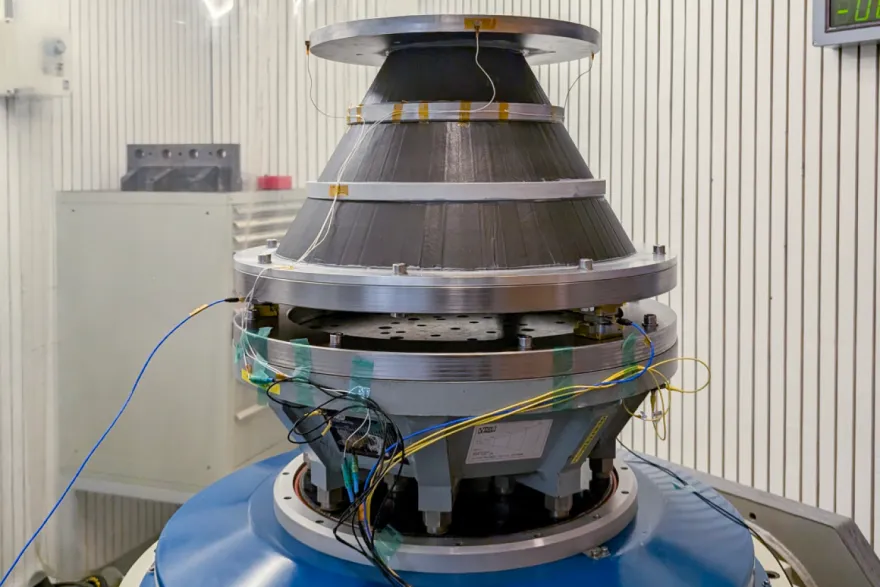
The journey from a terrestrial launchpad to the vacuum of space is widely regarded as one of the most physically demanding sequences any human-made object can endure. Rocket launches are characterized by extreme violence, generating millions of pounds of thrust and subjecting payloads to punishing g-forces and intense acoustic vibrations. While human astronauts undergo years of rigorous physiological training to survive these conditions, the satellites and scientific instruments that comprise a rocket’s cargo must be engineered for survival from the ground up. If a delicate optical mirror, a sensitive sensor, or a microscopic solder joint fractures before a multi-billion dollar satellite even reaches orbit, years of international collaboration and immense financial investment can be liquidated in seconds. To mitigate these risks, researchers in Switzerland have developed a groundbreaking payload adapter utilizing phononic crystals, a type of metamaterial designed to neutralize the destructive vibrations that have long plagued the aerospace industry.
The Mechanical Violence of Atmospheric Ascent
To understand the significance of the Swiss breakthrough, one must first appreciate the environment inside a rocket’s fairing—the protective nose cone—during the first few minutes of flight. As the primary engines ignite, they create a colossal release of energy that translates into structural vibrations. These vibrations are not merely noise; they are mechanical waves that travel through the frame of the rocket and into the payload.
Historically, satellites are not simply placed inside the rocket; they are bolted to a "payload adapter," a structural interface that ensures the spacecraft remains fixed during the ascent. Traditional adapters are designed for maximum rigidity to prevent the satellite from shifting or colliding with the fairing walls. However, this rigidity creates a significant engineering paradox: the stiffer the mount, the more efficiently it transmits high-frequency longitudinal vibrations. These "straight up and down" shakes, often referred to in the industry as pogo oscillations, can resonate with the natural frequencies of the satellite’s internal components, leading to catastrophic structural failure.
For decades, engineers have attempted to dampen these forces using two primary methods, both of which carry significant drawbacks. The first involves the use of massive rubber cushions. While effective at absorbing some energy, rubber is susceptible to the extreme temperature fluctuations of space and has a history of outgassing or degrading in a vacuum. The second method involves active, motorized dampeners. While these can be tuned to specific frequencies, they add substantial weight and complexity to the launch vehicle. In the aerospace sector, where every additional kilogram can cost thousands of dollars in fuel and lost opportunity, adding weight to a dampening system is often seen as a last resort.
The Phononic Crystal Breakthrough: Engineering the "Acoustic Band Gap"
The collaboration between the Swiss Federal Laboratories for Materials Science and Technology (Empa) and the aerospace supplier Beyond Gravity (formerly RUAG Space) has resulted in a radical departure from traditional mechanical dampening. Instead of relying on mass or friction, the team turned to the field of metamaterials—specifically, phononic crystals.
Phononic crystals are synthetic structures designed to control the propagation of mechanical waves (phonons) in the same way that photonic crystals manipulate light (photons). By creating a periodic arrangement of materials with varying densities and elastic properties, engineers can create "acoustic band gaps"—specific frequency ranges where mechanical waves are physically unable to pass through the material.
The prototype developed by the Swiss team takes this concept a step further. Rather than simply blocking the energy, the adapter is designed to redirect it. The geometry of the adapter facilitates a conversion of kinetic energy: as the rocket body vibrates vertically, the phononic structure translates that sharp vertical shock into rotational motion. This energy is then dissipated into a series of movable aluminum rings within the adapter. By the time the energy reaches the satellite interface, the magnitude of the vibration is significantly reduced, effectively insulating the delicate cargo from the "heartbeat" of the rocket.
A Chronology of Development and Testing
The path to this innovation has been a multi-year journey involving theoretical physics, computer modeling, and physical stress testing. The project began with the identification of a specific need within the European space sector for lighter, more reliable vibration isolation for the next generation of heavy-lift launch vehicles, such as the Ariane 6.
- Conceptual Phase: Researchers at Empa utilized advanced computational fluid dynamics and structural analysis to simulate how different lattice structures could influence wave propagation. The goal was to find a geometry that was light enough for flight but strong enough to support the weight of a multi-ton satellite.
- Prototyping: Once the optimal geometry was identified, Beyond Gravity assisted in the fabrication of a prototype using aerospace-grade aluminum. The design focused on a series of interconnected rings and struts that act as a mechanical filter.
- Laboratory Validation: The prototype was subjected to rigorous "shaker table" tests, which replicate the acoustic and mechanical stresses of a launch. These tests confirmed that the phononic crystal structure could effectively redirect longitudinal loads into rotational energy without compromising the structural integrity of the mount.
- Current Status: The technology has currently achieved a Technology Readiness Level (TRL) of 4 to 5 on NASA’s nine-point scale. This means the component has been validated in a laboratory environment and is moving toward "system/subsystem validation in a relevant environment."
Economic and Scientific Implications
The implications of a more efficient, lightweight payload adapter extend far beyond mere safety. In the modern space economy, weight is the ultimate currency. Current satellite designs must be "over-engineered"—built with extra structural reinforcement—simply to survive the first ten minutes of a mission. This added mass is essentially "dead weight" once the satellite reaches the microgravity environment of space.
If the phononic crystal adapter can significantly reduce the vibration loads experienced by a satellite, engineers can reduce the thickness of structural panels and the robustness of internal housings. According to industry analysts, even a 5% reduction in a satellite’s structural mass could allow for additional fuel (extending the mission’s lifespan) or the inclusion of more scientific sensors.
Furthermore, this technology opens the door for a new class of "ultra-fragile" space instruments. Current constraints prevent the launch of certain high-precision optics and quantum sensors because they are too delicate to survive existing launch profiles.
- Quantum Computing: Sensitive quantum sensors, which require near-perfect isolation from external noise, could finally be deployed for global secure communications.
- Deep Space Telescopes: Thinner, larger mirrors could be launched, allowing for higher-resolution observations of distant exoplanets without the risk of cracking during ascent.
- Cost Reduction: By lowering the failure rate of launches and reducing the need for bespoke, heavy dampening systems, the overall cost per kilogram to orbit could see a marginal but meaningful decrease.
Industry Response and the Road to Orbit
Beyond Gravity, a key player in the global space supply chain, has already filed for a patent on the system, signaling a high level of confidence in its commercial viability. While the technology is not yet ready for a maiden flight, the aerospace industry is watching closely.
A spokesperson for the research initiative noted that the primary challenge moving forward is "scaling the manufacturing process while maintaining the precise tolerances required for phononic band gaps to function." Because the effectiveness of the metamaterial depends entirely on its geometric precision, any manufacturing defect could potentially allow destructive frequencies to leak through.
As the global space industry transitions toward more frequent launches and more complex constellations, the demand for standardized, high-performance payload adapters is expected to surge. If the Swiss phononic crystal adapter continues to pass its milestones, it may soon become the standard interface for everything from Starlink-style communication nodes to the next generation of Martian rovers.
While it may be several years before a phononic crystal adapter is integrated into a commercial launch vehicle like the Falcon 9 or the Ariane 6, the successful laboratory tests represent a major victory for metamaterial science. By mastering the art of redirection rather than just resistance, Swiss researchers are ensuring that the satellites of tomorrow have a smoother, safer, and more efficient ride to the stars. The "violent" era of rocket travel may never truly end, but thanks to these innovations, the cargo will be none the wiser.