Sisilia Frederika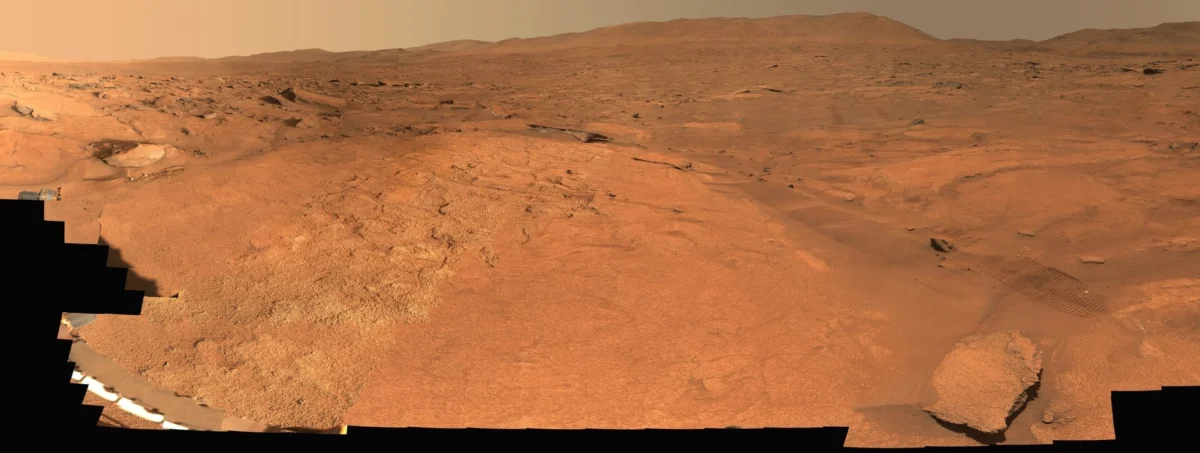
The Mars 2020 mission has reached a significant scientific milestone as the Perseverance rover provides a groundbreaking look into the aqueous history of the Red Planet. Upon reaching a geological feature known as the Margin Unit in September 2023, the mission’s science team encountered a series of geological surprises that have fundamentally reshaped the understanding of Jezero Crater’s past. While initial orbital data suggested the area was composed of sedimentary rocks—the type typically formed by the slow accumulation of sand and silt in a lakebed—on-site analysis revealed a far more complex volcanic origin. The rocks, rich in the mineral olivine, bear the chemical signatures of three distinct periods of water interaction, suggesting that Mars’ early history was characterized by a dynamic and evolving hydrologic cycle.
A Geological Surprise in the Margin Unit
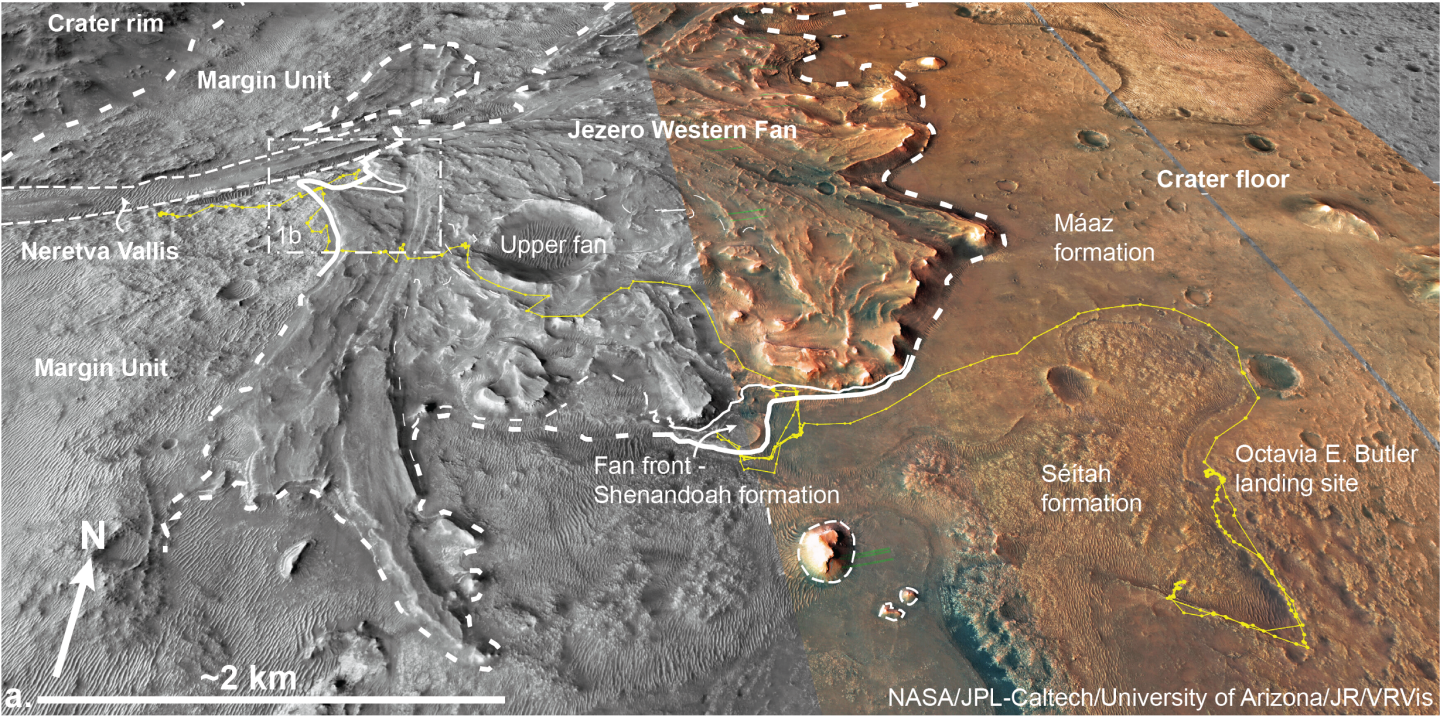
Jezero Crater, a 28-mile-wide (45-kilometer-wide) impact basin located on the edge of Isidis Planitia, was selected as the landing site for Perseverance specifically because of its history as an ancient lake and river delta system. Scientists hypothesized that the Margin Unit, which hugs the inner rim of the crater, would contain thick layers of carbonate-rich sedimentary rock. On Earth, carbonates are often associated with life, forming in marine environments or through the precipitation of minerals in water.
However, when Perseverance began its ascent into the Margin Unit, its instruments revealed that the bedrock was not sedimentary but igneous. The presence of olivine-rich igneous rock indicates that the region was once shaped by molten activity, either through surface volcanic flows or underground magma chambers that cooled over time. This discovery was unexpected because orbital observations from the Mars Reconnaissance Orbiter (MRO) had identified high concentrations of carbonates in the area, which are usually the product of water reacting with rock rather than the rock itself.
The discrepancy between orbital data and ground-level reality highlights the importance of "ground-truthing" in planetary science. While the carbonates are indeed present, they exist as alteration products within the volcanic rock, rather than as primary sedimentary layers. This distinction is vital for reconstructing the environmental conditions of early Mars and determining the planet’s former habitability.
The Triple-Phase History of Water Interaction
Using the SuperCam instrument—a sophisticated suite of sensors that utilizes reflected light and Raman spectroscopy to identify mineral compositions—the research team analyzed more than 185 bedrock targets. The results, published in the journal Communications Earth & Environment, outline a chronological sequence of three separate events where liquid water fundamentally altered the chemistry of the Margin Unit.
Phase One: The Rise of Carbonates and Groundwater
The first era of alteration occurred when neutral to carbon dioxide-rich groundwater circulated through the deep fractures of the volcanic bedrock. This water reacted with the magnesium-rich olivine in the rock, a process that produced ridges of carbonate minerals. These carbonates formed within the cracks of the igneous rock at lower elevations.
Over billions of years, the surrounding softer rock was stripped away by Martian winds (aeolian erosion), leaving the harder carbonate ridges exposed. This initial phase demonstrates that Mars possessed an active subsurface plumbing system long before or perhaps concurrent with the existence of surface lakes. The presence of carbon dioxide in the groundwater suggests a thick, early Martian atmosphere that interacted with the planet’s crust.

Phase Two: The Influence of the Paleolake
The second major aqueous event is tied to the existence of the lake that once filled Jezero Crater. As the water levels rose and fell, or as the chemistry of the groundwater shifted, the rocks were subjected to a different type of chemical weathering. In this phase, the team detected significant deposits of silica (silicon dioxide).
Eleni Ravanis, a planetary scientist at the University of Hawaii at Manoa and co-author of the study, noted that the transformation of olivine into carbonate often leaves silica behind as a byproduct. The data showed a higher concentration of silica in rocks located below the hypothesized ancient shoreline, reinforcing the theory that these rocks were submerged for extended periods. Silica is of particular interest to astrobiologists because it is highly effective at entombing and preserving microbial life, acting as a natural "time capsule" for organic molecules.
Phase Three: Hydrothermal Activity and Fluorite Veins
The final and perhaps most surprising stage of water interaction involved the circulation of warm, mineral-rich fluids through younger fractures in the rock. In the eastern portion of the Margin Unit, Perseverance identified calcium-sulfate mineral veins approximately 25 centimeters (10 inches) thick. Most notably, these veins contained fluorite.
On Earth, fluorite is typically associated with hydrothermal systems—environments where water is heated by volcanic activity. The discovery of fluorite suggests that even after the primary lake had dried or receded, the Jezero region remained geologically active, with hot water moving through the crust. Hydrothermal vents are considered one of the most likely places where life could have originated on Earth, making this find a high-priority detail for the mission’s search for ancient biosignatures.
Technical Data and Altitudinal Variations
The data collected by SuperCam provided a clear correlation between the elevation of the rocks and their level of alteration. At higher elevations, approximately 2,350 meters (~7,700 feet), the bedrock appeared relatively "pristine." These rocks maintained the texture and chemistry of slow-cooled, olivine-rich igneous material with very little evidence of water exposure.
However, as the rover moved approximately 265 meters (870 feet) lower toward the crater floor, the signs of rock-water interaction became increasingly prevalent. In areas near Neretva Vallis—the river channel that breached the crater rim—and the Western Fan, the rocks showed physical signs of "reworking." The olivine grains were fractured, with secondary minerals like silica and carbonate filling the gaps. This altitudinal gradient provides a clear map of where the water was most active and for how long.
Expert Perspectives and Mission Implications
The findings have sparked significant discussion within the planetary science community. Candice Bedford, a research scientist at Purdue University and the lead author of the study, emphasized that the Margin Unit has proven to be a "crossroads" for different aqueous systems.
"Before we arrived at the Margin Unit, the main hypothesis was that the carbonate seen from orbit formed from interaction with the lake that existed in Jezero Crater," Bedford stated. "But now we know that this location experienced multiple episodes of water activity. What we learn here reaches well beyond this crater because Jezero sits inside one of the largest exposures of carbonate on Mars."
The discovery also has profound implications for the Mars Sample Return (MSR) mission. Perseverance is currently caching tubes of rock and soil that a future mission aims to bring back to Earth for more intensive laboratory analysis. By identifying rocks that have undergone multiple stages of alteration—including hydrothermal activity—scientists can ensure they are selecting samples with the highest potential for containing biosignatures.
Analysis: Why Olivine and Carbonates Matter for Life
The chemistry of the Margin Unit is particularly exciting because of a process known as serpentinization. When water interacts with olivine-rich minerals, it can produce hydrogen gas. On Earth, certain types of microorganisms, known as chemolithotrophs, "eat" hydrogen to produce energy in environments where sunlight is unavailable, such as deep-sea hydrothermal vents.
If the early Martian environment supported similar chemical reactions, the Margin Unit would have provided both a source of energy (hydrogen) and a means of preservation (silica and carbonates). The fact that these interactions happened in three distinct stages increases the "habitability window"—the period during which life could have potentially thrived in the region.
The Road Ahead for Perseverance
As Perseverance continues its traverse, it will move toward the crater rim and eventually beyond it, exploring even older terrains. The insights gained from the Margin Unit will serve as a template for interpreting the geology of the rest of the planet.
The discovery of a triple-phase water history challenges the previous "one-and-done" view of Martian water, where a single wet period was followed by a permanent transition to a dry, frozen desert. Instead, the data from Jezero Crater suggests a more nuanced climate history, with fluctuating conditions that allowed for groundwater, surface lakes, and hydrothermal activity to occur at different times.
The Perseverance mission continues to demonstrate that Mars is a world of surprises. As the rover moves forward, each rock it zaps with its laser and each sample it drills brings humanity closer to answering the ultimate question: was there ever life on the Red Planet? For now, the complex mineral record of the Margin Unit provides the most detailed evidence yet of a world that was once very much alive with the movement of water.