Sonny Valindra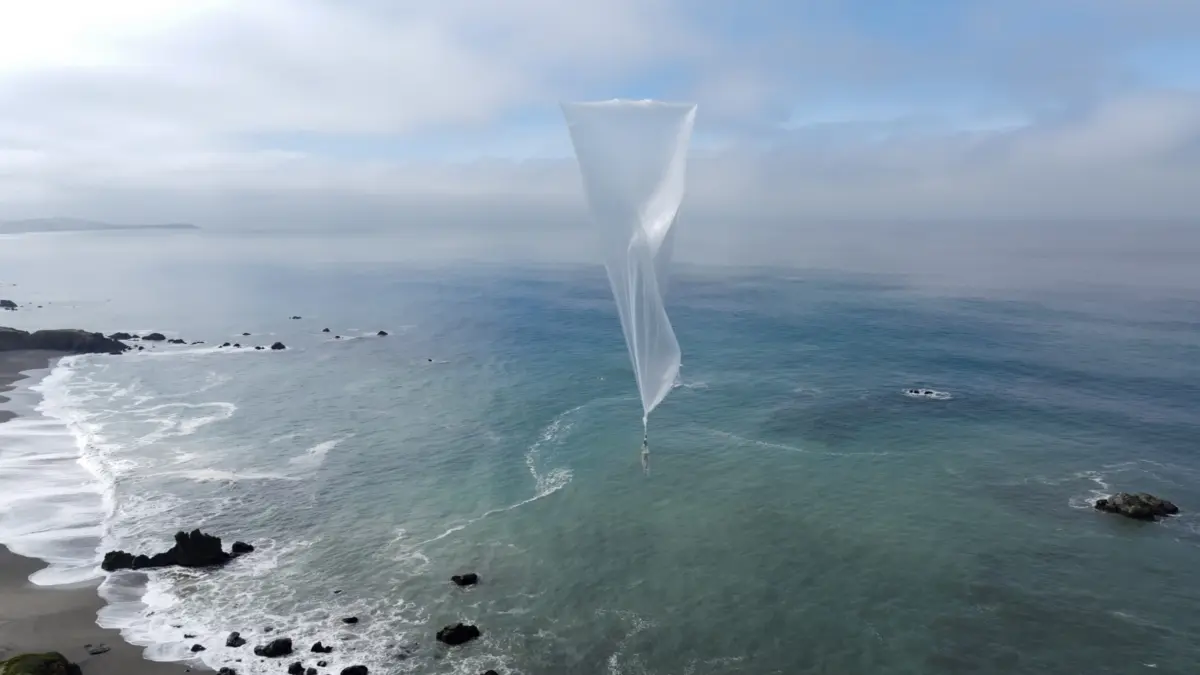
The U.S. Air Force is set to procure atmospheric data from WindBorne Systems, a startup specializing in autonomous weather balloons, under a new contract that could reach nearly $50 million. This significant agreement underscores the growing reliance of governmental agencies on innovative, data-driven approaches to weather forecasting and atmospheric monitoring. WindBorne’s unique capability to collect empirical data globally using its fleet of unmanned aerial systems positions it as a key player in advancing meteorological intelligence for national security and operational planning.
WindBorne’s Expanding Global Data Network
WindBorne Systems currently operates a constellation of approximately 700 weather balloons that traverse the Earth’s atmosphere, gathering critical atmospheric sensor readings. This vast network serves a dual purpose: the raw data is sold to commercial clients, and it is also integrated into WindBorne’s proprietary artificial intelligence (AI) weather forecasting model. Founded in 2015 and headquartered in Redwood City, California, WindBorne has distinguished itself as one of the pioneers in directly feeding empirical, real-world data into deep-learning weather prediction systems. This approach contrasts with traditional meteorological models that primarily rely on physical simulations.
The company has cultivated a strong relationship with U.S. government entities, including the National Weather Service, the U.S. Air Force, and the U.S. Navy. However, the recently awarded contract represents the single largest engagement in WindBorne’s history. Valued at up to $49 million, the contract operates on a pay-as-you-go basis, with the Air Force ordering data based on specific regional and temporal needs. To date, the Air Force has committed $1.7 million for initial data acquisitions, with company executives anticipating a substantial increase in orders as the utility of the data becomes more evident.
Strategic Value and Technological Innovation
Andrey Sushko, co-founder and Chief Technology Officer of WindBorne, emphasized the strategic importance of the contract. "This is largely a vehicle through which continued growth of the constellation can be supported, as well as some work on research and development to continue to improve the hardware and performance of the balloons," Sushko stated. He further elaborated on the unique nature of the award, noting that it was granted without competitive bidding. This process, Sushko explained, reflects "a determination by the government that for this capability of collecting global data, we were the only company able to provide it in the way that met their needs for these operations."
This direct government procurement highlights the Air Force’s recognition of WindBorne’s specialized capability in providing a global, empirical data stream that complements or enhances existing meteorological intelligence. The ability to deploy sensors in remote or challenging-to-access regions of the atmosphere offers a distinct advantage over conventional methods.
The Rise of AI in Weather Forecasting
The burgeoning field of AI-powered weather forecasting has seen significant advancements in recent years, driven by innovations in deep-learning architectures and the availability of vast meteorological datasets. The development of transformer model architectures, coupled with the release of extensive weather datasets by organizations like the European Centre for Medium-Range Weather Forecasts (ECMWF), has accelerated progress.
Historically, meteorologists have relied on sophisticated supercomputers to run complex physical models that simulate atmospheric behavior. These models, while powerful, are computationally intensive and can be time-consuming. The advent of end-to-end deep learning offers an alternative paradigm. By ingesting decades of historical weather data, AI models can learn patterns and relationships, enabling them to issue predictions with remarkable speed and, increasingly, accuracy.
WindBorne’s Competitive Edge and AI Advancements
WindBorne CEO John Dean had previously indicated the company’s commitment to scaling its operations, citing a $37 million Series B funding round raised to support business expansion. Earlier in the summer, WindBorne unveiled WeatherMesh 6, the latest iteration of its AI forecasting model. The company claims this model surpasses the accuracy of traditional forecasts generated by the ECMWF, which bases its simulations on fundamental laws of physics.
The benchmarks provided by WindBorne suggest that their AI-driven approach can offer more nuanced and precise predictions, potentially outperforming even established scientific models in certain aspects. This is a crucial development in a field where even marginal improvements in forecast accuracy can have significant economic and safety implications.
Navigating Extreme Weather: A Technological Feat
WindBorne has demonstrated its technological prowess through groundbreaking operational achievements. In August, the company became the first organization to successfully guide an unpowered flight system—specifically, a weather balloon without an engine—into the eye of a typhoon. This remarkable feat was accomplished through sophisticated navigation techniques that involve precisely adjusting the balloon’s altitude, releasing air, or shedding sand ballast. These maneuvers allow the balloons to be steered by prevailing wind currents, directing them to specific atmospheric locations.
Sushko described this achievement as a "pretty novel step," attributing it to two key factors: "having good wind and weather models, and knowing how to navigate them; and two, having a large enough constellation that you have balloons in the right places." He highlighted that this represented "one of the first times that a deep-learning model was used for actual operational decisions." This application of AI for real-time, operational navigation in extreme weather conditions underscores the practical utility and maturity of WindBorne’s technology.
Broader Implications for National Security and Operations
The U.S. Air Force’s substantial investment in WindBorne’s data collection capabilities has far-reaching implications. Access to a continuous, global stream of empirical atmospheric data can enhance a wide range of military operations, including:
- Mission Planning: More accurate weather forecasts are vital for planning aerial missions, troop movements, and logistical operations. Understanding atmospheric conditions at various altitudes and across broad geographical areas can optimize flight paths, minimize risks, and ensure operational efficiency.
- Intelligence, Surveillance, and Reconnaissance (ISR): Atmospheric conditions can significantly impact the effectiveness of ISR platforms. Real-time data can improve the deployment and operation of sensors, drones, and other surveillance assets.
- Climate and Environmental Monitoring: Beyond immediate operational needs, the data collected by WindBorne can contribute to long-term climate research and environmental monitoring, which are increasingly important for national security and resource management.
- Disaster Response and Preparedness: The ability to forecast severe weather events with greater precision is critical for military and civilian disaster response efforts. This data can aid in early warning systems and the effective deployment of resources during natural disasters.
The Evolving Landscape of Weather Prediction
The integration of AI into weather forecasting represents a paradigm shift, complementing rather than entirely replacing traditional methods. While AI models excel at pattern recognition and rapid prediction, physics-based models provide a fundamental understanding of atmospheric processes. The most robust forecasting likely emerges from a hybrid approach that leverages the strengths of both.
Leading technology companies and research institutions are also actively developing advanced AI weather models. Google DeepMind’s latest weather model, for instance, offers novel capabilities, and its cyclone forecasting tools are becoming integral to the U.S. government’s hurricane season response. The U.S. government’s engagement with multiple AI weather forecasting initiatives signals a strategic commitment to harnessing cutting-edge technology for improved weather intelligence.
Contract Structure and Future Outlook
The $49 million contract with the U.S. Air Force is structured to allow the government flexibility and control over its spending. By paying for data as needed, the Air Force can scale its acquisition based on evolving requirements and the demonstrated value of WindBorne’s service. This approach mitigates risk for both parties and ensures that the investment is aligned with operational demands.
The significant size of the potential contract, coupled with the direct award without open competition, suggests a high level of confidence in WindBorne’s unique capabilities. As the company continues to expand its balloon constellation and refine its AI forecasting models, its role in providing critical atmospheric data to governmental and commercial clients is likely to grow. The success of this contract could pave the way for further collaborations and a broader adoption of WindBorne’s innovative approach to atmospheric data collection and analysis within defense and civilian sectors. The company’s ability to navigate extreme weather and integrate empirical data into deep-learning models positions it at the forefront of a transformative era in meteorological science and technology.