Sonny Valindra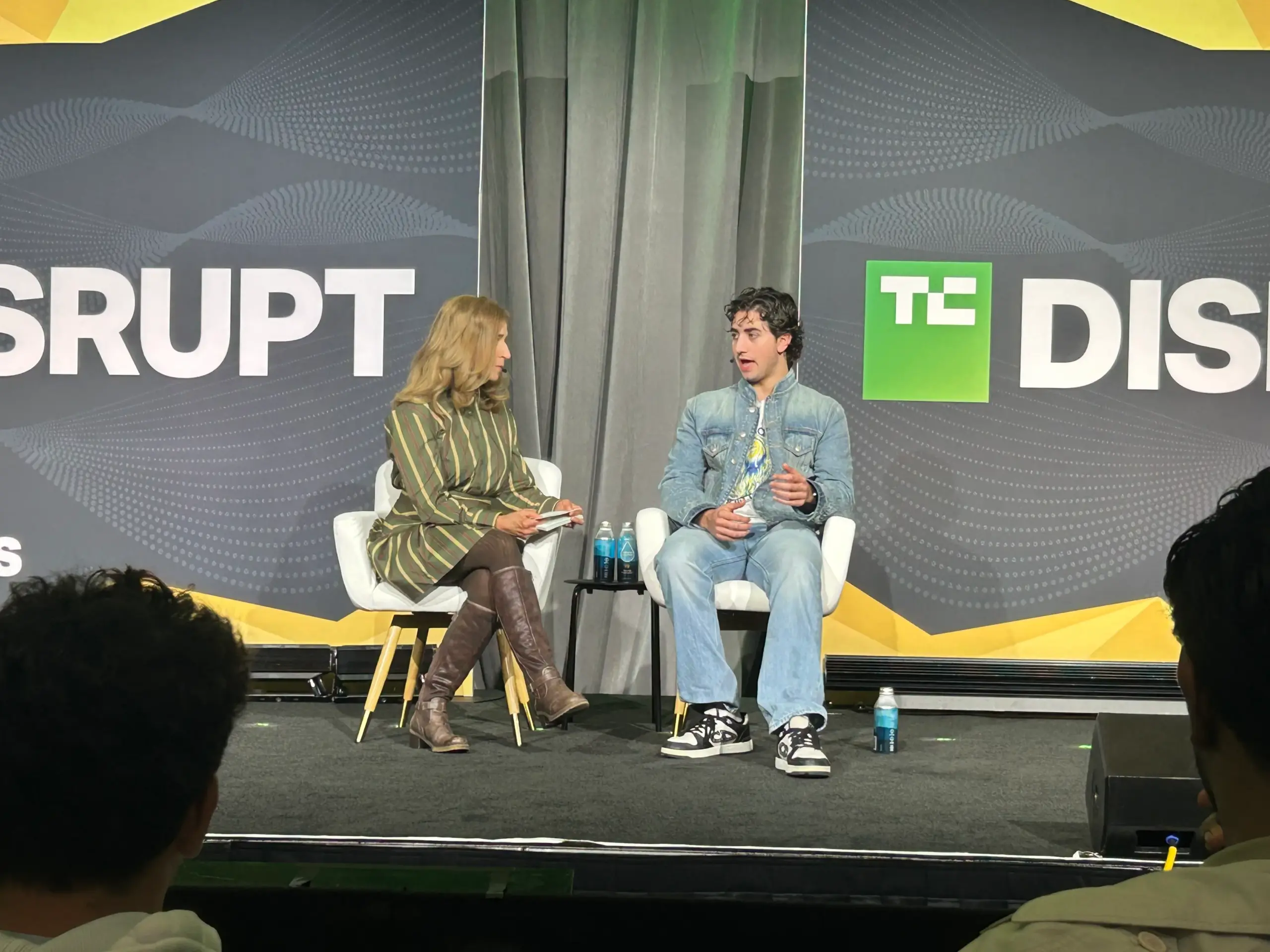
Zach Yadegari, a recent high school graduate and the visionary founder behind the AI-powered calorie-tracking application Cal AI, captivated the audience at TechCrunch Disrupt on Thursday with an insightful account of his meteoric rise in the tech industry. At just 19 years old, Yadegari has achieved remarkable success, transforming his nascent startup into a viral sensation over the past two years. His presentation offered a rare glimpse into the strategic acumen that propelled Cal AI to widespread recognition and a lucrative acquisition.
The Explosive Trajectory of Cal AI
Founded in 2024, Cal AI rapidly ascended to prominence, driven by an innovative and highly effective marketing strategy spearheaded by Yadegari. The app’s explosive growth can be largely attributed to the founder’s calculated deployment of a diverse network of social media influencers. This approach, while unconventional for a nascent startup, proved to be a powerful catalyst for user acquisition and brand awareness. Within a mere two years, Cal AI generated an impressive revenue exceeding $30 million. This remarkable financial performance culminated in its acquisition by the established health and fitness platform MyFitnessPal in March of the current year, for an undisclosed sum.
The Influencer Marketing Masterclass
During his onstage discussion at TechCrunch Disrupt, Yadegari elaborated on the foundational elements of his social media strategy. He recounted an early, pivotal moment that validated the efficacy of influencer marketing. "An influencer’s post about us led to approximately a thousand new users over the course of two days," Yadegari revealed. This initial surge provided a clear indication that the strategy held significant potential.
"From there, we figured out, okay, this can actually work for us, and so we started recruiting influencers as fast as we could – paying as many people as possible to start posting for us," he explained. Yadegari characterized the influencer marketing approach as a discernible and highly effective formula. "What we saw was that it was a clear formula. It was pretty linear, but it was extremely fast. I guess linear in the sense that every post they did would get a certain number of viewers that would convert."
This "linear" conversion, as described by Yadegari, signifies a predictable return on investment. For every post published by an influencer, a quantifiable number of users were acquired, allowing for scalable growth. This predictable conversion rate enabled Cal AI to efficiently allocate its marketing budget and aggressively expand its user base.
Strategic Negotiation and Targeted Outreach
Yadegari, a recognized alumnus of the Forbes 30 Under 30 list, further detailed his company’s negotiation tactics with influencers. The strategy involved establishing clear payout structures tied to specific reach metrics. He noted that many influencers, particularly those who are still students, are primarily motivated by financial compensation. "A lot of influencers are ‘broke college kids’ who ‘just want cash’," Yadegari stated. "You just ask them, okay, we’ll pay you this, but we need to get us at least this amount of use and keep posting until you get there." This pragmatic approach allowed Cal AI to secure influencer collaborations without necessarily requiring large upfront payments, instead linking compensation to tangible results.
A critical component of this strategy was identifying influencers who possessed "very tight communities." Yadegari emphasized, "The biggest thing for us was finding influencers that had very tight communities." This focus on niche communities rather than broad, less engaged audiences ensured that promotional content resonated deeply with the target demographic, leading to higher conversion rates and more authentic brand advocacy. The implication here is that hyper-targeted influencer marketing, where the influencer’s audience closely aligns with the product’s ideal customer profile, yields superior results compared to mass-market outreach.
A Look at the Numbers: Rapid Growth and Acquisition
The acquisition of Cal AI by MyFitnessPal marks a significant milestone in the company’s brief but impactful history. While the financial terms of the acquisition remain undisclosed, the rapid revenue generation of over $30 million in just two years underscores the immense value MyFitnessPal saw in Cal AI’s technology and user base. This acquisition is a testament to the power of agile startups to disrupt established markets and achieve significant valuations through innovative strategies.
The timeline of Cal AI’s success is remarkably compressed:
- 2024: Cal AI is founded by Zach Yadegari.
- Early 2024 onwards: The company implements its influencer marketing strategy, leading to rapid user acquisition and brand recognition.
- Late 2024 – Early 2025: Cal AI achieves significant revenue milestones, exceeding $30 million.
- March [Year of Acquisition]: MyFitnessPal acquires Cal AI for an undisclosed sum.
This rapid ascent from founding to acquisition within approximately two years highlights the accelerated pace of innovation and market responsiveness in the current tech landscape.
The Role of Family and Education
Yadegari acknowledged the supportive role of his family in his entrepreneurial journey, noting that his father was present in the audience. This familial backing provided him with the necessary freedom to pursue his ambitious goals. However, when questioned about the role of higher education in his success, Yadegari expressed a decidedly pragmatic, and somewhat provocative, viewpoint that drew laughter from the TechCrunch Disrupt audience.
"I think the only real reason to go to college is if you want to have a fun social time as a kid and be with other people," he stated. This sentiment suggests that, for Yadegari, the traditional academic path was not a prerequisite for his entrepreneurial achievements. His experience implicitly points to the growing recognition of alternative routes to success, particularly in the technology sector, where practical experience and innovation can often outweigh formal educational credentials. The broader implication is a potential shift in how entrepreneurial success is perceived and achieved, with a greater emphasis on real-world application and rapid iteration.
Launch of Persona: A New Frontier in AI
Fresh off the success of Cal AI, Yadegari has not rested on his laurels. Earlier this month, he unveiled his latest venture, Persona, an AI agent startup that has already garnered substantial investment. Persona has successfully raised $10 million, signaling strong market confidence in Yadegari’s vision and execution capabilities.
The overarching mission of Persona, as articulated by Yadegari, is to "make computing seamless with human life." The company aims to develop a personal AI assistant that is not confined to a single device or platform. "Our personal AI assistant will ‘live anyplace with internet connection’," Yadegari explained, citing examples such as "iMessage, app, email, phone call." This ubiquitous integration signifies a move towards AI that is deeply embedded in users’ daily digital interactions, acting as a constant, context-aware companion.
A key differentiator for Persona, according to Yadegari, is its intention to build "a hardware ecosystem around" the AI application. This suggests a strategy that extends beyond software, potentially encompassing dedicated hardware devices designed to enhance the functionality and accessibility of the AI assistant. This holistic approach could position Persona as a significant player in the evolving landscape of personal artificial intelligence, bridging the gap between digital intelligence and tangible user experiences.
Context of TechCrunch Disrupt
TechCrunch Disrupt is a premier technology conference that serves as a vital platform for startups to showcase their innovations, connect with investors, and gain industry recognition. The event typically features a startup battlefield competition, keynote speeches from industry leaders, and extensive networking opportunities. Yadegari’s appearance and presentation at Disrupt underscore the platform’s significance in highlighting emerging talent and groundbreaking technologies. His candid discussion of Cal AI’s success and the ambitious plans for Persona provide valuable insights for aspiring entrepreneurs and established players in the technology sector alike. The event’s focus on innovation and disruption makes it the ideal venue for a young entrepreneur like Yadegari to share his remarkable journey and future aspirations.
Broader Implications and Future Outlook
The story of Zach Yadegari and Cal AI offers a compelling case study in the power of focused strategy, agile execution, and innovative marketing in the modern startup ecosystem. His ability to identify and leverage emerging trends, such as influencer marketing, and to adapt quickly to market demands, has been instrumental in his success. The rapid growth and subsequent acquisition of Cal AI demonstrate that age is no barrier to entrepreneurial achievement, particularly when coupled with a clear vision and the drive to execute it.
The launch of Persona further signals Yadegari’s ambition to tackle complex challenges in the artificial intelligence space. The goal of creating a seamless integration of computing into human life, supported by a dedicated hardware ecosystem, positions Persona to potentially redefine personal AI assistance. The significant early-stage funding for Persona indicates that investors are betting on Yadegari’s track record and his ability to innovate in a highly competitive field. As AI continues to evolve, startups like Persona, led by dynamic young founders, are likely to play a crucial role in shaping its future applications and impact on society. The successful exit of Cal AI also provides a valuable data point for the burgeoning market of AI-driven consumer applications, potentially influencing future investment trends and acquisition strategies within the health and wellness tech sector.