Sonny Valindra
The landscape of digital advertising is undergoing a seismic shift, driven by the rapid advancements in artificial intelligence. Historically, the creation of compelling and personalized online ad campaigns was a labor-intensive process, heavily reliant on the expertise of graphic designers, videographers, and other creative professionals. This traditional workflow often involved lengthy communication chains with brand design teams and external ad agencies, leading to extended production timelines and significant costs. However, a seven-year-old startup, Hightouch, has dramatically disrupted this paradigm with the launch of its AI-powered service, empowering marketing professionals to generate bespoke content for leading brands without the need for traditional creative intermediaries.
Launched in late 2024, Hightouch’s innovative platform has rapidly gained traction, demonstrating remarkable success. In just 20 months since the introduction of its AI product, the company has announced an impressive addition of $70 million in annualized recurring revenue (ARR), propelling its total ARR to a substantial $100 million. This rapid growth underscores the significant market demand for solutions that can streamline and democratize content creation in the hyper-competitive digital advertising space.
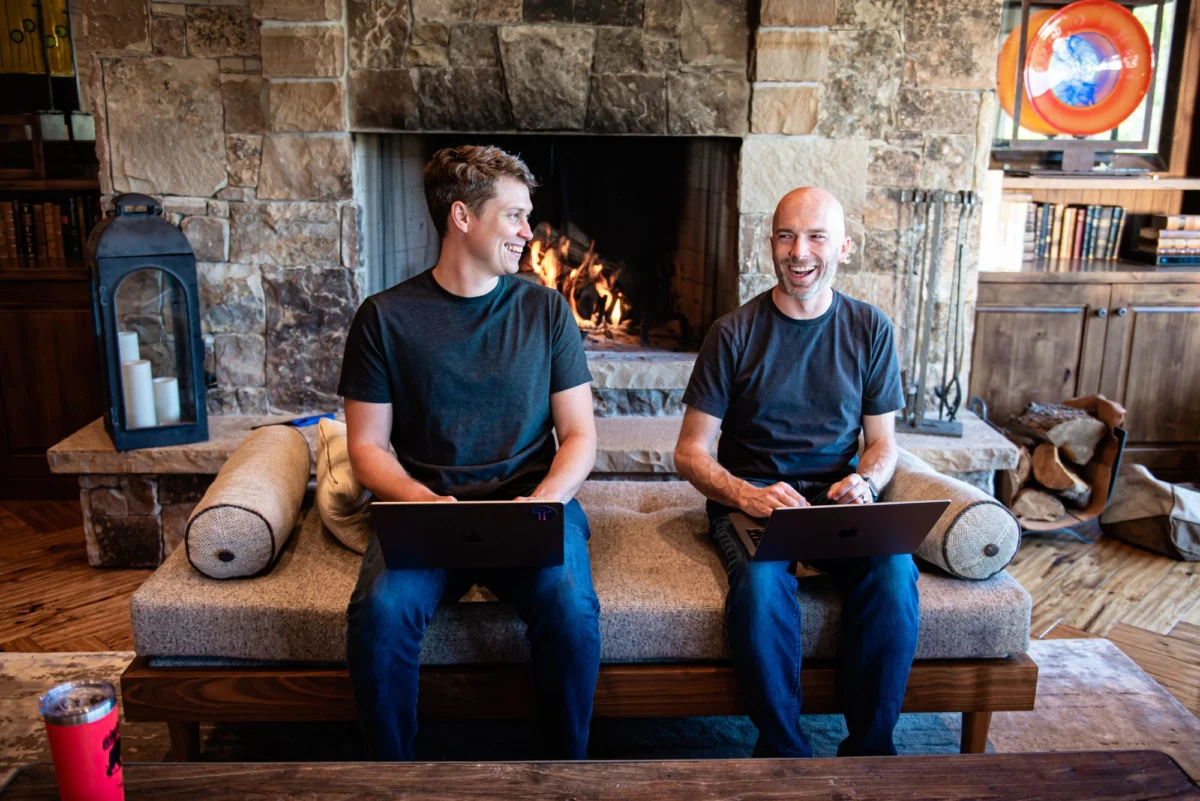
"Before GenAI, it was impossible for someone without many, many years of design skills to create consumer-level assets," stated Kashish Gupta, co-CEO of Hightouch. This sentiment highlights a fundamental challenge that marketers have faced for years: the significant barrier to entry for creating high-quality visual and video content. Gupta’s co-CEO, Tejas Manohar, brings a wealth of experience from his previous role as an engineering manager at Segment, a prominent customer data platform that was acquired by Twilio for $3.2 billion in 2020. This background in data management and platform development likely informs Hightouch’s sophisticated approach to AI integration.
Addressing the "On-Brand" Challenge
While the advent of generative AI models has offered new possibilities, many brands initially struggled to leverage these foundational models effectively for their advertising needs. General AI systems, while capable of generating text and broad visual concepts, often lack the specific contextual understanding required to maintain brand consistency. These "foundation models," as described by Hightouch, operate on a vast but generalized dataset, making them prone to errors when tasked with replicating a specific brand’s unique visual identity.
"Foundation models didn’t know about specific consumer brands, whether it was colors or fonts, tone, or assets," Gupta explained. "The LLMs would hallucinate products that didn’t exist, and you can’t do advertising and emails on products that don’t exist." This tendency to "hallucinate" or create fictional elements is a critical flaw for brands that rely on accurate product representation and a consistent brand image. The inability of general AI to adhere to specific brand guidelines – encompassing everything from color palettes and typography to brand voice and established visual assets – proved to be a significant hurdle.
Hightouch’s Differentiated AI Approach
Hightouch’s distinct advantage lies in its ability to transcend the limitations of standard AI models by deeply integrating with a client’s existing brand infrastructure. Instead of relying solely on generic AI capabilities, Hightouch establishes direct connections with a company’s established creative tools. This includes popular design platforms like Figma, extensive photo libraries, and content management systems (CMS).
By accessing these proprietary sources, Hightouch’s AI effectively "learns" the intricate details of a company’s brand identity. This learning process involves analyzing existing design assets, brand guidelines, product imagery, and even customer insights. The AI agents then leverage this deep understanding to autonomously generate personalized ad campaigns. This means that marketers can now create a high volume of tailored content, for various platforms and audience segments, without the bottleneck of waiting for approval or direct involvement from brand designers or ad agencies.
The ultimate objective of Hightouch’s AI is to produce visual and video content that is indistinguishable from that created by professional human designers. This approach actively combats the "fake" or generic aesthetic that has often characterized early AI-generated visuals, ensuring that the output is not only creative but also authentic and aligned with the brand’s established quality standards.
Case Study: Domino’s and Brand Integrity
The strategic application of Hightouch’s AI is exemplified by its work with major brands like Domino’s. "For example, Domino’s will never generate a pizza," Gupta stated, illustrating the platform’s nuanced approach. "They’ll always use existing images of pizza, and they’ll place it into an ad where the background might be generated, and other things might be generated around it." This highlights a sophisticated workflow where AI is used to enhance and augment existing brand assets, rather than to replace them entirely. The AI’s role is to intelligently assemble and contextualize, ensuring that core product representations remain authentic while creative elements like backgrounds, promotional overlays, or supporting graphics are generated in a brand-consistent manner. This selective application of AI is crucial for maintaining consumer trust and brand authenticity.
Growth and Funding Milestones
The impressive commercial success of Hightouch’s AI product has been mirrored by significant financial backing. In February 2025, the company secured an $80 million Series C funding round, led by Sapphire Ventures, valuing Hightouch at $1.2 billion. This substantial investment underscores the confidence that venture capital firms have in Hightouch’s technology and its market-disrupting potential. The company now employs approximately 380 individuals, a testament to its rapid scaling and expanding operational capacity.
The Broader Implications for the Advertising Industry
Hightouch’s innovation has profound implications for the broader advertising and marketing industries.
Democratization of Creative Production
The ability for marketing professionals, irrespective of their design background, to generate high-quality ad content significantly democratizes the creative process. This can empower smaller businesses and marketing teams with limited resources to compete more effectively with larger organizations that have extensive in-house creative departments. The reduction in reliance on external agencies can also lead to substantial cost savings.
Increased Efficiency and Speed to Market
The automation of content creation dramatically accelerates the speed at which marketing campaigns can be developed and deployed. In a digital landscape where trends can shift rapidly, the ability to quickly generate and iterate on ad creatives provides a significant competitive advantage. This agility allows brands to capitalize on timely opportunities and respond more effectively to market dynamics.
Hyper-Personalization at Scale
By integrating with customer data, Hightouch’s AI can facilitate hyper-personalization of ad content. This means that ads can be tailored not just to broad demographic segments but to individual user preferences and behaviors, leading to higher engagement rates and improved conversion metrics. The AI can dynamically adjust visual elements, messaging, and calls to action based on rich customer profiles, a level of personalization that was previously unattainable at scale.
Evolution of Creative Roles
While Hightouch’s AI empowers marketers to create content autonomously, it does not necessarily eliminate the need for human creatives. Instead, it is likely to shift their roles. Designers and creative directors may focus more on strategic brand development, defining the parameters for AI generation, and overseeing the quality and integrity of AI-produced assets. Their expertise will be crucial in training and guiding the AI, ensuring that the output aligns with long-term brand vision and creative excellence. The role of the "AI prompt engineer" or "AI creative strategist" is also likely to emerge as a critical function.
Data-Driven Creativity
Hightouch’s approach, which emphasizes learning from existing brand assets and customer data, signifies a move towards a more data-driven form of creativity. AI becomes a tool that amplifies human insight, using data to inform and execute creative strategies. This fusion of art and science in advertising promises to yield more effective and resonant campaigns.
The Future of AI in Marketing
The success of Hightouch is indicative of a broader trend: the increasing integration of AI into every facet of the marketing workflow. As AI technology continues to evolve, we can expect even more sophisticated applications, including predictive content generation, AI-powered media buying optimization, and AI-driven customer journey mapping. The ability to understand and replicate brand identity, as demonstrated by Hightouch, will be a critical differentiator for AI platforms seeking to capture the enterprise market.
The challenges of maintaining brand integrity in the age of AI are significant, but companies like Hightouch are proving that with the right approach, AI can be a powerful ally in not only generating content but in preserving and enhancing brand equity. The $100 million ARR milestone is a clear indicator that the market is embracing this new era of AI-powered marketing, signaling a transformative period for the advertising industry. As more brands recognize the potential of AI to drive efficiency, personalization, and creativity, the demand for sophisticated solutions like Hightouch’s is expected to continue its upward trajectory.