Sonny Valindra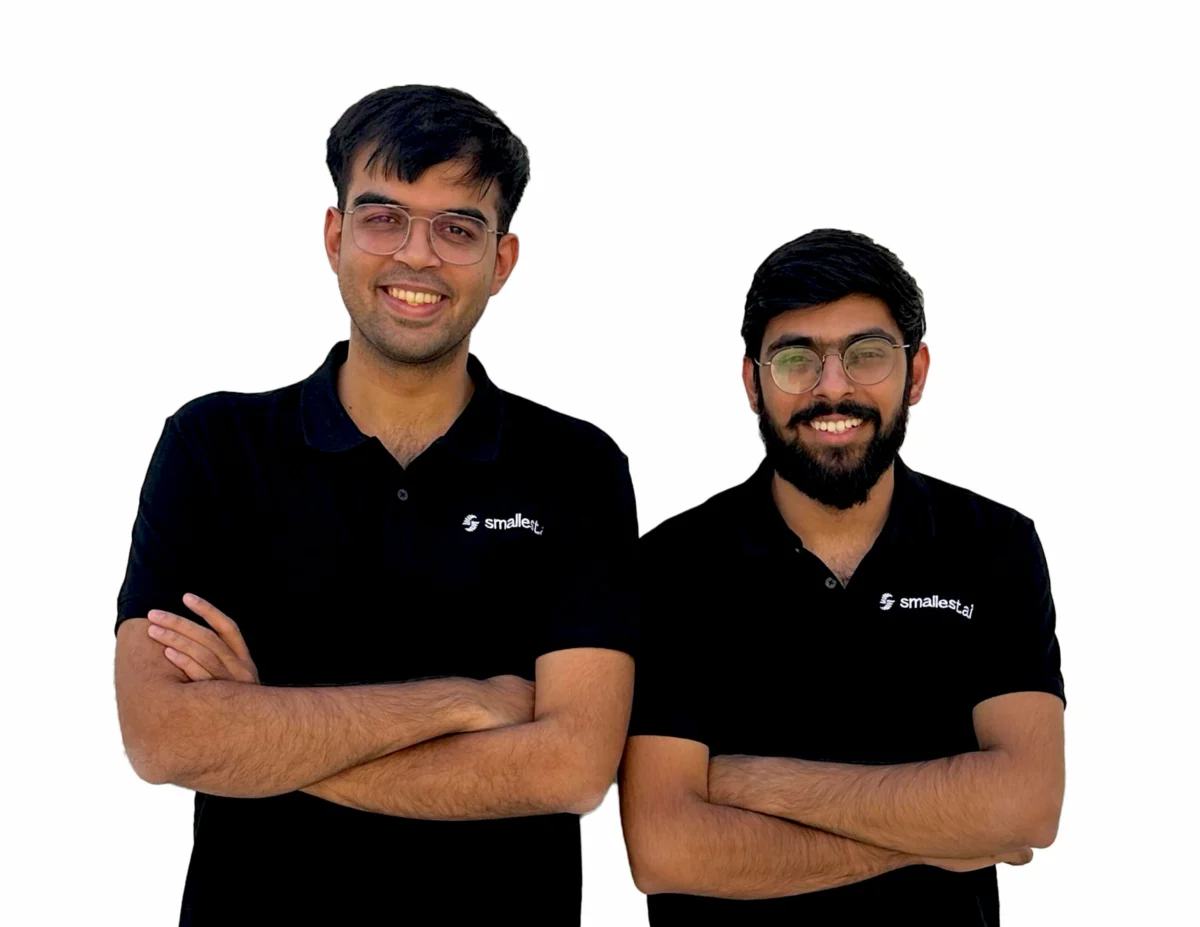
The quest for truly indistinguishable AI-powered customer support agents has taken a significant stride forward with Smallest.ai, a startup founded in late 2024, announcing a $13 million Series A funding round. This infusion of capital, led by Seligman Ventures with participation from Sierra Ventures and 3one4 Capital, brings the company’s total funding to over $21 million. Smallest.ai is not aiming to simply accelerate the processing power of large language models (LLMs), but rather to fundamentally redefine voice agent capabilities by focusing on smaller, specialized models designed for the nuances of human conversation. Their ambitious goal: to make interactions with AI indistinguishable from speaking with a human.
The current landscape of AI customer support, while increasingly capable, often falters in its ability to convincingly mimic human conversation. While AI agents can efficiently resolve many customer issues, users can almost invariably identify when they are interacting with a machine. This disconnect stems from the underlying architecture of current AI models, particularly LLMs. As Sudarshan Kamath, founder and CEO of Smallest.ai, explained to TechCrunch, "The way an LLM works is you give it an entire prompt, and then it starts thinking." This sequential processing, while acceptable in text-based interactions, creates an unnatural latency in voice communication. Even a brief pause can feel jarring and artificial to a human listener, disrupting the fluid rhythm of a natural dialogue.
Smallest.ai’s innovative approach tackles this challenge head-on by developing a compact voice model engineered to mirror the human cognitive process: listening, thinking, and speaking concurrently. This parallel processing capability is crucial for achieving genuine conversational flow. "While I’m speaking to you, you’re already thinking, and you might interrupt me if I talk for too long," Kamath elaborated, drawing a direct parallel to the intended functionality of his company’s technology. This ability to anticipate, process, and respond in real-time, without significant lag, is the cornerstone of their strategy to bridge the gap between AI and human interaction.
The Technical Underpinnings of Natural Conversation
The core innovation of Smallest.ai lies in its proprietary small voice model, which acts as a real-time intelligence layer. This specialized model is optimized for specific conversational domains, enabling immediate responses and virtually eliminating the perceptible lag that plagues many existing voice agents. By focusing on a narrower set of conversational parameters, Smallest.ai can achieve a level of responsiveness that larger, more general-purpose models struggle to replicate in a live voice setting.
However, the company recognizes the inherent limitations of specialized models. To address situations where a query falls outside the small model’s knowledge base, Smallest.ai has implemented a sophisticated fallback mechanism. When encountering an unfamiliar topic, the AI agent will seamlessly hand off the query to a larger, foundational LLM. This transition is designed to be as unobtrusive as possible, mimicking human behavior by briefly placing the customer on hold to "research" the issue. This hybrid approach ensures that customers receive comprehensive support without the frustration of hitting an AI knowledge wall.
Kamath envisions a future where all AI agents will adopt a dual-model architecture. This paradigm would consist of a highly efficient small voice model for immediate, real-time interaction, complemented by an "offline" LLM that is accessed on demand to tackle complex problems. This modular design offers a scalable and adaptable solution for a wide range of conversational AI applications.
Beyond Speed: Focusing on Voice Nuances
Unlike the broad capabilities of large foundational models, Smallest.ai’s development is intensely focused on the intricate details of voice communication. This includes robust handling of diverse accents, ensuring comprehension across a multitude of languages, and maintaining performance in noisy environments – factors that are often overlooked or poorly addressed by more general AI models. This specialized expertise in voice-specific nuances is a key differentiator for the startup.
The company has already garnered interest from prominent players in the voice technology sector, with existing customers including RingCentral and Truecaller. Kamath indicated that any company operating in the customer support space, from established enterprises to emerging startups like Sierra and Decagon, represents a potential client for Smallest.ai. He further posited that for many AI customer support companies, developing their own advanced voice capabilities would be a significant distraction from their core business objectives, making a specialized partner like Smallest.ai a more strategic and efficient choice.
Competitive Landscape and Future Ambitions
Smallest.ai operates in a dynamic and competitive market. Among its rivals are established voice AI leaders like ElevenLabs, as well as emerging players such as Cartesia and regional companies like Sarvam, which concentrate on local language support. While some competitors are exploring broader applications of voice AI, including audio dubbing and podcasting, Smallest.ai remains steadfastly committed to its core mission of delivering superior real-time conversational voice agents for enterprise clients.
The ultimate benchmark for Smallest.ai’s success is clear: "We want our models to break the Turing test," Kamath stated unequivocally. "You should speak to our model and not know it’s AI or human. That’s the sole focus of the company." This singular dedication to achieving human-level conversational indistinguishability underscores the profound ambition driving Smallest.ai’s development and its recent significant funding round.
The Broader Implications for Customer Experience
The implications of Smallest.ai’s technology extend far beyond mere convenience. For businesses, achieving a truly human-like AI interaction can lead to enhanced customer satisfaction, reduced operational costs, and improved brand perception. Customers who feel understood and efficiently served, regardless of whether they are speaking to a human or an AI, are more likely to remain loyal and positive about a company.
The "human-like" approach also has the potential to democratize access to high-quality customer support. By overcoming language barriers and accent-related comprehension issues, Smallest.ai’s technology can make sophisticated support accessible to a global audience. Furthermore, the ability to handle complex queries through a seamless handover to LLMs ensures that no customer is left without a resolution, a critical factor in building trust and reliability in automated systems.
The development of specialized AI models, as championed by Smallest.ai, represents a significant shift in the AI landscape. Instead of pursuing a one-size-fits-all approach with massive LLMs, the industry is beginning to recognize the power of focused, efficient AI. This trend is likely to accelerate, leading to a proliferation of AI agents tailored for specific tasks and industries, each contributing to a more integrated and seamless technological ecosystem. The successful implementation of Smallest.ai’s vision could very well usher in a new era of customer interaction, where the line between human and artificial intelligence becomes increasingly blurred, to the benefit of both businesses and consumers.