Sisilia Frederika
The pursuit of interstellar travel has historically been tethered to the limitations of chemical and nuclear propulsion, systems that require massive amounts of onboard propellant to achieve even a fraction of the velocities needed to reach the nearest stars. However, a paradigm shift is occurring within the aerospace community as researchers look toward propellantless propulsion systems, specifically those utilizing radiation pressure and electromagnetism. By leveraging solar sails, magnetic sails, and laser-driven lightsails, humanity is exploring a future where spacecraft are pushed by external energy sources rather than internal combustion. These technologies offer the unique prospect of achieving relativistic speeds—fractions of the speed of light—potentially enabling missions to neighboring star systems like Proxima Centauri within a single human lifetime.
The Physics of Light and the Propellantless Advantage
The theoretical foundation for sail-based propulsion rests on the discovery that light, despite having no rest mass, possesses momentum. In the mid-19th century, Scottish physicist James Clerk Maxwell demonstrated through his research on electromagnetic phenomena that light exerts pressure upon any surface it hits. This "radiation pressure" is the fundamental mechanism behind the solar sail. While the force exerted by sunlight is minuscule—roughly equivalent to the weight of a postage stamp on a football field—it is constant. In the vacuum of space, where there is no atmospheric drag, this continuous acceleration allows a spacecraft to reach incredible velocities over time.
The primary advantage of this approach is the elimination of the "rocket equation" bottleneck. In traditional rocketry, a significant portion of a vehicle’s mass is dedicated to fuel, which in turn requires more fuel to lift, creating a cycle of diminishing returns. By utilizing solar wind or Earth-based lasers, a spacecraft can be reduced to its essential payload and sail structure, drastically lowering the cost and complexity of launch while allowing for sustained acceleration that chemical rockets cannot provide.
A Century of Conceptual Evolution
The concept of sailing through the cosmos is not a modern invention but a refined vision of early 20th-century physics. Following Maxwell’s theoretical work, Russian physicist Pyotr Lebedev provided the first experimental evidence of light pressure in 1899. This was quickly followed by Konstantin Tsiolkovsky, the father of cosmonautics, who in 1921 proposed using "tremendous mirrors of very thin sheets" to attain cosmic velocities. By 1925, Latvian physicist Friedrich Zander analyzed the technical requirements for such mirrors, suggesting that the transmission of light energy over vast distances could propel thin metallic foils.
The mid-20th century saw these ideas enter the public consciousness through the work of J.B.S. Haldane and later Carl Sagan. Sagan, in particular, became a vocal advocate for solar sailing, famously proposing a mission to rendezvous with Halley’s Comet during his 1970s lectures and television appearances. While the Halley’s Comet mission did not materialize at the time, it set the stage for formal research at NASA’s Jet Propulsion Laboratory (JPL), led by engineer Carl Berglund.
Magnetic and Plasma Sails: Tapping the Solar Wind
As solar sail theory matured, researchers began to investigate alternative methods of harnessing the Sun’s output. In 1988, Dana G. Andrews and Robert Zubrin introduced the "magsail" (magnetic sail). Unlike solar sails, which reflect photons, the magsail uses a superconducting loop to create a magnetic field that deflects the charged particles of the solar wind. Zubrin’s original design called for a loop with a radius of 50 to 100 kilometers, capable of pushing against a planetary ionosphere to escape orbit or utilizing solar plasma for interplanetary transit.
Refinements to this concept followed in the 21st century. Professor Robert M. Winglee of the University of Washington proposed Mini-Magnetospheric Plasma Propulsion (M2P2) in 2000, which sought to reduce the size and mass of the magnetic coil by injecting low-energy plasma into the system. This was furthered by the Japan Aerospace Exploration Agency (JAXA), which developed the Magneto-Plasma Sail (MPS) concept. Most recently, in 2021, researchers from the Xi’an Aerospace Propulsion Institute published studies on electromagnetic sails that combine magnetic and electric fields to deflect positive ions, potentially providing higher thrust-to-mass ratios than previous iterations.
Milestones in Testing and Deployment
The transition from theory to flight began in earnest during the 2010s. NASA’s NanoSail-D, launched in November 2010, became the agency’s first successful solar sail deployment in Low Earth Orbit (LEO). Measuring 9.3 square meters, the aluminum and plastic structure demonstrated that small-scale sails could effectively maneuver CubeSats.
The most significant early success came from JAXA’s IKAROS (Interplanetary Kite-craft Accelerated by Radiation Of the Sun) mission in 2010. IKAROS was the world’s first interplanetary solar sail, traveling to Venus using a 196-square-meter polyimide sail. The mission was notable for its use of liquid-crystal device (LCD) panels embedded in the sail; by changing the reflectance of these panels, engineers could control the spacecraft’s attitude without the need for traditional thrusters.
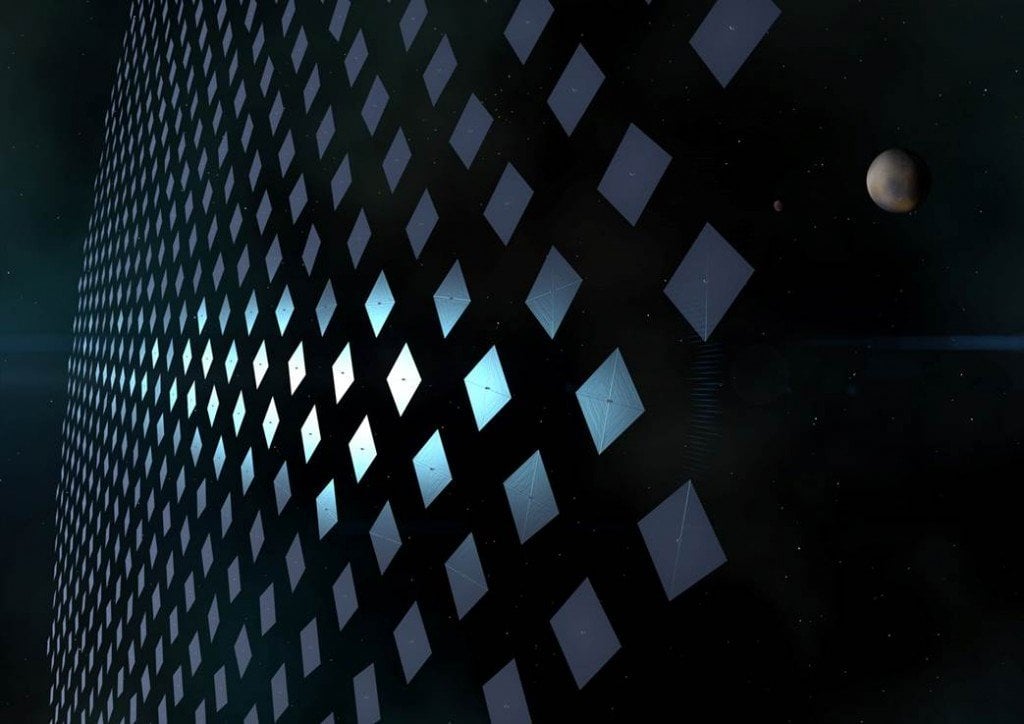
The Planetary Society further democratized the technology with its crowdfunded LightSail program. LightSail-2, launched in 2019, successfully demonstrated that a CubeSat could raise its orbit using nothing but the pressure of sunlight, proving the viability of solar sailing for small, low-cost satellites. More recently, in April 2024, NASA launched the Advanced Composite Solar Sail System (ACS3), testing carbon fiber-reinforced polymer booms designed to be lighter and stiffer than previous metallic supports. Although the mission faced mechanical challenges in late 2024, it provided critical data on the durability of composite materials in the harsh space environment.
The Interstellar Leap: Directed Energy and Laser Sails
While solar and magnetic sails are effective for travel within our solar system, they lack the "punch" required for interstellar distances. Because the intensity of sunlight drops off with the square of the distance from the Sun, a solar sail’s acceleration diminishes rapidly as it leaves the inner solar system. To reach the stars, researchers propose "Beamed Power Propulsion" or laser-driven lightsails.
In 1984, physicist Robert Forward published a seminal paper describing how massive laser arrays in the solar system could focus energy onto a sail, pushing it to relativistic speeds. Because laser beams do not dissipate as quickly as sunlight, they can provide continuous acceleration over much longer distances. Forward even theorized that the same lasers could be used to decelerate the craft upon arrival at its destination by reflecting light back onto a secondary sail.
In 2000, Robert Frisbee of NASA JPL calculated that a laser sail 965 kilometers in diameter could theoretically reach half the speed of light, arriving at Proxima Centauri in under nine years. However, the energy requirements are astronomical. Such a mission would require approximately 17,000 terawatts (TW) of power—a figure nearly 1,000 times the total annual energy consumption of Earth.
Current Interstellar Initiatives
Despite the daunting energy requirements, several organizations are actively working toward small-scale interstellar missions. The Initiative for Interstellar Studies (i4is) and Breakthrough Initiatives are currently leading this charge.
- Breakthrough Starshot: This $100 million R&D program aims to demonstrate proof-of-concept for ultra-light "Starchips"—gram-scale spacecraft attached to lightsails. Driven by a 100-gigawatt (GW) ground-based laser array, these probes could reach 20% of the speed of light, making the 4.37 light-year journey to Alpha Centauri in just 20 years.
- Project Lyra: This initiative focuses on using lightsail technology to intercept interstellar objects (ISOs) passing through our solar system, such as ‘Oumuamua. By achieving velocities of 26 km/s, these sails could catch up to ISOs that are otherwise unreachable by chemical rockets.
- Swarming Proxima Centauri: A 2022 proposal by i4is and Space Initiative Inc. suggests launching thousands of tiny probes in a "swarm." This approach provides redundancy; if some probes are destroyed by interstellar dust, others will survive to transmit data back to Earth using "light buckets"—large terrestrial arrays designed to catch the faint signals from the probes.
Technical Hurdles and Strategic Implications
The path to the stars via radiation pressure is fraught with engineering challenges. Beyond the immense power requirements for laser arrays, material science remains a primary hurdle. A sail traveling at 20% the speed of light would face catastrophic damage from even microscopic dust grains. Furthermore, the heat generated by high-intensity lasers could melt conventional materials, necessitating the development of highly reflective, heat-resistant thin films.
The economic implications are equally significant. Building a 100 GW laser array would require an international consortium and an energy infrastructure far beyond current capabilities. However, proponents argue that this investment is a one-time cost. Once the laser "infrastructure" is built in the solar system, it can be used to launch an infinite number of probes at a very low marginal cost per mission.
Future Outlook
As of 2025, the consensus among aerospace experts is that while laser-driven sailcraft represent the most feasible path to interstellar travel, the technology is still in its infancy. Interplanetary solar sails are likely to become a standard tool for low-cost scientific missions to asteroids and outer planets within the next two decades. The leap to interstellar distances, however, will require breakthroughs in directed energy, autonomous swarm intelligence, and extreme-environment materials.
The success of missions like IKAROS and LightSail-2 has proven that the "propellantless revolution" is no longer a matter of science fiction. If the current trajectory of miniaturization and beamed-energy research continues, the first human-made objects could begin their journey to the stars by the mid-21st century, fundamentally altering our understanding of our place in the cosmos.