Vera Intan Clara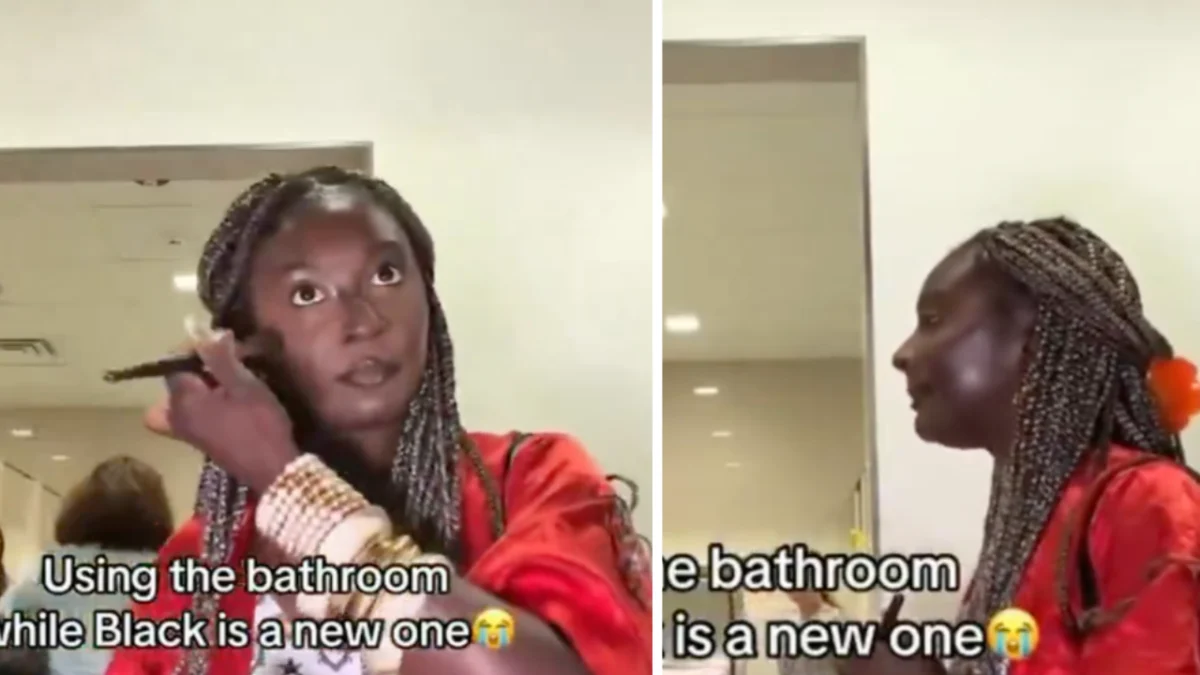
A video widely circulated on X has ignited a fervent online debate, capturing an incident where two women claimed they were unjustly asked to exit a public restroom while simply touching up their makeup. The women contend that the request to cease applying cosmetics quickly escalated, prompting them to question whether the true motivation behind their eviction was indeed about makeup application or a deeper, racially motivated discrimination. The incident has since become a flashpoint for discussions surrounding racial profiling, public accommodation rights, and the often-subtle nature of bias in everyday encounters.
The Viral Video and Initial Confrontation
The clip, which begins in media res, opens with the two women, both of whom are Black, engaged in applying makeup in what appears to be a public restroom. It is evident that the recording commenced after an initial confrontation had already taken place. The women are heard discussing an earlier interaction with an unidentified woman who, according to their account, expressed displeasure over their use of the bathroom for makeup application. Their conversation suggests a level of bewilderment and frustration regarding the initial complaint, as applying makeup in front of a mirror in a public restroom is a common and generally accepted practice.
The situation takes an unexpected turn when a male individual, later identified by the women as a police officer, abruptly enters the female restroom. His entrance is heralded by shouts of, "Male coming in! Male coming in!" a warning that itself contributed to the uncomfortable atmosphere, as it signaled a breach of an otherwise gender-segregated space. The man immediately instructs the women to leave, stating, "You guys gotta go. Not here. She told you that you can’t put makeup on." He reiterates that their presence for makeup application was prohibited, demanding their immediate departure.
Escalation and Allegations of Racial Motivation
The women express profound confusion and disbelief at the man’s directive. They point out the obvious utility of bathroom mirrors for personal grooming, including makeup application. This prompts one of the women to directly challenge the man, asking, "Is it because we’re Black?" This direct question immediately shifts the narrative from a mere dispute over restroom etiquette to a serious accusation of racial discrimination. The man, visibly taken aback, responds with a dismissive "Really?", to which the woman firmly reiterates, "Yes," doubling down on her conviction that their race was the underlying factor in their treatment.
The man attempts to justify his demand by claiming the women were "obnoxious." However, the video footage available does not support this characterization, as the women appear to be calmly discussing the situation amongst themselves, even while expressing their distress. It is crucial to note that the video does not capture the initial interaction with the unidentified woman, making it impossible for viewers to independently verify the claim of obnoxiousness or the precise nature of the initial complaint. The women continue to press the issue, questioning the existence of any rule prohibiting makeup application in a public restroom and expressing their skepticism regarding the stated reason for their eviction.
As the confrontation escalates, the man further accuses the women of "trespassing." The video, however, offers no clarity or explanation as to why this accusation was levied. Trespassing typically implies unauthorized presence on private property or refusal to leave after being lawfully asked. Without context regarding the ownership or specific regulations of the establishment, the trespassing claim appears to be an additional and seemingly arbitrary justification for their removal. The women persist in asking if their race is the reason, which the man consistently denies.
One of the women then confronts the man about his demeanor, stating, "You’re a grown man talking to a young woman," and labeling his conduct as disrespectful. She explicitly links his "hostility" to their race, contrasting the seriousness of his intervention with what she describes as a minor initial run-in with the other woman. The situation culminates with the women being told to leave, clarifying that the man is a police officer. They express significant discomfort that a male officer was dispatched to address a situation in an all-female space, arguing that it only served to heighten their discomfort and sense of intimidation. One of the women poignantly remarks, "Using the bathroom while being Black, that’s a new one," highlighting the absurdity and perceived novelty of their experience as a form of racial injustice. Ultimately, they are escorted out of the restroom by the officer.
Broader Context: Racial Discrimination in Public Accommodations
This incident resonates deeply within the broader historical and contemporary context of racial discrimination in public spaces, particularly against Black individuals. From the era of Jim Crow laws, which mandated segregation and denied Black people equal access to public facilities, to modern-day instances of racial profiling and microaggressions, the act of simply "being Black" in certain public environments has, for many, remained fraught with potential for scrutiny, suspicion, and unwarranted intervention.
The Civil Rights Act of 1964 explicitly prohibits discrimination on the basis of race, color, religion, sex, or national origin in places of public accommodation, including restaurants, hotels, and other public facilities. While this incident does not directly involve denial of entry to the restroom, the alleged differential treatment and subsequent expulsion based on perceived non-compliance with unstated rules, particularly when coupled with racial allegations, falls squarely within the spirit of these protections. Such incidents, even if seemingly minor, contribute to a pervasive sense of marginalization and indignity, reinforcing the idea that certain spaces are not truly "public" for all.
The Pervasiveness of Racial Profiling and Bias
Data from various civil rights organizations consistently highlights the ongoing issue of racial profiling and bias in law enforcement and public interactions. Studies have shown that Black individuals are disproportionately stopped, questioned, and subjected to more severe enforcement actions for minor infractions compared to their white counterparts. While the officer in the video denies racial motivation, the women’s immediate assumption that their race was a factor is not an isolated sentiment but rather a reflection of lived experiences and a societal pattern.
These encounters often involve the "policing of Black bodies," where Black individuals are subjected to heightened surveillance and scrutiny, their actions interpreted through a lens of suspicion, even in routine activities like applying makeup. This can manifest as microaggressions – subtle, often unintentional, expressions of prejudice – or overt acts of discrimination, making everyday life a series of potential challenges to their right to exist comfortably and without harassment in public spaces.
The Role of Social Media in Amplifying Such Incidents
Platforms like X (formerly Twitter) have become powerful tools for documenting and disseminating incidents of alleged discrimination, bringing them to immediate public attention. The rapid virality of such videos forces public discourse, holds individuals and institutions accountable, and highlights experiences that might otherwise remain unseen or dismissed. While social media can sometimes lead to premature judgments without full context, it undeniably serves as a critical mechanism for marginalized communities to share their narratives and advocate for justice.
The widespread sharing of this video has undoubtedly contributed to a larger conversation about the nuances of racial bias, the responsibilities of law enforcement, and the rights of individuals in public spaces. It allows for collective empathy, outrage, and analysis, shaping public opinion and potentially influencing policy changes or organizational training.
Challenges in Proving Discriminatory Intent
One of the most significant challenges in cases of alleged discrimination is proving discriminatory intent. Without explicit racist remarks, it can be difficult to definitively establish that an action was motivated by race, even if the outcome disproportionately affects a racial group. Opposing parties can always offer alternative, race-neutral explanations, such as "obnoxiousness" or "trespassing," as was done by the officer in this video.
Legal standards often require a showing that race was a "motivating factor," which can be inferred from a pattern of behavior, inconsistent application of rules, or the totality of circumstances. However, in a single, isolated incident captured partially on video, such inferences can be contentious and subject to varied interpretations. This ambiguity often leaves victims feeling unheard and justice unserved, perpetuating a cycle of frustration.
Potential Implications and Calls for Accountability
While the specific outcome of this incident remains unclear, its broader implications are significant. For the women involved, it represents an unsettling and potentially traumatic experience that reinforces feelings of vulnerability and being "othered" in public. For the public, it serves as a stark reminder of the ongoing struggle for racial equality and the subtle ways in which discrimination can manifest.
If the officer’s actions are found to be discriminatory or an abuse of authority, it could lead to internal investigations within the police department, potential disciplinary action, or calls for revised training protocols regarding public interactions and de-escalation techniques, particularly in sensitive spaces like restrooms. For the establishment where the incident occurred, there could be pressure to clarify its policies regarding customer conduct and ensure that all staff, including security personnel or those who might summon law enforcement, are adequately trained in non-discriminatory practices.
Ultimately, this incident underscores the critical need for continued vigilance against racial discrimination, the importance of fostering inclusive public spaces, and the ongoing dialogue necessary to address and dismantle systemic biases. The video, though incomplete, provides a powerful glimpse into the complexities of race relations in contemporary society, prompting observers to consider not just what was said and done, but also what was left unsaid, and the historical weight carried by such encounters. The debate sparked by this footage serves as a testament to the enduring impact of perceived injustices and the continuous pursuit of equitable treatment for all.